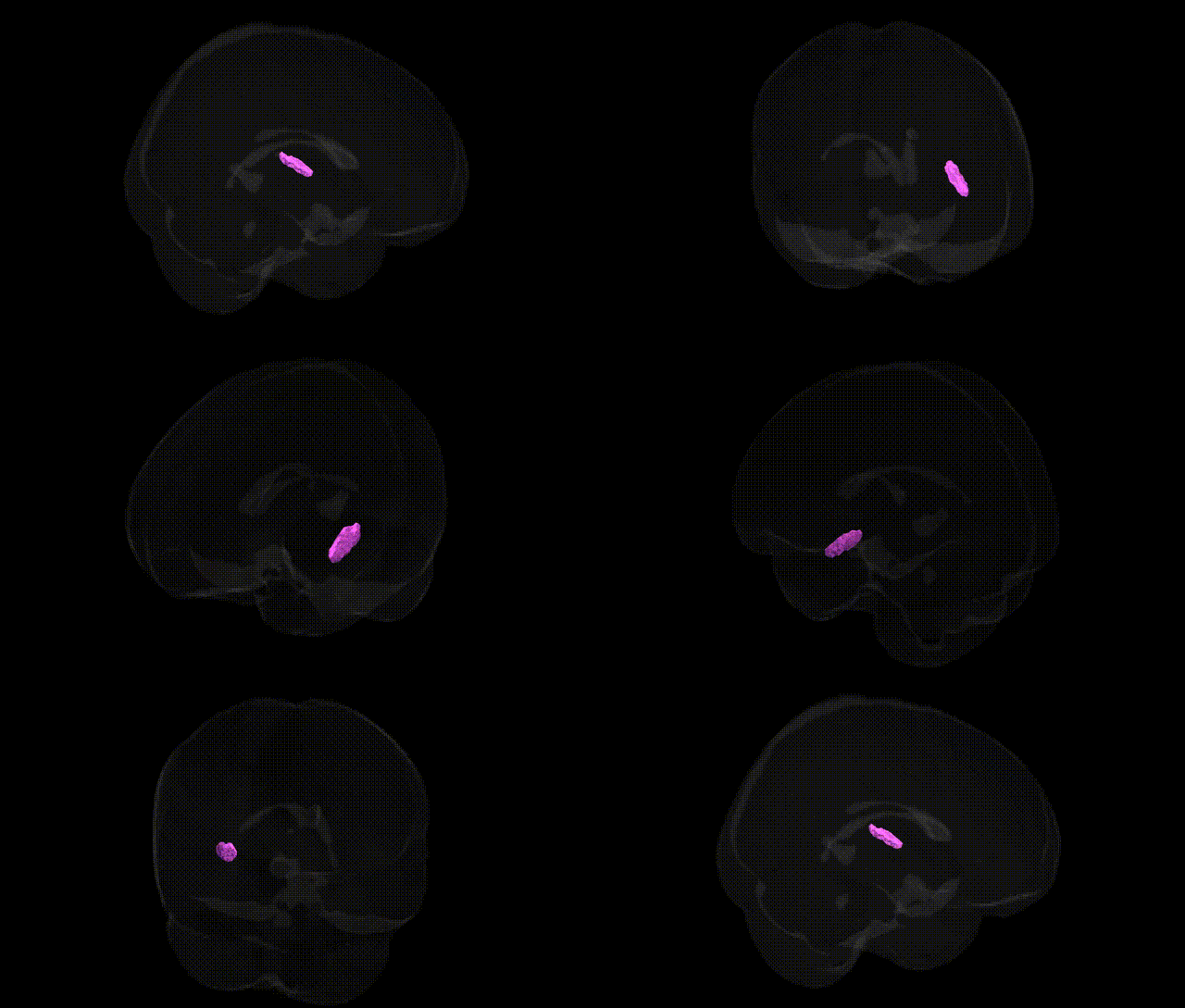
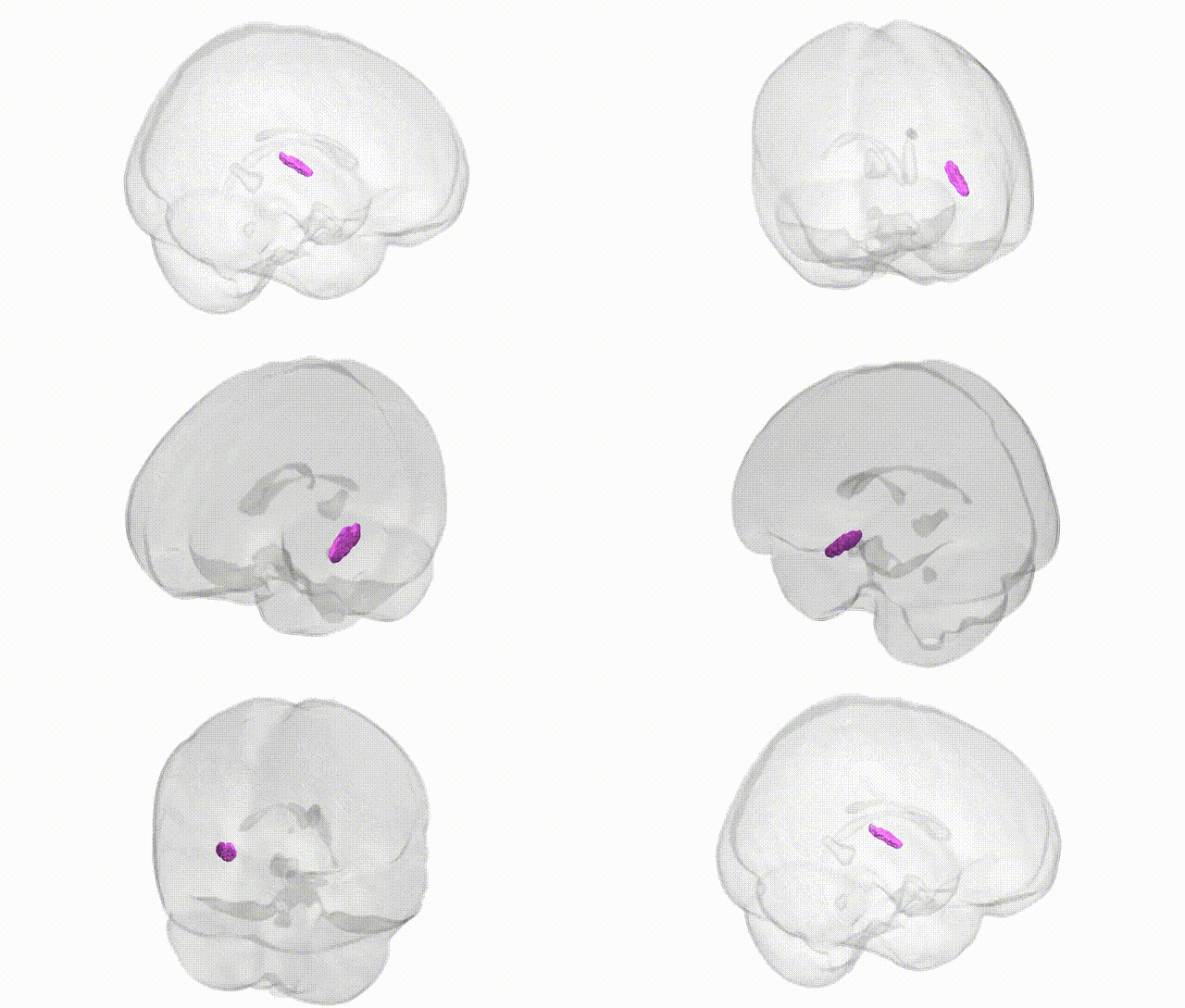
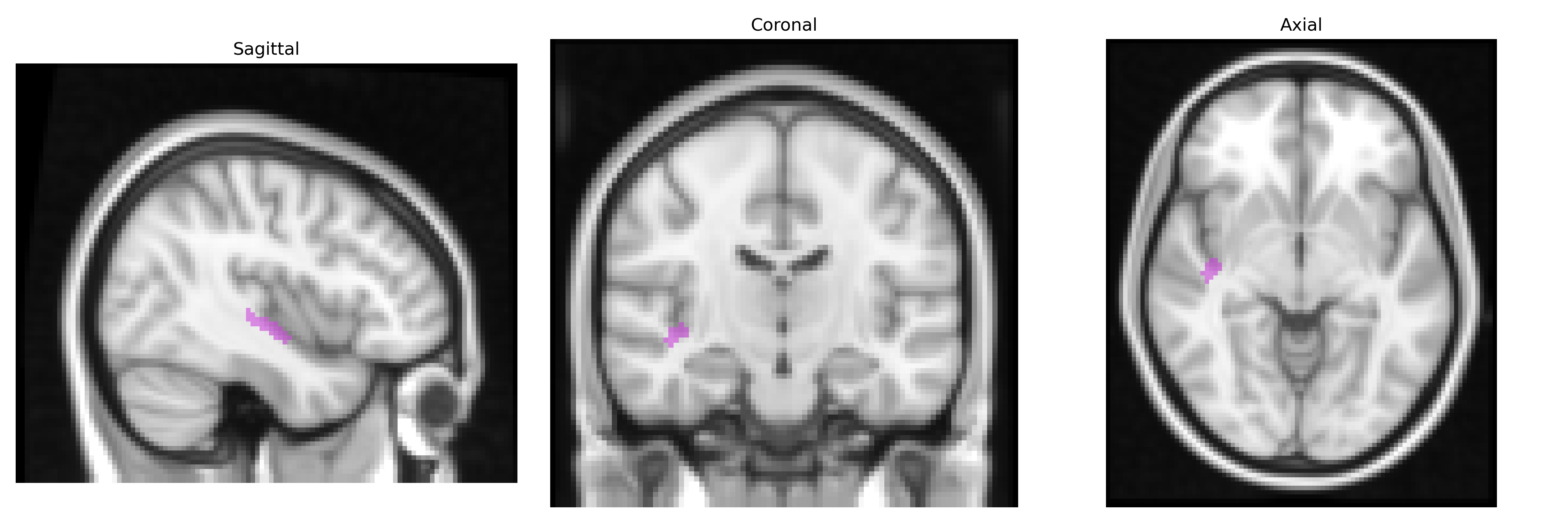
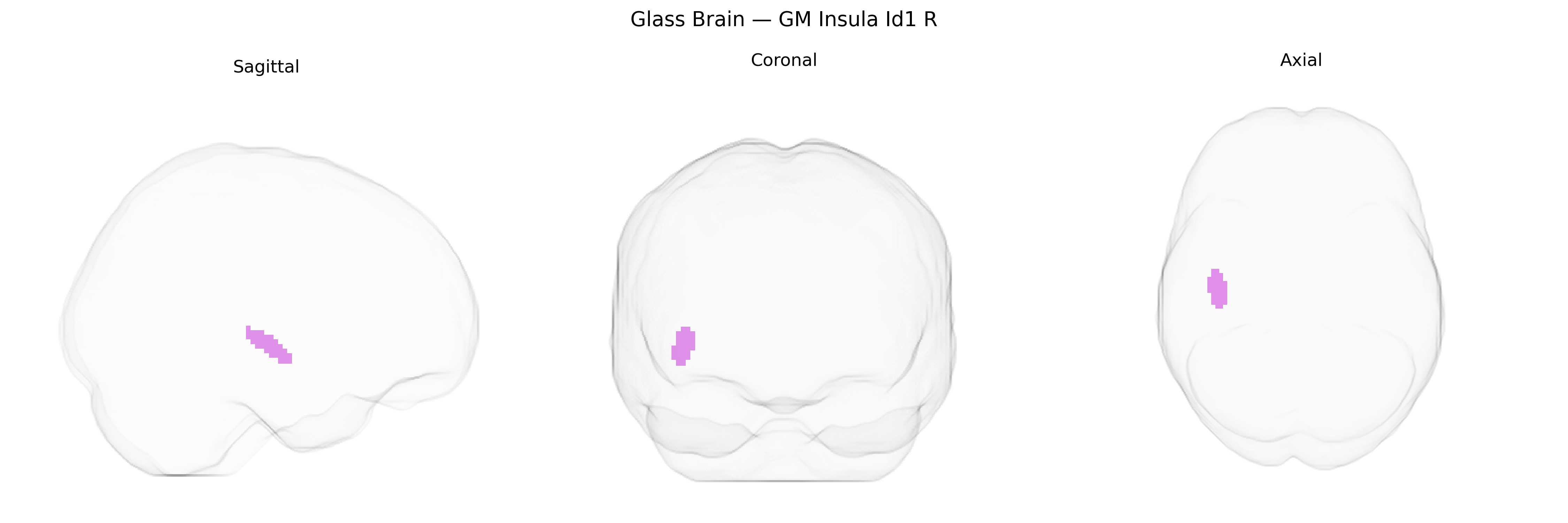
The bilateral GM Insula Id1 R region in the Juelich maxprob thr25 2mm Atlas corresponds to a cytoarchitectonically defined subregion within the right insular cortex, part of the insula’s granular/dysgranular zones implicated in multimodal integration and interoceptive processing. This area lies deep within the lateral sulcus and is structurally associated with salience detection, autonomic regulation, and integration of visceral, somatosensory, and affective information, contributing to emotional awareness and homeostatic control. The Id1 subdivision reflects distinct cellular architecture and connectivity patterns that differentiate it from adjacent insular fields, supporting specialized roles in integrating bodily states with higher-order cognitive and affective functions. There is no direct link for “Insula Id1”; a related structure is the Insular cortex.
The bilateral GM Insula Id1 R region in the Juelich maxprob thr25 2mm atlas corresponds to anterior insular cortex, a multimodal integration hub repeatedly implicated in genetic studies of brain structure and function. Large neuroimaging GWAS consortia such as ENIGMA and UK Biobank have identified common variants associated with insular cortical thickness and surface area, with notable signals in genes related to neurodevelopment (e.g., variants in pathways involving CADM2, HMGA2, and genes influencing neuronal migration and synaptogenesis), although these are typically reported for broader insular parcels rather than the specific Id1 subdivision. Polygenic risk scores for major depressive disorder, schizophrenia, bipolar disorder, autism spectrum disorder, and attention-deficit/hyperactivity disorder show associations with altered insular morphology or functional connectivity, suggesting that psychiatric risk alleles partly exert their effects via this region’s circuits for interoception, salience detection, and emotional awareness. Insular structure and activation have been linked to genetic liability for substance use (including alcohol and nicotine dependence), eating disorders, and chronic pain syndromes, often through variants in dopaminergic, glutamatergic, and opioid-related genes that modulate reward and aversive processing. Additionally, GWAS of traits such as neuroticism, anxiety sensitivity, and stress reactivity have associated polygenic profiles with insula-related metrics, supporting a genetically influenced role of this area in affective and cognitive control networks rather than a single, region-specific locus with large effect size.
Overview generated by GPT-4o (2026).
Region ID: 117
Hemisphere: bilateral
Atlas: Juelich maxprob thr25 2mm
Full Quality Version: Download MP4
Full Quality Version: Download MP4
Wali Sidiqyar*, Gaurav Rudravaram*, Elyssa M. McMaster, Trent M. Schwartz, Adam M. Saunders, Kurt G. Schilling, Bennett A. Landman "Introducing SPINS: A Shared Public Visualization Library of Neuroanatomical Structures." Medical Imaging with Deep Learning- short paper
This resource is licensed under CC0 1.0 Universal (Public Domain).