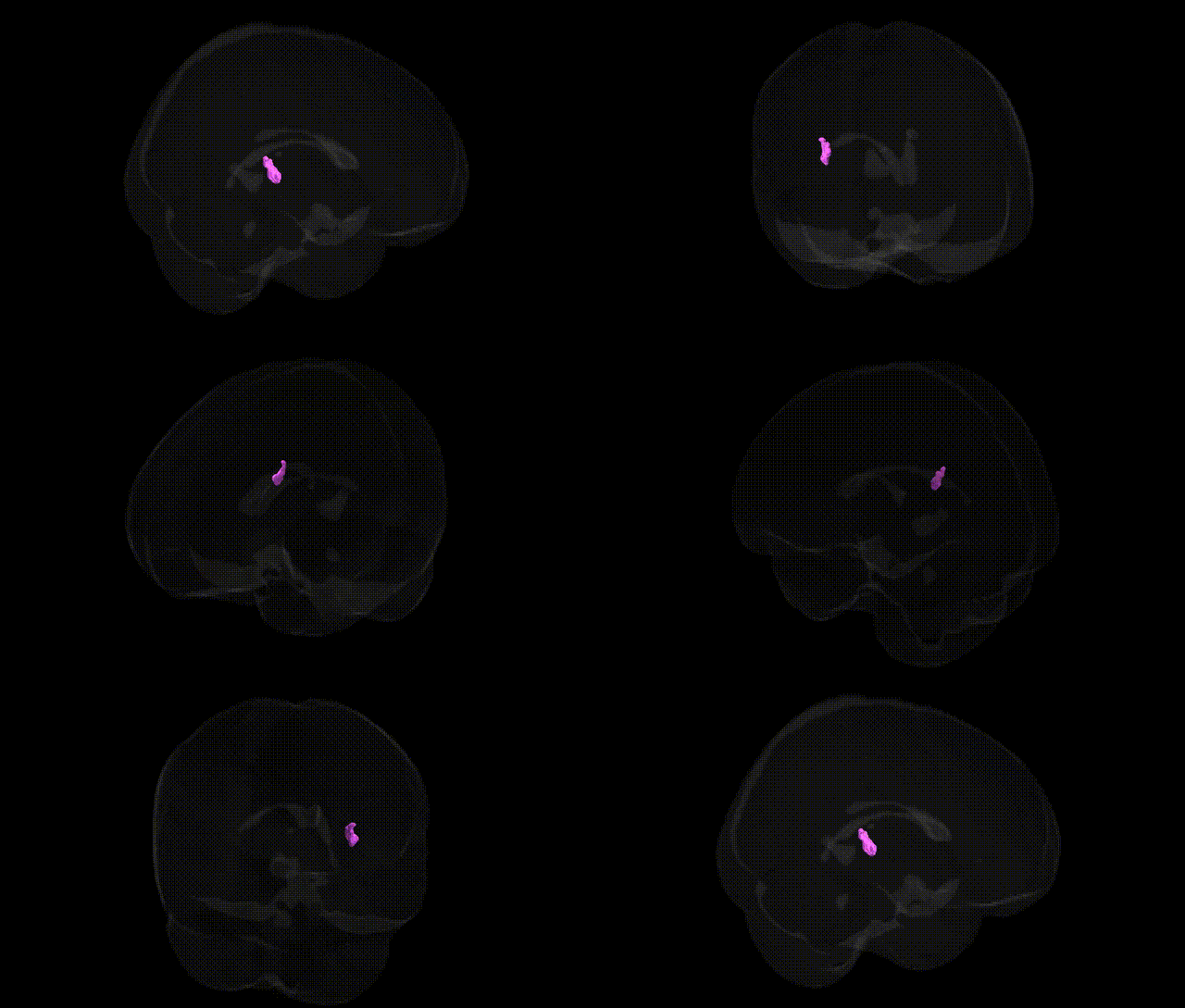
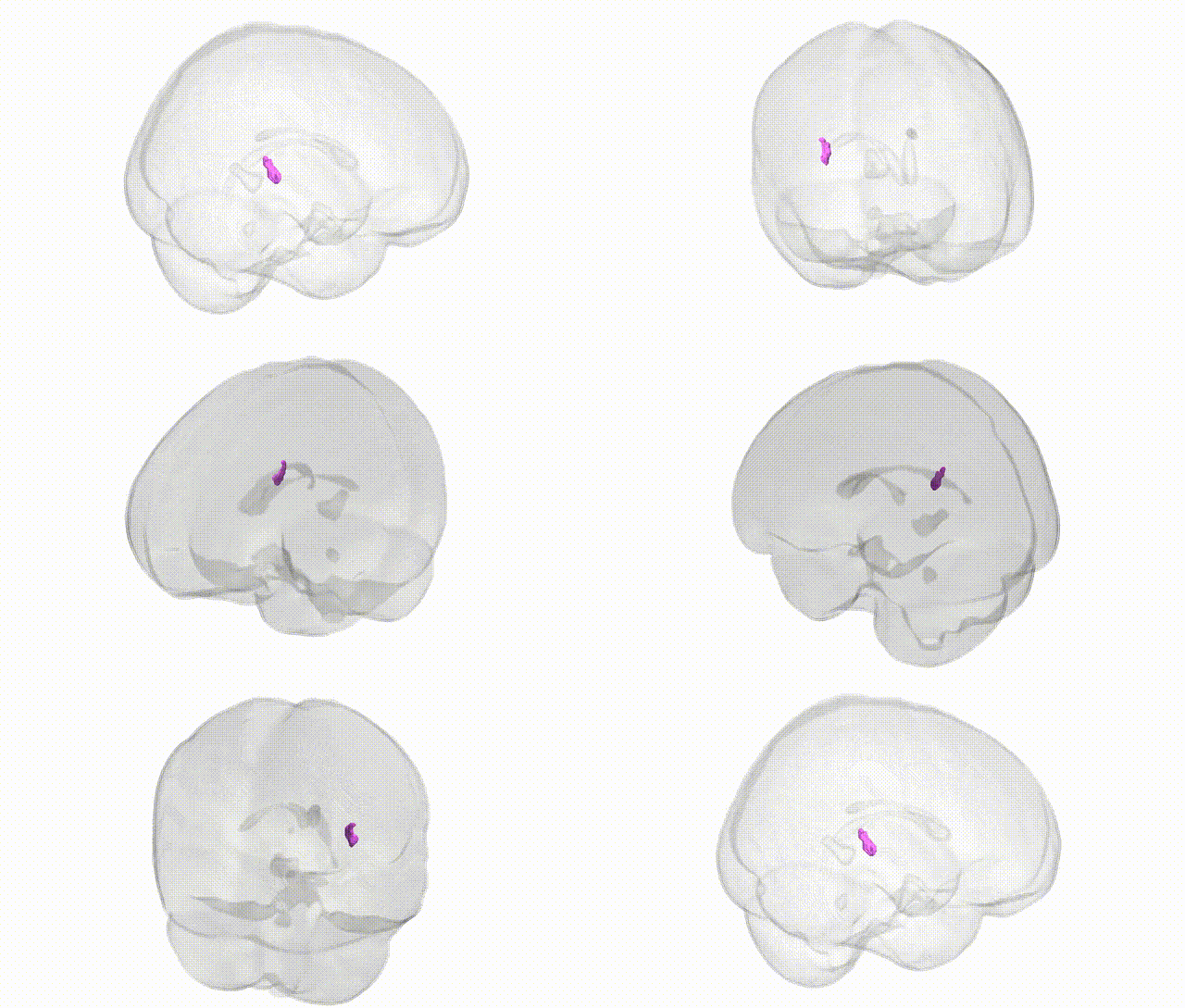
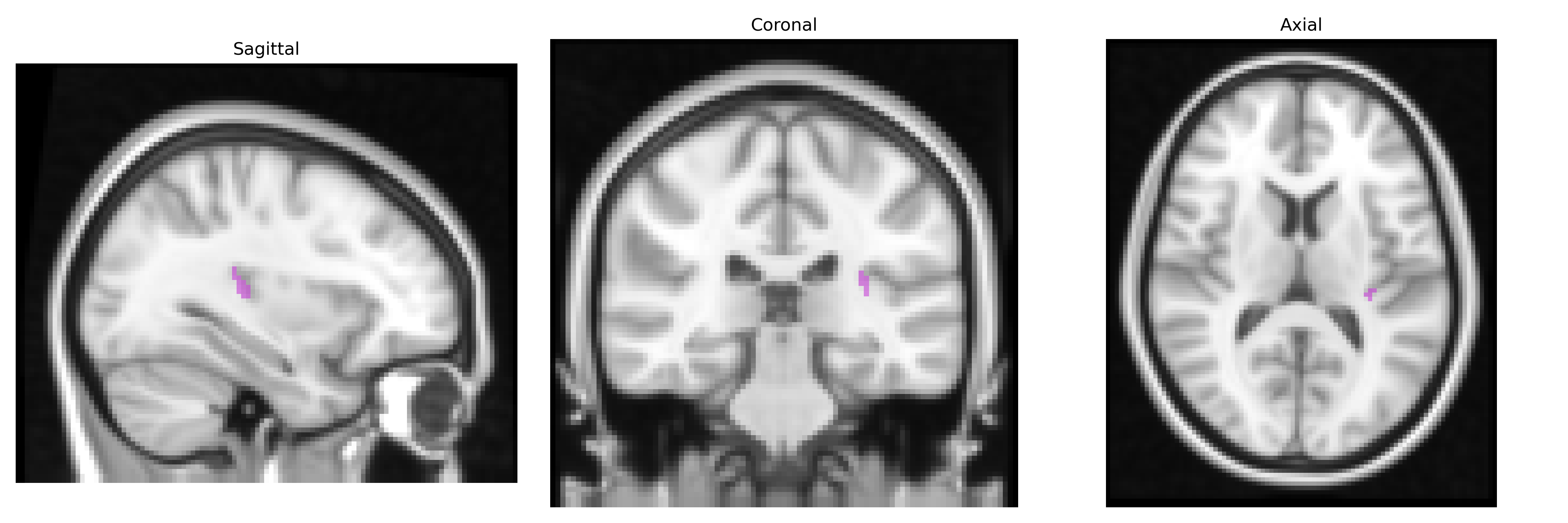
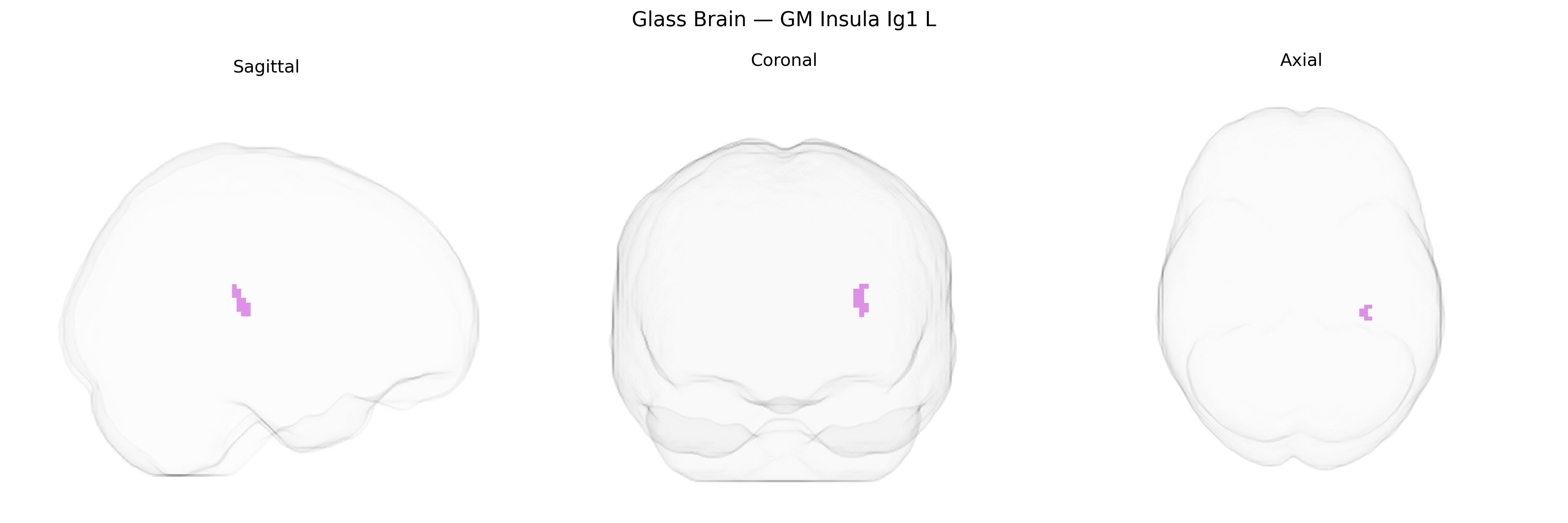
The bilateral GM Insula Ig1 L region from the Juelich maxprob thr25 2mm Atlas corresponds to a granular subregion of the insular cortex, located deep within the lateral sulcus and covered by parts of the frontal, parietal, and temporal opercula. As part of the insular cortex, this granular insular area is implicated in multimodal integration of sensory, autonomic, and affective information, contributing to interoception, visceral regulation, and aspects of emotional and cognitive processing. Cytoarchitectonically, granular insula is characterized by a distinct laminar organization with a prominent granular layer IV, differentiating it from agranular and dysgranular insular territories. Functionally, Ig1 is thought to participate in networks supporting salience detection, homeostatic regulation, and integration of bodily states with subjective experience. There is no direct Wikipedia article for Insula Ig1; a related structure is the insular cortex: Insular cortex.
The bilateral GM Insula Ig1 L region, a granular insular subregion in the Juelich maxprob atlas, has not yet been the direct focus of region-specific GWAS, but genetic and imaging-genetic studies implicating the insular cortex more broadly provide convergent evidence on its molecular and clinical associations. Common variants in genes involved in synaptic function and neurodevelopment—such as CACNA1C, DRD2, GRIN2A, and BDNF—have been linked to insular volume, thickness, or functional connectivity, often in the context of large-scale imaging GWAS, with notable contributions from ENIGMA and UK Biobank-based studies. Polygenic risk scores for schizophrenia, bipolar disorder, major depressive disorder, and autism spectrum disorder have been associated with altered insular morphology and activation patterns, and insula-related endophenotypes such as salience network connectivity show heritability and genetic correlation with these conditions. In addition, insular structure and function, including granular insula subregions, have been tied via genetic studies to traits such as pain sensitivity, interoception, anxiety, substance use (particularly nicotine and alcohol), and obesity, with variants in opioid, dopaminergic, and neuropeptide-related genes frequently implicated. While no GWAS has specifically isolated the Ig1 L parcel as a unique locus of genetic association, the granular insula’s role in sensory integration and salience processing means that genetic influences identified for insular cortex in general—especially those affecting neurodevelopmental pathways, synaptic signaling, and stress-response systems—are likely to be relevant to this region.
Overview generated by GPT-4o (2026).
Region ID: 118
Hemisphere: bilateral
Atlas: Juelich maxprob thr25 2mm
Full Quality Version: Download MP4
Full Quality Version: Download MP4
Wali Sidiqyar*, Gaurav Rudravaram*, Elyssa M. McMaster, Trent M. Schwartz, Adam M. Saunders, Kurt G. Schilling, Bennett A. Landman "Introducing SPINS: A Shared Public Visualization Library of Neuroanatomical Structures." Medical Imaging with Deep Learning- short paper
This resource is licensed under CC0 1.0 Universal (Public Domain).