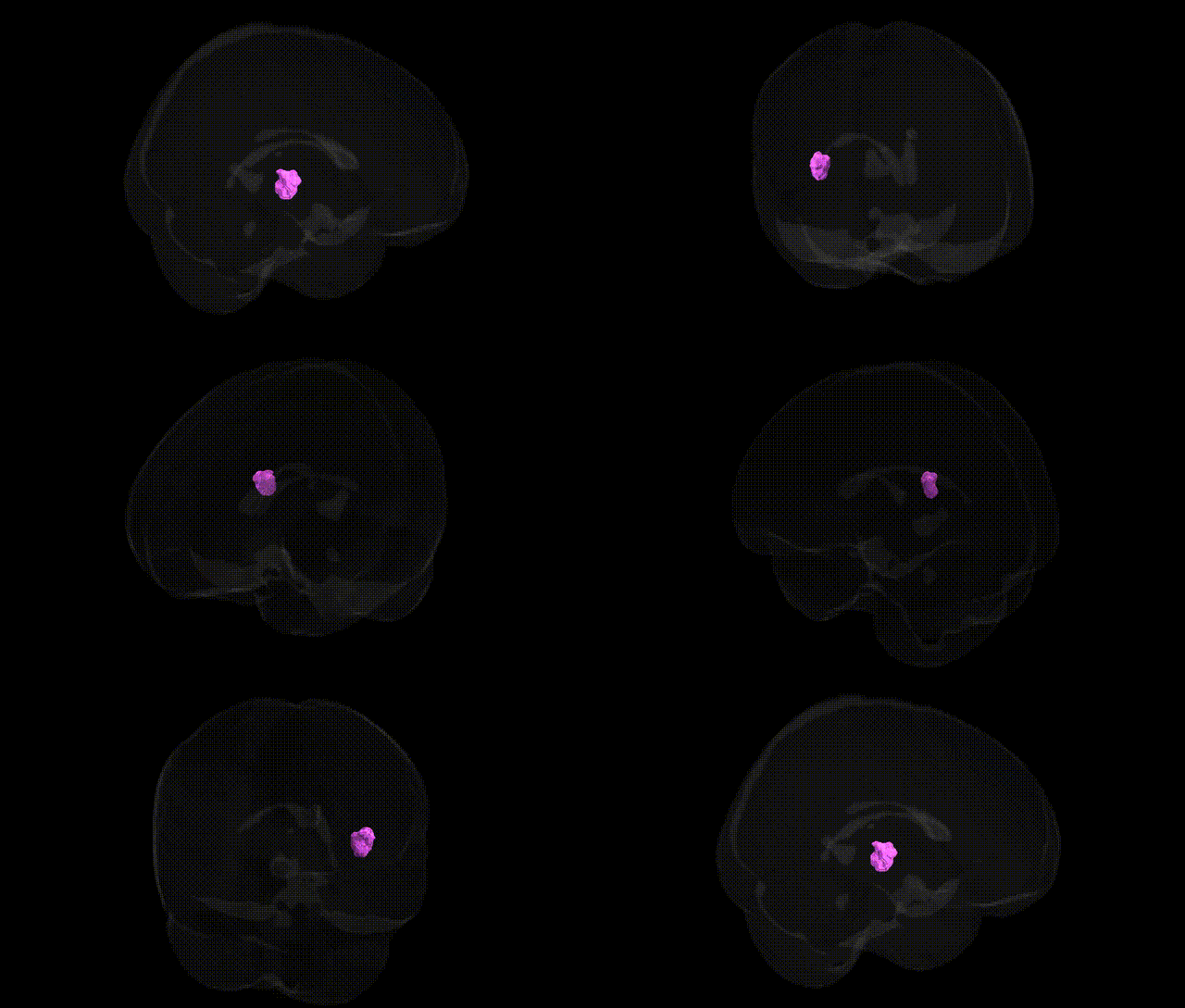
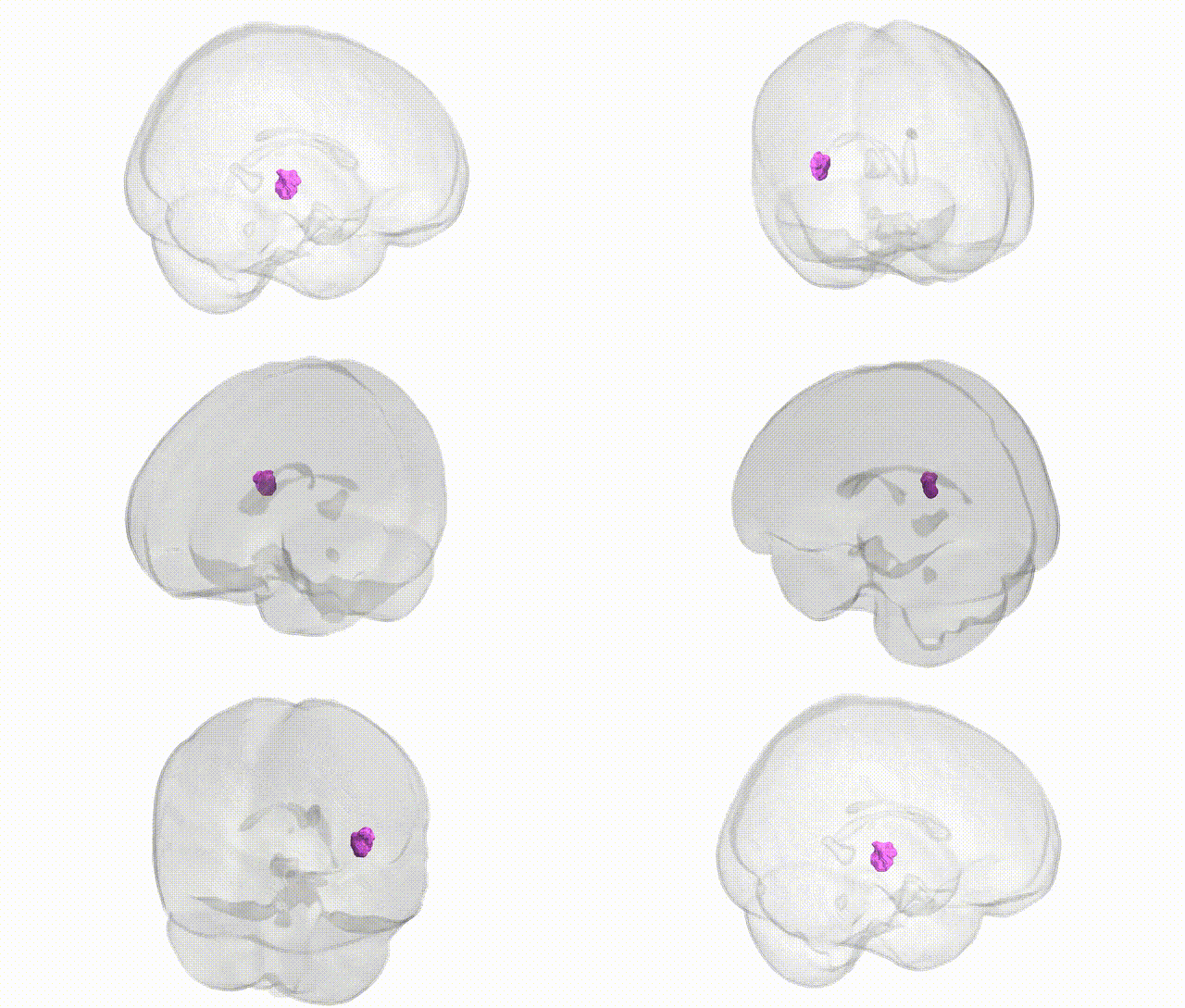
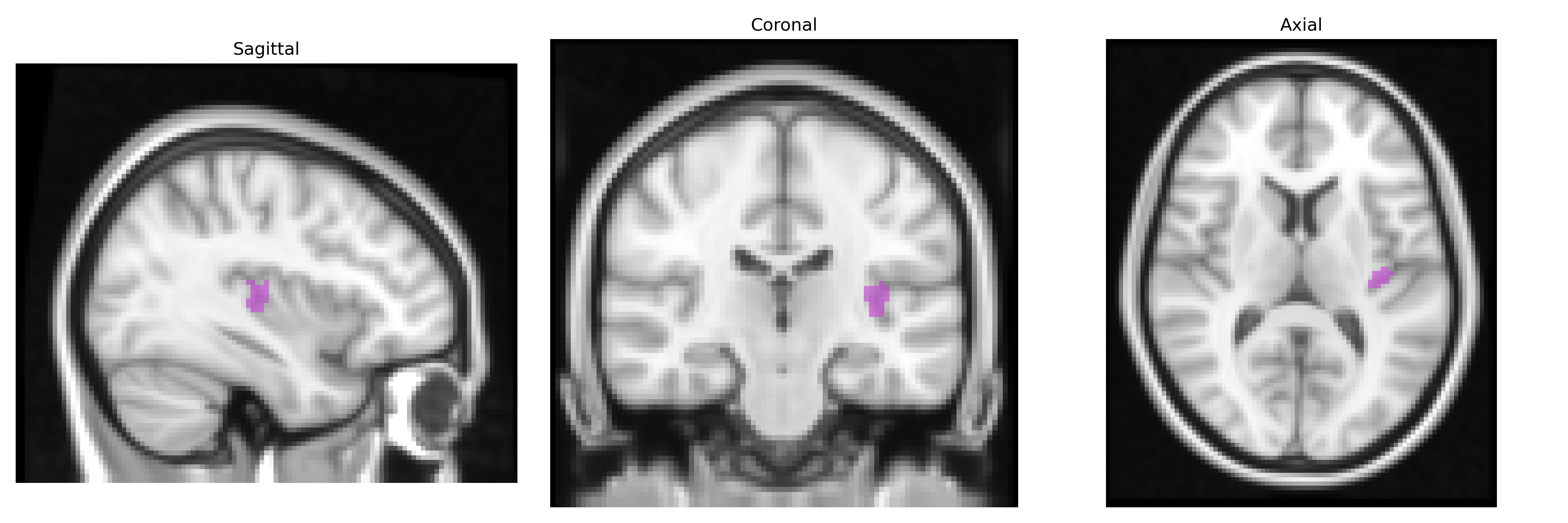
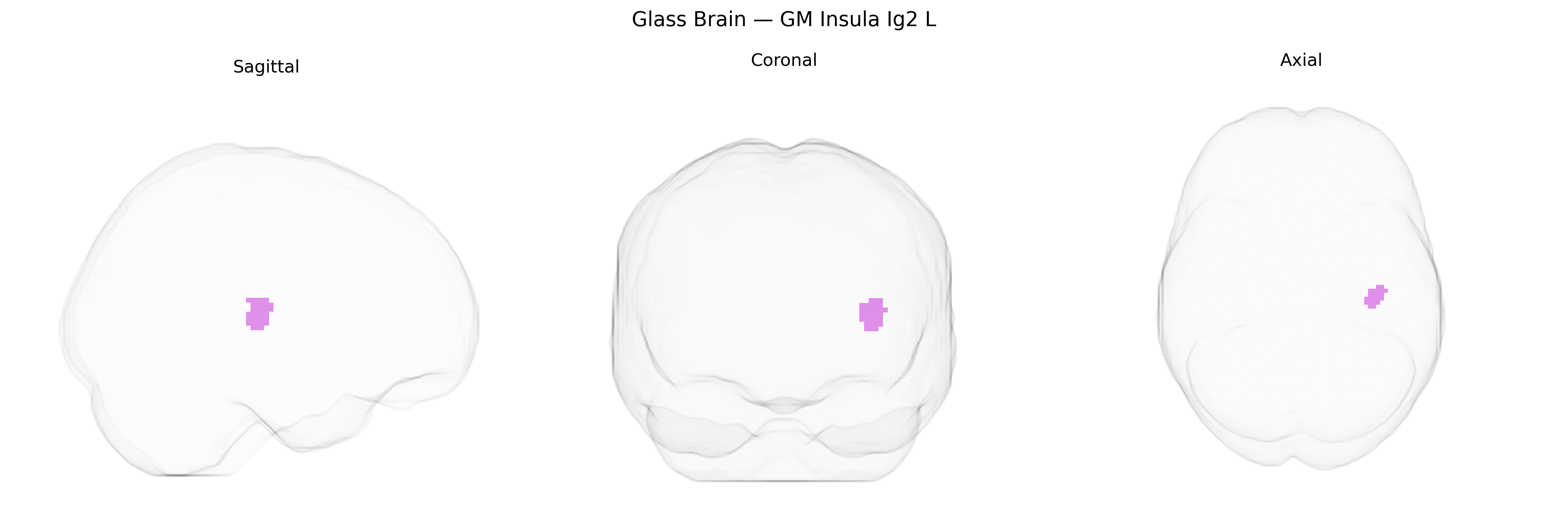
The bilateral GM Insula Ig2 L region from the Juelich maxprob thr25 2mm Atlas corresponds to a left-hemispheric granular insular subregion implicated in primary interoceptive and somatosensory processing. This area is part of the posterior insular cortex, characterized by granular cytoarchitecture and strong connections with thalamic nuclei conveying nociceptive, temperature, visceral, and other bodily signals. Functionally, Ig2 participates in the representation of internal bodily states, contributing to pain perception, thermosensation, and aspects of autonomic regulation, and serves as a key node in integrating sensory input with affective and homeostatic processes. There is no direct link for Ig2 specifically; a related structure is the insular cortex: Insular cortex.
The bilateral GM Insula Ig2 L region in the Juelich maxprob thr25 2mm atlas corresponds roughly to portions of the granular and dysgranular insular cortex, which has been implicated in a variety of genetically influenced traits and disorders, though precise GWAS-level mapping to this specific subregion is still emerging. Large-scale imaging genetics consortia such as ENIGMA and UK Biobank–based studies have identified heritable variation in insular cortical thickness and surface area, with associated loci enriched for genes involved in neurodevelopment, synaptic signaling, and cortical patterning (e.g., common variants near genes such as MIR124-1, TBR1, and other neurodevelopmental regulators have been implicated in insular morphology). Polygenic overlap links insular morphology with schizophrenia, major depressive disorder, bipolar disorder, and autism spectrum disorder, consistent with case–control MRI findings showing insular volume or thickness alterations in these conditions. GWAS of functional connectivity and resting-state networks that prominently involve the insula (e.g., salience network) have identified associations with genes related to glutamatergic and GABAergic signaling and to risk for psychiatric disorders, suggesting that insula-related circuits serve as intermediate phenotypes for psychiatric genetics. Additional associations have been reported between insula structure or activation and genetic risk scores for nicotine and alcohol use, obesity and metabolic traits, as well as pain sensitivity and interoceptive processes, although these findings typically reference the insula as a whole rather than the Ig2 L subdivision specifically. Overall, genetic studies support a role for insular cortex, including regions overlapping Ig2 L, as a convergence zone for neurodevelopmental, affective, interoceptive, and addiction-related genetic influences, while fine-grained, atlas-based GWAS targeting this exact Juelich-defined parcel remain limited.
Overview generated by GPT-4o (2026).
Region ID: 120
Hemisphere: bilateral
Atlas: Juelich maxprob thr25 2mm
Full Quality Version: Download MP4
Full Quality Version: Download MP4
Wali Sidiqyar*, Gaurav Rudravaram*, Elyssa M. McMaster, Trent M. Schwartz, Adam M. Saunders, Kurt G. Schilling, Bennett A. Landman "Introducing SPINS: A Shared Public Visualization Library of Neuroanatomical Structures." Medical Imaging with Deep Learning- short paper
This resource is licensed under CC0 1.0 Universal (Public Domain).