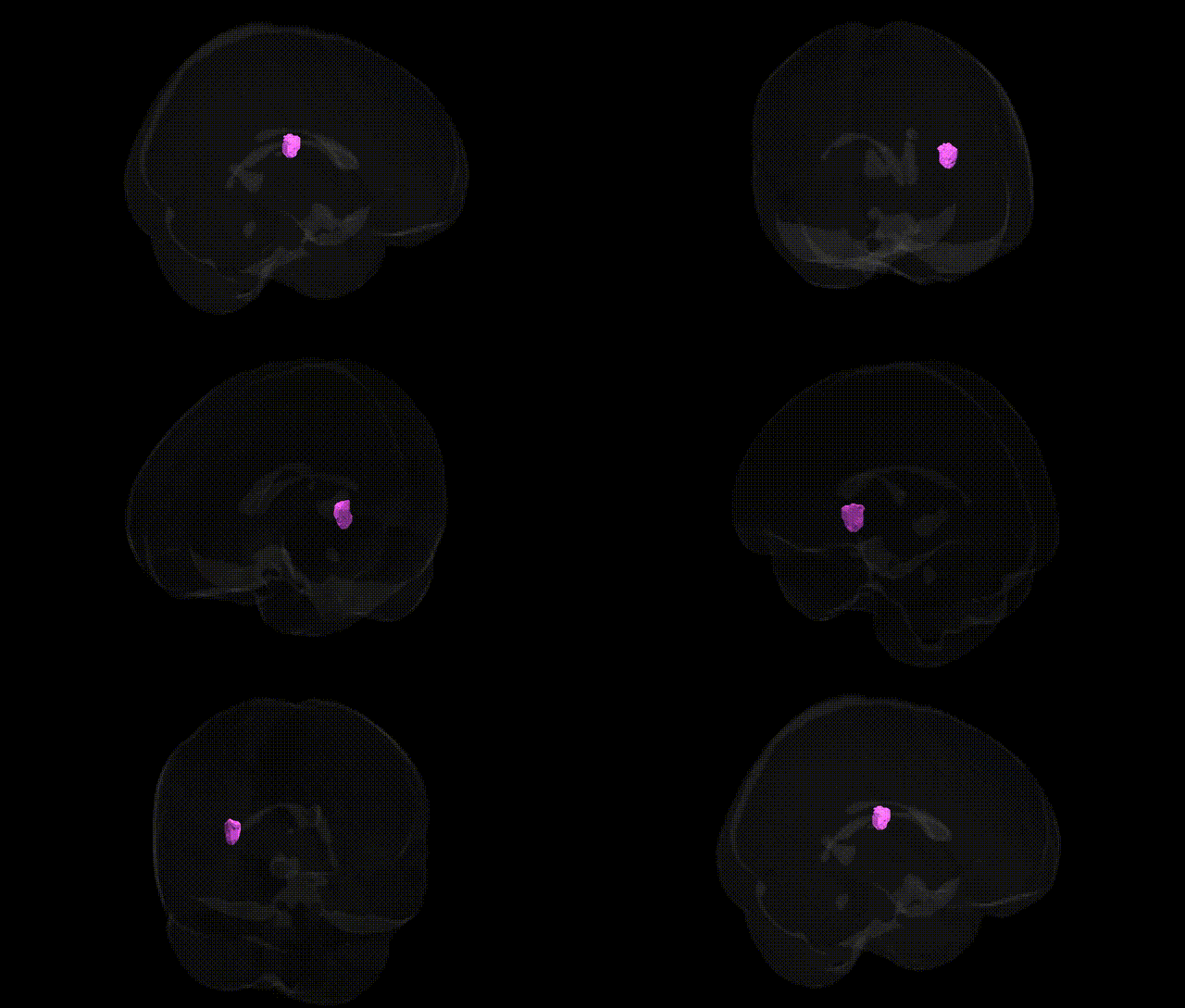
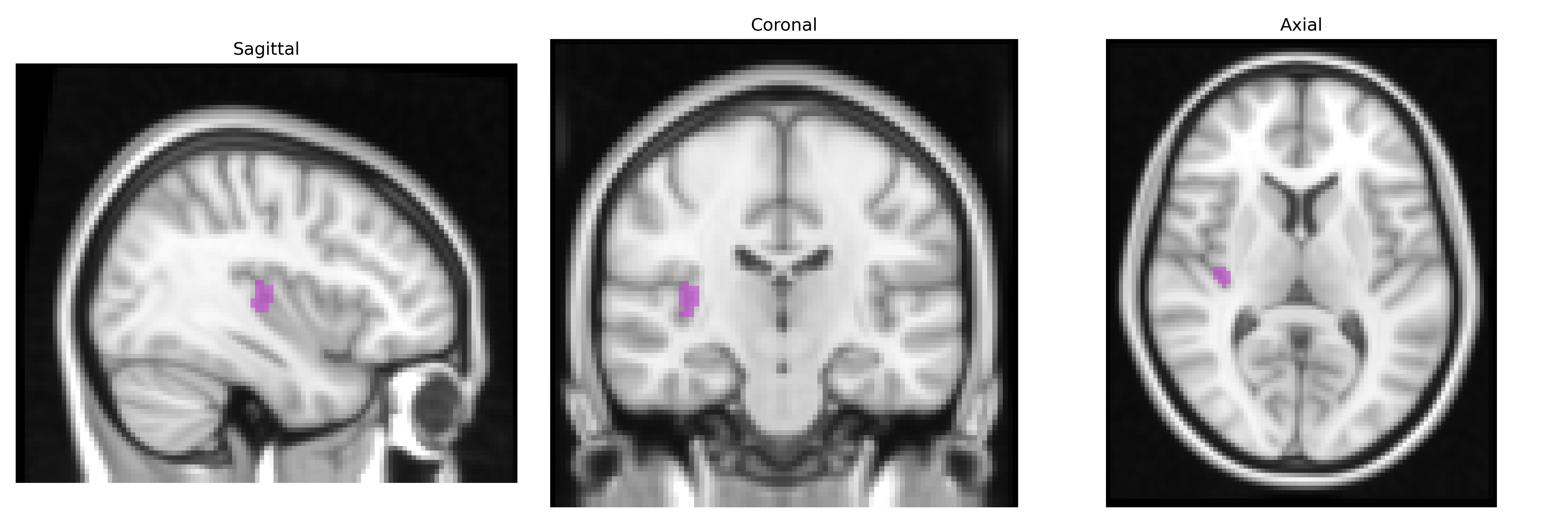
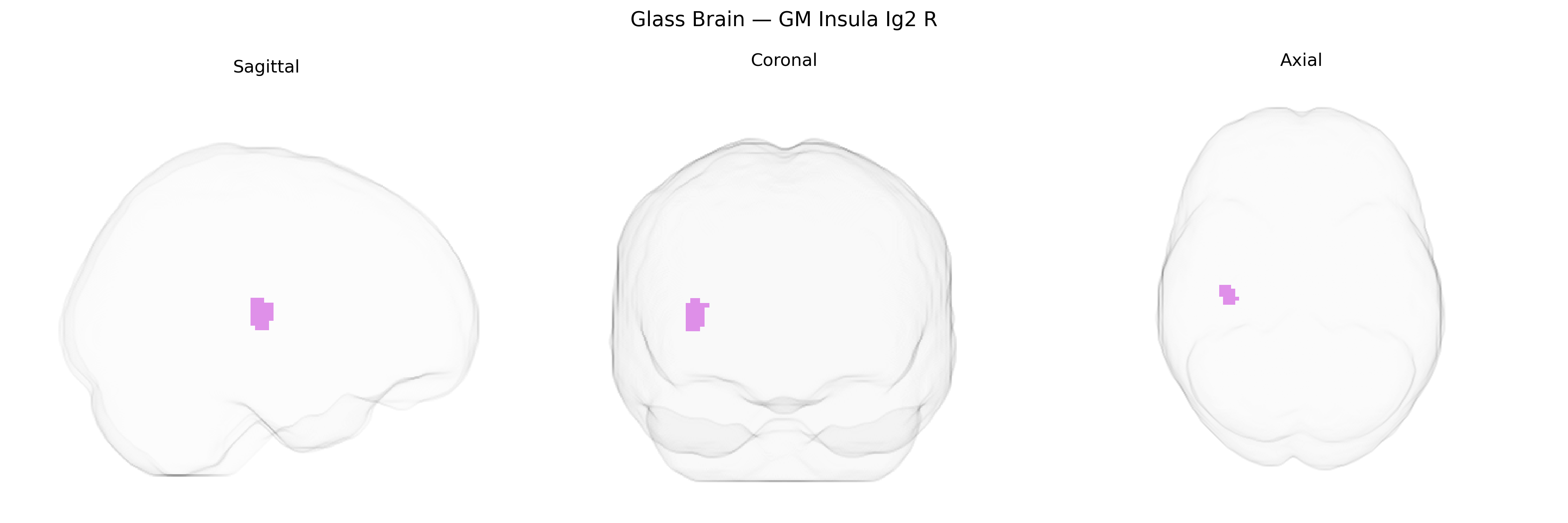
The bilateral GM Insula Ig2 R region from the Juelich maxprob thr25 2mm atlas corresponds to a granular subregion of the right insular cortex, typically associated with primary and secondary sensory processing and integration of interoceptive, somatosensory, and visceral information. As part of the insular lobe, this granular insular area receives multimodal input from thalamic nuclei and other cortical regions, contributing to functions such as pain perception, autonomic regulation, and aspects of emotional and cognitive processing linked to bodily states. Cytoarchitectonically, it is characterized by a well-developed granular layer IV, distinguishing it from agranular and dysgranular insular zones and indicating its role in early sensory processing within the insular hierarchy. There is no direct link for “Insula Ig2 R,” but it is a subregion of the Insular cortex.
The bilateral GM Insula Ig2 R region in the Juelich maxprob thr25 2mm atlas corresponds largely to the right granular insular cortex, a hub for interoception and salience processing, and genetic associations are generally inferred from broad insula- or salience-network–related imaging genetics rather than Ig2-specific studies. GWAS of cortical thickness and surface area have identified common variants in genes involved in neurodevelopment, synaptic function, and cell adhesion (e.g., HMGA2, TCF4, DCC, CNTNAP2, and loci near PLCL1 and GRIN2A) that influence insular morphology and connectivity; these structural and functional measures of the insula have, in turn, been genetically correlated with psychiatric and neurological traits, including major depressive disorder, schizophrenia, bipolar disorder, anxiety, addictions (especially smoking and alcohol use), and chronic pain, suggesting shared polygenic architecture. Large-scale ENIGMA and UK Biobank imaging genetics analyses report that insula anatomy and functional coupling within the salience and default-mode networks show heritable variation and overlap genetically with personality traits (e.g., neuroticism), cognitive performance, and risk-taking behavior, as well as with liability to obesity and cardiometabolic traits via interoceptive and autonomic circuitry. Although no GWAS has yet targeted the Ig2 subregion specifically, the granular right insula’s genetically influenced structure and connectivity appear consistently linked to the polygenic risk architecture of affective disorders, substance use, and pain-related conditions, positioning this atlas-defined region within a broader network of genetically modulated vulnerability to psychopathology and somatic symptom traits.
Overview generated by GPT-4o (2026).
Region ID: 121
Hemisphere: bilateral
Atlas: Juelich maxprob thr25 2mm
Full Quality Version: Download MP4
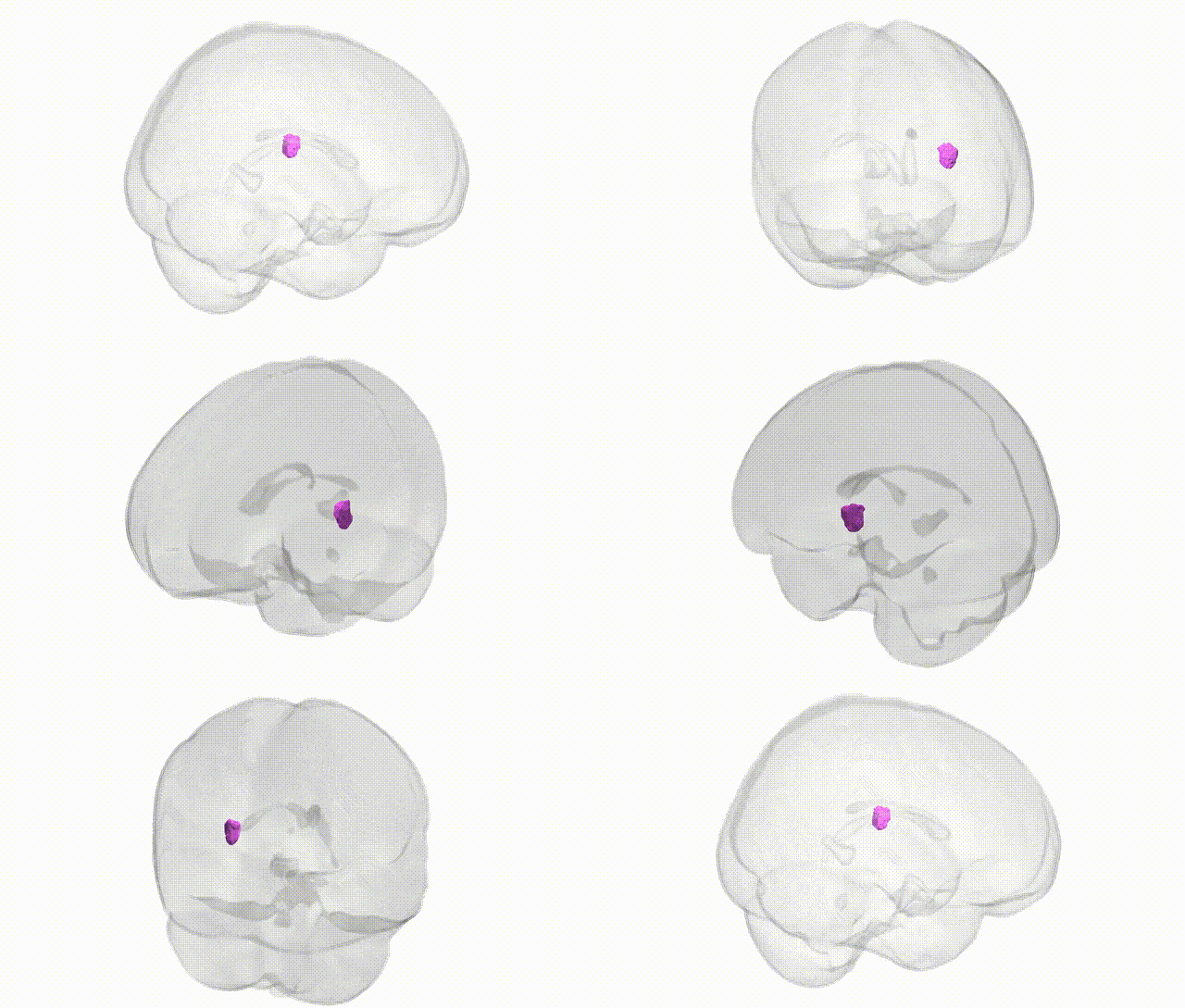
Full Quality Version: Download MP4
Wali Sidiqyar*, Gaurav Rudravaram*, Elyssa M. McMaster, Trent M. Schwartz, Adam M. Saunders, Kurt G. Schilling, Bennett A. Landman "Introducing SPINS: A Shared Public Visualization Library of Neuroanatomical Structures." Medical Imaging with Deep Learning- short paper
This resource is licensed under CC0 1.0 Universal (Public Domain).