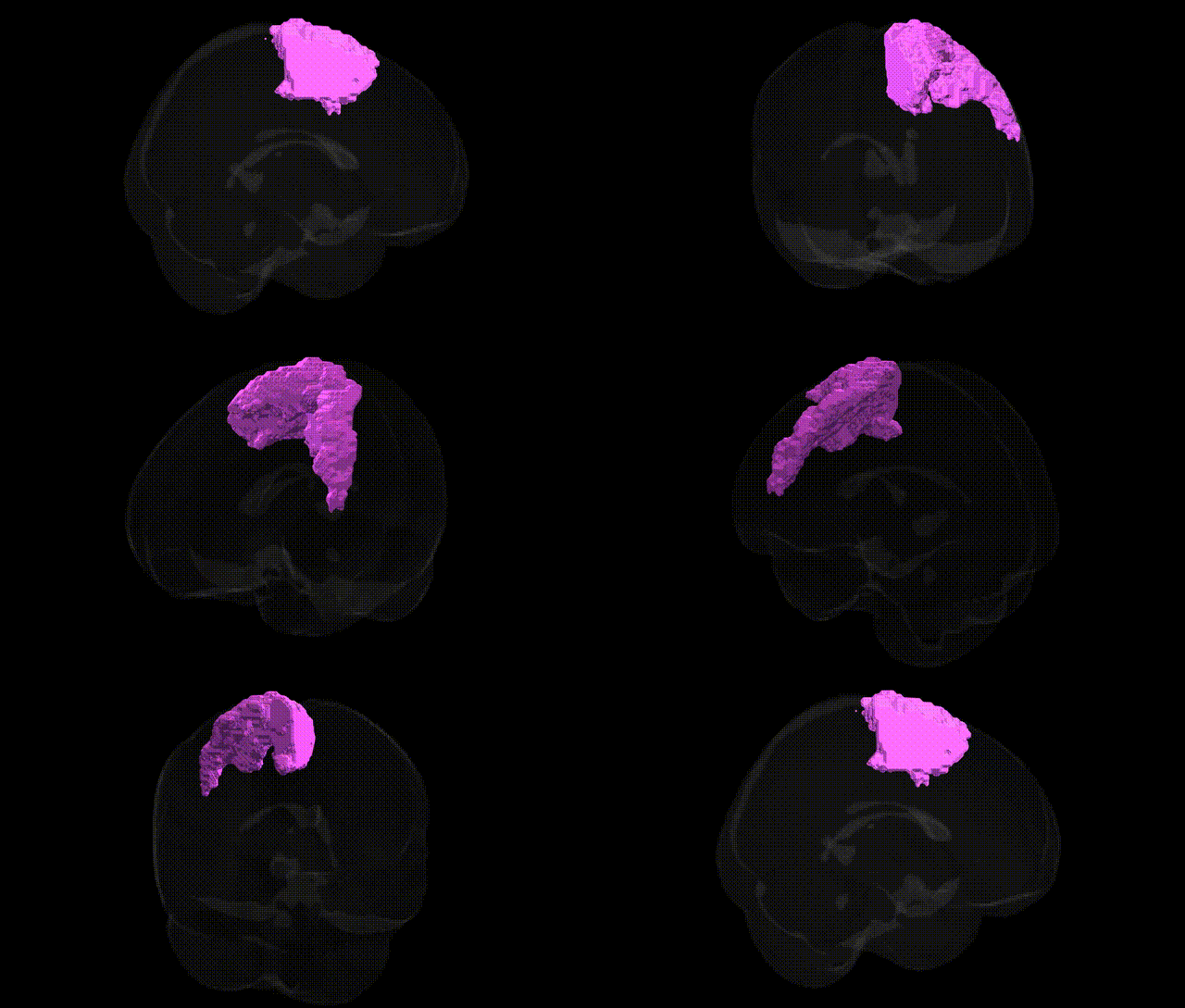
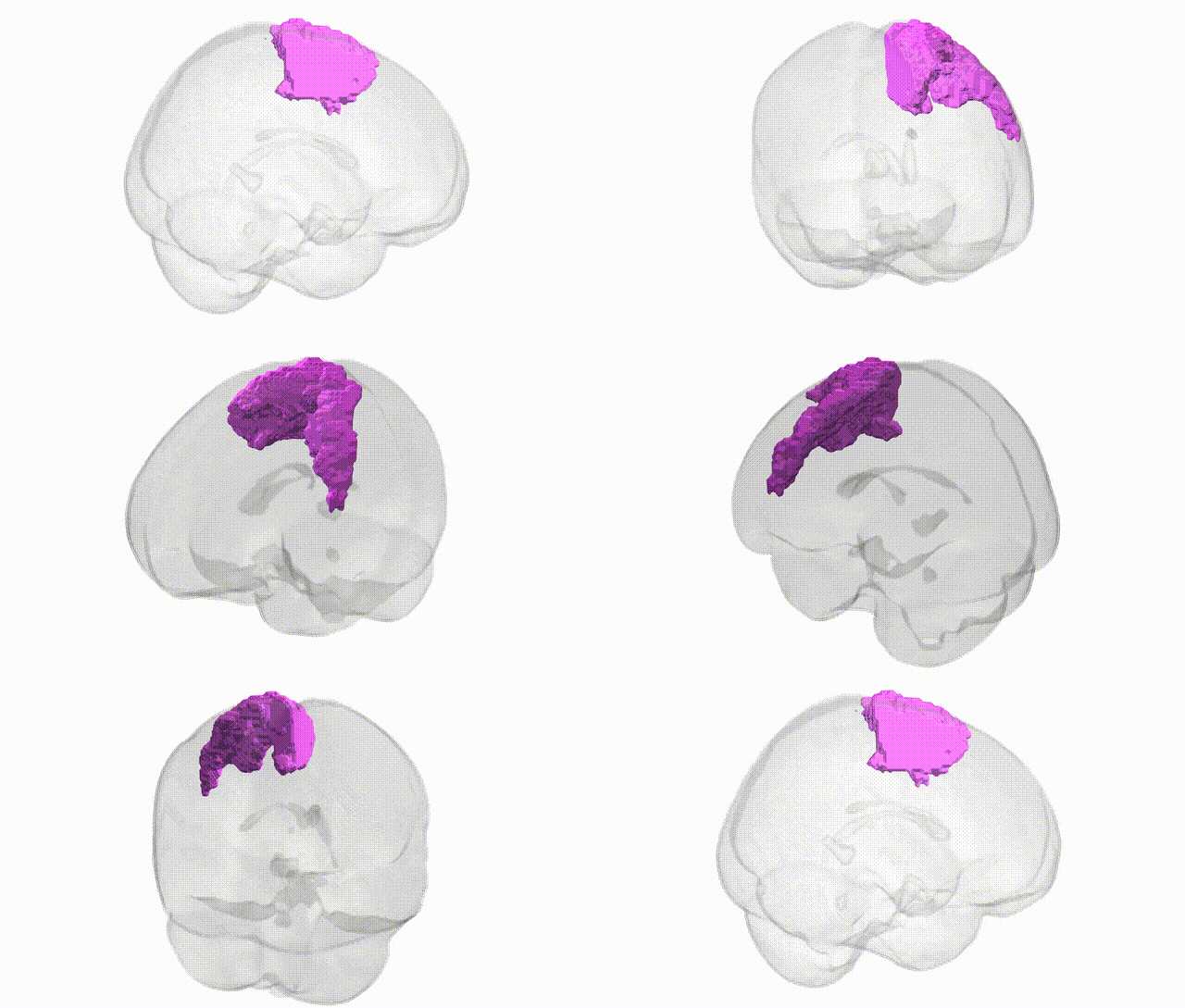
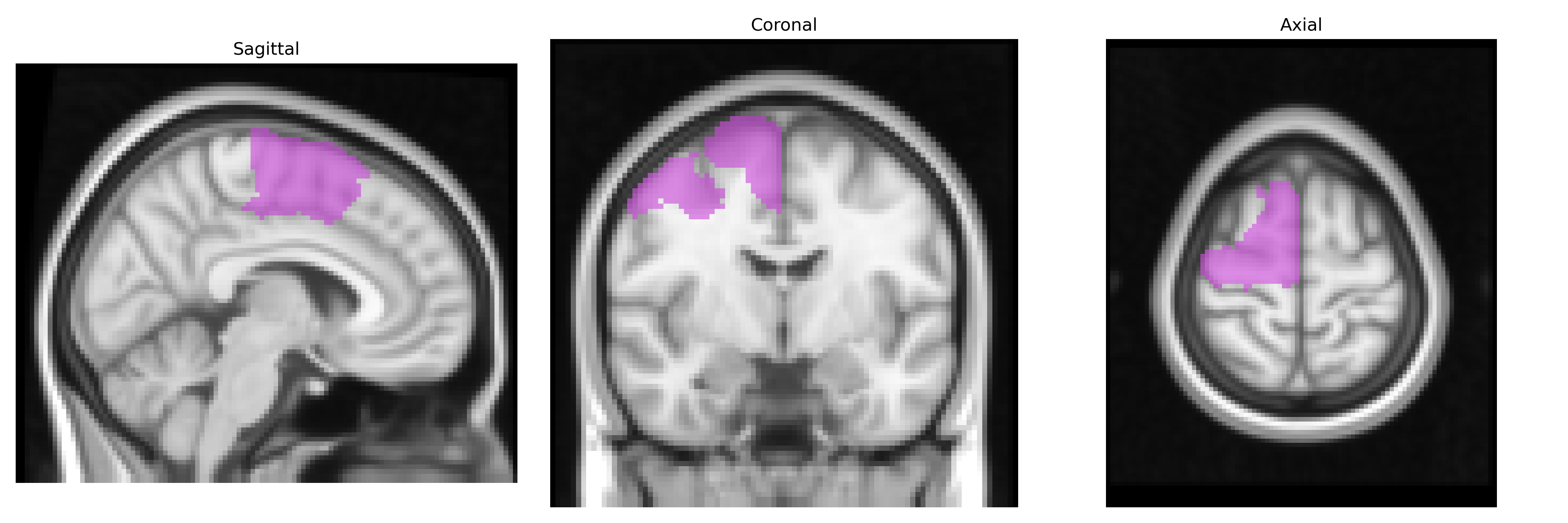
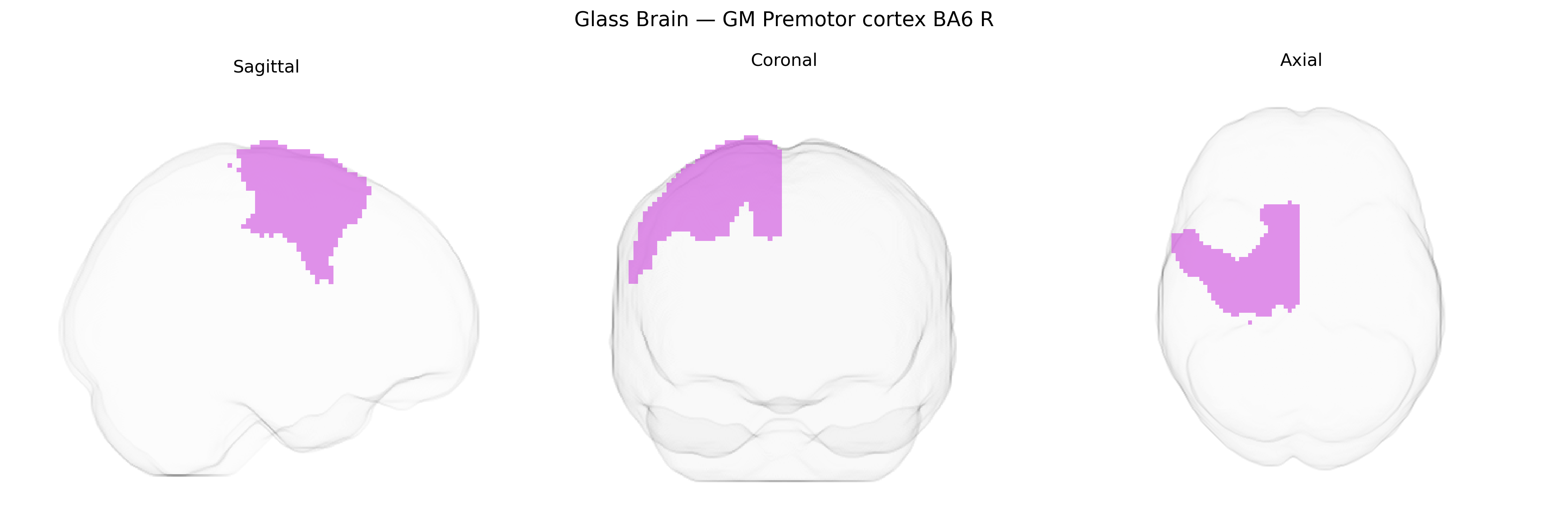
The bilateral GM Premotor cortex BA6 R, as defined in the Juelich maxprob thr25 2mm atlas, corresponds primarily to the premotor portion of Brodmann area 6 located anterior to the primary motor cortex along the precentral gyrus and superior frontal gyrus in both hemispheres, with the “R” label denoting the right-hemisphere–dominant or right-hemisphere–referenced component of this bilateral field. This region is implicated in higher-order motor control, including the planning, selection, and preparation of voluntary movements, integration of sensory cues for movement guidance, and coordination of complex motor sequences, often in conjunction with parietal and subcortical motor circuits. Neuronal populations in BA6 exhibit activity related to motor intention and motor imagery, contribute to the transformation of sensory input into motor commands, and participate in bilateral coordination and postural adjustments. Functionally, this area is frequently subdivided into dorsal (supplementary and pre-supplementary motor areas) and lateral premotor components, which collectively support goal-directed actions, motor learning, and contextual modulation of motor output. A closely related and encompassing structure is Brodmann area 6.
The premotor cortex (Brodmann area 6, including the Juelich maxprob BA6 R region) has been implicated in several genetic and GWAS-based findings, largely through imaging genetics and large-scale neuroimaging consortia. Variants in genes influencing synaptic plasticity, neurodevelopment, and motor circuitry—such as BDNF, CNTNAP2, and DISC1—have been associated with structural and functional alterations in premotor and adjacent motor regions, which are often treated collectively in imaging studies. GWAS of cortical thickness and surface area (e.g., ENIGMA and UK Biobank cohorts) have identified multiple loci affecting frontal and premotor cortex morphology, including regions overlapping BA6, with genes involved in neuronal migration, axon guidance, and myelination. Clinically, the premotor cortex is frequently implicated in neurodevelopmental and neuropsychiatric disorders with known genetic components, such as autism spectrum disorder, attention-deficit/hyperactivity disorder, and schizophrenia, in which risk variants are associated with altered connectivity and activation in frontal motor-preparatory networks. Moreover, GWAS of motor-related traits—such as fine motor skills, motor learning, and gait—have linked polygenic influences on frontal motor system organization to performance, indirectly implicating BA6 circuitry. However, most genetic findings refer to broader frontal and motor networks rather than specifically isolating the right BA6 premotor subregion, so current evidence for precise locus-level genetic associations to this Juelich-defined region is indirect and based on overlapping structural and functional parcellations.
Overview generated by GPT-4o (2026).
Region ID: 92
Hemisphere: bilateral
Atlas: Juelich maxprob thr25 2mm
Full Quality Version: Download MP4
Full Quality Version: Download MP4
Wali Sidiqyar*, Gaurav Rudravaram*, Elyssa M. McMaster, Trent M. Schwartz, Adam M. Saunders, Kurt G. Schilling, Bennett A. Landman "Introducing SPINS: A Shared Public Visualization Library of Neuroanatomical Structures." Medical Imaging with Deep Learning- short paper
This resource is licensed under CC0 1.0 Universal (Public Domain).