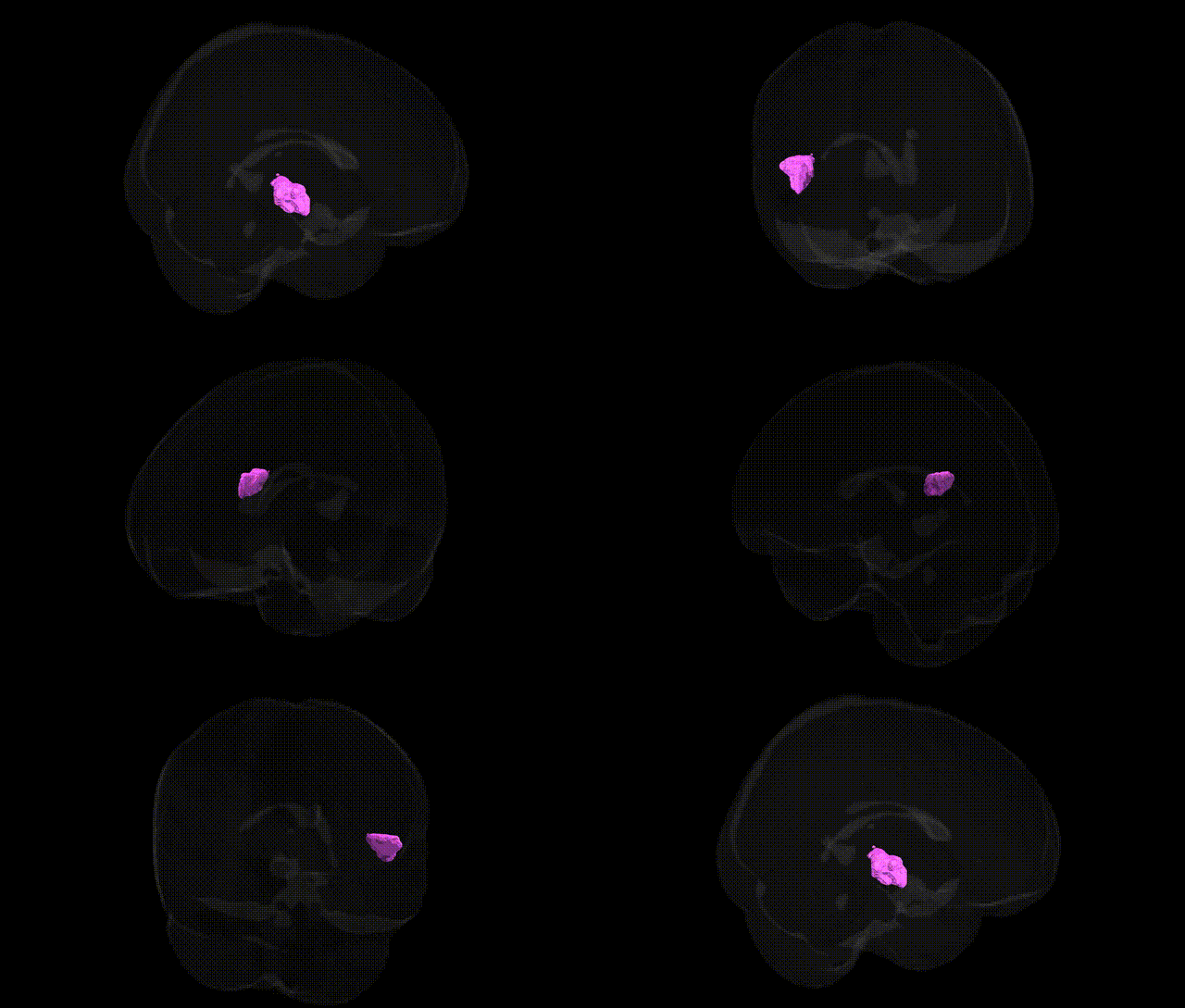
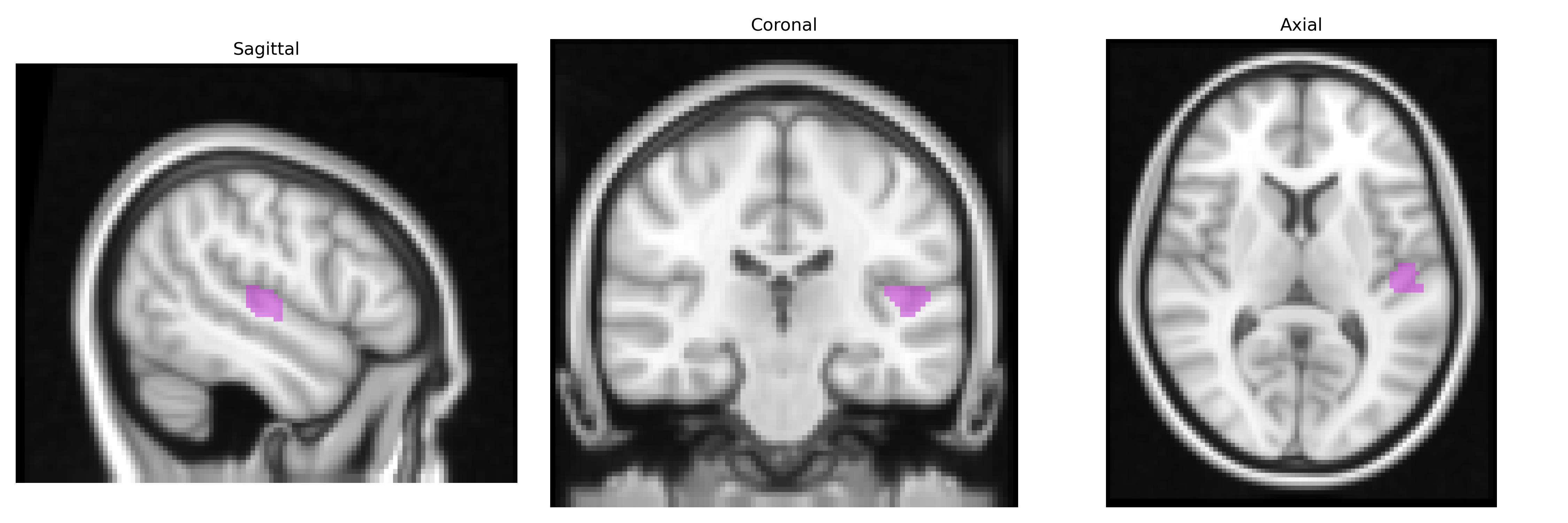
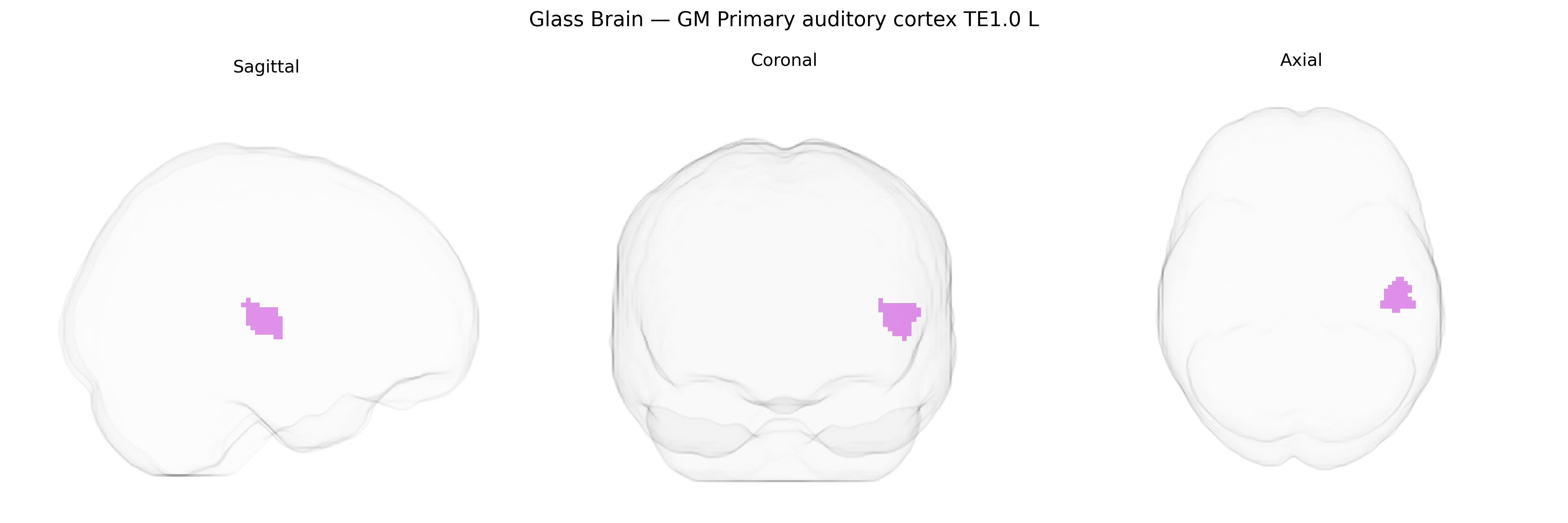
The bilateral GM Primary auditory cortex TE1.0 L in the Juelich maxprob thr25 2mm Atlas corresponds to the core part of Heschl’s gyrus in the left hemisphere, encompassing primary auditory cortex (A1), a cytoarchitectonically defined area specialized for the initial cortical processing of acoustic information. This region exhibits a dense granular layer (layer IV) and a characteristic laminar organization optimized for receiving thalamocortical input from the medial geniculate nucleus, supporting functions such as basic sound detection, frequency discrimination, temporal resolution, and the early stages of complex sound and speech analysis. Neurons in TE1.0 show tonotopic organization, with systematic mapping of sound frequency, and serve as a gateway for auditory information to higher-order auditory association areas in the superior temporal cortex, thereby contributing to auditory perception and language-related processing. Since there is no direct Wikipedia article for TE1.0, a closely related structure is provided: Primary auditory cortex.
The bilateral GM Primary auditory cortex TE1.0 L region (from the Juelich maxprob thr25 2mm atlas) has been implicated in several genetically influenced traits and disorders primarily through imaging-genetics and GWAS-based imaging studies, though locus-level specificity is still emerging. Variants in genes involved in synaptic function, neurodevelopment, and myelination (for example GRIN2A, FOXP2, DCDC2, KIAA0319, and CNTNAP2) have been associated with auditory cortical structure and function, particularly in relation to language, reading, and speech processing, and these often implicate Heschl’s gyrus and primary auditory fields overlapping TE1.0. Large-scale GWAS of cortical thickness and surface area (e.g., ENIGMA and UK Biobank–based studies) have identified polygenic influences on temporal lobe and Heschl’s gyrus morphology, linking loci near genes such as TBR1, LMX1A, and microtubule- or axon-guidance–related genes, although TE1.0-specific hits are typically reported at the level of broader auditory or superior temporal regions rather than this exact cytoarchitectonic field. Disorders with strong genetic components that show altered primary auditory cortex structure or function include developmental language disorder, dyslexia, autism spectrum disorder, and schizophrenia, with convergent but not TE1.0-exclusive associations to genes regulating cortical patterning, synaptic plasticity, and glutamatergic signaling. Tinnitus and hearing-related traits have also shown associations with genes related to cochlear and central auditory pathways (e.g., ESRRG, PCDH15), and neuroimaging work often localizes related functional changes to primary and secondary auditory cortices, including regions overlapping TE1.0. Overall, current genetic evidence points to polygenic, distributed influences on the TE1.0 region, embedded within broader auditory-temporal networks rather than uniquely defined, single-region genetic signatures.
Overview generated by GPT-4o (2026).
Region ID: 41
Hemisphere: bilateral
Atlas: Juelich maxprob thr25 2mm
Full Quality Version: Download MP4
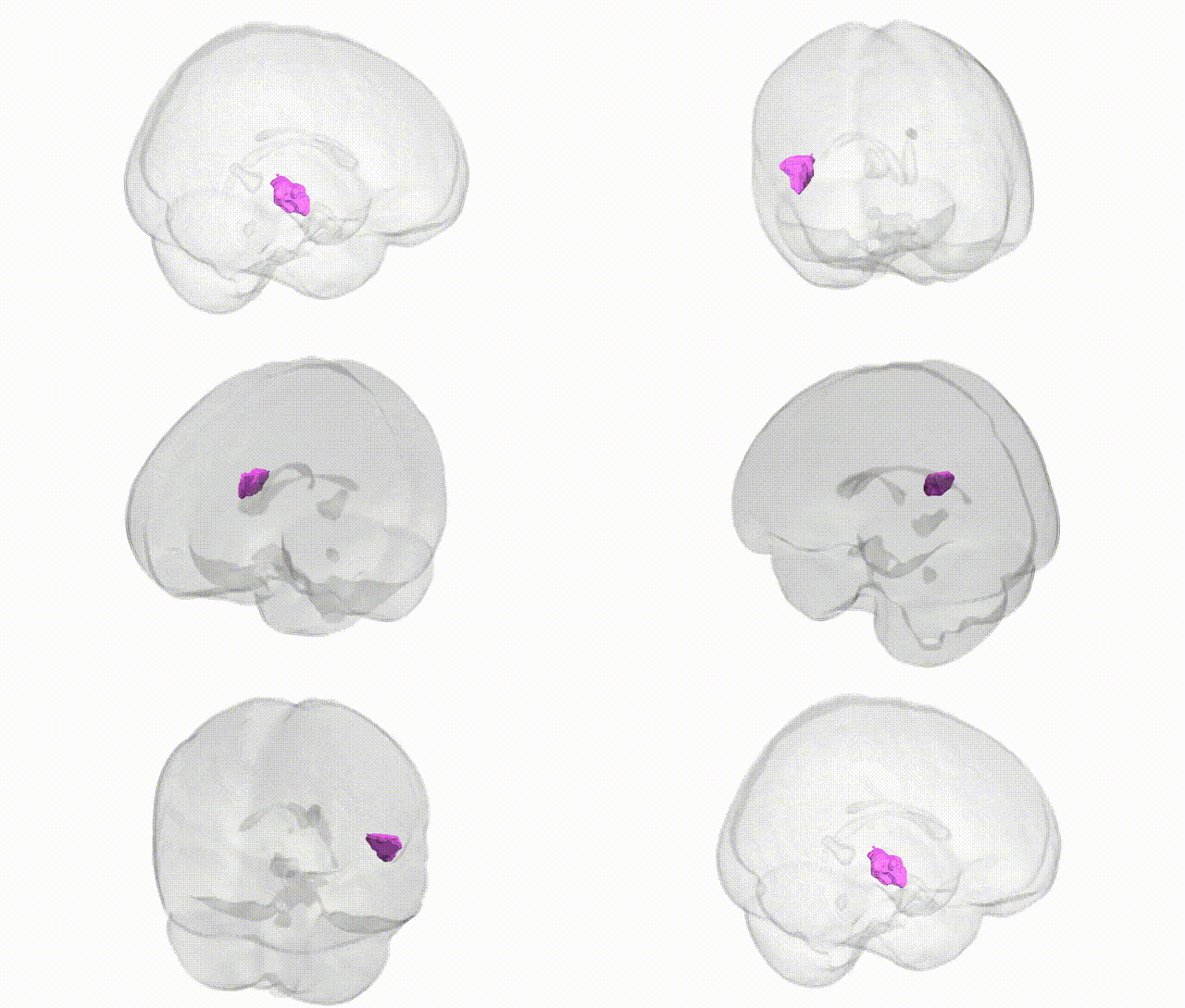
Full Quality Version: Download MP4
Wali Sidiqyar*, Gaurav Rudravaram*, Elyssa M. McMaster, Trent M. Schwartz, Adam M. Saunders, Kurt G. Schilling, Bennett A. Landman "Introducing SPINS: A Shared Public Visualization Library of Neuroanatomical Structures." Medical Imaging with Deep Learning- short paper
This resource is licensed under CC0 1.0 Universal (Public Domain).