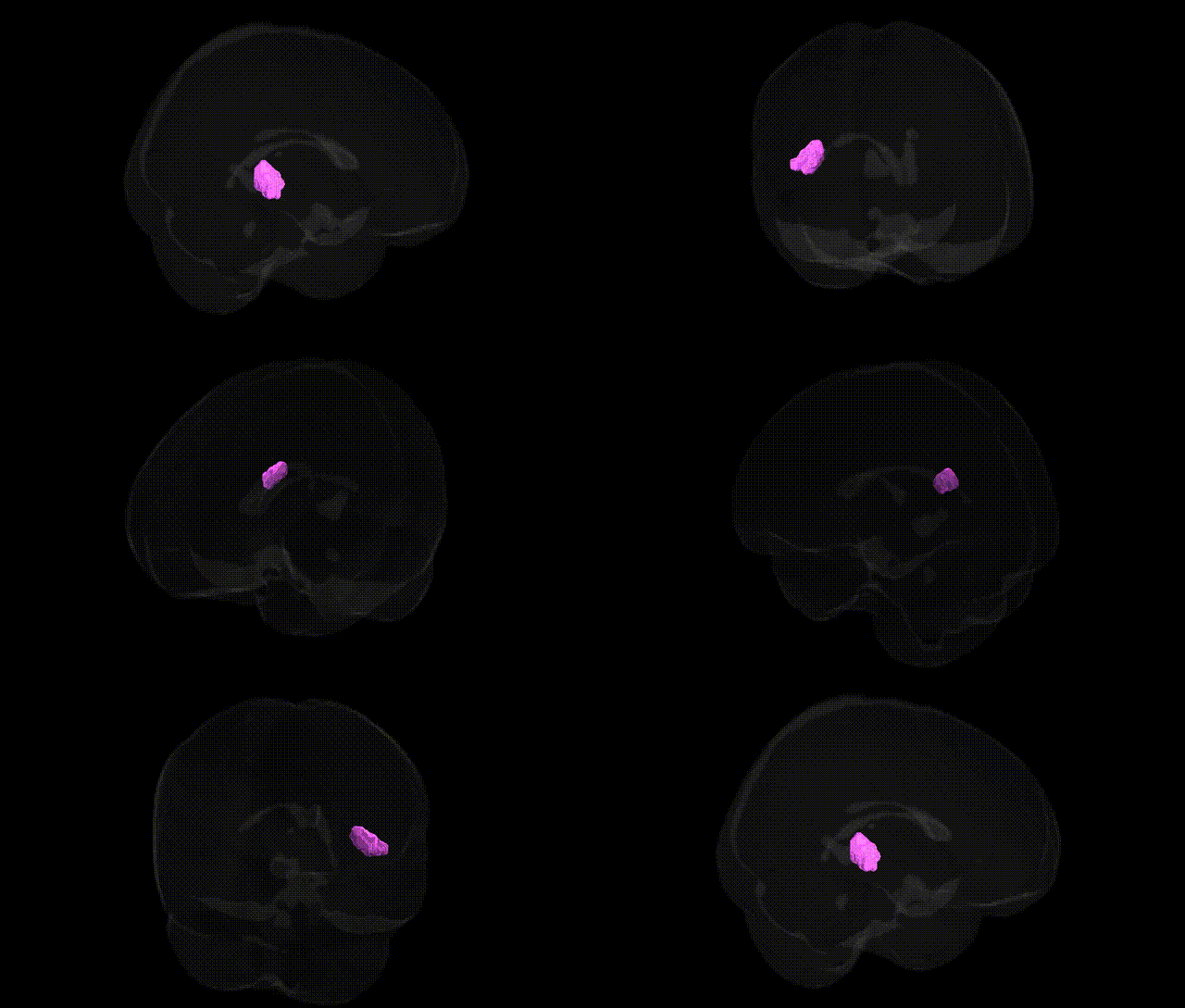
The bilateral GM Primary auditory cortex TE1.1 L, as defined in the Juelich maxprob thr25 2mm Atlas, corresponds to a cytoarchitectonic subdivision of Heschl’s gyrus within the primary auditory cortex (A1) of the temporal lobe. This region is characterized by granular neocortex (koniocortex), dense thalamocortical input from the medial geniculate nucleus, and precise tonotopic organization for early-stage processing of acoustic features such as sound frequency, intensity, and temporal structure. TE1.1 lies within the broader auditory core areas and serves as a principal cortical entry point for auditory information, supporting basic sound perception that underlies more complex functions such as speech and music processing in adjacent belt and parabelt regions. There is no direct Wikipedia article for TE1.1; a closely related structure is the Primary auditory cortex.
The bilateral GM primary auditory cortex TE1.1 (L) from the Juelich maxprob atlas corresponds to core Heschl’s gyrus, a region whose structure and function show heritable variation and multiple genetic associations, though most evidence is indirect via imaging genetics and GWAS of auditory or cortical traits. Large-scale neuroimaging GWAS (e.g., ENIGMA, UK Biobank) have identified common variants near genes involved in neurodevelopment, synaptic function, and axon guidance (such as DCDC2, KIAA0319 and other language/auditory-related loci) that correlate with cortical thickness, surface area, or gyrification of Heschl’s gyrus or adjacent superior temporal areas implicated in early auditory processing. TE1.1 lies within networks affected in developmental language disorders, dyslexia, and stuttering, for which GWAS and candidate-gene studies implicate genes including FOXP2, CNTNAP2, DCDC2, ROBO1, and others, with imaging work linking risk alleles to altered microstructure or activation of primary and secondary auditory cortices. Hearing-related GWAS (for sensorineural hearing loss, tinnitus, and audiometric thresholds) have highlighted multiple loci in ion-channel, hair-cell, and synaptic genes (e.g., PCDH20, GRM7, GJB2 family members) whose effects manifest centrally in altered auditory cortex responses, though region-specific TE1.1 findings are usually inferred from functional or structural connectivity rather than direct locus-to-region mapping. Psychiatric and neurodevelopmental GWAS for schizophrenia, autism spectrum disorder, and major depression, which implicate large polygenic architectures involving synaptic and neurodevelopmental genes (e.g., CACNA1C, GRIN2A, complement pathway genes), frequently show case–control differences in Heschl’s gyrus volume and activation, suggesting that genetic risk acts partly through circuits that include TE1.1, even if no single variant is uniquely specific to this subfield. Overall, TE1.1 emerges as a highly heritable early auditory hub whose morphology and function are modulated by polygenic influences linked to language and reading disorders, auditory perception and hearing traits, and broader neuropsychiatric risk, rather than by any one gene or variant uniquely tied to this precise Juelich parcel.
Overview generated by GPT-4o (2026).
Region ID: 43
Hemisphere: bilateral
Atlas: Juelich maxprob thr25 2mm
Full Quality Version: Download MP4
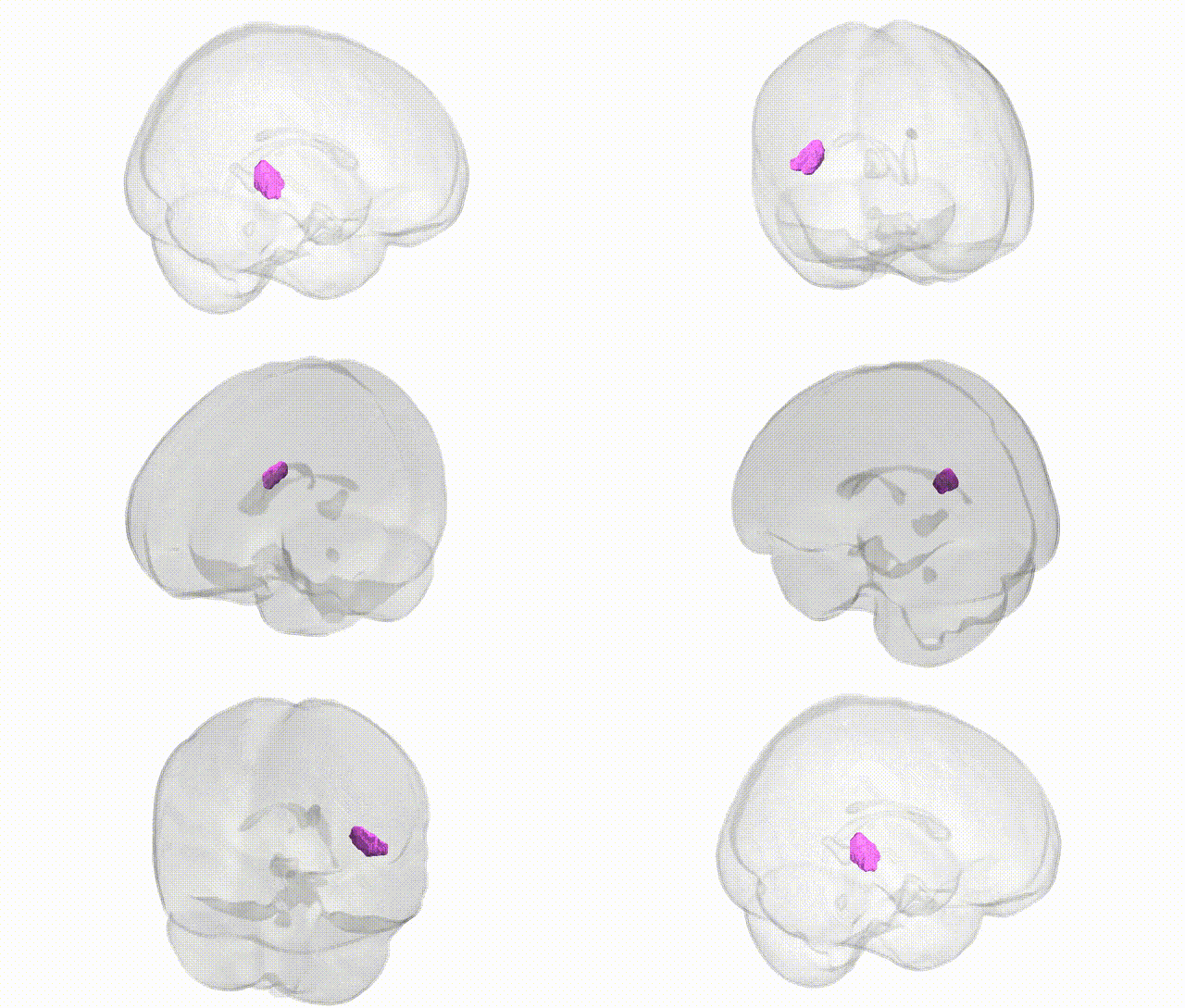
Full Quality Version: Download MP4
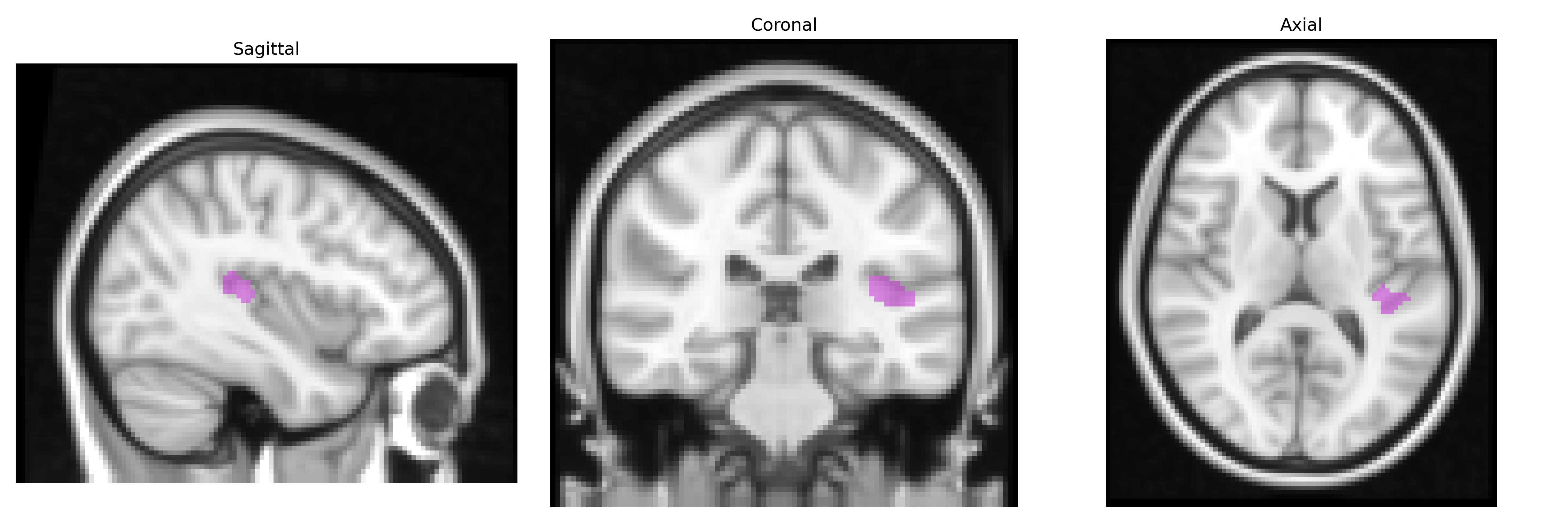
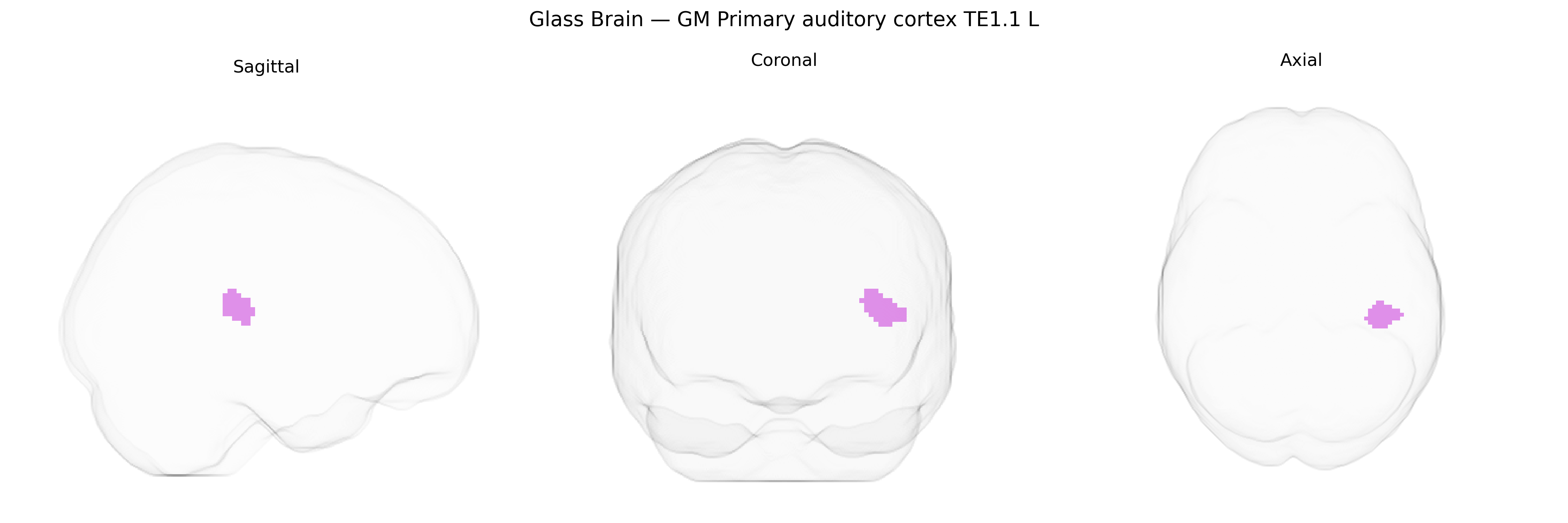
Wali Sidiqyar*, Gaurav Rudravaram*, Elyssa M. McMaster, Trent M. Schwartz, Adam M. Saunders, Kurt G. Schilling, Bennett A. Landman "Introducing SPINS: A Shared Public Visualization Library of Neuroanatomical Structures." Medical Imaging with Deep Learning- short paper
This resource is licensed under CC0 1.0 Universal (Public Domain).