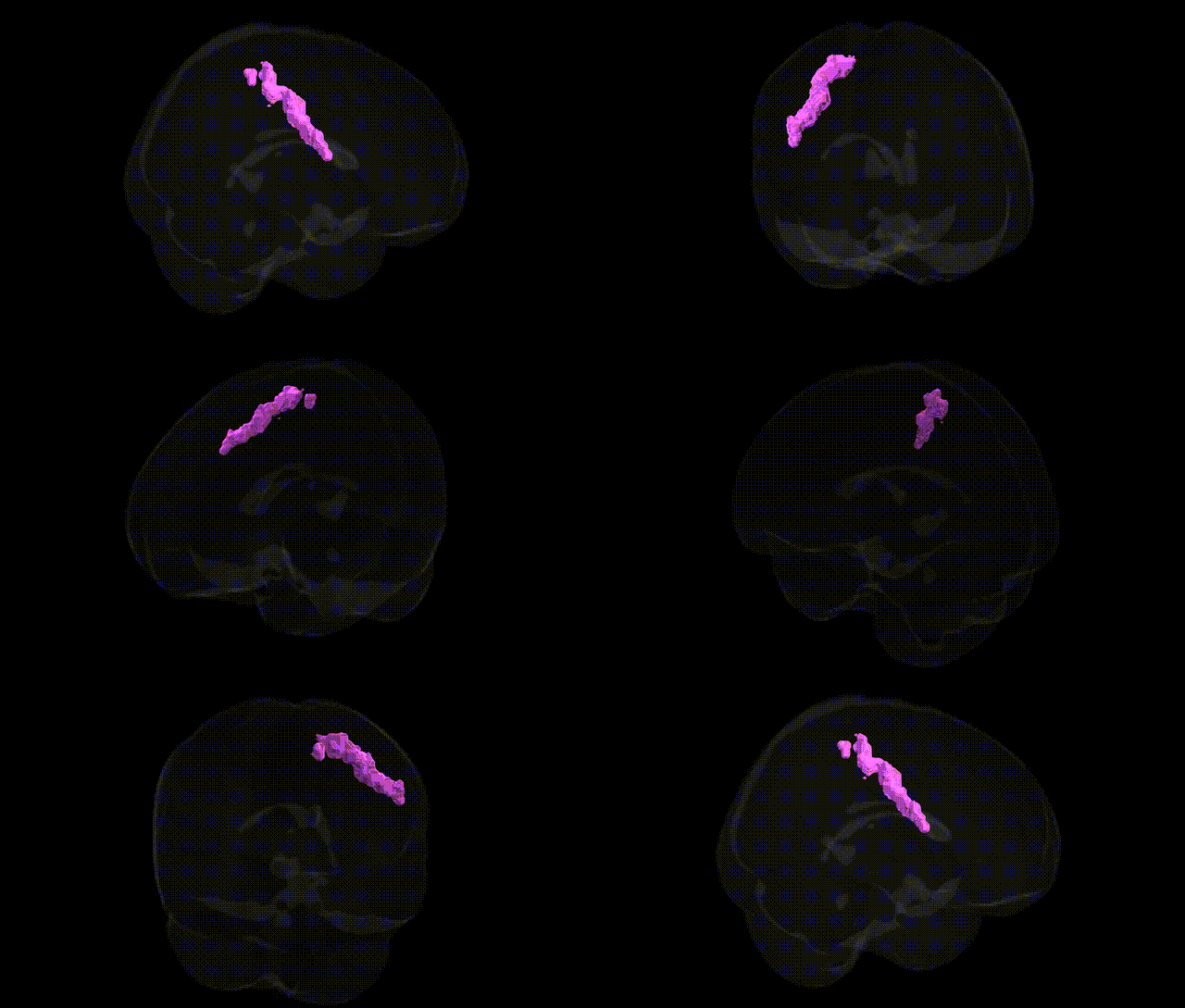
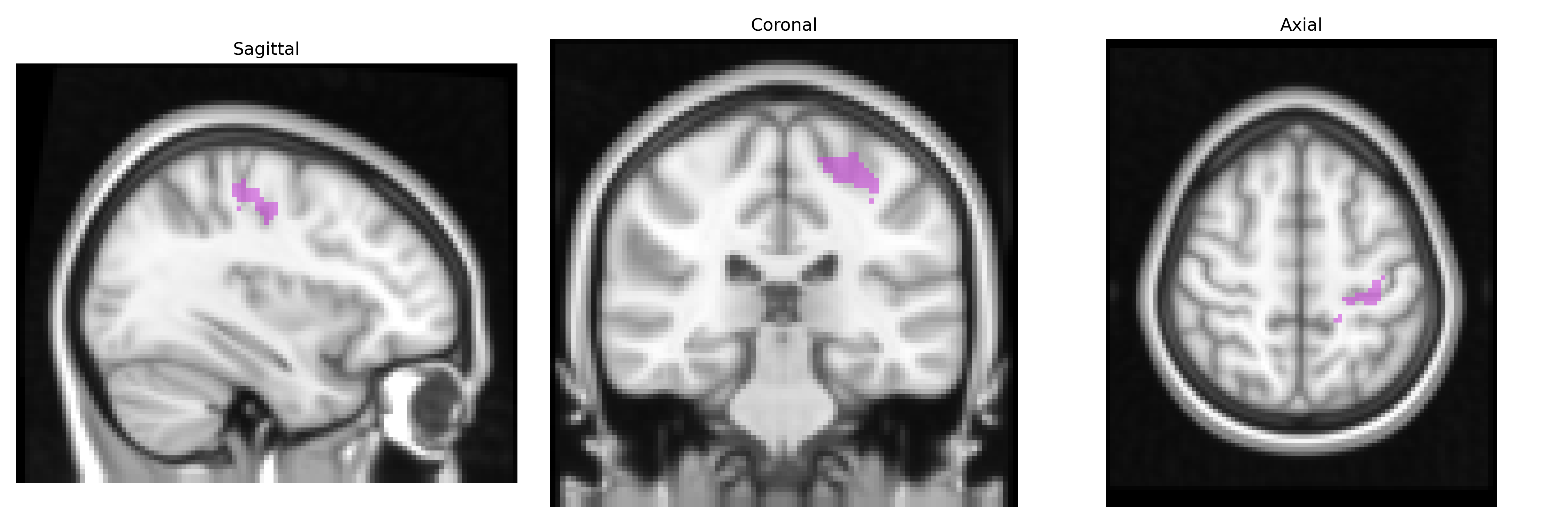
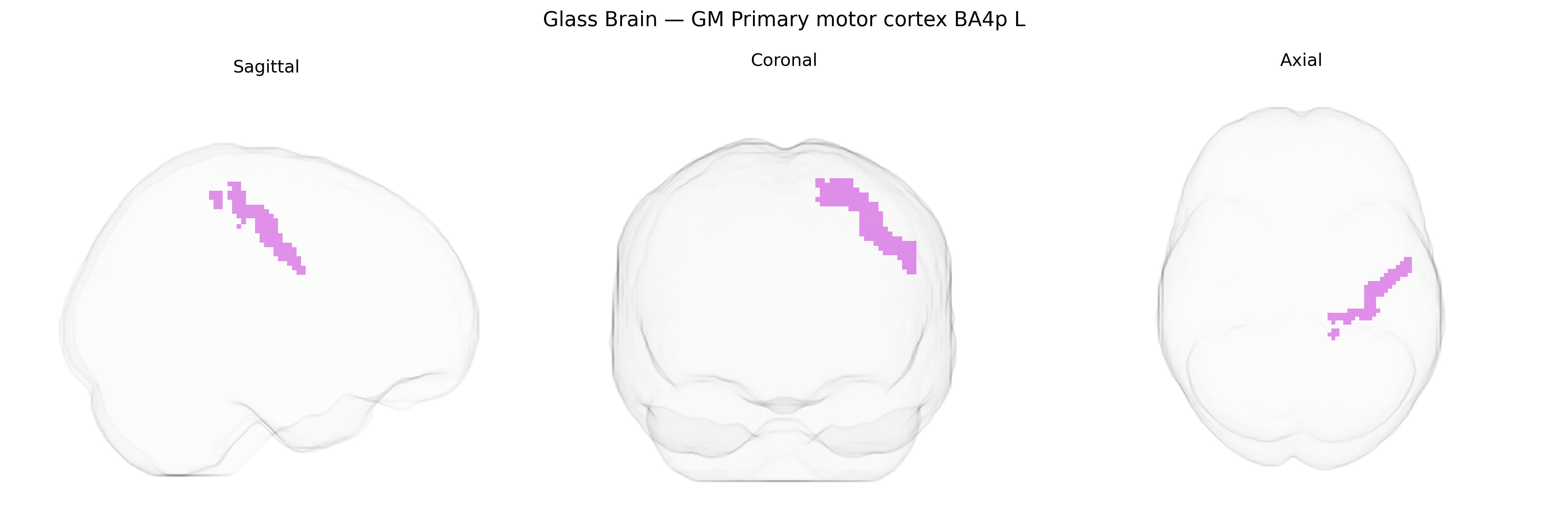
The bilateral GM Primary motor cortex BA4p L from the Juelich maxprob thr25 2mm atlas corresponds to the granular, posterior subdivision of Brodmann area 4 in the left hemisphere, located in the precentral gyrus of the frontal lobe and forming a core part of the primary motor cortex responsible for voluntary movement execution. This region is characterized by a distinct cytoarchitecture with prominent Betz cells in layer V that give rise to corticospinal and corticobulbar projections, exerting direct control over spinal motor neurons and brainstem motor nuclei. Functionally, BA4p is involved in fine motor control, especially of distal musculature such as the fingers and hand, and participates in somatotopically organized motor representations. It integrates inputs from premotor and somatosensory cortices and sends outputs to subcortical motor structures, contributing to motor planning-to-execution pathways and sensorimotor feedback loops. There is no direct Wikipedia article for “BA4p”; a closely related and encompassing structure is the Primary motor cortex.
The bilateral GM primary motor cortex BA4p (L) from the Juelich maxprob thr25 2 mm atlas overlaps with the dorsal precentral gyrus and has been repeatedly implicated in genetic studies of motor and neuropsychiatric traits, although few GWAS target this cytoarchitectonic subregion specifically. Large-scale imaging–genetics consortia (e.g., ENIGMA, UK Biobank) report that interindividual variation in cortical thickness and surface area of primary motor regions, including BA4p, shows significant SNP-based heritability and polygenic influences, with notable contributions from genes involved in neurodevelopment, synaptic signaling, and myelination (such as MIR137, MAPT, and multiple loci near calcium-channel and cell-adhesion genes). Structural and functional alterations in this region are consistently linked to monogenic and polygenic forms of movement disorders—particularly amyotrophic lateral sclerosis, hereditary spastic paraplegia, and some forms of dystonia—where mutations in genes like SOD1, C9orf72, SPG7, and others are associated with corticospinal tract and primary motor cortex degeneration or hyperexcitability. GWAS of motor-related endophenotypes (e.g., reaction time, grip strength, gait measures) often show polygenic overlap with cortical motor areas, while GWAS of neurodevelopmental and psychiatric disorders, including autism spectrum disorder, ADHD, schizophrenia, and major depression, identify risk loci whose carriers exhibit altered activation or morphology in primary motor cortex in imaging–genetics studies, suggesting shared genetic influences on motor and higher-order networks that encompass BA4p.
Overview generated by GPT-4o (2026).
Region ID: 49
Hemisphere: bilateral
Atlas: Juelich maxprob thr25 2mm
Full Quality Version: Download MP4
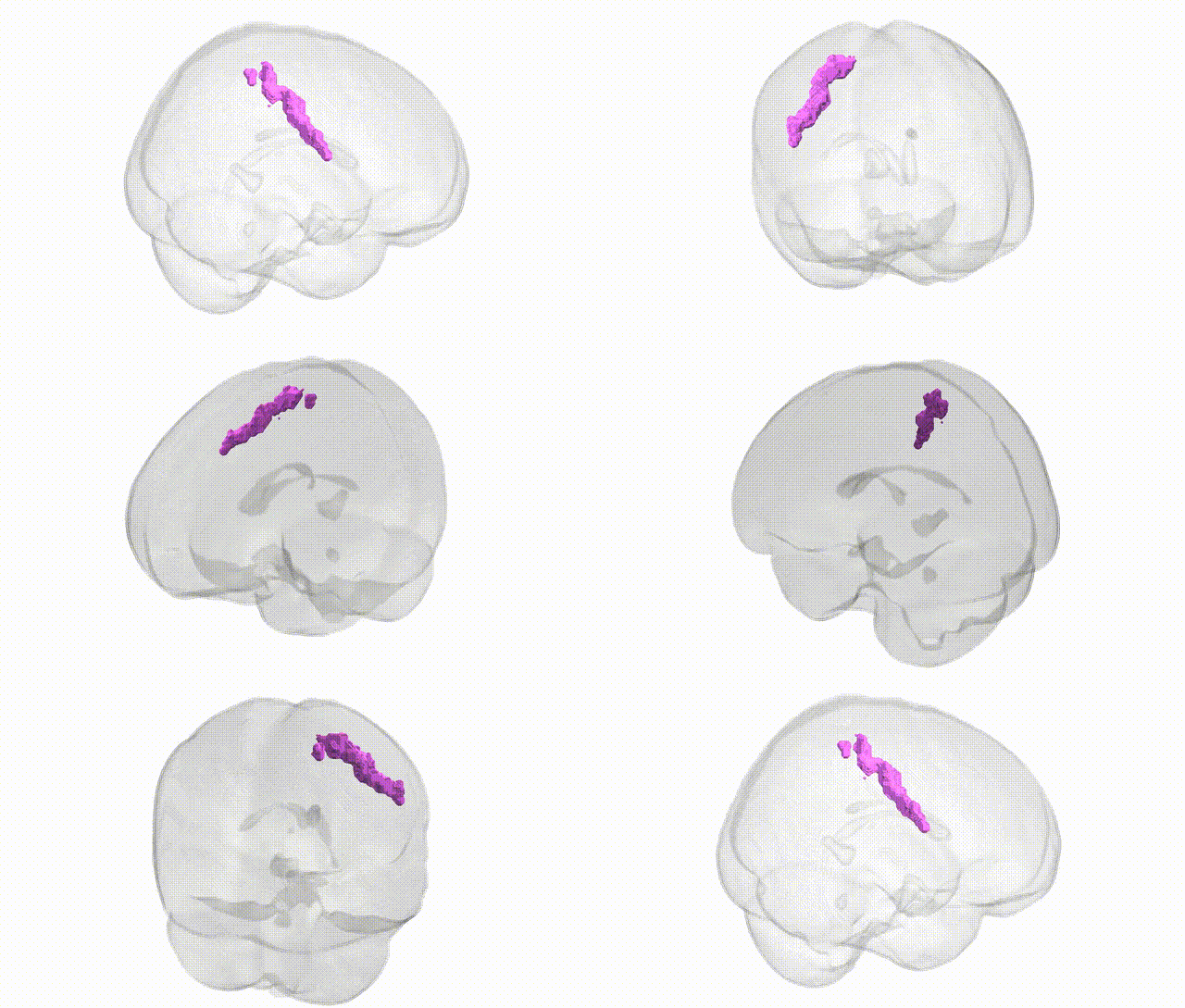
Full Quality Version: Download MP4
Wali Sidiqyar*, Gaurav Rudravaram*, Elyssa M. McMaster, Trent M. Schwartz, Adam M. Saunders, Kurt G. Schilling, Bennett A. Landman "Introducing SPINS: A Shared Public Visualization Library of Neuroanatomical Structures." Medical Imaging with Deep Learning- short paper
This resource is licensed under CC0 1.0 Universal (Public Domain).