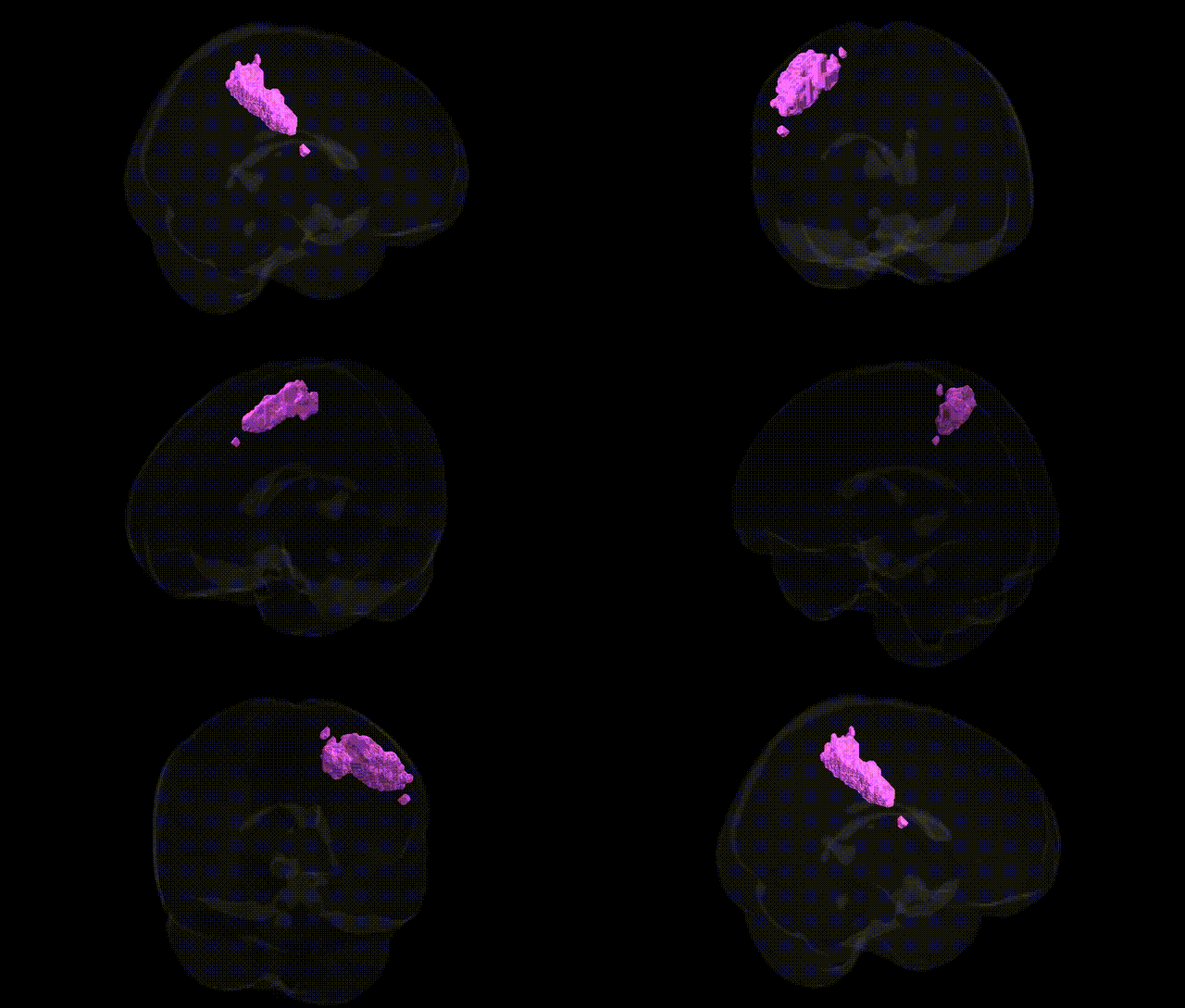
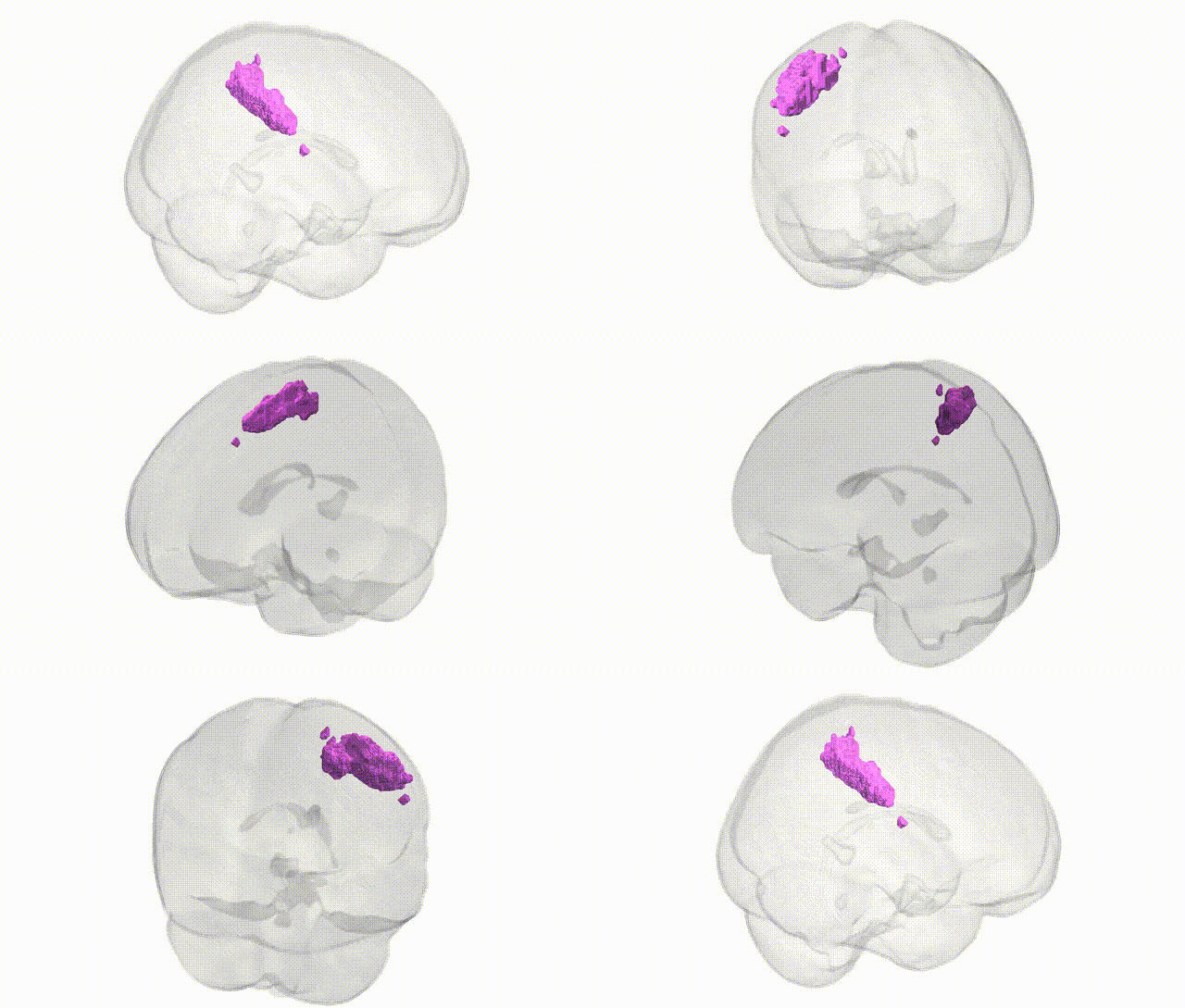
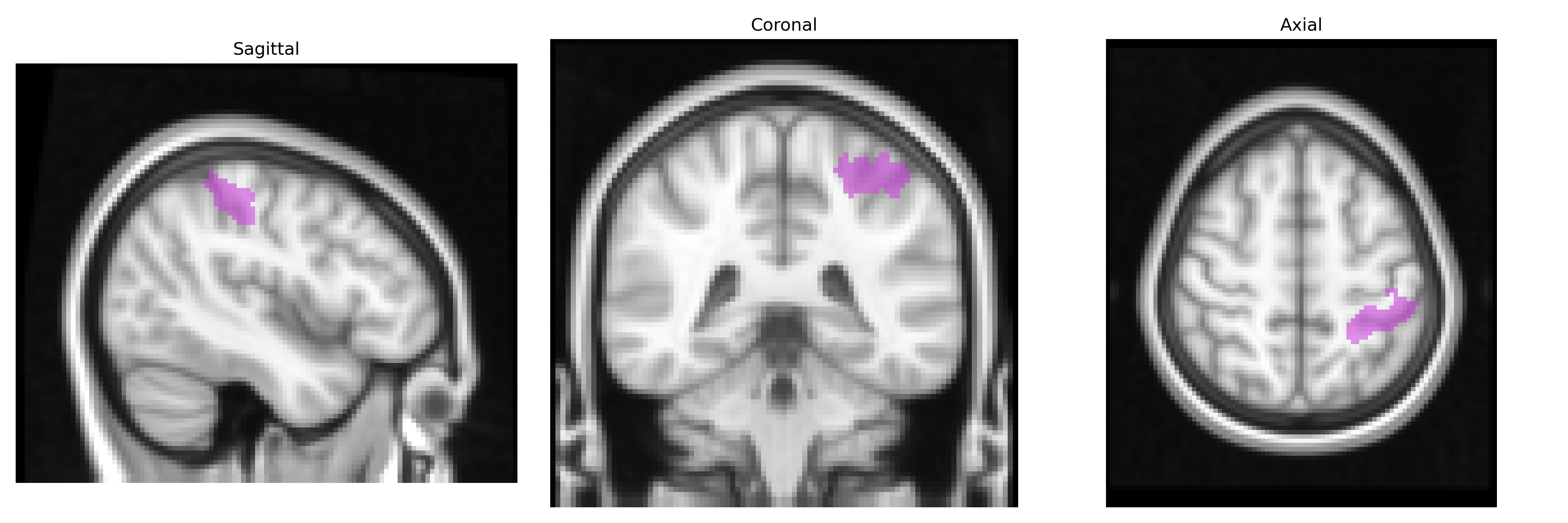
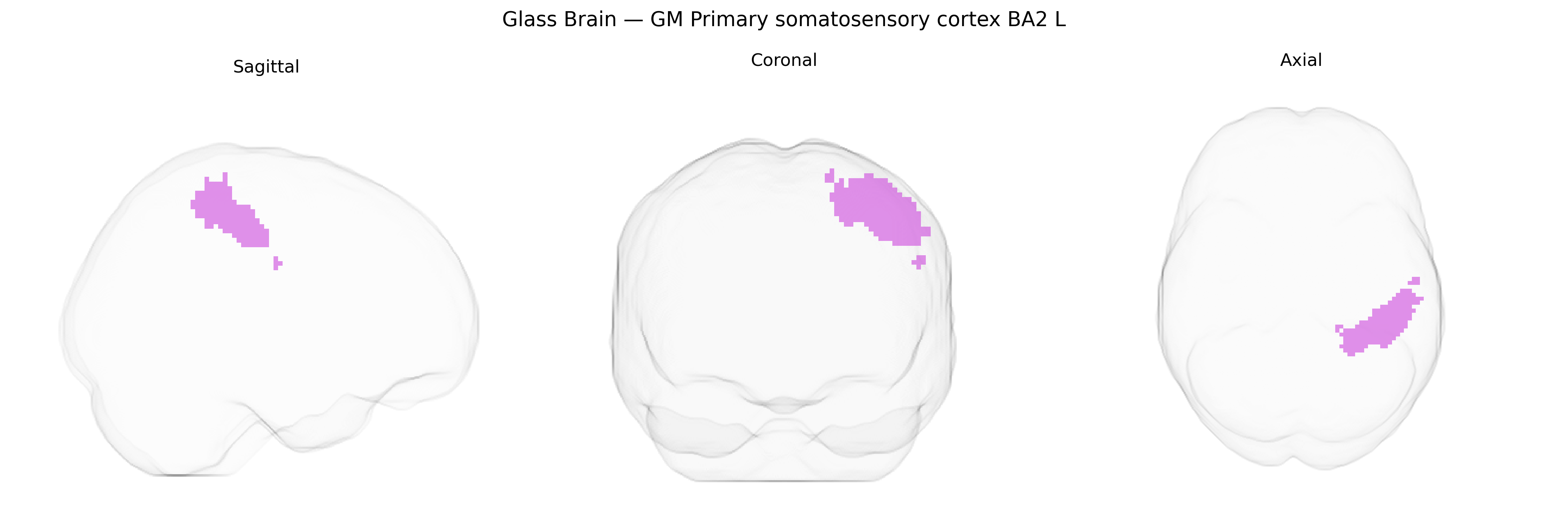
The bilateral GM Primary somatosensory cortex BA2 L (from the Juelich maxprob thr25 2mm Atlas) corresponds to Brodmann area 2 within the postcentral gyrus, forming part of the primary somatosensory cortex in the parietal lobe. This region is involved in higher-order processing of somatosensory information, integrating inputs from cutaneous and proprioceptive receptors to support complex tactile functions such as size, shape, and texture discrimination, as well as aspects of sensorimotor integration important for object manipulation and hand function. BA2 lies posterior to BA3 and BA1 and receives convergent input from these areas, contributing to a more synthesized representation of the body’s somatosensory state. There is no dedicated Wikipedia article specifically for BA2; a closely related structure is the Primary somatosensory cortex.
The bilateral GM primary somatosensory cortex BA2 (Juelich maxprob thr25 2 mm) has been implicated in several genetic and neuropsychiatric contexts, although direct, region-specific GWAS associations are relatively sparse and typically inferred from broader somatosensory or parietal cortex findings. Imaging–genetics and large-scale consortia (e.g., ENIGMA, UK Biobank) report that common variants in genes related to neuronal development, synaptic function, and myelination (such as BDNF, NTRK2, and multiple glutamatergic and GABAergic pathway genes) modestly influence cortical thickness and surface area in superior parietal and postcentral regions encompassing BA2. Polygenic risk scores for schizophrenia, major depressive disorder, and autism spectrum disorder show associations with structural alterations in postcentral/somatosensory cortex, including BA2-adjacent territories, while GWAS of chronic pain, migraine, and tactile sensitivity highlight parietal–somatosensory cortical involvement, often via genes affecting nociception and sensory integration (e.g., variants near CACNA1A and other ion channel genes). Neurodevelopmental disorders such as ADHD and dyslexia have also been linked to altered morphology or activation of somatosensory/parietal areas, with corresponding genetic signals in neurodevelopmental and axon-guidance pathways that map, in part, to this region, but current evidence largely reflects distributed cortical networks rather than a BA2-specific genetic signature.
Overview generated by GPT-4o (2026).
Region ID: 53
Hemisphere: bilateral
Atlas: Juelich maxprob thr25 2mm
Full Quality Version: Download MP4
Full Quality Version: Download MP4
Wali Sidiqyar*, Gaurav Rudravaram*, Elyssa M. McMaster, Trent M. Schwartz, Adam M. Saunders, Kurt G. Schilling, Bennett A. Landman "Introducing SPINS: A Shared Public Visualization Library of Neuroanatomical Structures." Medical Imaging with Deep Learning- short paper
This resource is licensed under CC0 1.0 Universal (Public Domain).