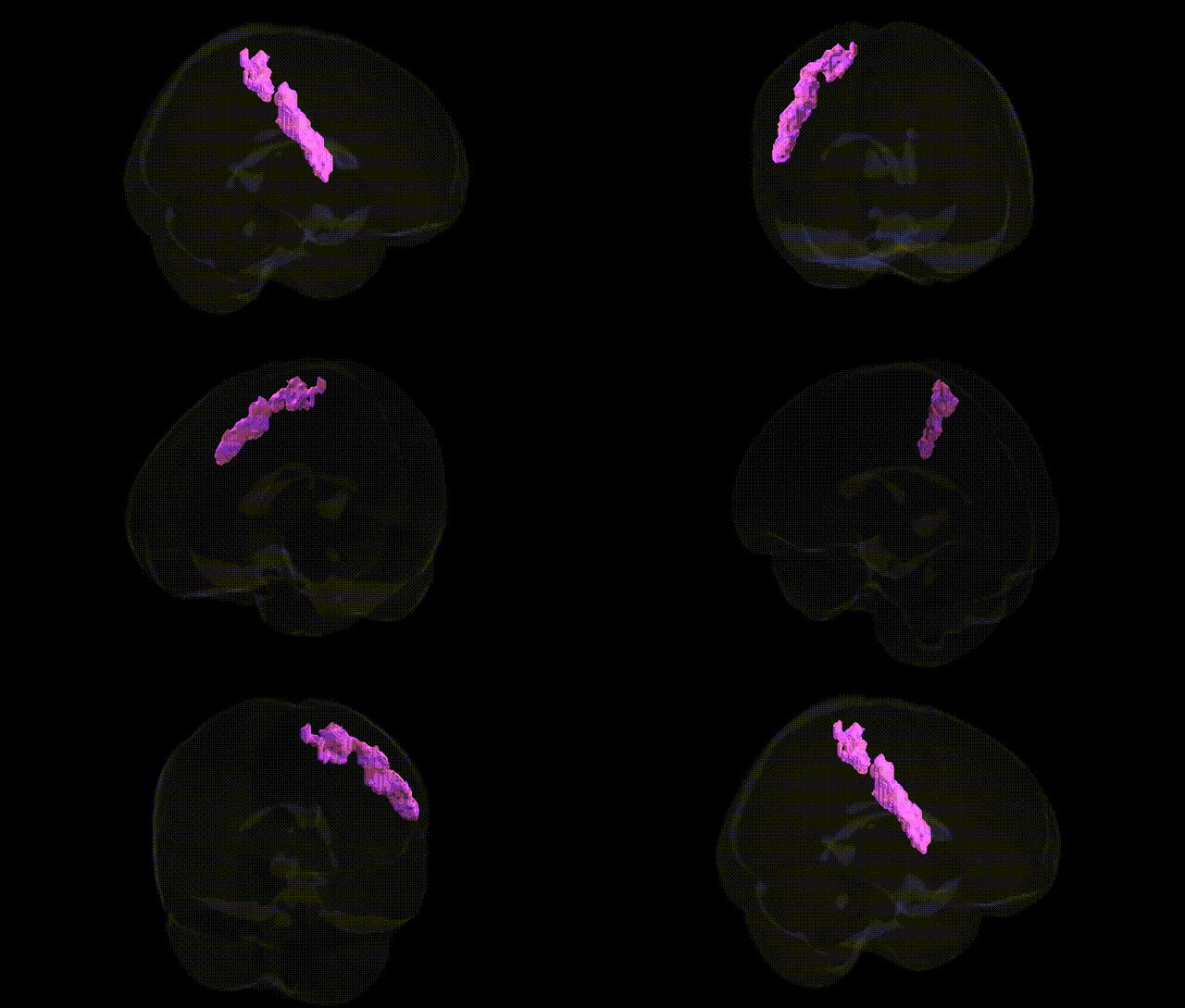
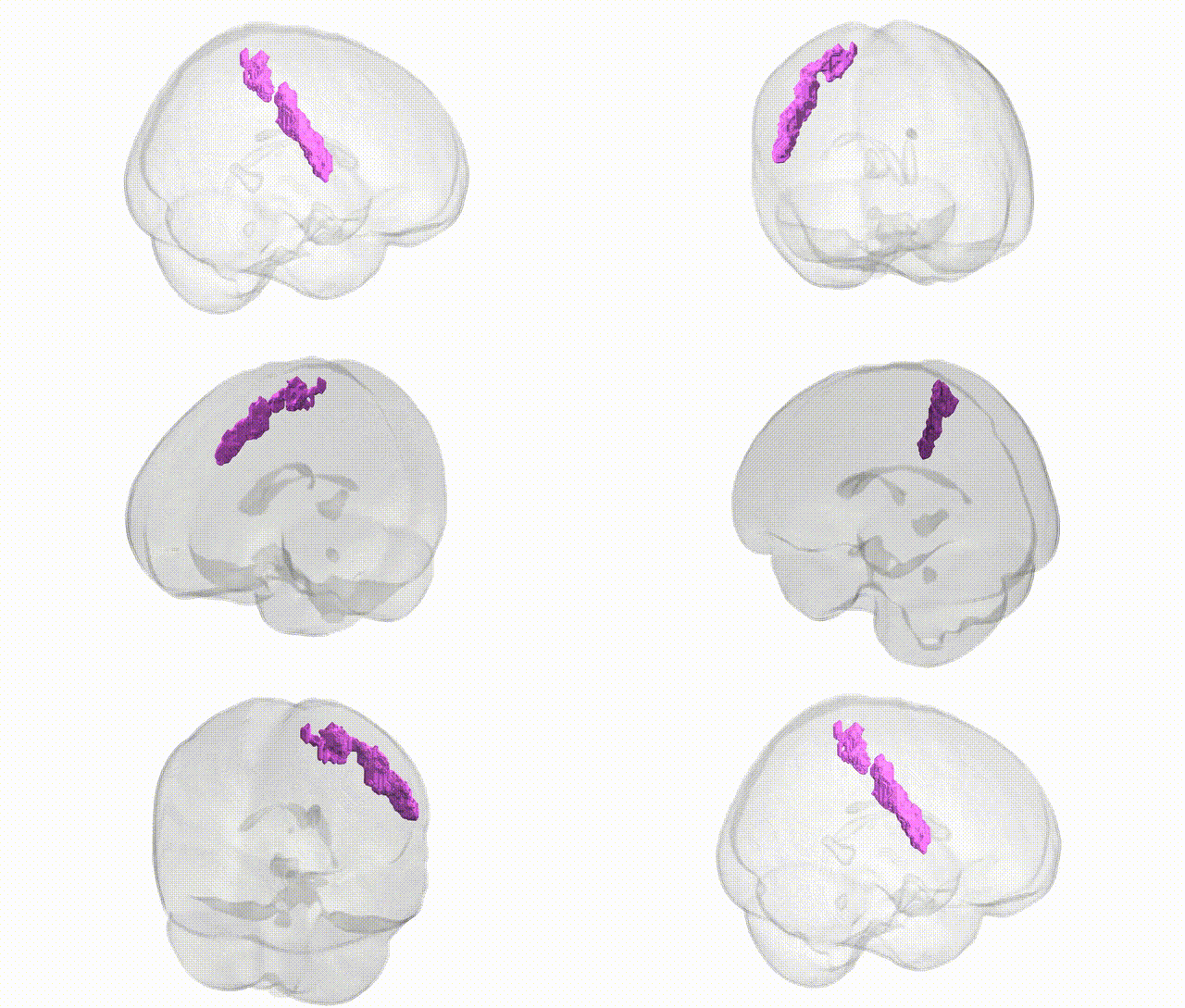
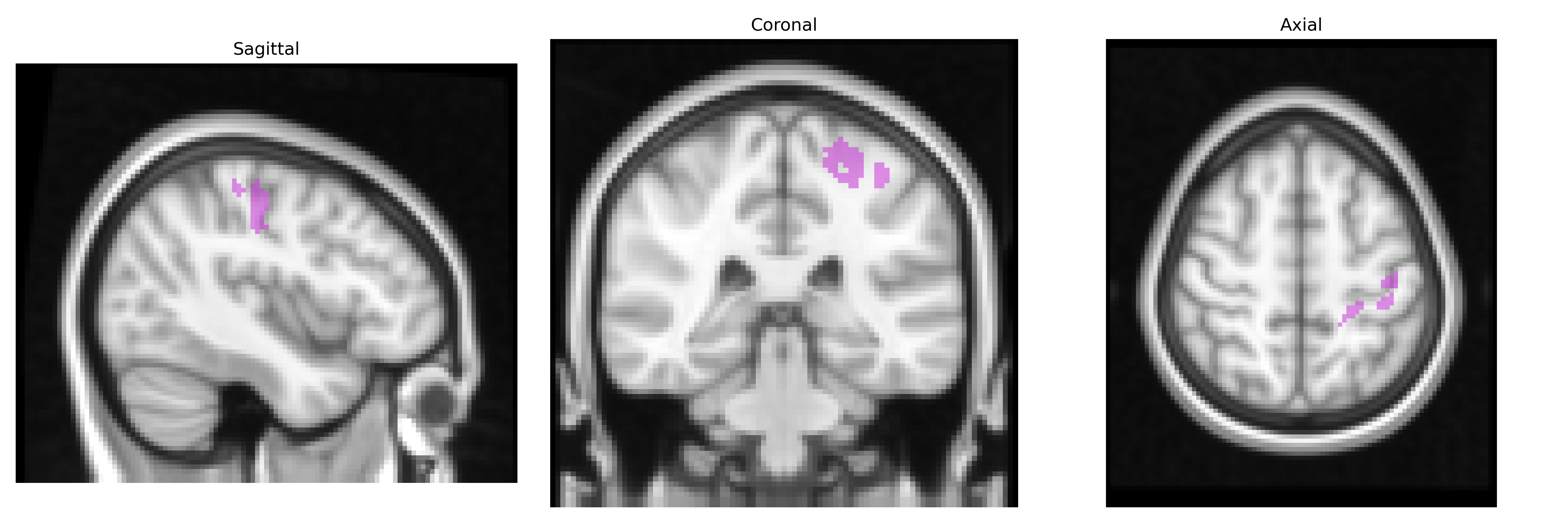
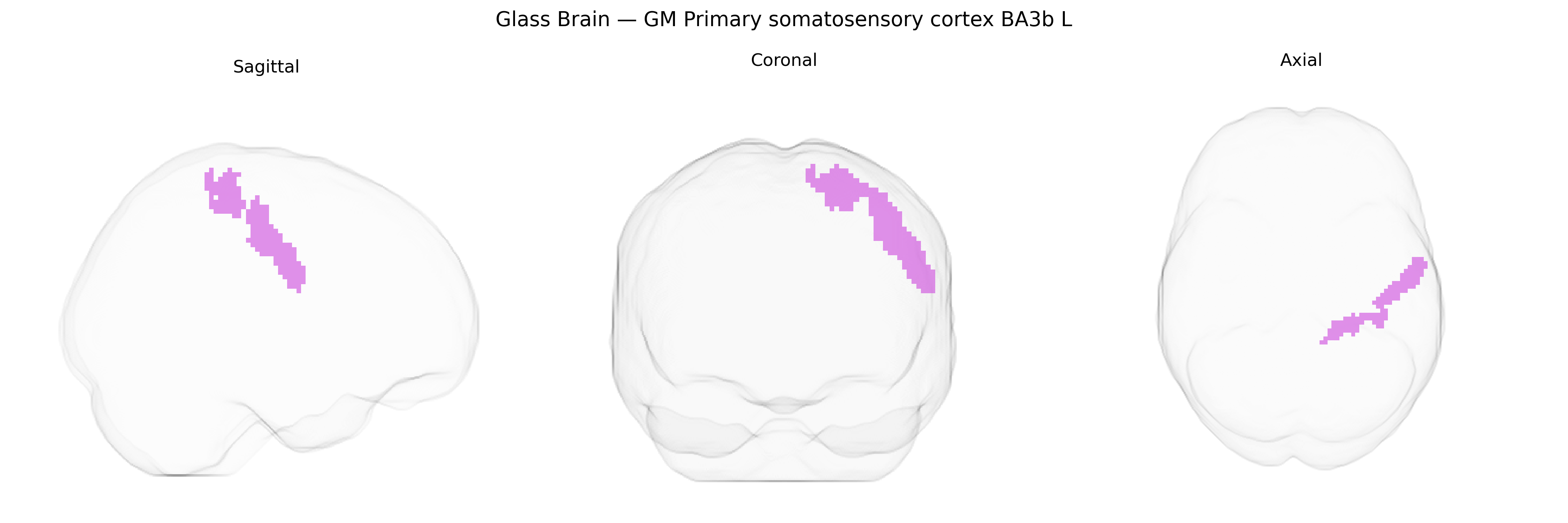
The bilateral GM Primary somatosensory cortex BA3b L (Juelich maxprob thr25 2mm Atlas) corresponds to the left hemisphere portion of Brodmann area 3b, a core subdivision of the primary somatosensory cortex located in the postcentral gyrus. This region receives dense thalamocortical input from the ventral posterior nucleus of the thalamus and is critically involved in processing tactile information such as fine touch, texture, and cutaneous mechanoreception from the contralateral side of the body. Neurons within BA3b exhibit small, modality-specific receptive fields and serve as an initial cortical stage for somatotopic representation, providing highly organized maps that feed forward to adjacent somatosensory areas (e.g., BA1 and BA2) for further integrative processing of complex tactile and proprioceptive stimuli. There is no direct link for “BA3b,” but it is a subregion of the primary somatosensory cortex: Primary somatosensory cortex.
The bilateral gray matter primary somatosensory cortex (BA3b, left hemisphere) from the Juelich maxprob atlas is a core node for tactile and proprioceptive processing, and genetic associations involving this region largely emerge from imaging genetics and GWAS of brain structure and function rather than single-region, candidate-gene studies. Large-scale neuroimaging GWAS (e.g., ENIGMA, UK Biobank) have identified numerous common variants associated with cortical thickness and surface area in somatosensory regions; many map to genes involved in neurodevelopment, synaptic function, and axon guidance (such as variants near genes regulating neuronal migration, cell adhesion, and cytoskeletal dynamics), though these findings typically reference broader “parietal” or “sensorimotor” cortices rather than BA3b specifically. Polygenic risk for neurodevelopmental and psychiatric disorders—including schizophrenia, autism spectrum disorder, ADHD, and major depression—has been associated with altered structure or activation in primary somatosensory and adjacent sensorimotor areas, suggesting that shared genetic architectures affecting cortical microstructure and connectivity can influence BA3b characteristics, but these effects are diffuse and not region-specific. GWAS for chronic pain, tactile sensitivity, and somatosensory traits also implicate genes related to ion channels, inflammatory pathways, and central pain processing networks, which in turn show functional and structural correlates in primary somatosensory cortex, including BA3b, though direct locus-to-BA3b mapping remains rare. Overall, genetic influences on BA3b are best characterized as part of distributed, polygenic architectures shaping sensorimotor cortex development, cortical thickness and surface area, and vulnerability to neuropsychiatric and pain-related conditions, rather than discrete variants uniquely tied to this specific Cytoarchitectonic subregion.
Overview generated by GPT-4o (2026).
Region ID: 57
Hemisphere: bilateral
Atlas: Juelich maxprob thr25 2mm
Full Quality Version: Download MP4
Full Quality Version: Download MP4
Wali Sidiqyar*, Gaurav Rudravaram*, Elyssa M. McMaster, Trent M. Schwartz, Adam M. Saunders, Kurt G. Schilling, Bennett A. Landman "Introducing SPINS: A Shared Public Visualization Library of Neuroanatomical Structures." Medical Imaging with Deep Learning- short paper
This resource is licensed under CC0 1.0 Universal (Public Domain).