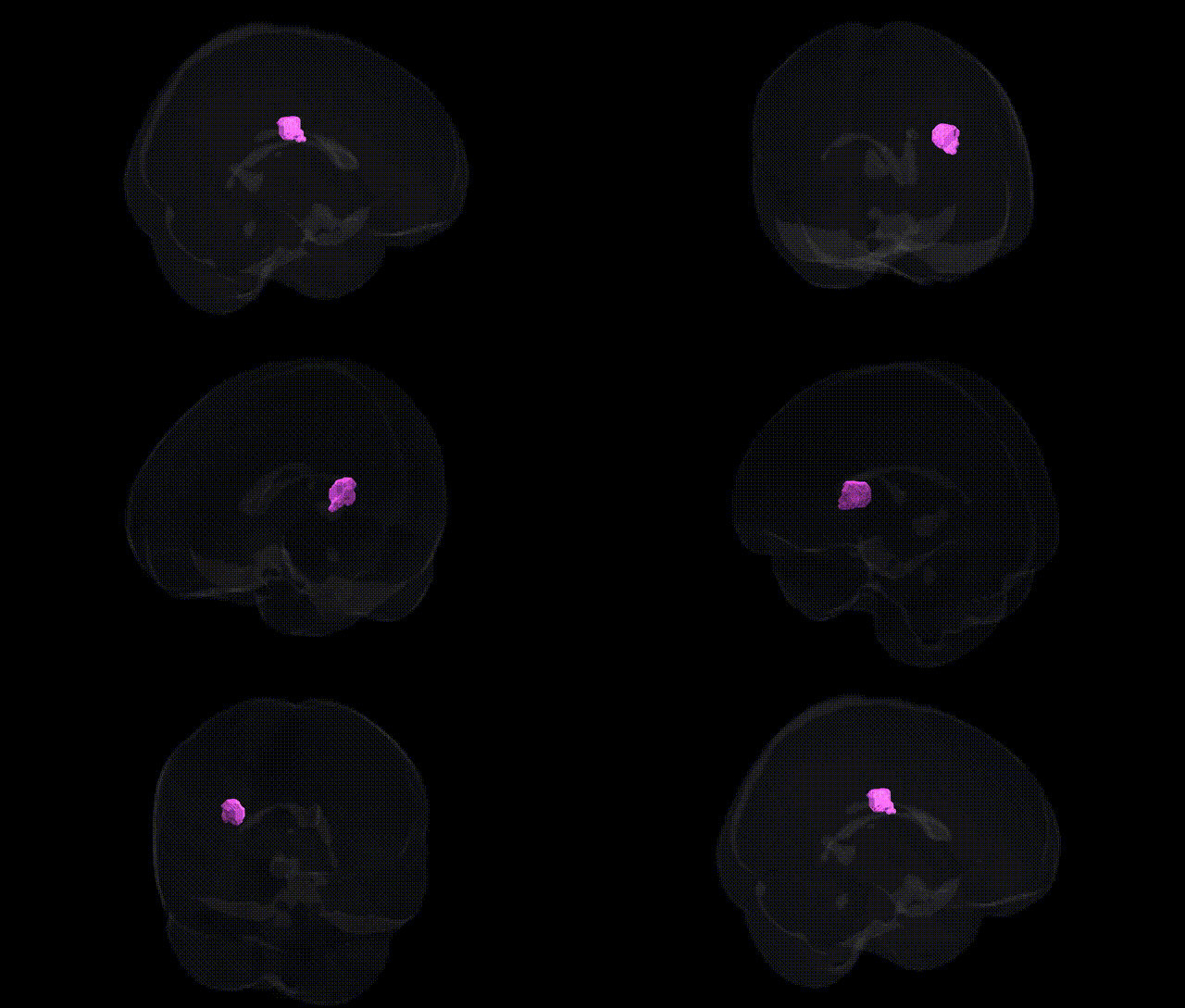
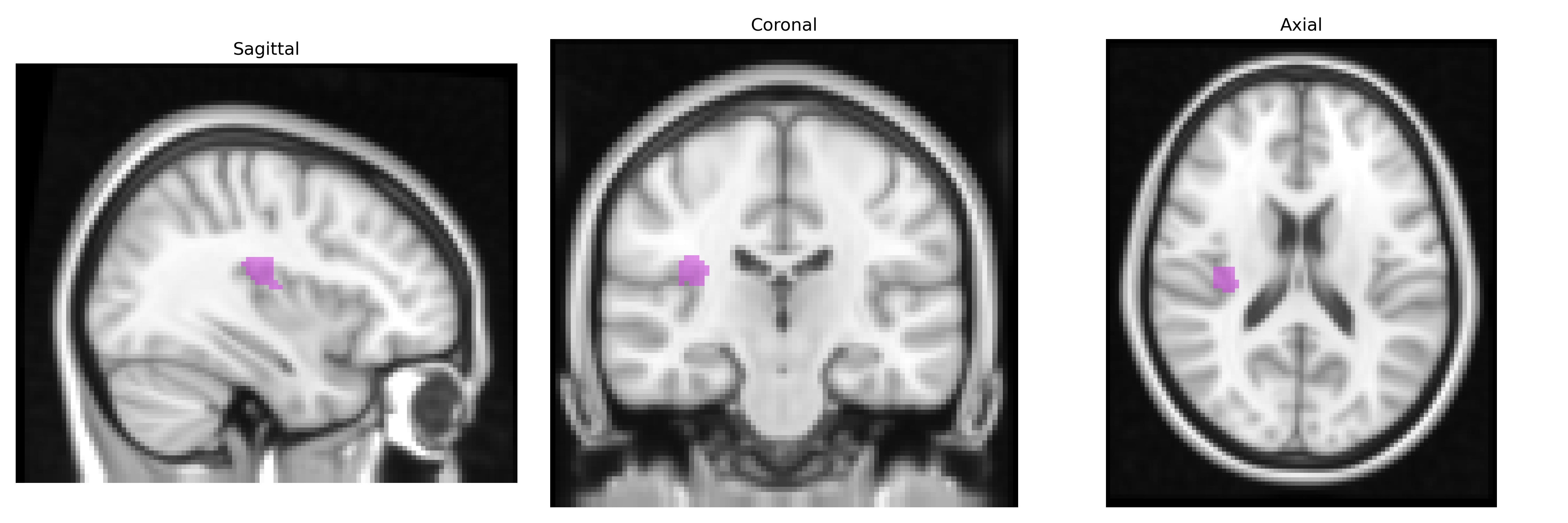
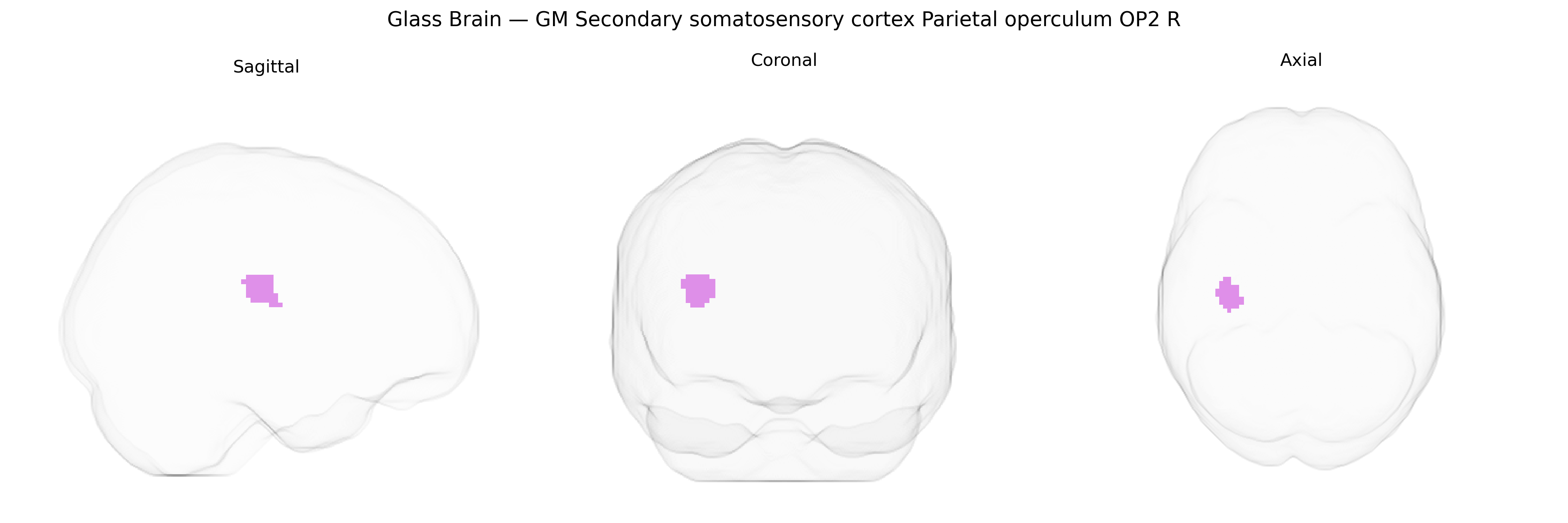
The bilateral GM Secondary somatosensory cortex Parietal operculum OP2 R, as defined in the Juelich maxprob thr25 2mm Atlas, corresponds to a cytoarchitectonically delineated subregion of the parietal operculum that forms part of the human secondary somatosensory cortex (SII). This region is located along the upper bank of the lateral sulcus, overlying the insula and adjacent to other opercular fields (OP1, OP3, OP4), and is involved in higher-order processing of somatosensory information, including integration of tactile, proprioceptive, and possibly nociceptive inputs. OP2 contributes to bilateral representations of the body, multimodal sensory integration, and aspects of sensorimotor coordination and perception, with functional connectivity to primary somatosensory cortex, insular cortex, and motor-related regions. There is no direct link for OP2, but it is a defined subregion of the Parietal operculum.
The bilateral GM Secondary somatosensory cortex Parietal operculum OP2 R region, as defined in the Juelich maxprob thr25 2mm Atlas, is implicated in vestibular processing, somatosensory integration, and multisensory perception, with genetic associations emerging primarily from imaging genomics and GWAS of brain structure and function rather than from region-specific candidate gene studies. Large-scale neuroimaging GWAS (e.g., ENIGMA, UK Biobank) have identified common variants influencing cortical thickness, surface area, and functional connectivity in parietal and opercular regions, with loci near genes involved in neurodevelopment, synaptic function, and axon guidance (such as variants near MAPT, BDNF, and cell adhesion genes) showing broad effects on parietal-temporal networks that encompass OP2. Genetic risk for schizophrenia, bipolar disorder, and major depressive disorder—captured by polygenic risk scores—has been associated with altered activation and connectivity of parietal opercular and secondary somatosensory areas during sensory, pain, and cognitive tasks, suggesting that common psychiatric risk variants modulate OP2-related circuits. GWAS of chronic pain, somatic symptom disorders, and vestibular migraine have also pointed to polygenic influences on cortical pain and balance networks, with OP2 highlighted in functional imaging as a key hub, although specific SNPs tied uniquely to OP2 R are not yet delineated. More recent resting-state fMRI GWAS have linked variants in neurotransmitter and neuroplasticity pathways to individual differences in the salience and sensorimotor networks that include OP2, and these genetic influences overlap with loci implicated in neurodevelopmental traits (e.g., autism spectrum conditions, ADHD) where atypical somatosensory and vestibular processing is common. Overall, genetic associations for OP2 R are currently inferred from network-level and structural GWAS rather than direct, region-specific findings, indicating a polygenic architecture where many common variants affecting brain development, synaptic signaling, and psychiatric risk contribute to variability in the structure and function of this parietal opercular secondary somatosensory territory.
Overview generated by GPT-4o (2026).
Region ID: 62
Hemisphere: bilateral
Atlas: Juelich maxprob thr25 2mm
Full Quality Version: Download MP4
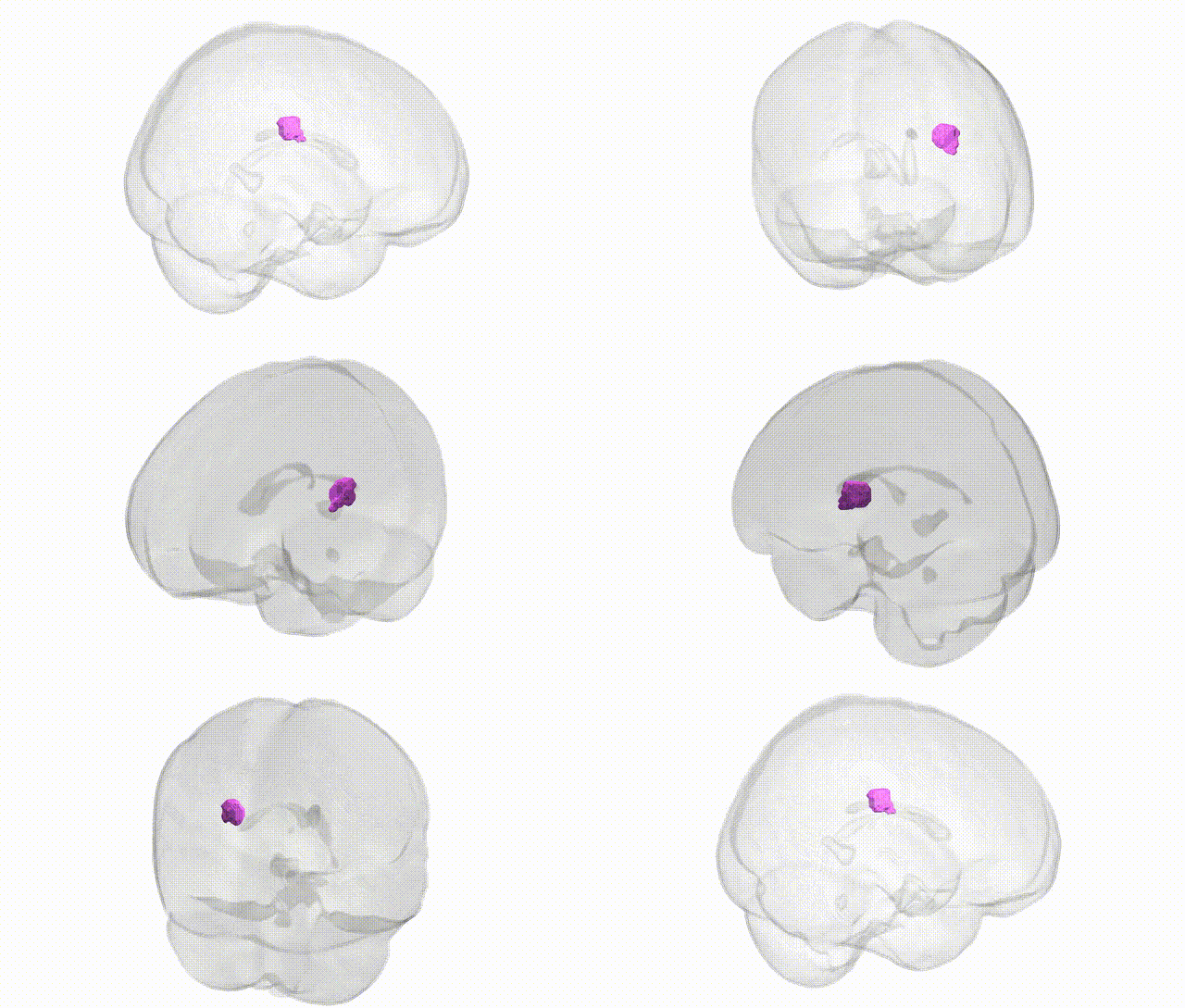
Full Quality Version: Download MP4
Wali Sidiqyar*, Gaurav Rudravaram*, Elyssa M. McMaster, Trent M. Schwartz, Adam M. Saunders, Kurt G. Schilling, Bennett A. Landman "Introducing SPINS: A Shared Public Visualization Library of Neuroanatomical Structures." Medical Imaging with Deep Learning- short paper
This resource is licensed under CC0 1.0 Universal (Public Domain).