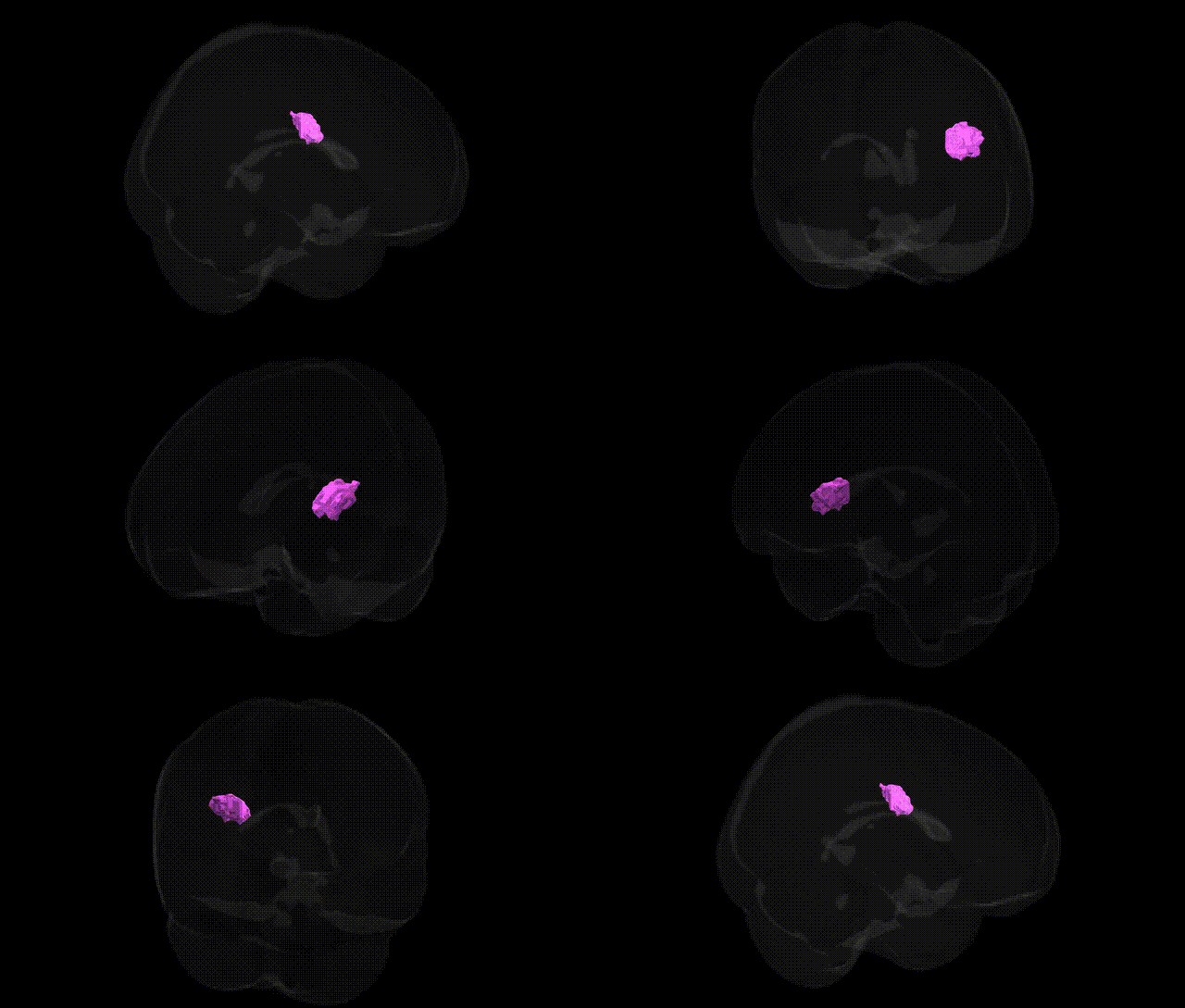
The bilateral GM Secondary somatosensory cortex Parietal operculum OP3 R, as defined in the Juelich maxprob_thr25 2mm atlas, corresponds to a cytoarchitectonic subregion of the parietal operculum within the secondary somatosensory cortex (SII). This area participates in higher-order somatosensory processing, including integration of tactile input, texture discrimination, and aspects of sensorimotor and pain-related processing, often in coordination with other opercular and insular regions. Neuronal populations in OP3 receive convergent input from primary somatosensory cortex and other sensory areas and contribute to bilateral representation of the body, multimodal integration, and perceptual aspects of touch. There is no direct Wikipedia article for OP3 specifically; relevant anatomical and functional context can be found in Secondary somatosensory cortex.
The bilateral GM Secondary somatosensory cortex Parietal operculum OP3 R (Juelich maxprob thr25 2 mm) lies in the parietal operculum/secondary somatosensory cortex (S2), a region repeatedly implicated in imaging–genetics and GWAS-based imaging studies rather than in single-gene associations, with most findings emerging from large consortia such as ENIGMA and UK Biobank. Variants in genes involved in neurodevelopment, synaptic function, and myelination (for example, BDNF, NRG1, CNTNAP2, and multiple glutamatergic pathway genes) have been linked to structural or functional differences in opercular somatosensory regions, although not always specifically isolated to OP3. Polygenic risk scores for schizophrenia, major depressive disorder, autism spectrum disorder, and ADHD have been associated with altered cortical thickness or surface area in parietal operculum/S2 territories, suggesting that common psychiatric risk architectures subtly shape this region’s morphology and connectivity. GWAS of pain sensitivity and chronic pain (including migraine and multisite chronic pain) have identified loci influencing somatosensory and opercular networks, and imaging–genetics work shows that alleles in nociceptive and inflammatory pathways modulate activation in parietal operculum S2 during pain tasks. In addition, genes implicated in sensorimotor integration and language networks overlap with patterns of connectivity involving OP3, providing indirect genetic links to traits such as tactile processing, speech and orofacial motor control, and sensorimotor integration, though region-specific, high-confidence gene lists for OP3 R remain limited and highly distributed across many small-effect common variants.
Overview generated by GPT-4o (2026).
Region ID: 64
Hemisphere: bilateral
Atlas: Juelich maxprob thr25 2mm
Full Quality Version: Download MP4
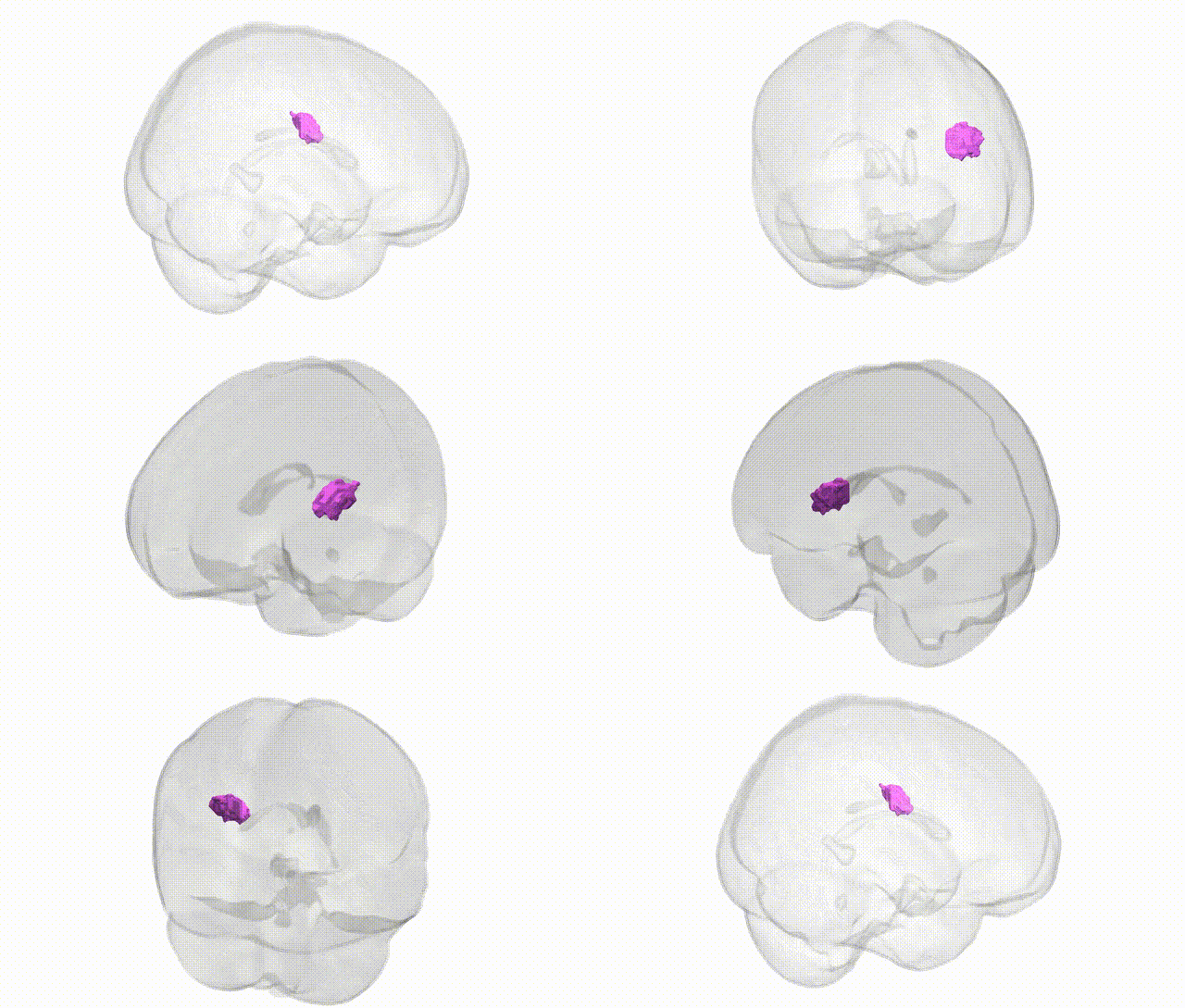
Full Quality Version: Download MP4
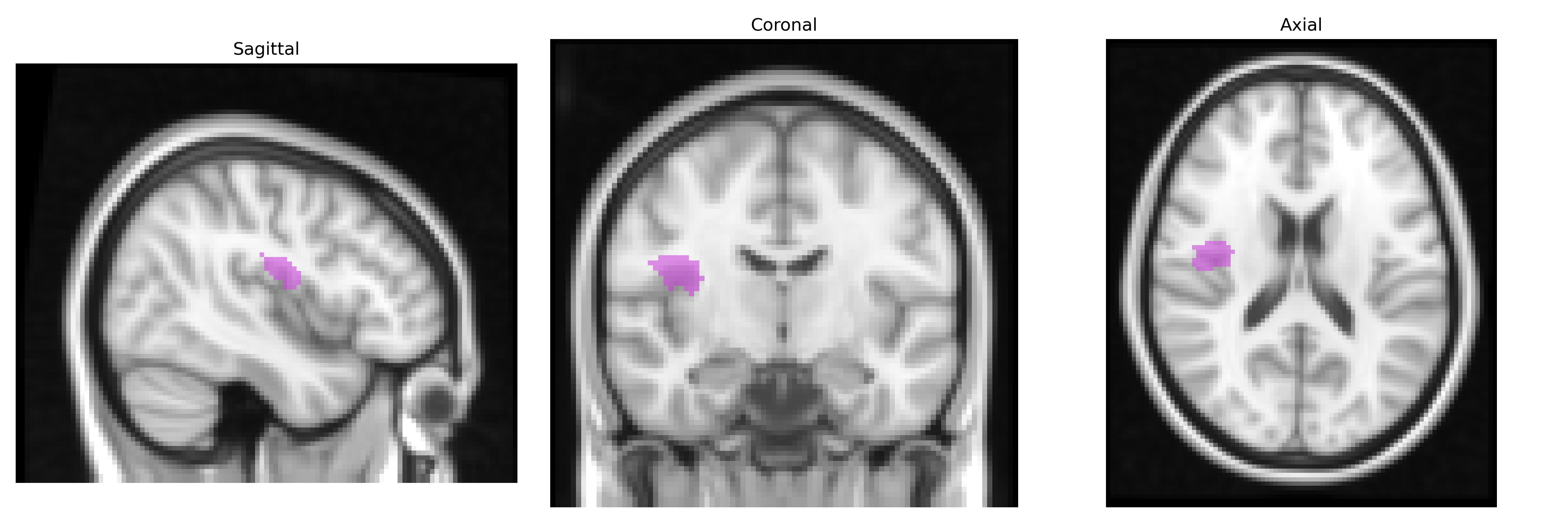
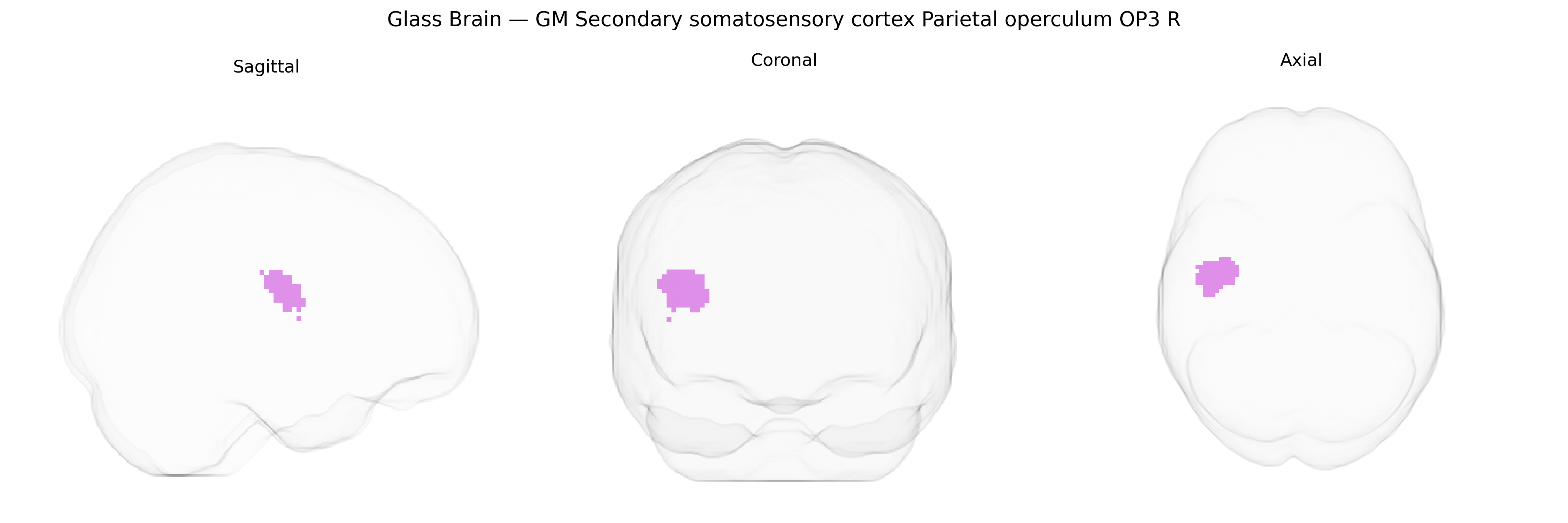
Wali Sidiqyar*, Gaurav Rudravaram*, Elyssa M. McMaster, Trent M. Schwartz, Adam M. Saunders, Kurt G. Schilling, Bennett A. Landman "Introducing SPINS: A Shared Public Visualization Library of Neuroanatomical Structures." Medical Imaging with Deep Learning- short paper
This resource is licensed under CC0 1.0 Universal (Public Domain).