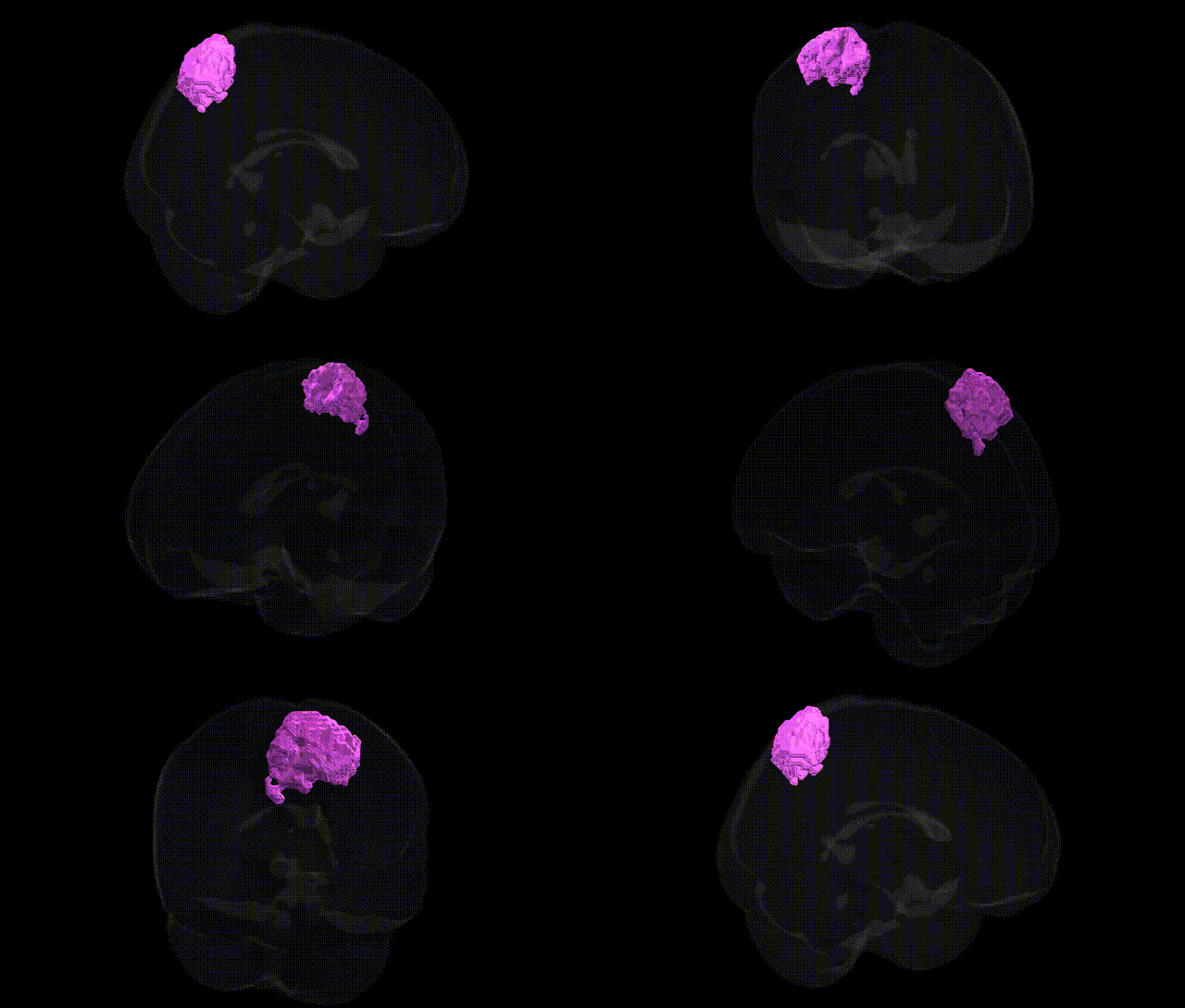
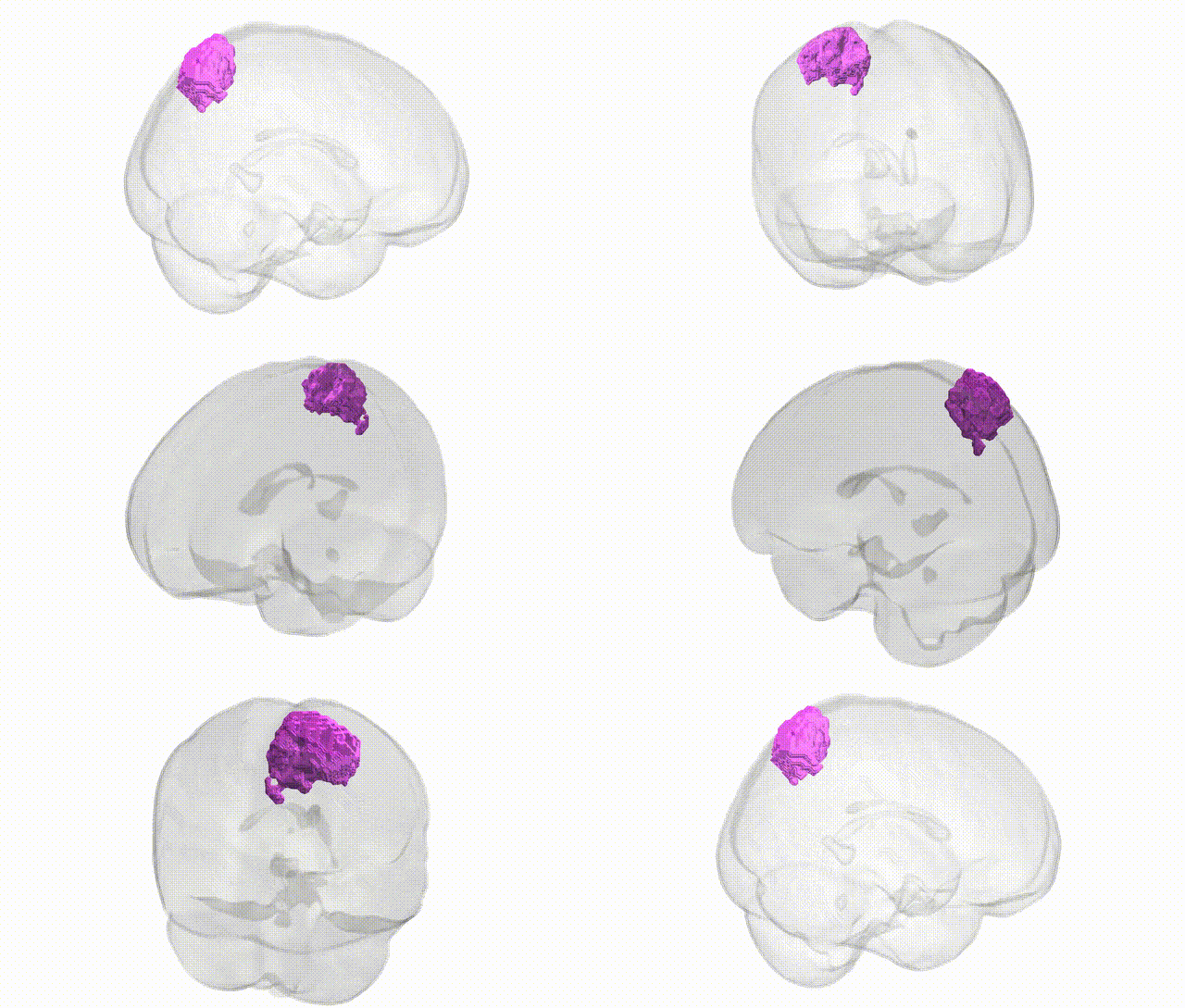
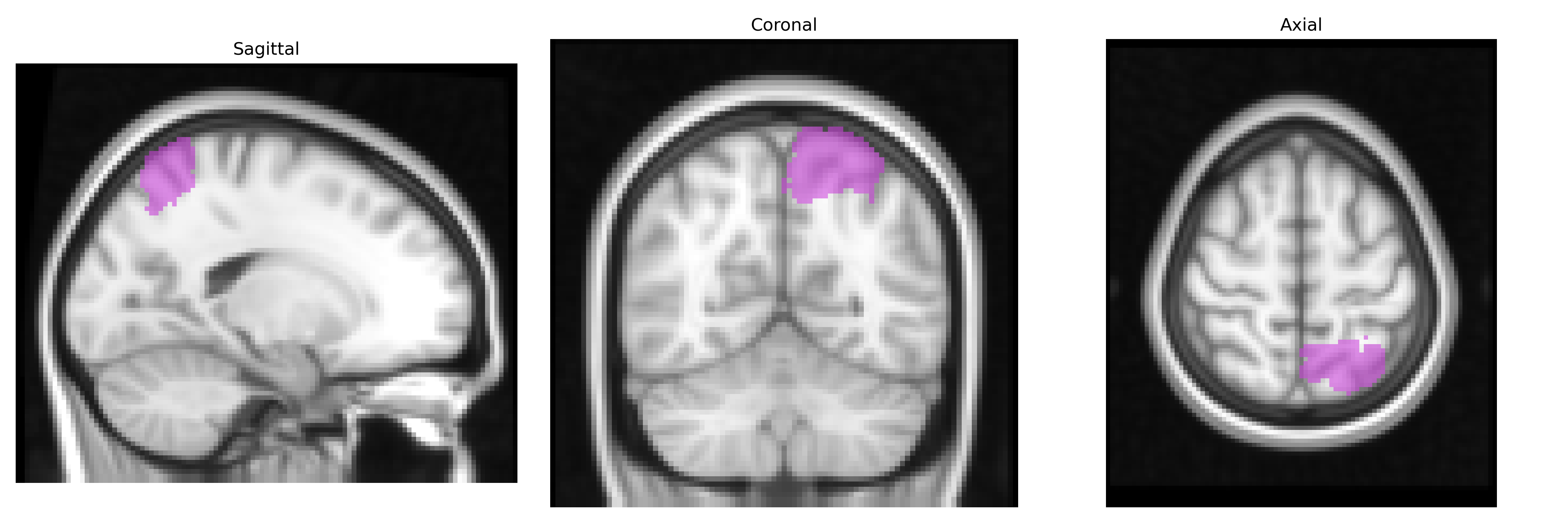
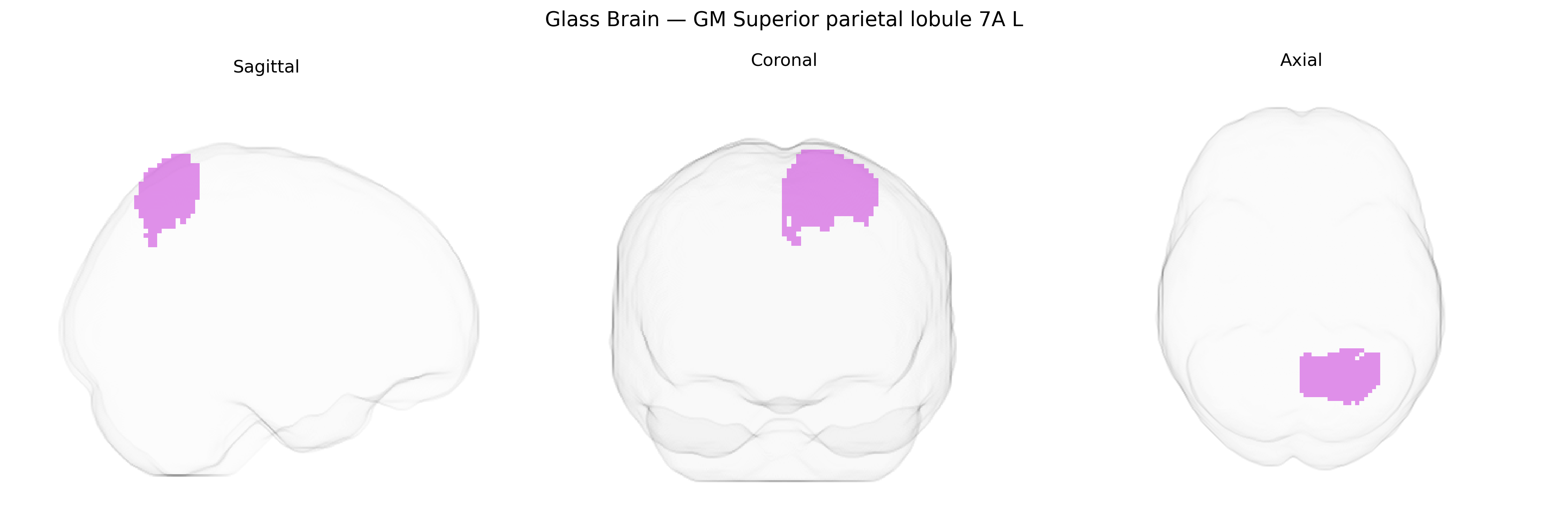
The bilateral GM Superior parietal lobule 7A L, as defined in the Juelich maxprob thr25 2mm atlas, corresponds to a cytoarchitectonic subdivision of the superior parietal lobule associated with Brodmann area 7. This region lies on the dorsal aspect of the parietal cortex, posterior to the postcentral gyrus and anterior to the precuneus, and is implicated in multisensory integration, visuospatial processing, and the coordination of attention and sensorimotor transformation. Neurons in this area receive convergent visual, somatosensory, and proprioceptive inputs and contribute to functions such as spatial orientation, reaching and grasping, and the online updating of body position in space. There is no direct link for “Superior parietal lobule 7A L,” but it is part of the Superior parietal lobule.
The bilateral GM Superior parietal lobule (SPL) 7A L region, as defined in the Juelich maxprob thr25 2mm atlas, is part of the dorsal parietal cortex implicated in visuospatial attention, sensorimotor integration, and higher-order cognition, and genetic association studies have linked variation in this region’s structure and function to multiple traits. Large-scale imaging genetics GWAS (e.g., ENIGMA, UK Biobank) have identified common variants in genes involved in neurodevelopment and synaptic plasticity—such as those in or near BDNF, CNTNAP2, DISC1, and KIAA0319—that modulate parietal cortical thickness, surface area, and connectivity, although most findings map to broader parietal or association cortex rather than SPL 7A specifically. Parietal lobule morphology and activation, including superior parietal areas, have been associated with polygenic risk for schizophrenia, autism spectrum disorder, and ADHD, as well as with genetic liability for cognitive performance and educational attainment, suggesting shared genetic architecture between SPL circuitry and higher-order cognitive and attentional traits. Parietal network connectivity involving SPL has also been linked to APOE and other Alzheimer’s disease risk variants in studies of posterior cortical atrophy and early network disruption, and GWAS of chronic pain, handedness, and motor coordination have reported associations with parietal regions overlapping SPL, implicating genes in axon guidance and myelination. Overall, current evidence supports a polygenic, distributed influence on SPL 7A structure and function, with genetic effects typically reported at the level of networks or lobes rather than the specific cytoarchitectonic subregion, and no single gene uniquely or conclusively defined as specific to bilateral GM SPL 7A L in existing GWAS.
Overview generated by GPT-4o (2026).
Region ID: 73
Hemisphere: bilateral
Atlas: Juelich maxprob thr25 2mm
Full Quality Version: Download MP4
Full Quality Version: Download MP4
Wali Sidiqyar*, Gaurav Rudravaram*, Elyssa M. McMaster, Trent M. Schwartz, Adam M. Saunders, Kurt G. Schilling, Bennett A. Landman "Introducing SPINS: A Shared Public Visualization Library of Neuroanatomical Structures." Medical Imaging with Deep Learning- short paper
This resource is licensed under CC0 1.0 Universal (Public Domain).