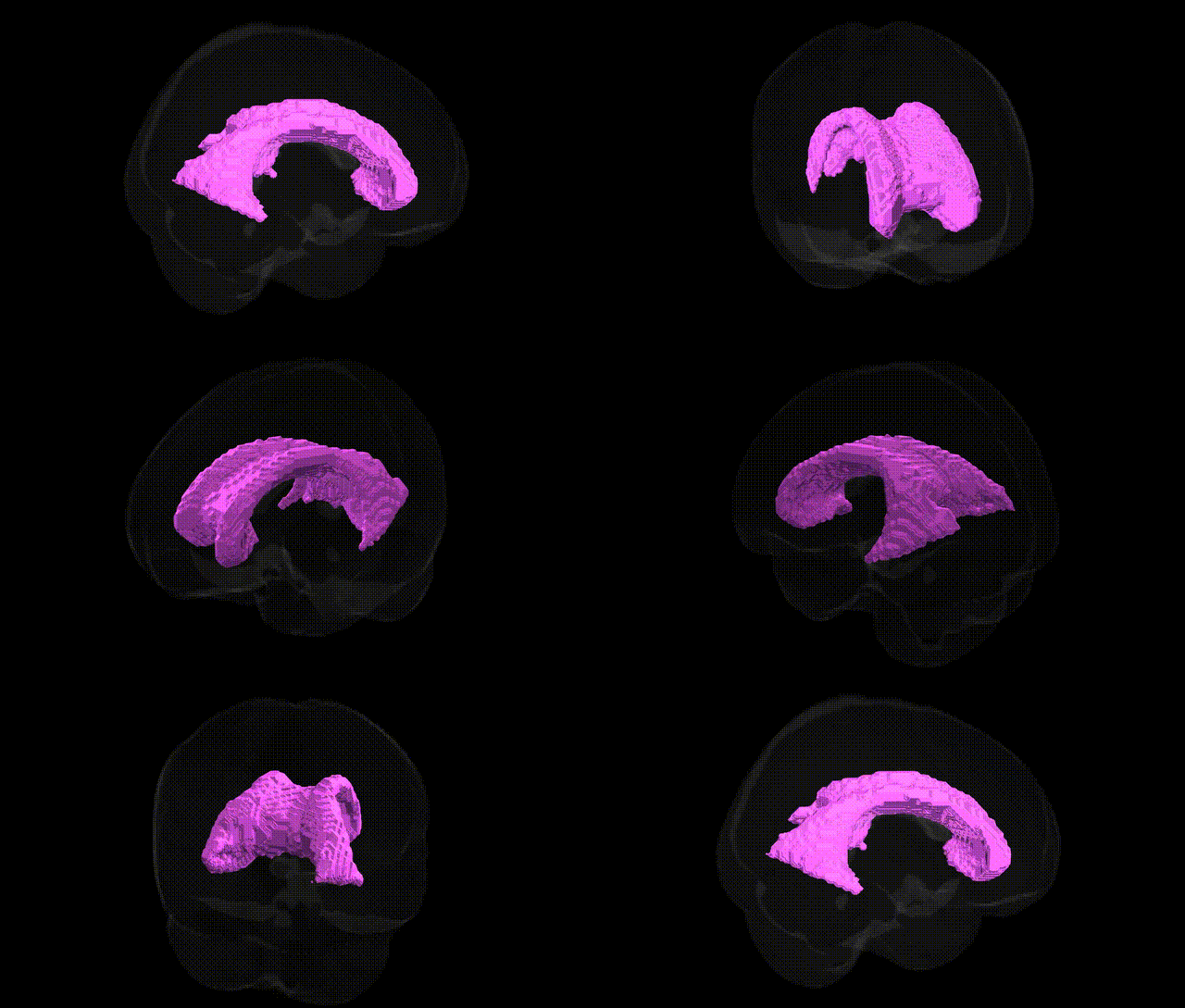
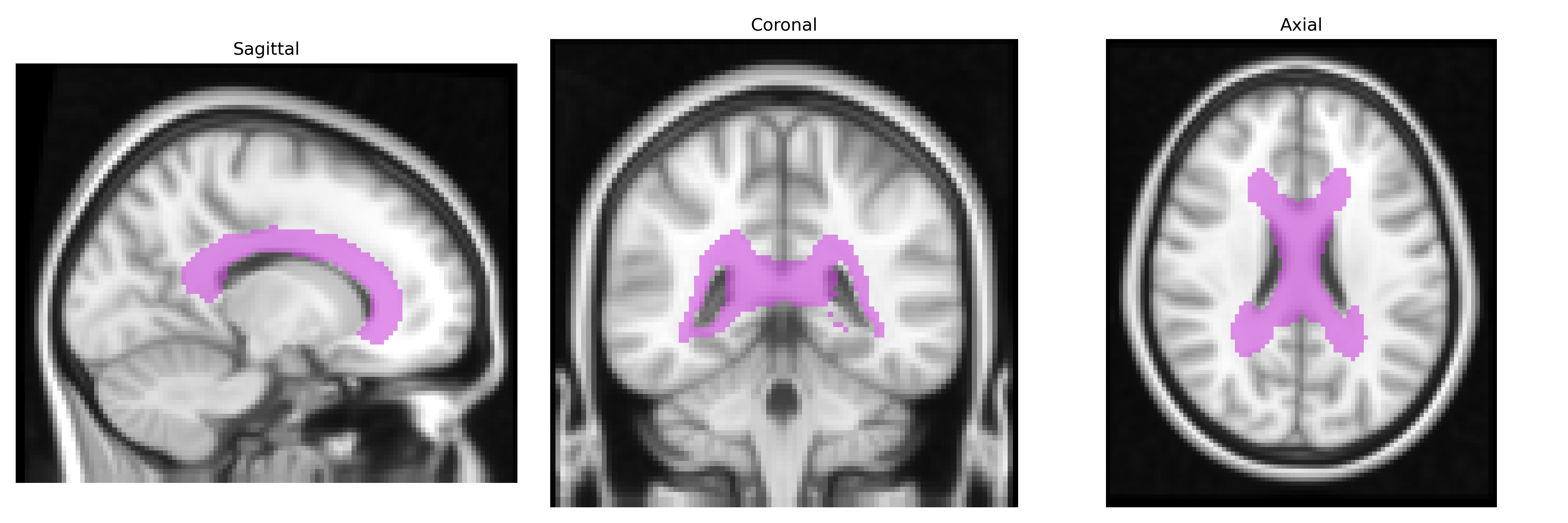
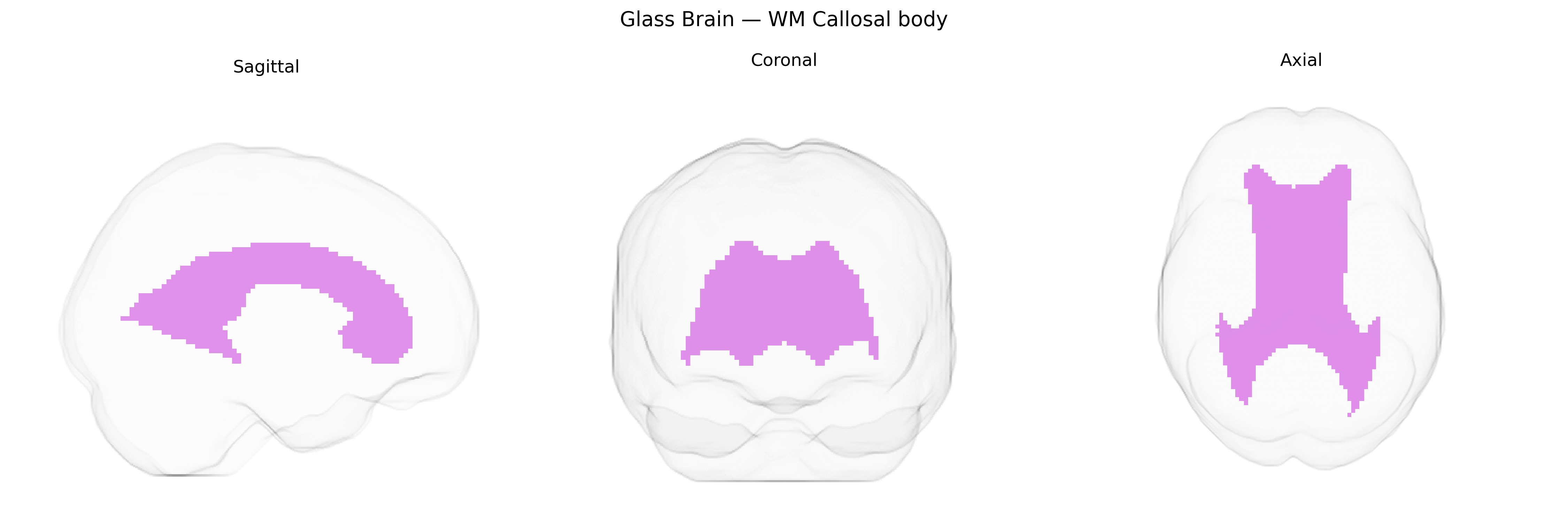
The bilateral WM Callosal body, as defined in the Juelich maxprob thr25 2mm Atlas, corresponds to the central portion of the corpus callosum composed of densely packed myelinated commissural fibers that interconnect homologous regions of the cerebral hemispheres, particularly premotor, primary motor, and primary somatosensory cortices. This white matter tract plays a key role in interhemispheric communication, enabling integration of sensorimotor information and coordination of bimanual and bilateral movements. Structurally, the callosal body lies between the genu anteriorly and the splenium posteriorly, and is composed of highly ordered fiber bundles that traverse the midline to synchronize cortical processing across hemispheres. There is no direct Wikipedia article specifically for “Callosal body,” but it is part of the Corpus callosum.
The bilateral WM callosal body (the central portion of the corpus callosum) has been implicated in multiple genetic and GWAS findings related to brain structure, cognition, and neuropsychiatric disorders. Twin and family studies consistently show high heritability of callosal body volume and microstructure (e.g., fractional anisotropy), with substantial contributions from common variants. Large imaging-genetics consortia such as ENIGMA and UK Biobank have identified genome-wide significant associations between callosal body measures and loci near or within genes involved in axon guidance, myelination, and neurodevelopment (including variants in or near genes such as CNTNAP2, NRG1, and regions on chromosomes 1q, 6q, and 15q, among others, depending on the specific metric analyzed). Alterations in callosal body anatomy and microstructure have been repeatedly linked to schizophrenia, bipolar disorder, major depressive disorder, autism spectrum disorder, ADHD, and dyslexia, with polygenic risk scores for these conditions correlating with callosal measures in some cohorts. GWAS of cognitive traits (e.g., intelligence, processing speed) and educational attainment have reported shared genetic influences with callosal body integrity, consistent with its role in interhemispheric integration; similarly, genetic variants affecting lipid metabolism and myelin-related pathways show associations with white matter traits that include the callosal body. Although specific SNP–region associations vary by study and phenotype, convergent evidence supports a robust genetic contribution to structural and microstructural variation in the bilateral WM callosal body that overlaps with risk architectures for major neurodevelopmental and psychiatric disorders as well as cognitive performance.
Overview generated by GPT-4o (2026).
Region ID: 95
Hemisphere: bilateral
Atlas: Juelich maxprob thr25 2mm
Full Quality Version: Download MP4
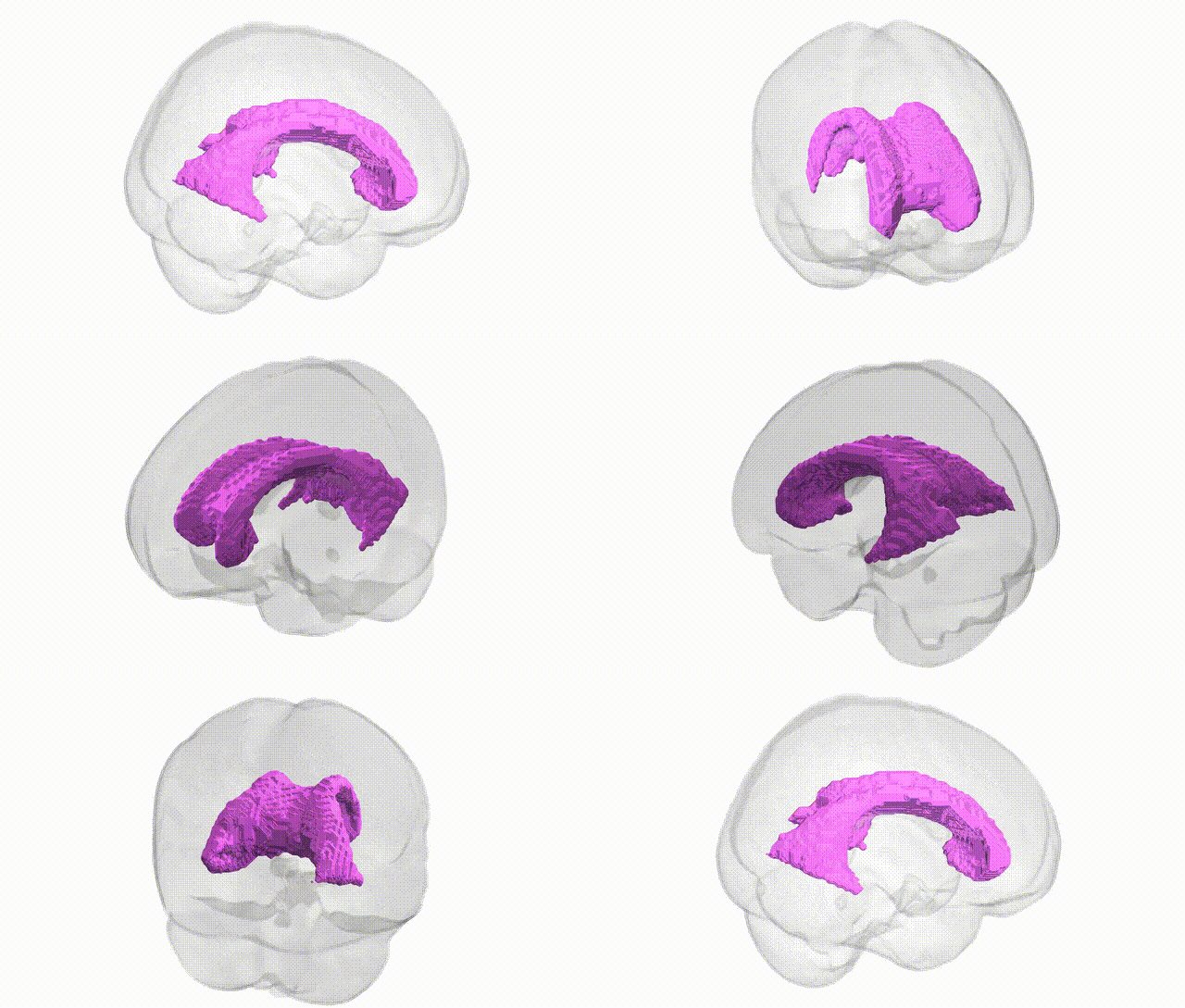
Full Quality Version: Download MP4
Wali Sidiqyar*, Gaurav Rudravaram*, Elyssa M. McMaster, Trent M. Schwartz, Adam M. Saunders, Kurt G. Schilling, Bennett A. Landman "Introducing SPINS: A Shared Public Visualization Library of Neuroanatomical Structures." Medical Imaging with Deep Learning- short paper
This resource is licensed under CC0 1.0 Universal (Public Domain).