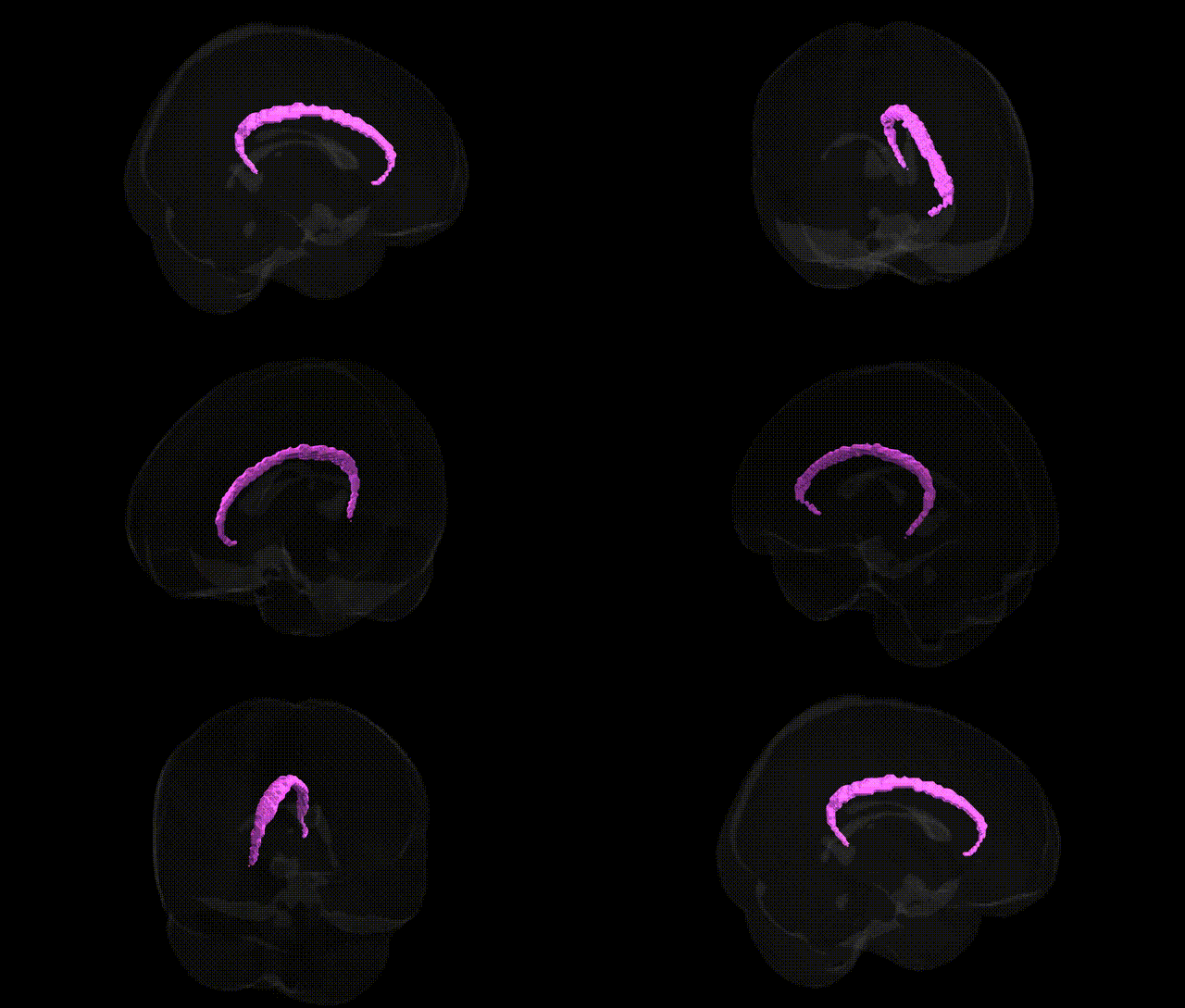
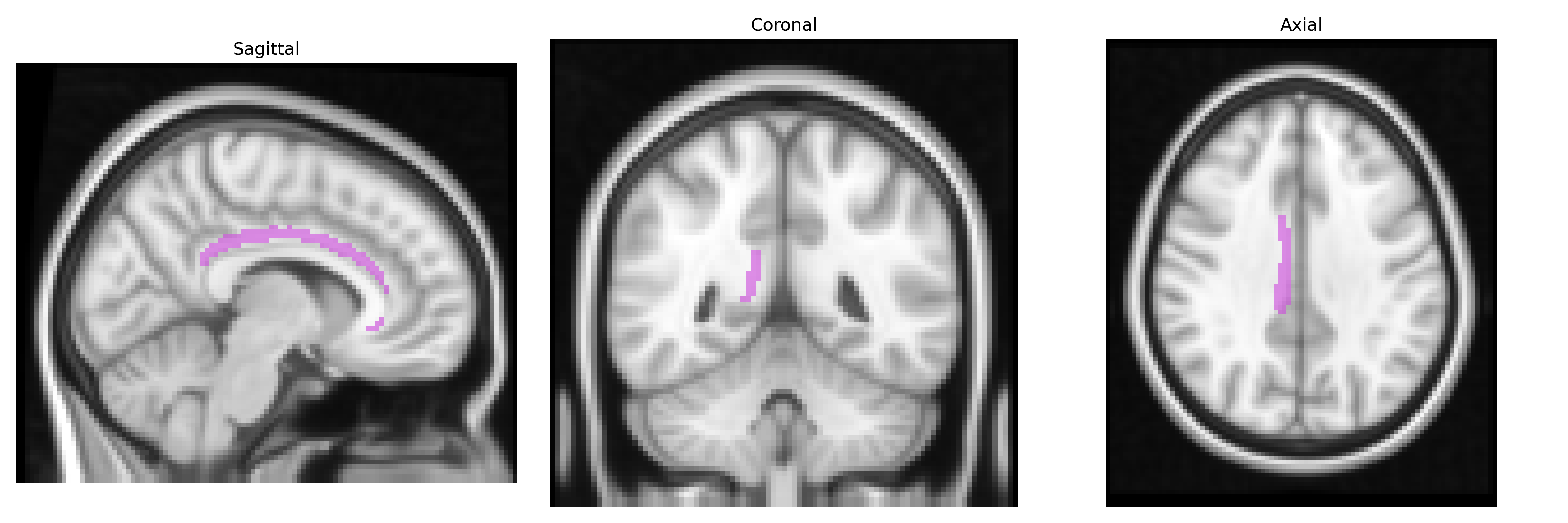
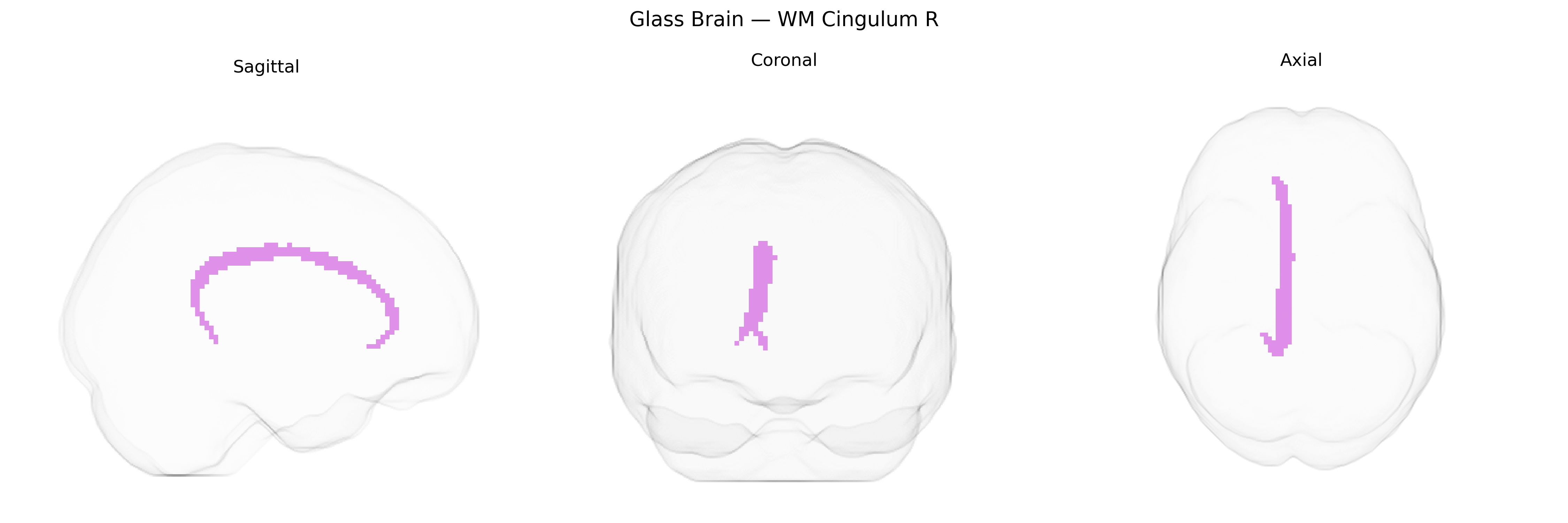
The bilateral WM Cingulum R in the Juelich maxprob thr25 2 mm atlas corresponds to the right-hemispheric segment of the cingulum white matter tract, a major association fiber bundle running within the cingulate gyrus and extending through the limbic system. Composed primarily of myelinated fibers, it interconnects medial frontal, cingulate, parietal, and parahippocampal regions, supporting integration of emotional, cognitive, and mnemonic processes. This tract plays a critical role in attention, executive control, and memory by linking components of the default mode and limbic networks, and is frequently implicated in structural and functional imaging studies of affective disorders, chronic pain, and neurodegenerative disease. There is no direct link for “bilateral WM Cingulum R”; a related structure is the Cingulum bundle.
The bilateral right cingulum white-matter (WM) bundle, as delineated in the Juelich maxprob thr25 2 mm atlas, has been implicated in multiple genetic and GWAS findings that link its microstructural properties and connectivity to neuropsychiatric and cognitive traits. Imaging–genetics and diffusion MRI GWAS (e.g., UK Biobank) have shown that fractional anisotropy, mean diffusivity, and other diffusion metrics in the cingulum are moderately heritable and associated with common variants in genes related to axonal guidance, myelination, and synaptic function, including pathways involving neurodevelopmental and oligodendroglial processes (such as genes within the neuregulin/ErbB and cell-adhesion families). Polygenic risk for schizophrenia, major depressive disorder, bipolar disorder, and autism spectrum disorder has been associated with altered cingulum integrity, and specific risk loci for schizophrenia and depression (for example in CACNA1C, GRIN2A, and other glutamatergic or calcium-channel genes) show downstream effects on cingulum structure in imaging–genetics studies. Cingulum WM alterations are also reported in GWAS-linked neurodegenerative and small-vessel disease traits, including Alzheimer’s disease polygenic risk and white-matter hyperintensities, aligning with variants in genes such as APOE and others involved in lipid metabolism and vascular function. Additionally, large-scale GWAS of brain connectivity and structural covariance have indicated that genetic variants influencing cingulum integrity partially overlap with those affecting executive function, intelligence, and educational attainment, suggesting that cingulum microstructure acts as a neuroanatomical mediator between polygenic cognitive risk and behavioral phenotypes.
Overview generated by GPT-4o (2026).
Region ID: 96
Hemisphere: bilateral
Atlas: Juelich maxprob thr25 2mm
Full Quality Version: Download MP4
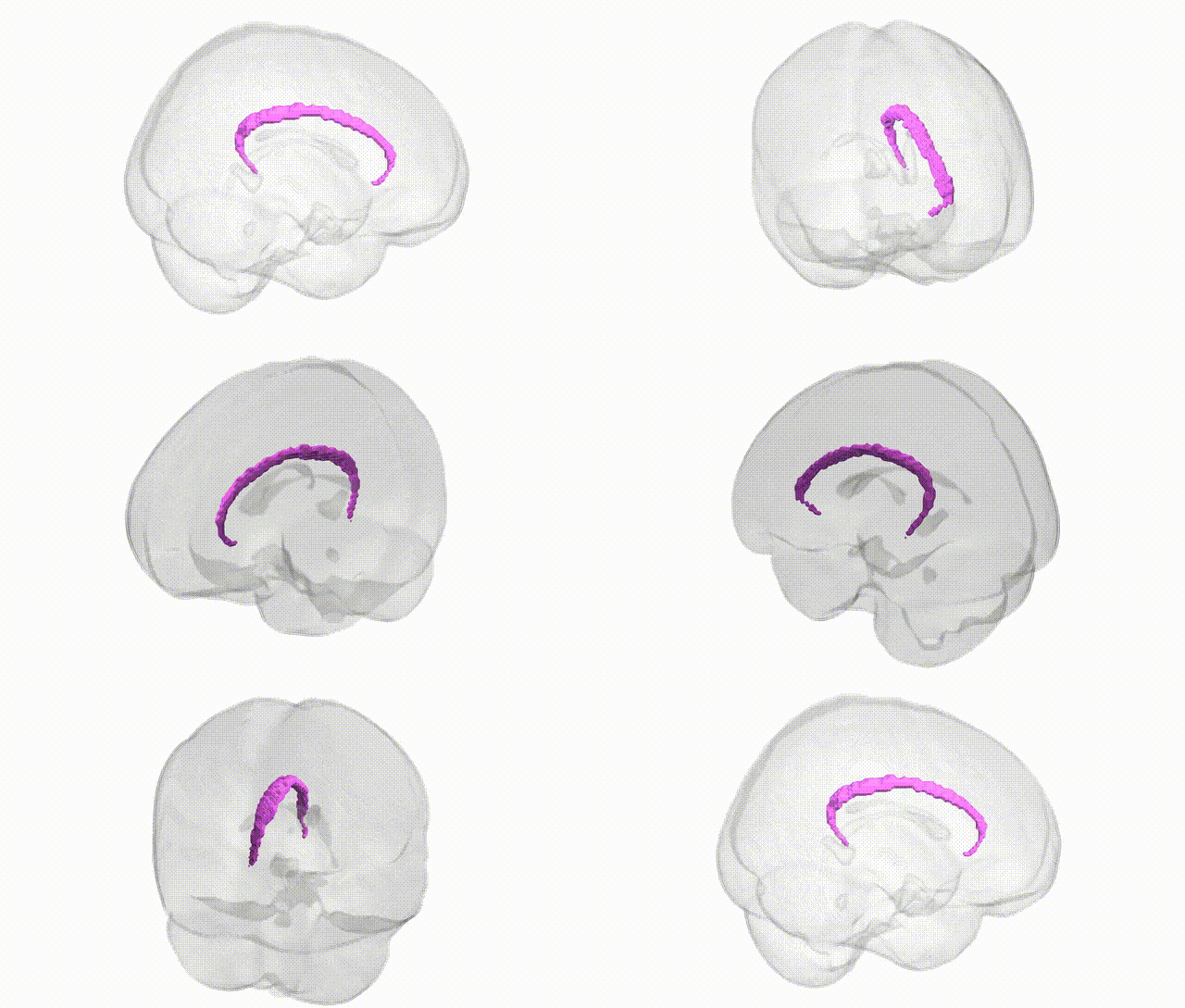
Full Quality Version: Download MP4
Wali Sidiqyar*, Gaurav Rudravaram*, Elyssa M. McMaster, Trent M. Schwartz, Adam M. Saunders, Kurt G. Schilling, Bennett A. Landman "Introducing SPINS: A Shared Public Visualization Library of Neuroanatomical Structures." Medical Imaging with Deep Learning- short paper
This resource is licensed under CC0 1.0 Universal (Public Domain).