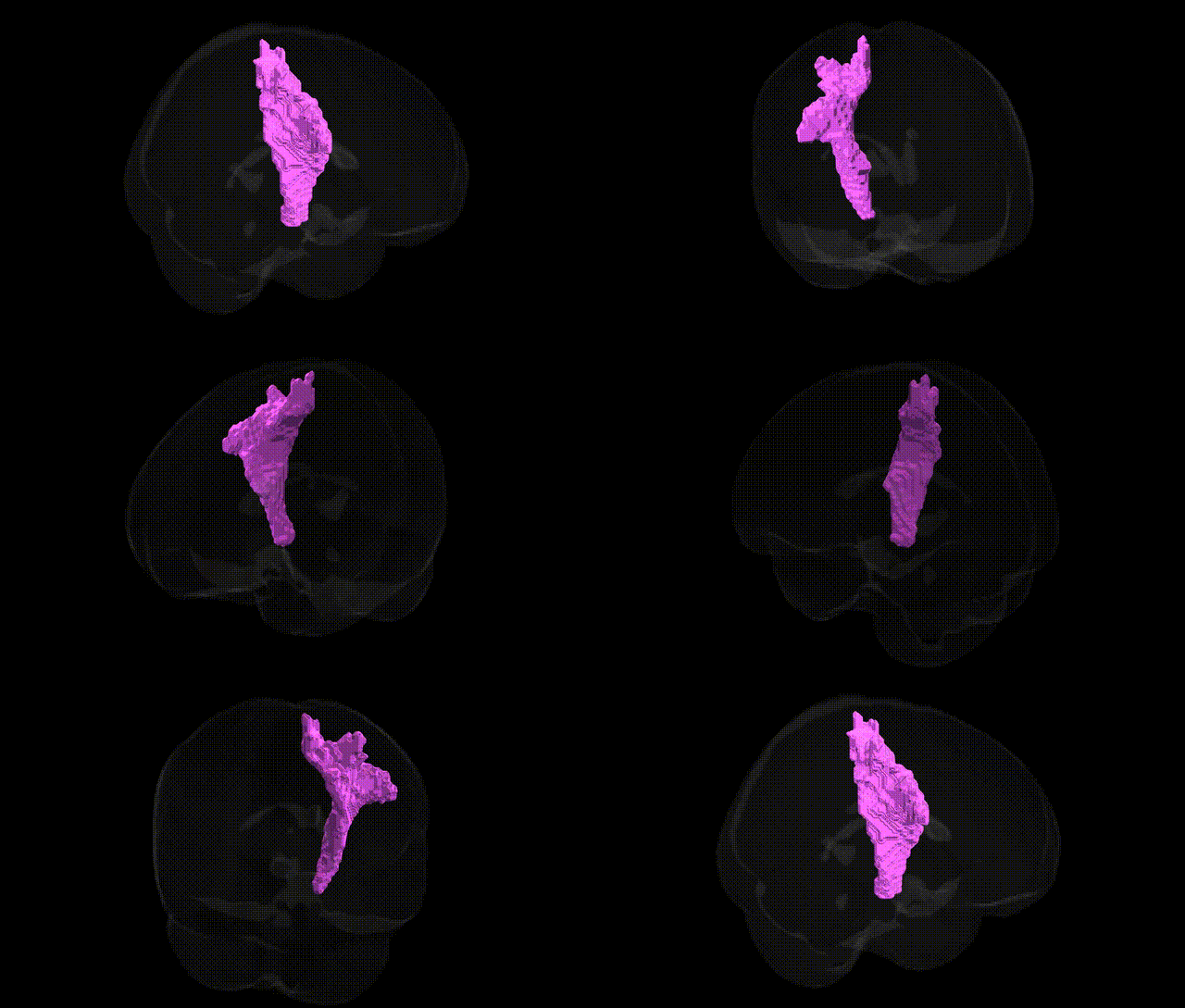
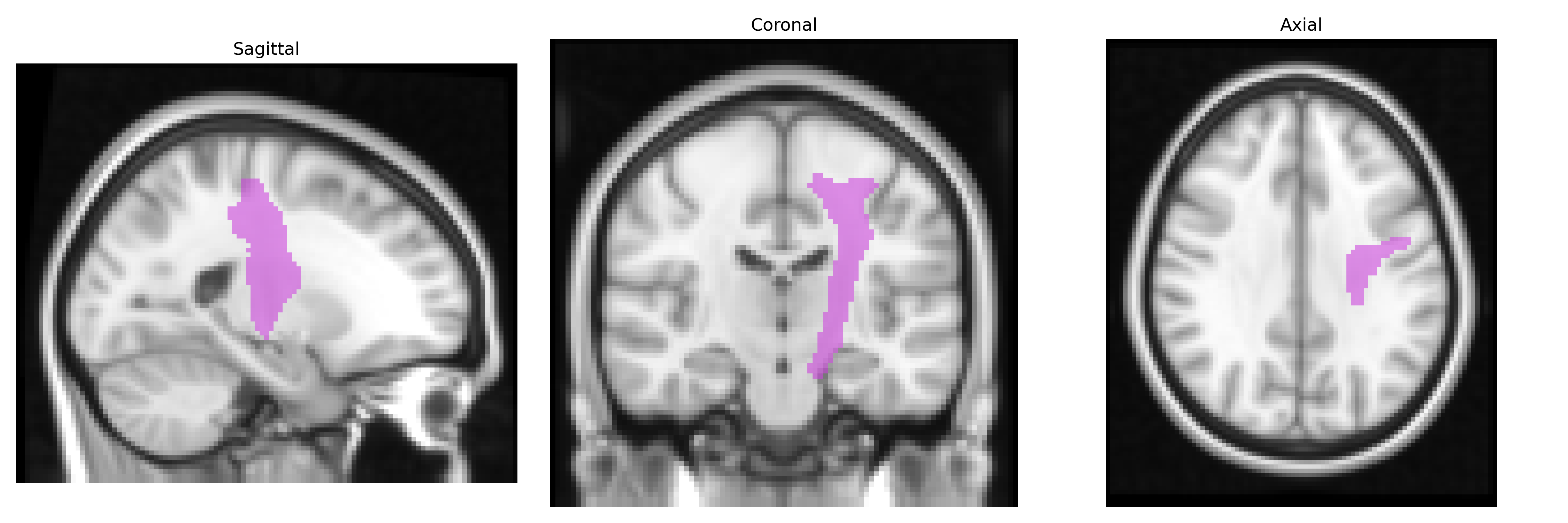
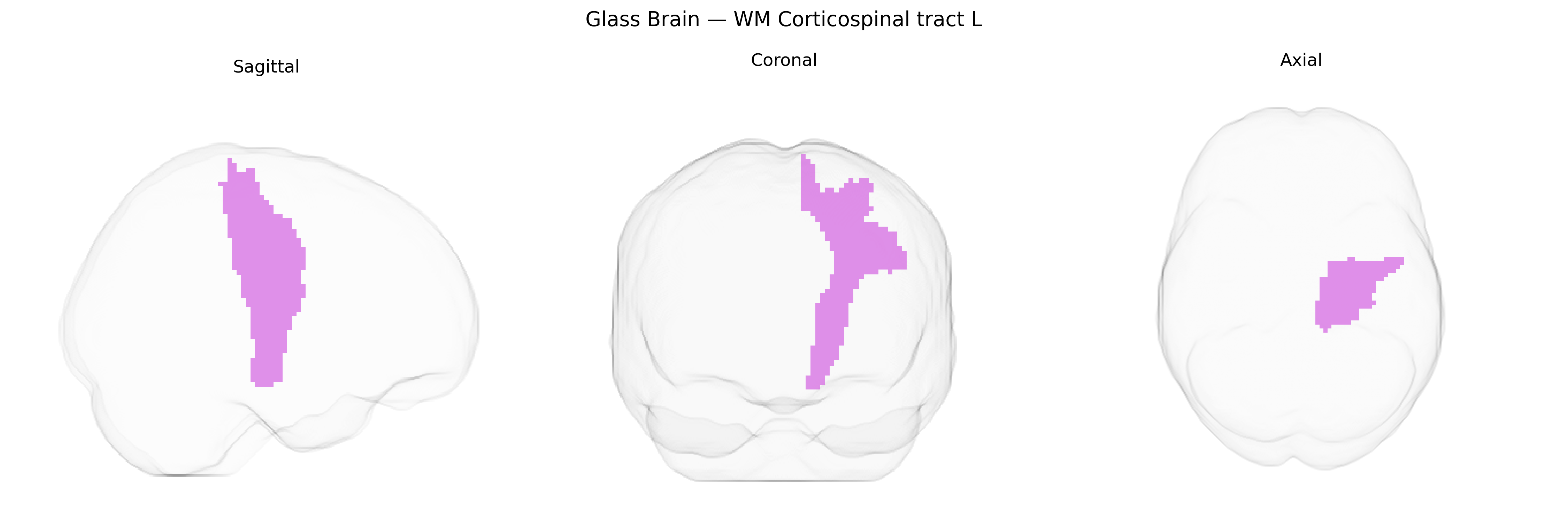
The bilateral WM Corticospinal tract L in the Juelich maxprob thr25 2mm atlas corresponds to the left-lateralized white matter portion of the corticospinal pathway, a major descending motor tract that originates primarily from neurons in the primary motor cortex, premotor cortex, and supplementary motor area and projects through the corona radiata, internal capsule, cerebral peduncles, pons, and medullary pyramids to terminate mainly on spinal interneurons and, to a lesser extent, directly on alpha motor neurons in the ventral horn. This tract is crucial for the execution and fine control of voluntary movements, especially of distal limb muscles, and is characterized by somatotopic organization reflecting the motor homunculus. Lesions involving the left corticospinal tract typically manifest as contralateral motor deficits, such as weakness, spasticity, and impaired dexterity, due to disruption of excitatory drive to spinal motor circuits. There is no direct Wikipedia article for the specific atlas label “bilateral WM Corticospinal tract L,” but its broader structure is described under the Corticospinal tract.
The bilateral white matter (WM) corticospinal tract in the left hemisphere, as defined in the Juelich maxprob thr25 2mm Atlas, has been implicated in genetic studies largely through imaging genetics and neurodevelopmental GWAS that use diffusion MRI metrics (e.g., fractional anisotropy, mean diffusivity) as endophenotypes rather than directly mapping single variants to atlas-defined tracts. Variants in genes involved in axon guidance, myelination, and cytoskeletal organization—such as CNTN4, NRG1, MAG, and several oligodendrocyte-related loci—have been associated with microstructural properties of major motor white matter pathways, including the corticospinal tract, in large consortia like ENIGMA-DTI, although findings often reflect polygenic and distributed effects and are not specific to the left tract alone. GWAS of motor-related traits, such as general motor ability, reaction time, and gait parameters, along with disorders featuring motor impairment (e.g., cerebral palsy, multiple sclerosis, amyotrophic lateral sclerosis, and some forms of schizophrenia and autism with motor deficits), often highlight genes that influence corticospinal tract integrity, but typically via global or regional white matter measures rather than tract-specific, atlas-based labels. Overall, genetic associations with the left corticospinal tract in the Juelich atlas are best understood as part of broader polygenic influences on white matter development, myelination, and motor network organization, with no widely accepted single-gene or variant uniquely tied to this specific atlas-defined region.
Overview generated by GPT-4o (2026).
Region ID: 99
Hemisphere: bilateral
Atlas: Juelich maxprob thr25 2mm
Full Quality Version: Download MP4
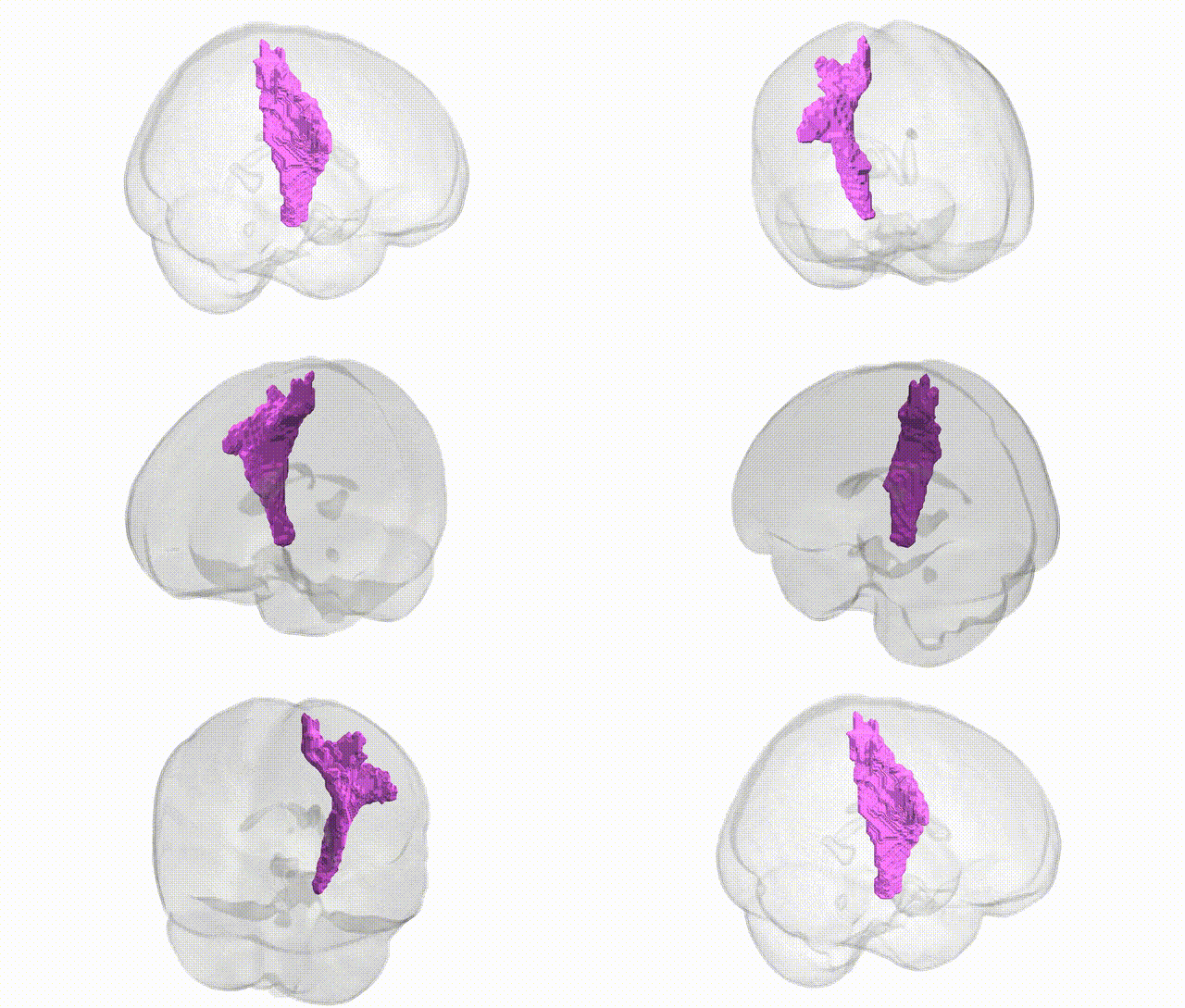
Full Quality Version: Download MP4
Wali Sidiqyar*, Gaurav Rudravaram*, Elyssa M. McMaster, Trent M. Schwartz, Adam M. Saunders, Kurt G. Schilling, Bennett A. Landman "Introducing SPINS: A Shared Public Visualization Library of Neuroanatomical Structures." Medical Imaging with Deep Learning- short paper
This resource is licensed under CC0 1.0 Universal (Public Domain).