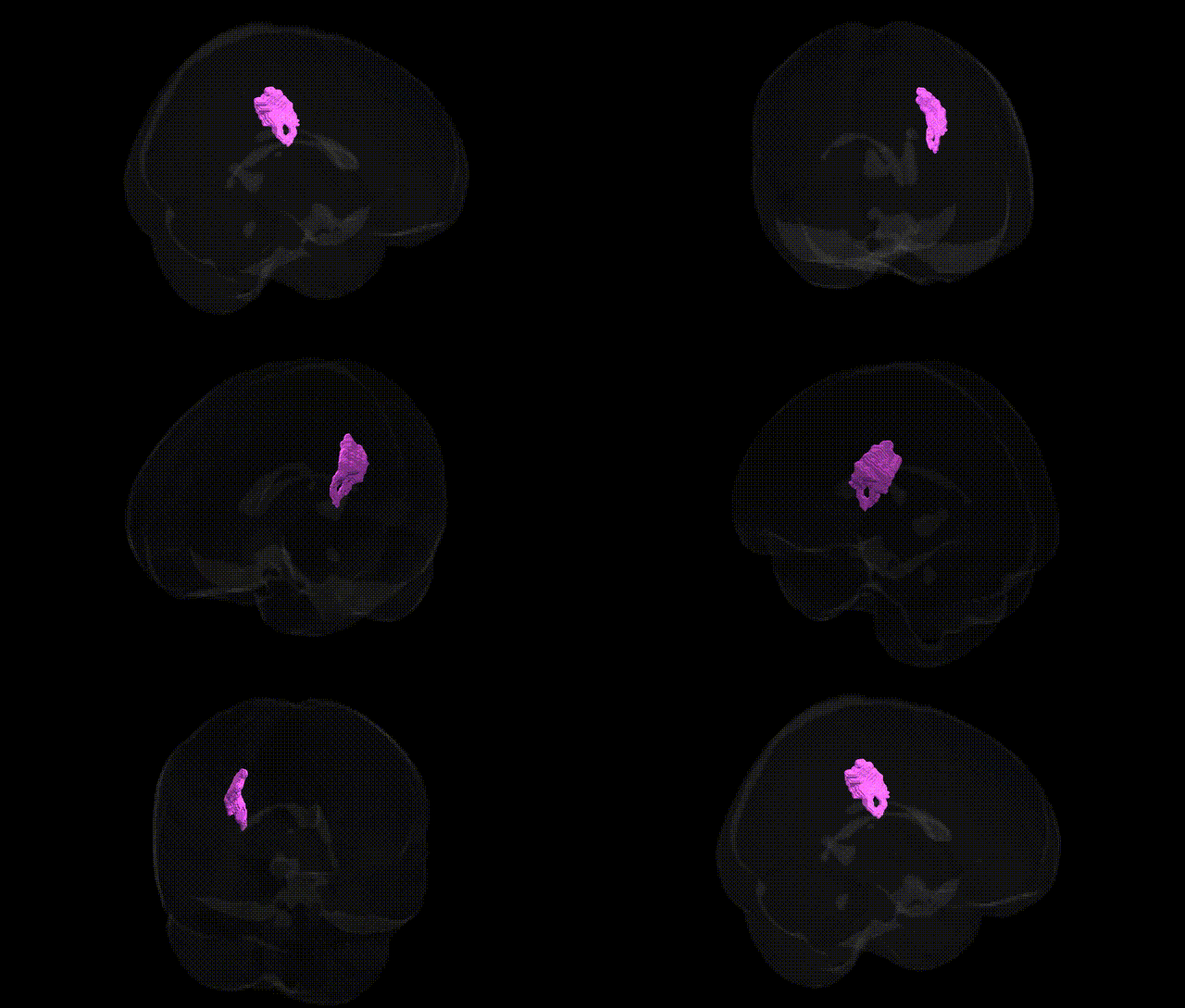
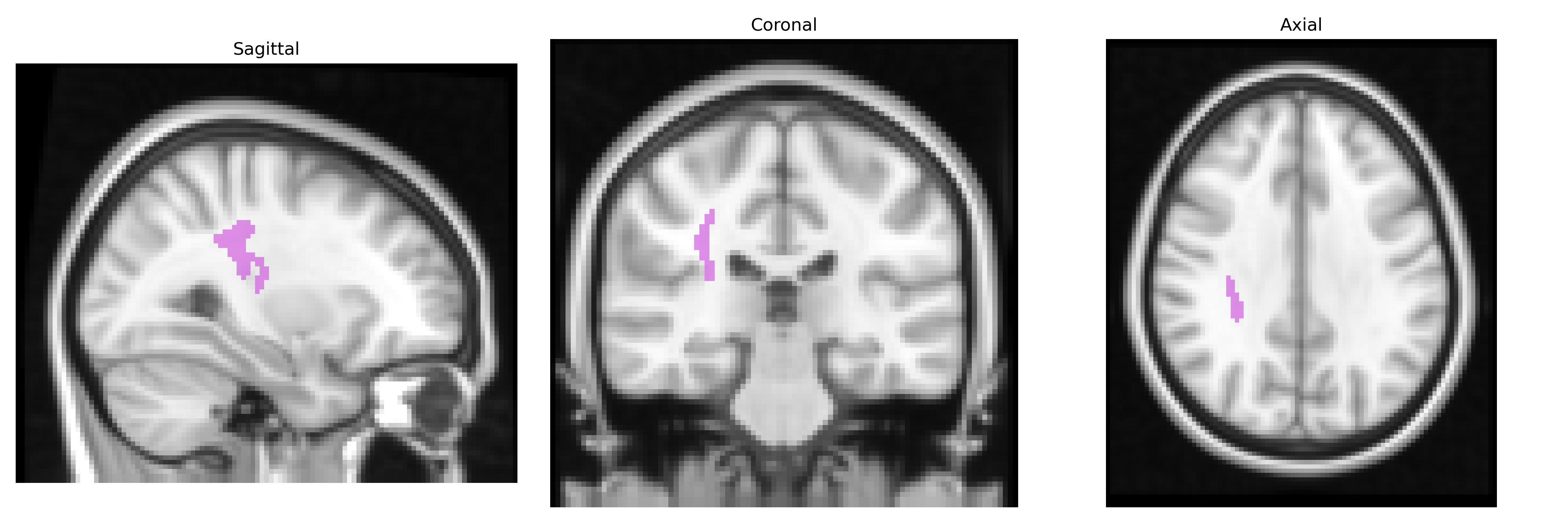
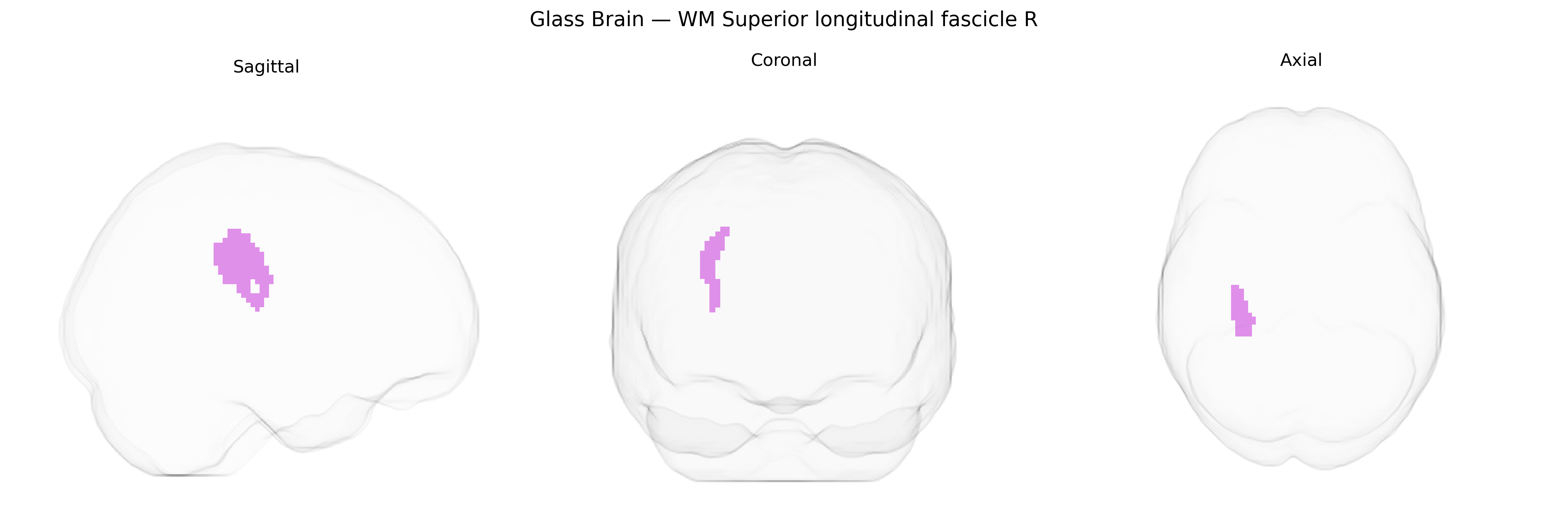
The bilateral WM Superior longitudinal fascicle R, as defined in the Juelich maxprob thr25 2mm Atlas, corresponds to the right-hemispheric component of the superior longitudinal fasciculus (SLF), a major association white matter pathway interconnecting frontal, parietal, temporal, and occipital cortices. This tract is composed of several subcomponents (often designated SLF I–III and the arcuate fasciculus), which together support higher-order cognitive and sensorimotor functions, including language, attention, visuospatial processing, and the integration of multimodal sensory information. The bilateral descriptor in this context reflects probabilistic mapping across subjects, while “R” specifies localization predominantly in the right hemisphere. The SLF courses dorsally and laterally around the insula, linking posterior parietal regions with frontal association areas and forming part of the structural backbone of large-scale brain networks such as the dorsal attention and frontoparietal control systems. Superior longitudinal fasciculus
The superior longitudinal fasciculus (SLF), a major bilateral white matter tract connecting frontal, parietal, and temporal regions, has been repeatedly implicated in genetic studies of brain structure and neuropsychiatric risk. Twin and SNP-heritability analyses from large imaging-genetics cohorts (e.g., ENIGMA, UK Biobank) indicate substantial heritability of SLF microstructural measures (fractional anisotropy, mean diffusivity), with common variants explaining a notable fraction of interindividual variability. GWAS of white matter integrity have identified loci near genes involved in axon guidance, myelination, and cytoskeletal dynamics (such as those related to NCAM, ROBO/SLIT pathways, and oligodendrocyte function) that show associations with SLF metrics, though most findings are polygenic and not specific to a single SLF subsegment such as the Juelich “WM Superior longitudinal fascicle R” label. Altered SLF structure has been genetically and phenotypically linked to disorders including schizophrenia, autism spectrum disorder, attention-deficit/hyperactivity disorder, and major depressive disorder, where risk alleles and polygenic risk scores correlate with SLF microstructural abnormalities; additionally, SLF integrity has been associated with cognitive traits such as general intelligence, working memory, reading ability, and language-related performance in imaging-genetic studies. However, current GWAS do not typically resolve associations at the level of this exact Juelich ROI, and reported genetic effects should be viewed as reflecting variation across the broader SLF system rather than this specific right-hemispheric segment alone.
Overview generated by GPT-4o (2026).
Region ID: 110
Hemisphere: bilateral
Atlas: Juelich maxprob thr25 2mm
Full Quality Version: Download MP4
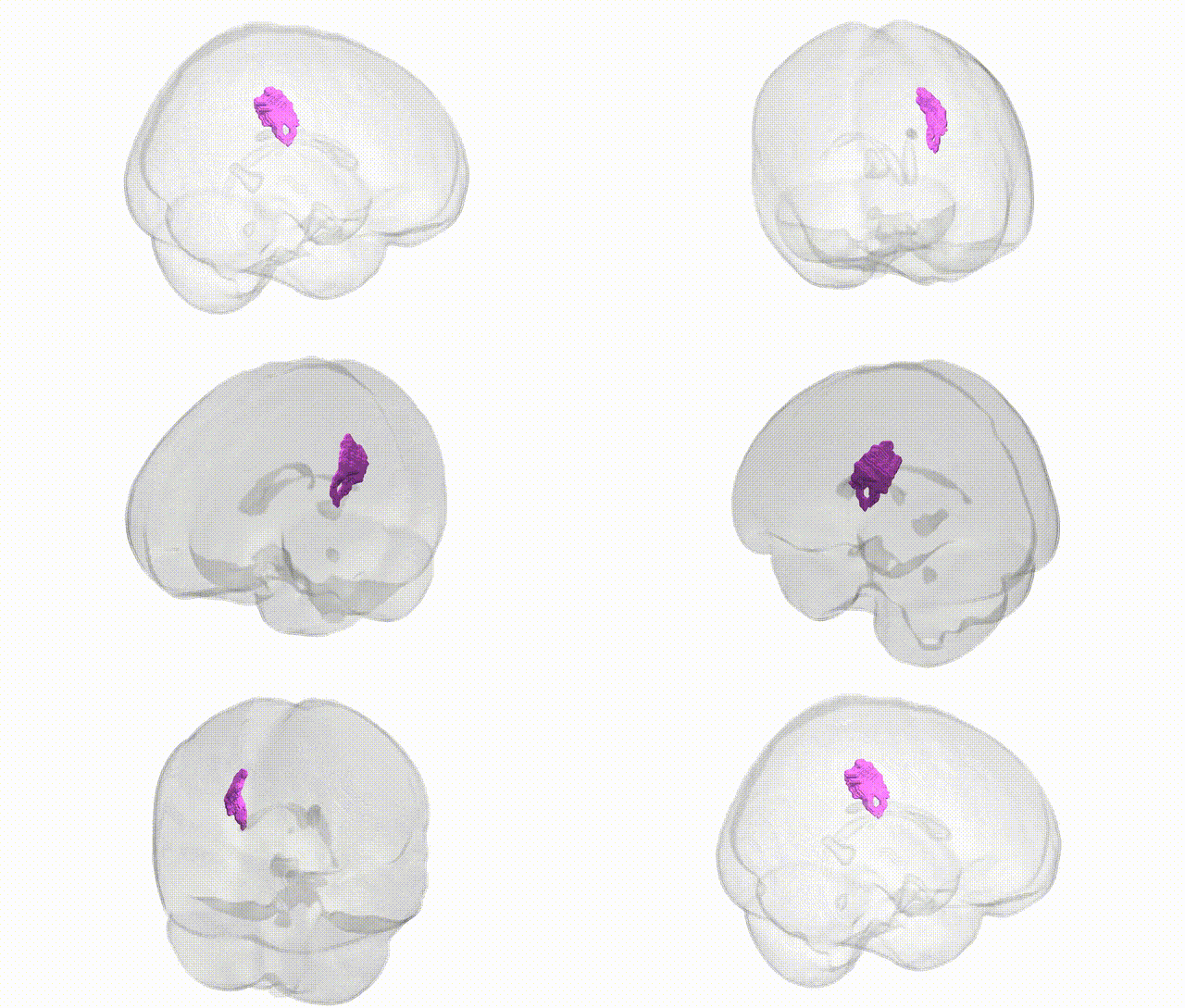
Full Quality Version: Download MP4
Wali Sidiqyar*, Gaurav Rudravaram*, Elyssa M. McMaster, Trent M. Schwartz, Adam M. Saunders, Kurt G. Schilling, Bennett A. Landman "Introducing SPINS: A Shared Public Visualization Library of Neuroanatomical Structures." Medical Imaging with Deep Learning- short paper
This resource is licensed under CC0 1.0 Universal (Public Domain).