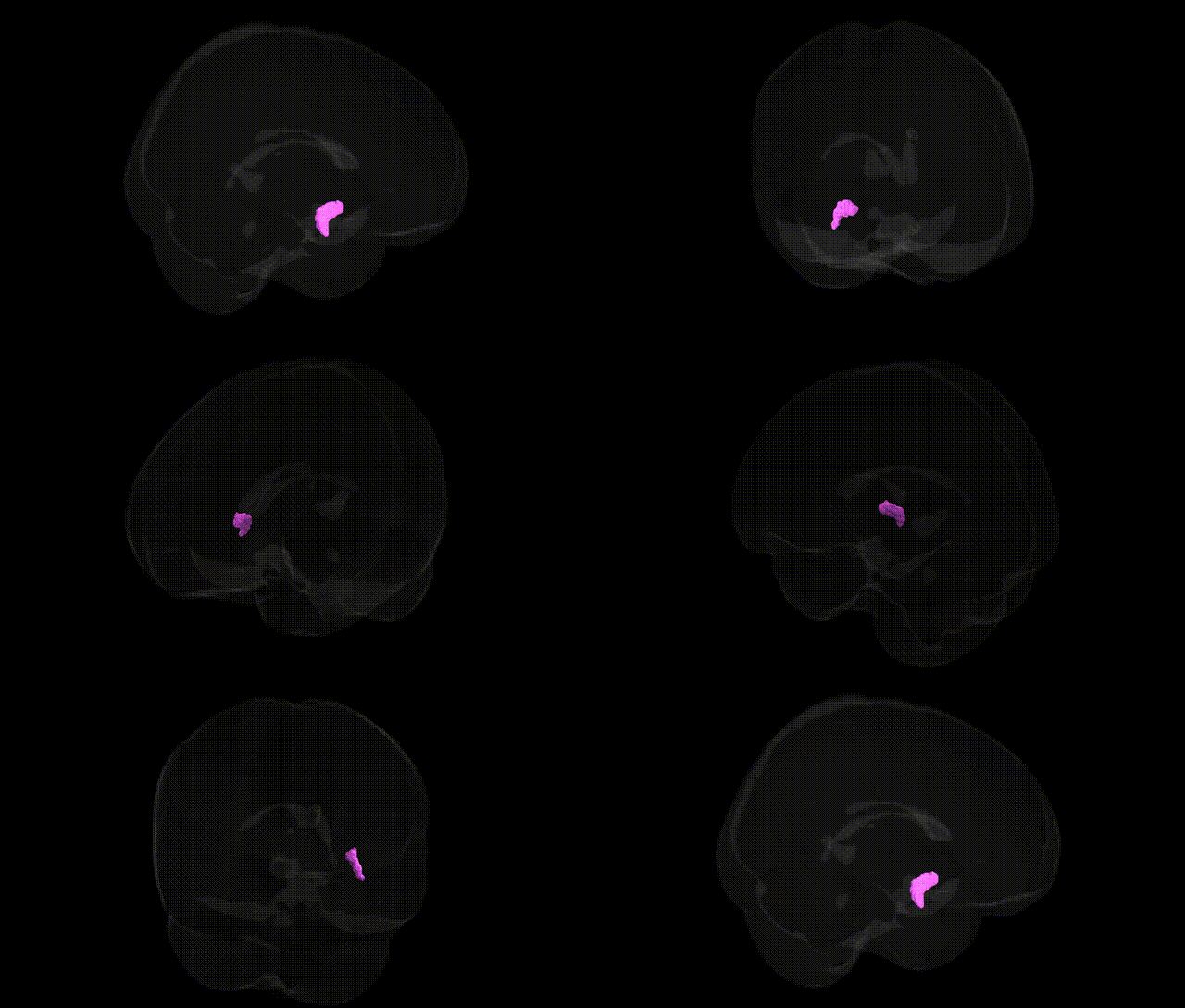
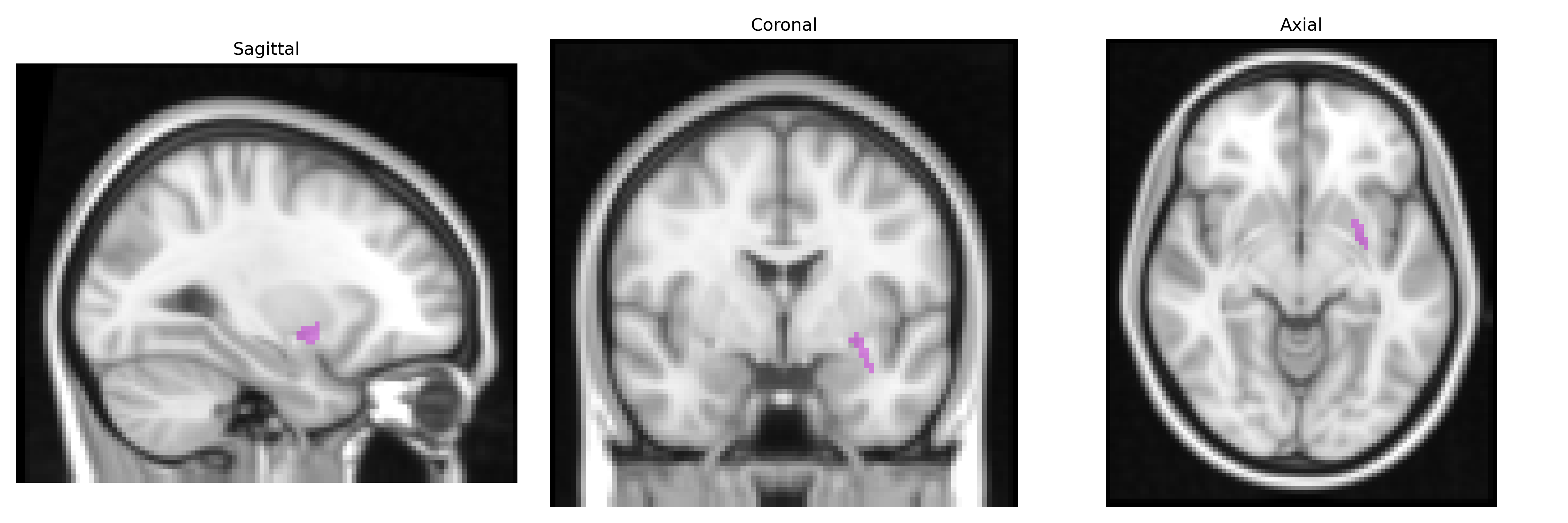
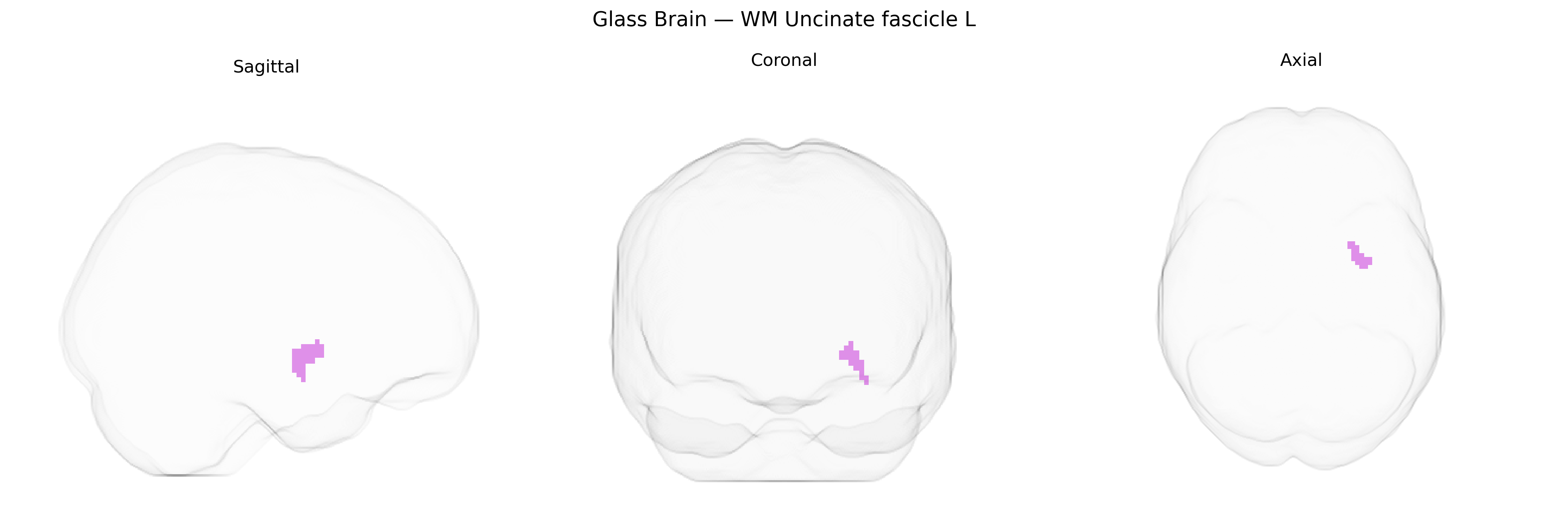
The bilateral WM Uncinate fascicle L in the Juelich maxprob thr25 2 mm atlas corresponds to the left-hemispheric portion of the uncinate fasciculus, a long association white-matter tract connecting anterior temporal lobe structures (including portions of the temporal pole and amygdalar region) with orbitofrontal and ventromedial prefrontal cortices. This tract courses medially through the temporal stem, curving around the Sylvian fissure and passing beneath the insula, enabling integration of limbic, mnemonic, and higher-order cognitive and socio-emotional processing. Functionally, the uncinate fasciculus has been implicated in semantic memory, emotional regulation, social cognition, and aspects of decision-making, and its microstructural integrity is frequently examined in neuropsychiatric and neurodegenerative conditions. There is no direct Wikipedia article for the Juelich “bilateral WM Uncinate fascicle L” label; a closely related structure is the Uncinate fasciculus.
The uncinate fasciculus (UF), including the left segment represented in the Juelich maxprob thr25 2mm atlas, is a frontotemporal white-matter tract whose microstructure shows robust heritability and has been repeatedly implicated in imaging genetics and GWAS of brain connectivity. Twin and family studies report substantial genetic contributions (often h² ~0.4–0.7) to diffusion MRI measures (FA, MD) in the UF, and large-scale GWAS of white-matter integrity (e.g., UK Biobank–based studies) have identified polygenic influences on UF microstructure involving variants in axon guidance, myelination, and neurodevelopmental pathways, though specific high-confidence locus–UF links remain emerging rather than consolidated. Genetically informed imaging studies have associated UF alterations with risk variants for schizophrenia (such as those in CACNA1C, ZNF804A, and other common schizophrenia GWAS loci), bipolar disorder, and major depressive disorder, as well as with polygenic risk scores for psychosis and mood disorders, consistent with the tract’s role in frontotemporal connectivity and emotional regulation. UF integrity has also been genetically and phenotypically linked to anxiety traits, callous–unemotional features, antisocial behavior, and autism spectrum conditions, with some studies showing that risk alleles for these disorders or traits modulate UF diffusion metrics. In addition, common variants related to Alzheimer’s disease and other neurodegenerative processes (including APOE and broader AD polygenic risk) have been associated with altered UF microstructure, reflecting vulnerability of frontotemporal connections in cognitive decline. Overall, genetic studies support the bilateral uncinate fasciculus as a heritable, polygenically influenced tract whose structure mediates the impact of diverse neuropsychiatric and neurodegenerative risk variants on behavior and cognition, though precise, region-specific GWAS hits for the “bilateral WM Uncinate fascicle L” label itself have not yet been definitively characterized.
Overview generated by GPT-4o (2026).
Region ID: 115
Hemisphere: bilateral
Atlas: Juelich maxprob thr25 2mm
Full Quality Version: Download MP4
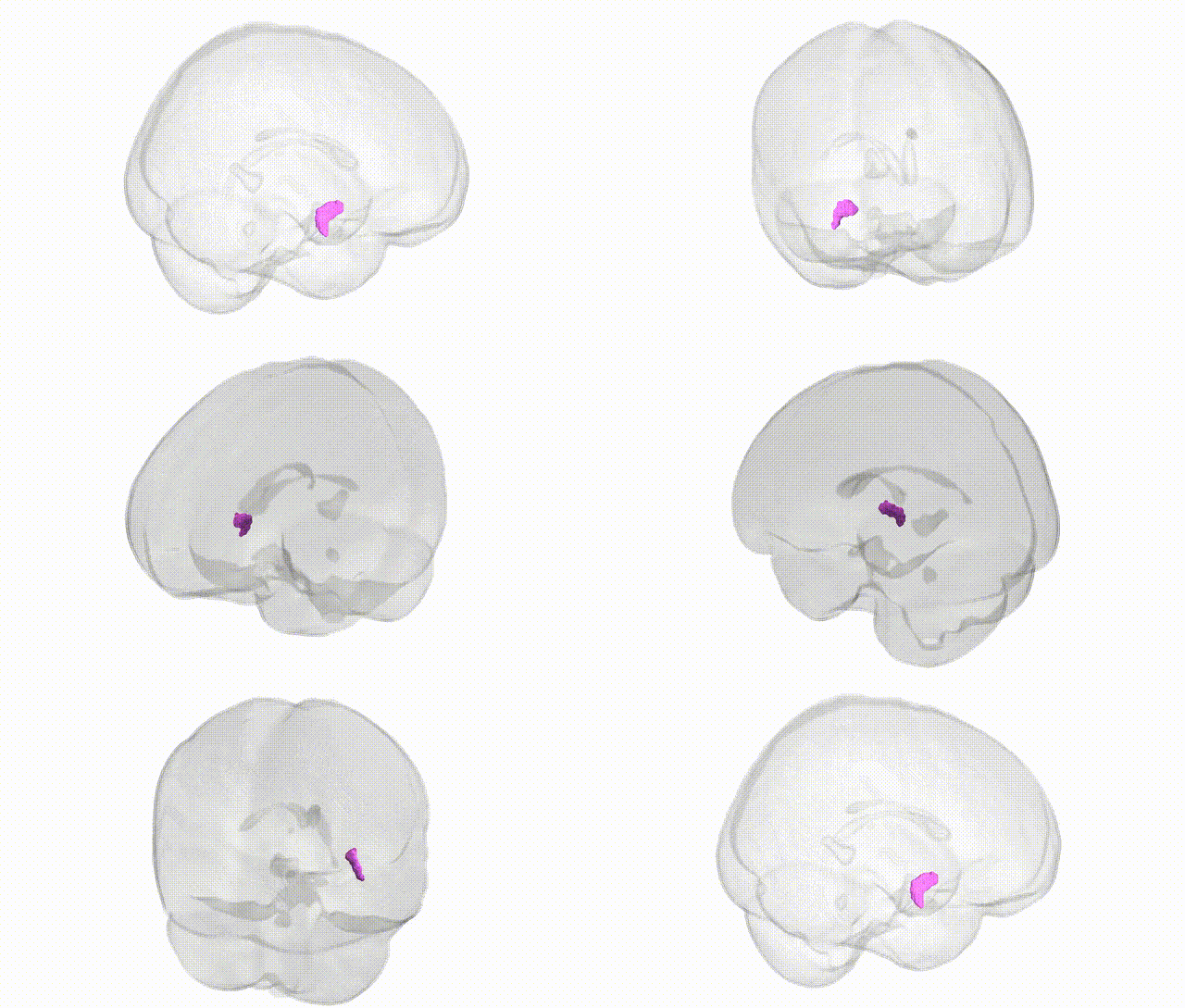
Full Quality Version: Download MP4
Wali Sidiqyar*, Gaurav Rudravaram*, Elyssa M. McMaster, Trent M. Schwartz, Adam M. Saunders, Kurt G. Schilling, Bennett A. Landman "Introducing SPINS: A Shared Public Visualization Library of Neuroanatomical Structures." Medical Imaging with Deep Learning- short paper
This resource is licensed under CC0 1.0 Universal (Public Domain).