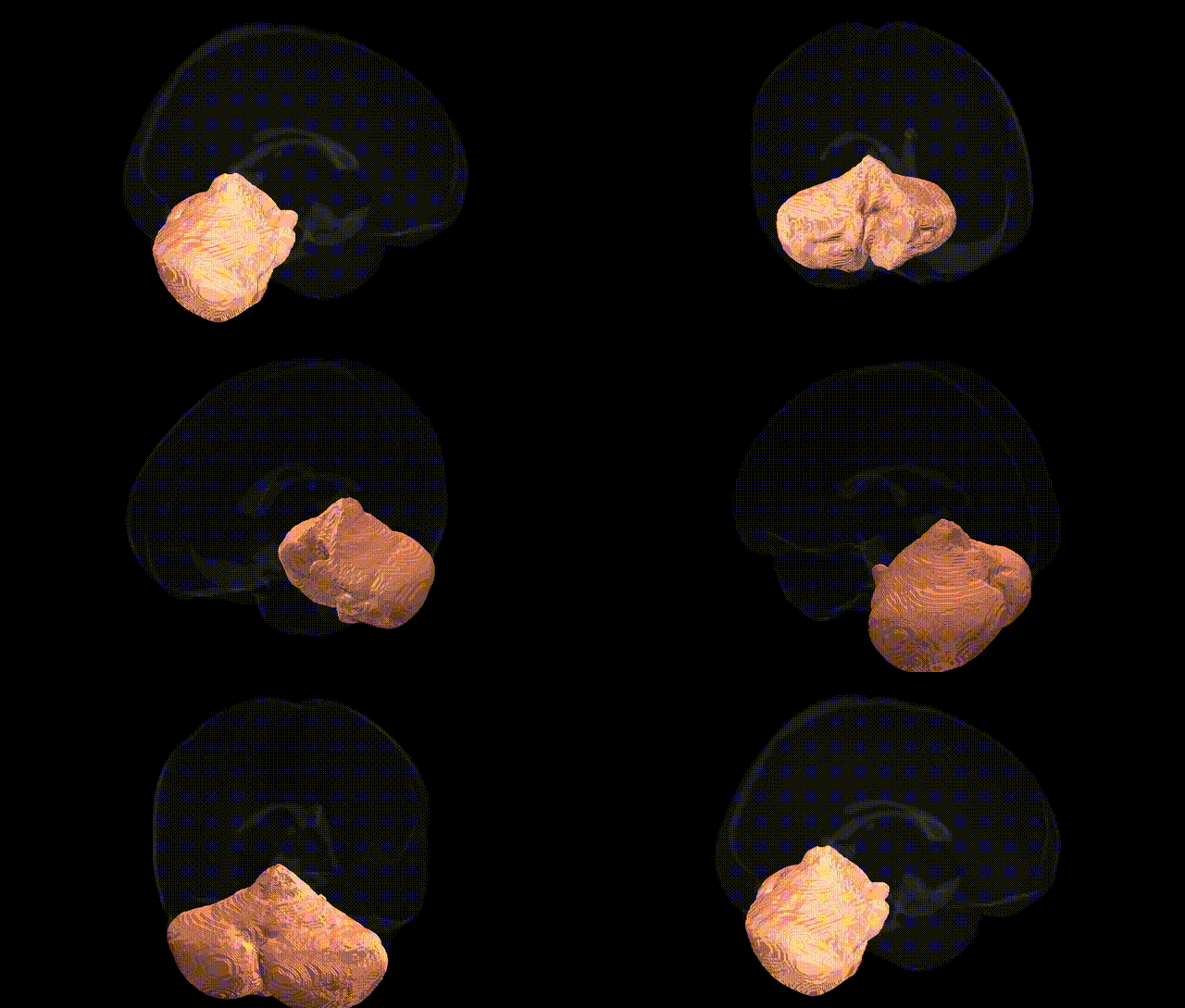
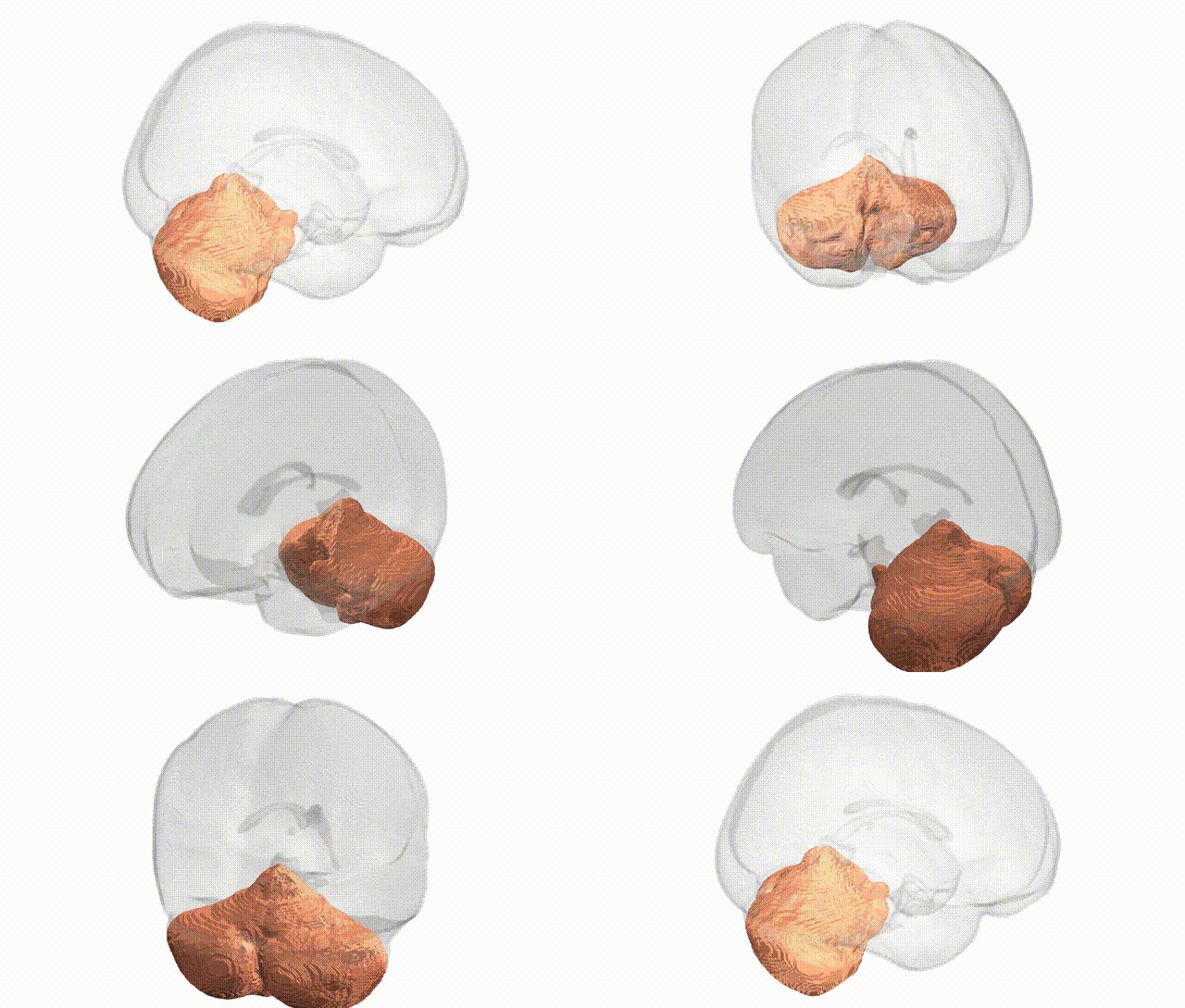
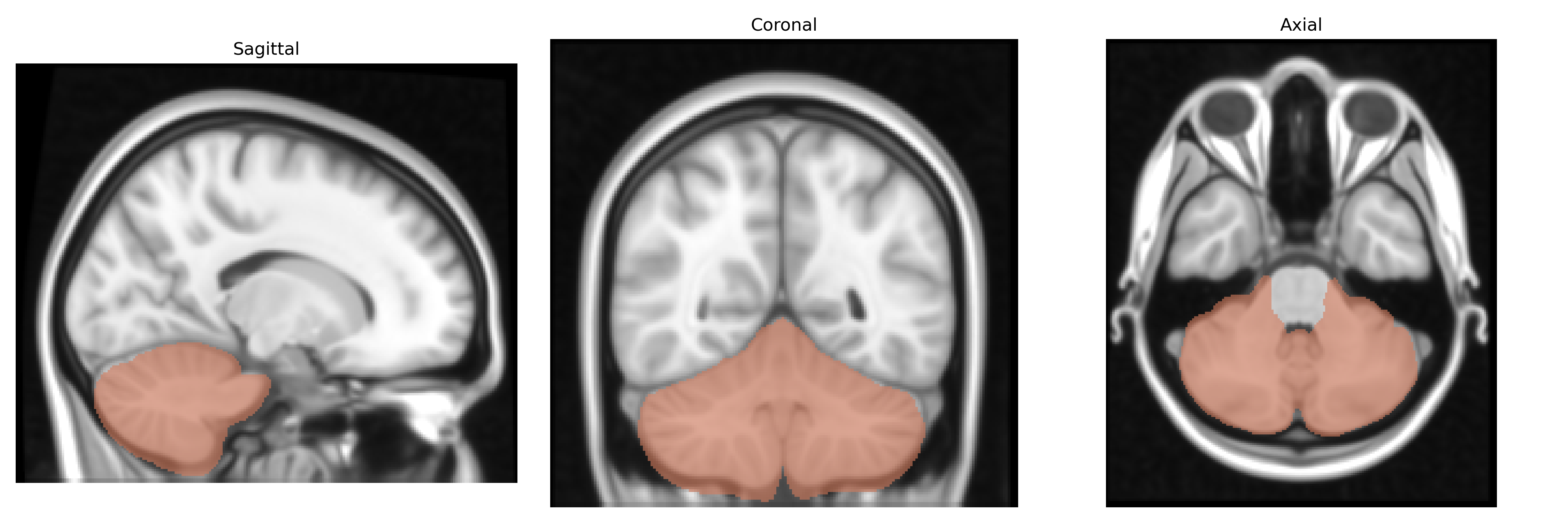
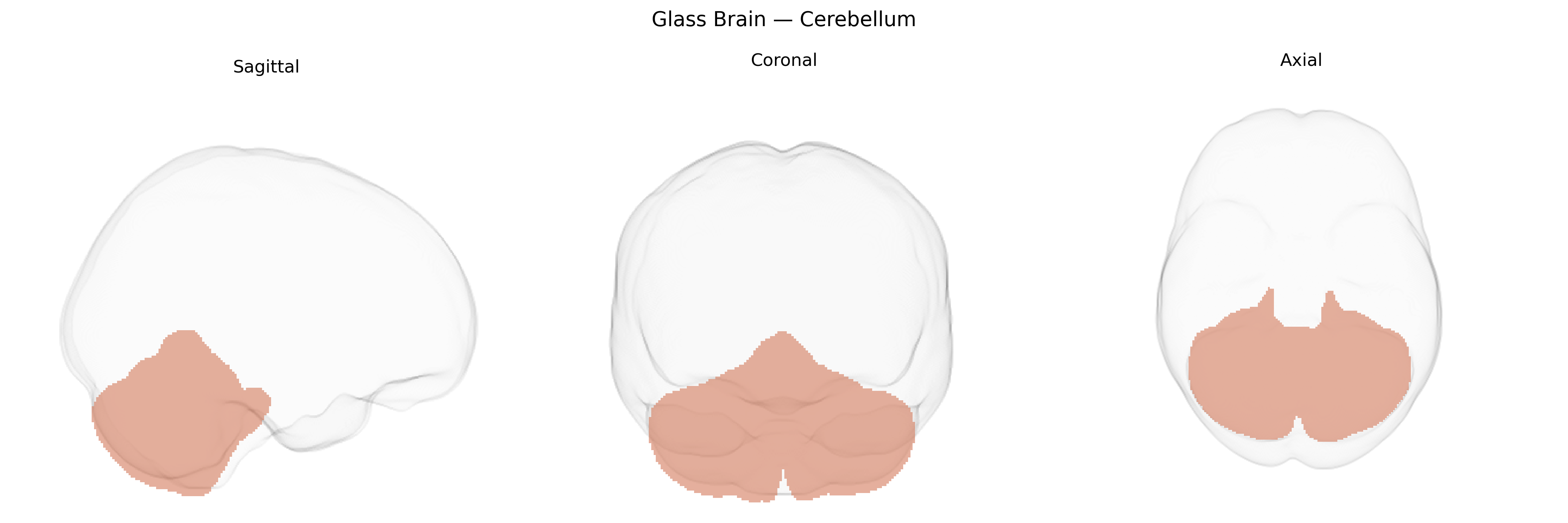
The bilateral cerebellum, as defined in the MNI Structural maxprob thr25 1mm Atlas, refers to the paired hemispheric portions of the cerebellar structure located in the posterior cranial fossa, dorsal to the brainstem and beneath the occipital lobes. Structurally, it is composed of an outer cerebellar cortex with distinctive folia, an underlying white matter arbor vitae, and deep cerebellar nuclei (including dentate, interposed, and fastigial nuclei), organized into lobules that support both sensorimotor and cognitive functions. Functionally, the cerebellar hemispheres are crucial for fine motor coordination, timing, motor learning, and adaptive control of movement, and they contribute to higher-order processes such as language, executive functions, and affective regulation through widespread connections with cerebral cortical and subcortical regions. The bilateral representation emphasizes its symmetric, midline-spanning organization around the vermis and its integration into distributed cerebro-cerebellar loops. Cerebellum
The bilateral cerebellum, as defined in the MNI Structural maxprob thr25 1 mm atlas, has been implicated in multiple genetic associations through GWAS and imaging‑genetics studies, particularly via cerebellar volume and connectivity endophenotypes. Common variants in genes involved in neurodevelopment and synaptic function (for example, MIR2113, TMEM106B, and loci near APOE) have been associated with interindividual differences in cerebellar volume, and polygenic scores for general cognitive ability and educational attainment show correlations with cerebellar structure, consistent with the cerebellum’s role in higher‑order cognition. Several psychiatric and neurodevelopmental disorders—including schizophrenia, autism spectrum disorder, major depressive disorder, and bipolar disorder—display genetically influenced alterations in cerebellar morphology and functional coupling, with overlap between disorder risk loci and genes regulating cerebellar development, synaptic plasticity, and myelination. Neurological disease genes, such as those underlying spinocerebellar ataxias (e.g., ATXN1, ATXN2, CACNA1A), multiple system atrophy, and some forms of epilepsy, directly affect cerebellar circuits, while common risk variants for Alzheimer’s disease and Parkinson’s disease have been associated with cerebellar atrophy patterns in large‑scale imaging‑genetics cohorts. Overall, the bilateral cerebellum emerges as a key target of polygenic influences spanning motor control, cognition, and psychiatric liability, with many associations mediated by shared developmental and synaptic pathways rather than region‑specific genes.
Overview generated by GPT-4o (2026).
Region ID: 2
Hemisphere: bilateral
Atlas: MNI Structural maxprob thr25 1mm
Full Quality Version: Download MP4
Full Quality Version: Download MP4
Wali Sidiqyar*, Gaurav Rudravaram*, Elyssa M. McMaster, Trent M. Schwartz, Adam M. Saunders, Kurt G. Schilling, Bennett A. Landman "Introducing SPINS: A Shared Public Visualization Library of Neuroanatomical Structures." Medical Imaging with Deep Learning- short paper
This resource is licensed under CC0 1.0 Universal (Public Domain).