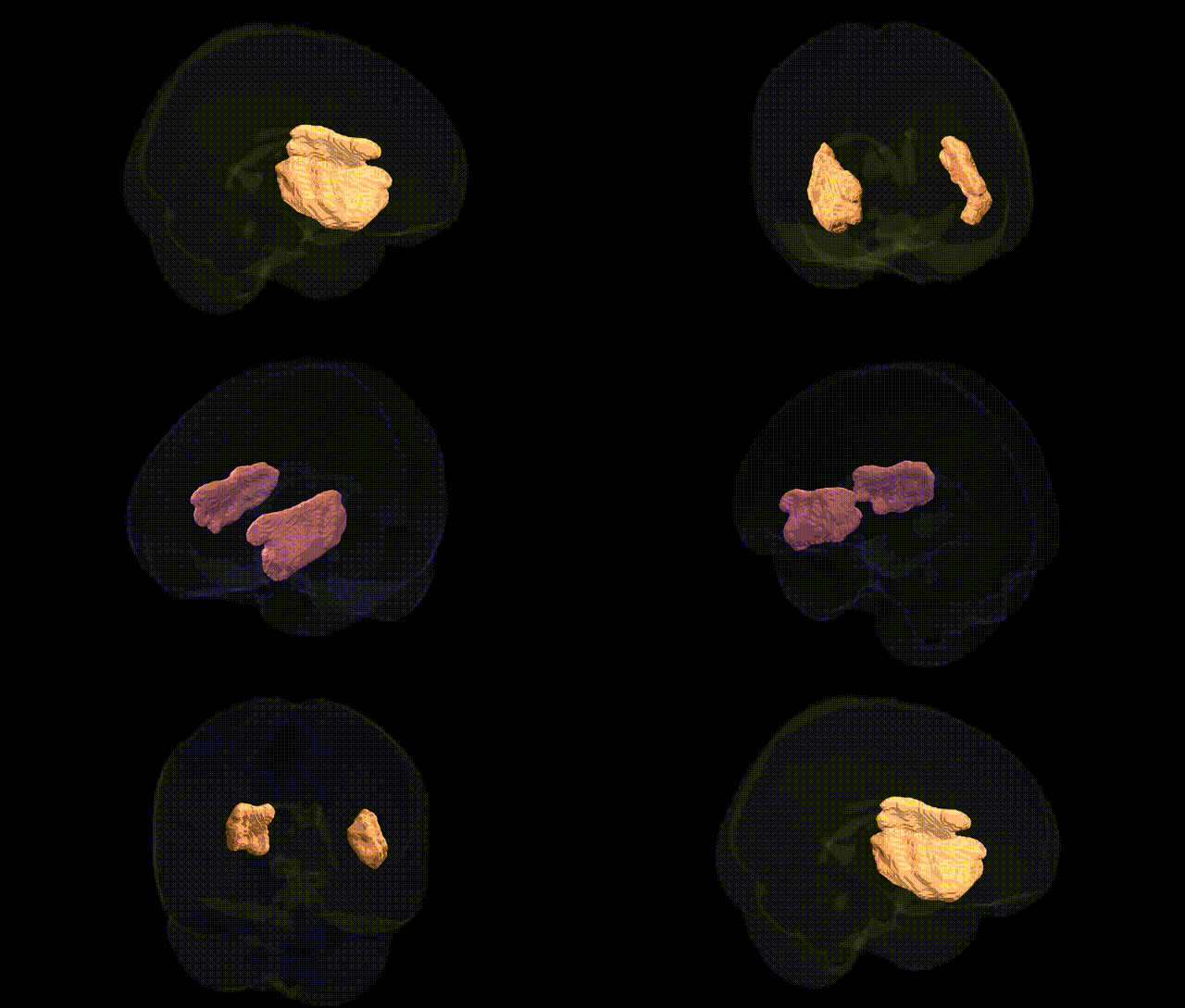
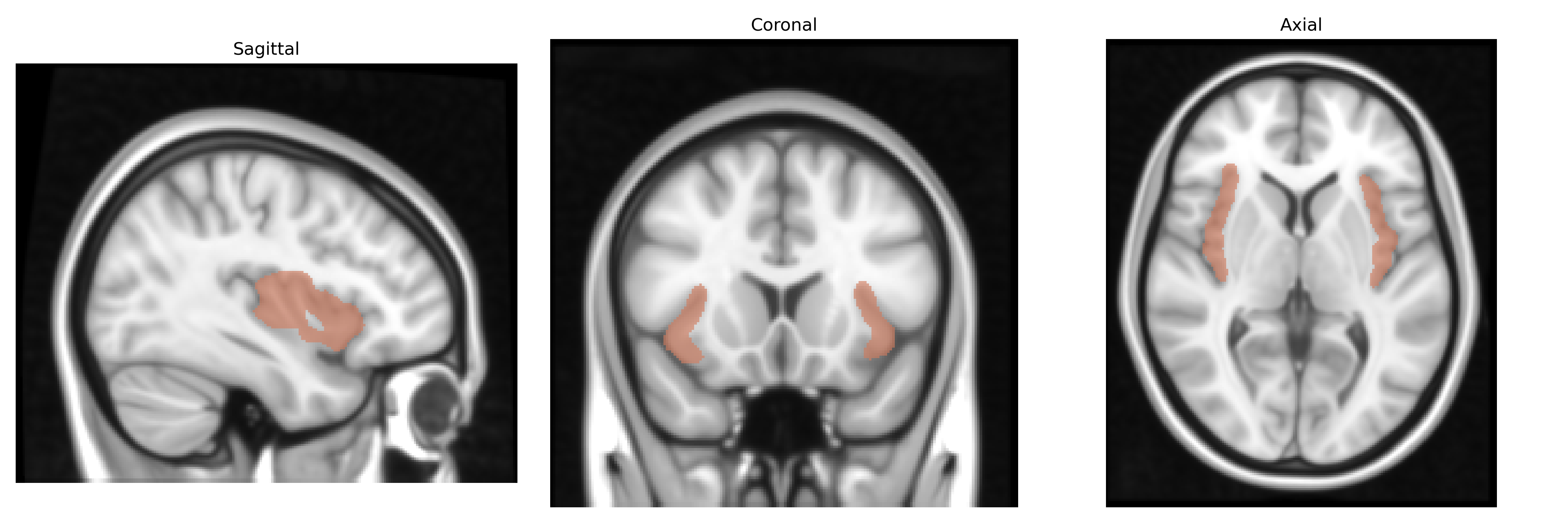
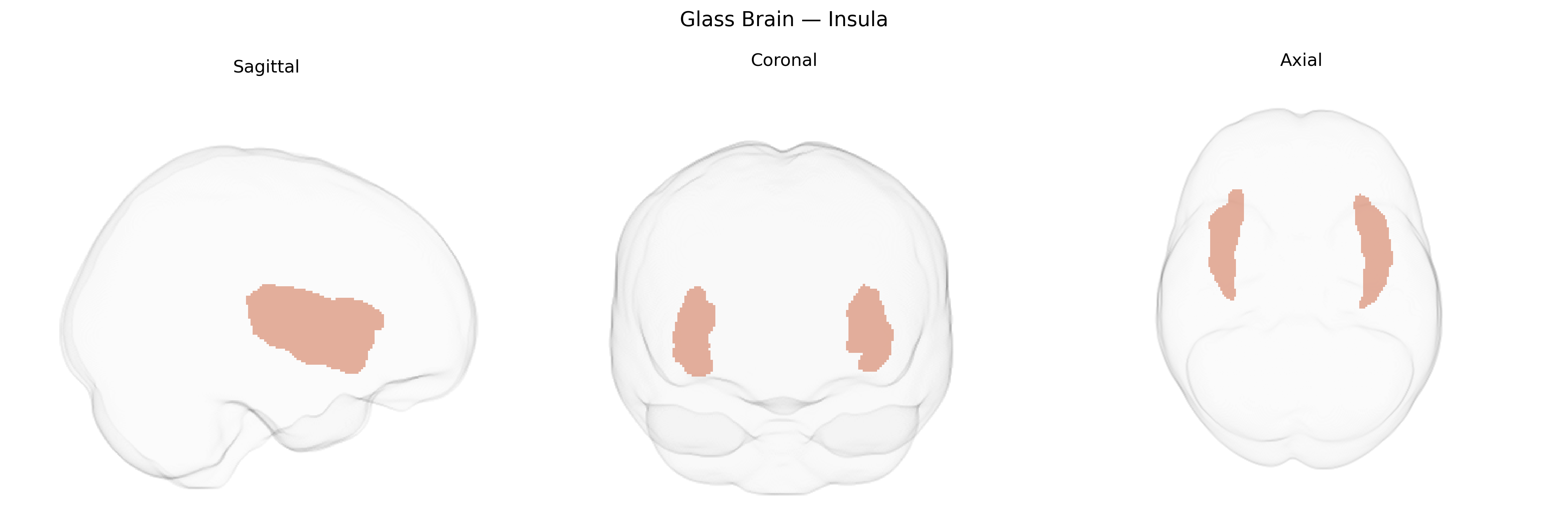
The bilateral insula, as defined in the MNI Structural maxprob thr25 1 mm Atlas, is a paired cortical region buried deep within the lateral sulcus, forming part of the cerebral cortex between the frontal, temporal, and parietal lobes. It is composed of anterior and posterior subregions with distinct cytoarchitecture and connectivity, and is involved in interoceptive awareness, autonomic regulation, gustation, visceral sensation, affective processing, pain perception, and integration of emotional and cognitive states. The insula receives multimodal inputs from thalamic, limbic, and sensory association areas and projects to frontal, limbic, and subcortical structures, thereby contributing to salience detection, homeostatic control, and aspects of conscious experience. Insular cortex
Genetic associations involving the bilateral insula, as defined in the MNI Structural maxprob thr25 1mm atlas, arise largely from imaging genetics and GWAS of brain structure and function, as well as disorder- and trait-based studies implicating insular morphology and connectivity. Common variation in genes regulating neurodevelopment, synaptic plasticity, and neurotransmission—such as BDNF, CACNA1C, GRIN2B, and genes in dopaminergic and serotonergic pathways—has been linked to insular cortical thickness, gray matter volume, and functional activation patterns in large cohorts. GWAS of cortical morphology have identified insula-related loci in genes involved in neuronal migration, axon guidance, and calcium signaling, while polygenic risk for schizophrenia, bipolar disorder, and major depression shows associations with reduced insular volume and altered connectivity. Insular structure and function also exhibit genetic correlations with traits such as anxiety, neuroticism, risk-taking, interoceptive sensitivity, and substance use, consistent with the insula’s role in salience processing and emotional regulation. Additionally, genomic variants associated with chronic pain, nicotine dependence, obesity, and autonomic regulation show convergent evidence through imaging genetics for altered insular anatomy or reactivity, suggesting that partly shared genetic architectures influence both insular organization and susceptibility to these clinical and behavioral phenotypes.
Overview generated by GPT-4o (2026).
Region ID: 4
Hemisphere: bilateral
Atlas: MNI Structural maxprob thr25 1mm
Full Quality Version: Download MP4
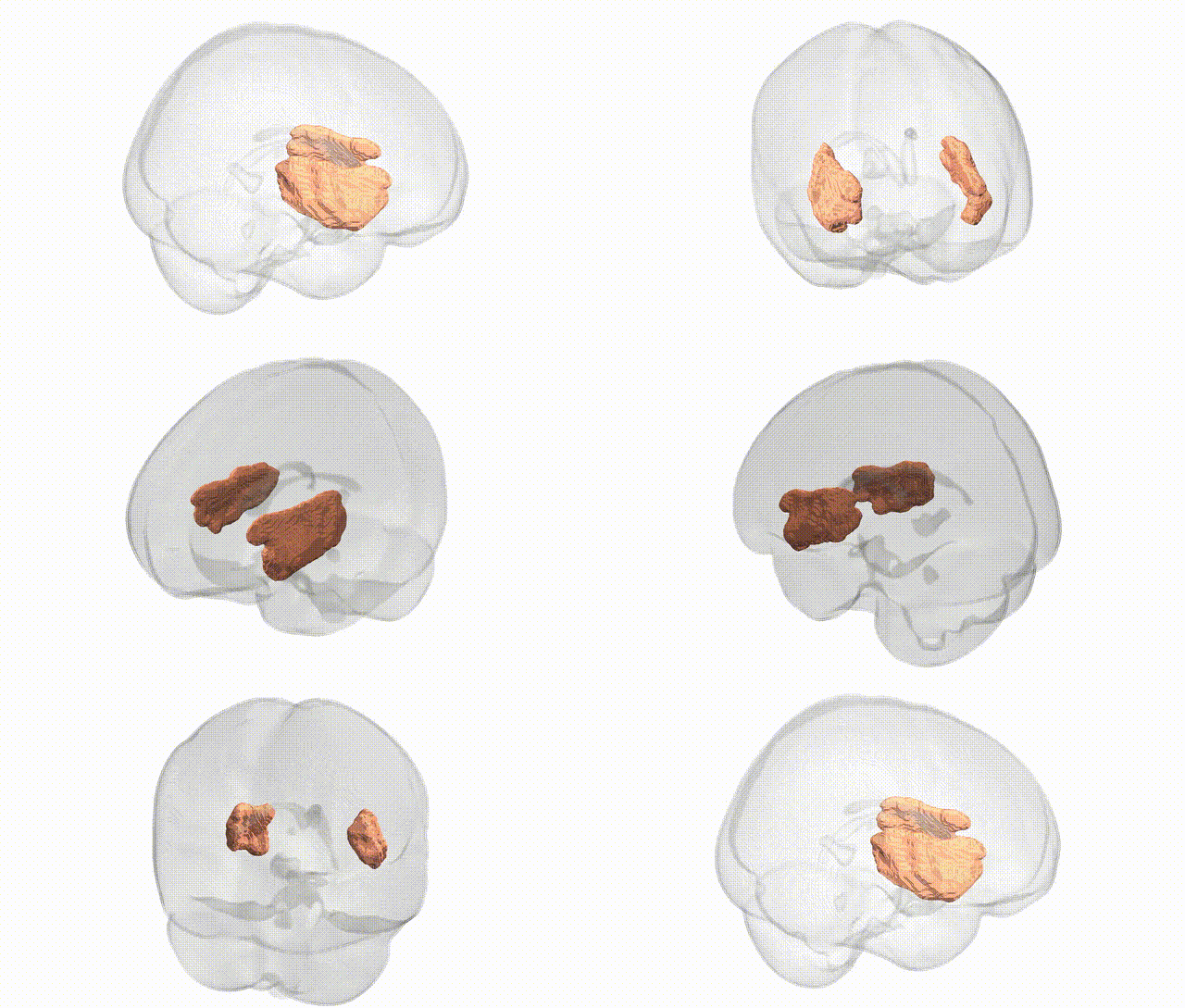
Full Quality Version: Download MP4
Wali Sidiqyar*, Gaurav Rudravaram*, Elyssa M. McMaster, Trent M. Schwartz, Adam M. Saunders, Kurt G. Schilling, Bennett A. Landman "Introducing SPINS: A Shared Public Visualization Library of Neuroanatomical Structures." Medical Imaging with Deep Learning- short paper
This resource is licensed under CC0 1.0 Universal (Public Domain).