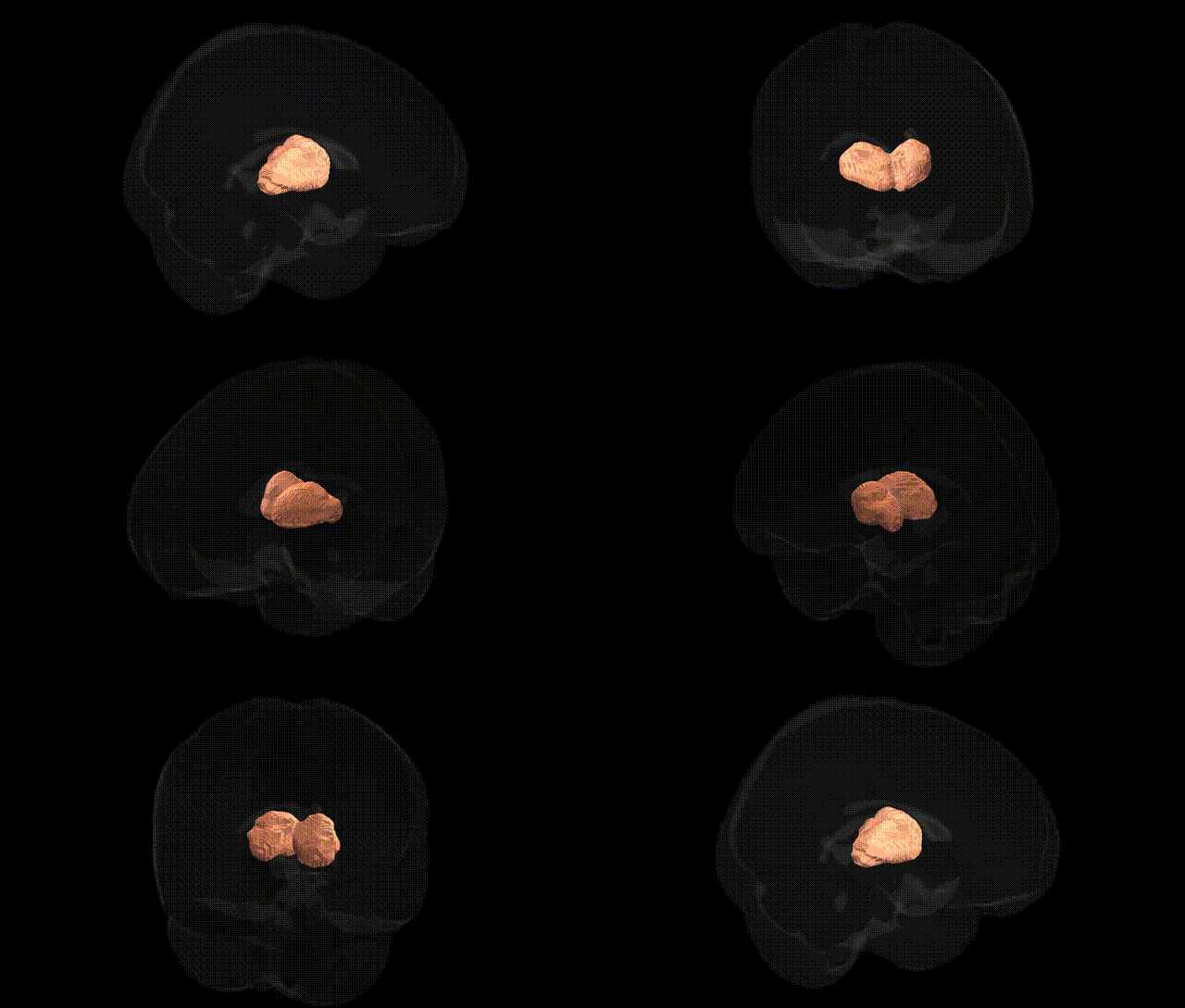
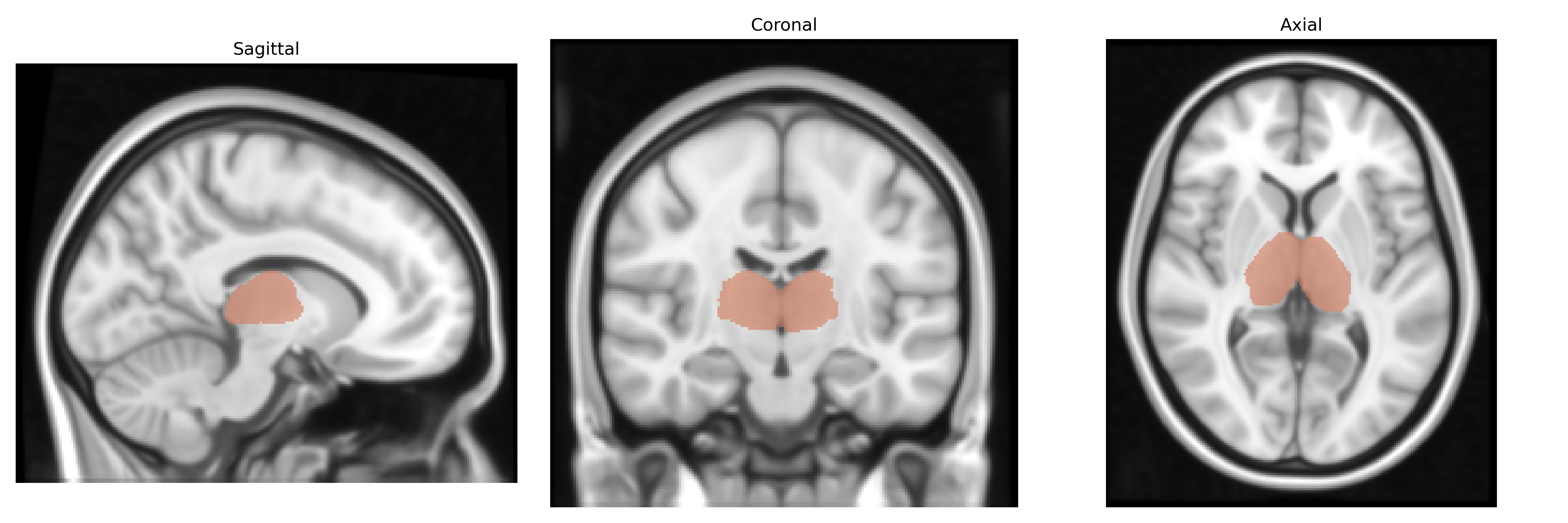
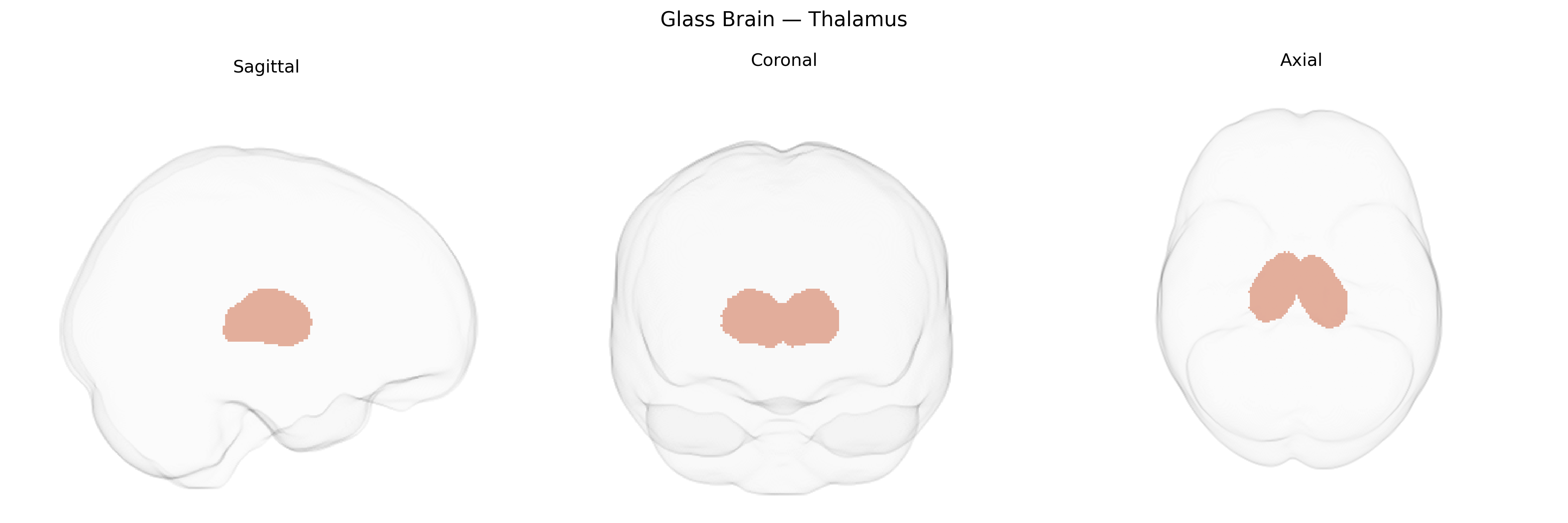
The bilateral thalamus is a paired, ovoid diencephalic structure located symmetrically around the third ventricle, composed predominantly of gray matter and serving as a major relay and integrative hub for sensory, motor, and associative information between subcortical regions and the cerebral cortex. It contains multiple nuclei (including relay, association, and intralaminar nuclei) that process inputs from the sensory systems (excluding olfaction), basal ganglia, cerebellum, and limbic structures, modulating cortical activity related to perception, motor control, attention, arousal, and aspects of cognition and emotion. In the MNI Structural maxprob thr25 1mm Atlas, the bilateral thalamus label reflects the probabilistic delineation of these nuclei as a unified functional group based on structural MRI and anatomical priors, highlighting its central role in large-scale brain networks and information integration. Thalamus
The bilateral thalamus, as defined in the MNI Structural maxprob thr25 1mm Atlas, shows robust heritability and has been repeatedly implicated in genetic studies of brain structure and neuropsychiatric traits. GWAS of subcortical volumes (e.g., ENIGMA and UK Biobank cohorts) have identified multiple loci associated with thalamic volume, including variants near genes involved in neurodevelopment, synaptic function, and cell adhesion such as DLG2, TSNARE1, and others influencing glutamatergic and GABAergic signaling. Polygenic risk for schizophrenia, bipolar disorder, and major depressive disorder has been associated with altered thalamic structure and connectivity, and specific risk variants (e.g., in CACNA1C, ZNF804A, and the MHC region) are linked to thalamic functional abnormalities in imaging genetics studies. Thalamic volume and microstructure are also genetically correlated with cognitive performance, educational attainment, sleep traits, and risk for Alzheimer’s disease, with APOE and other dementia-related loci showing downstream effects on thalamic atrophy and connectivity. Additionally, genetic risk for migraine, epilepsy, and attention-deficit/hyperactivity disorder has been associated with thalamic alterations, supporting the role of this region as a key relay whose morphology and function are partially shaped by common and rare genetic variation affecting neural circuitry and neurodevelopmental pathways.
Overview generated by GPT-4o (2026).
Region ID: 9
Hemisphere: bilateral
Atlas: MNI Structural maxprob thr25 1mm
Full Quality Version: Download MP4
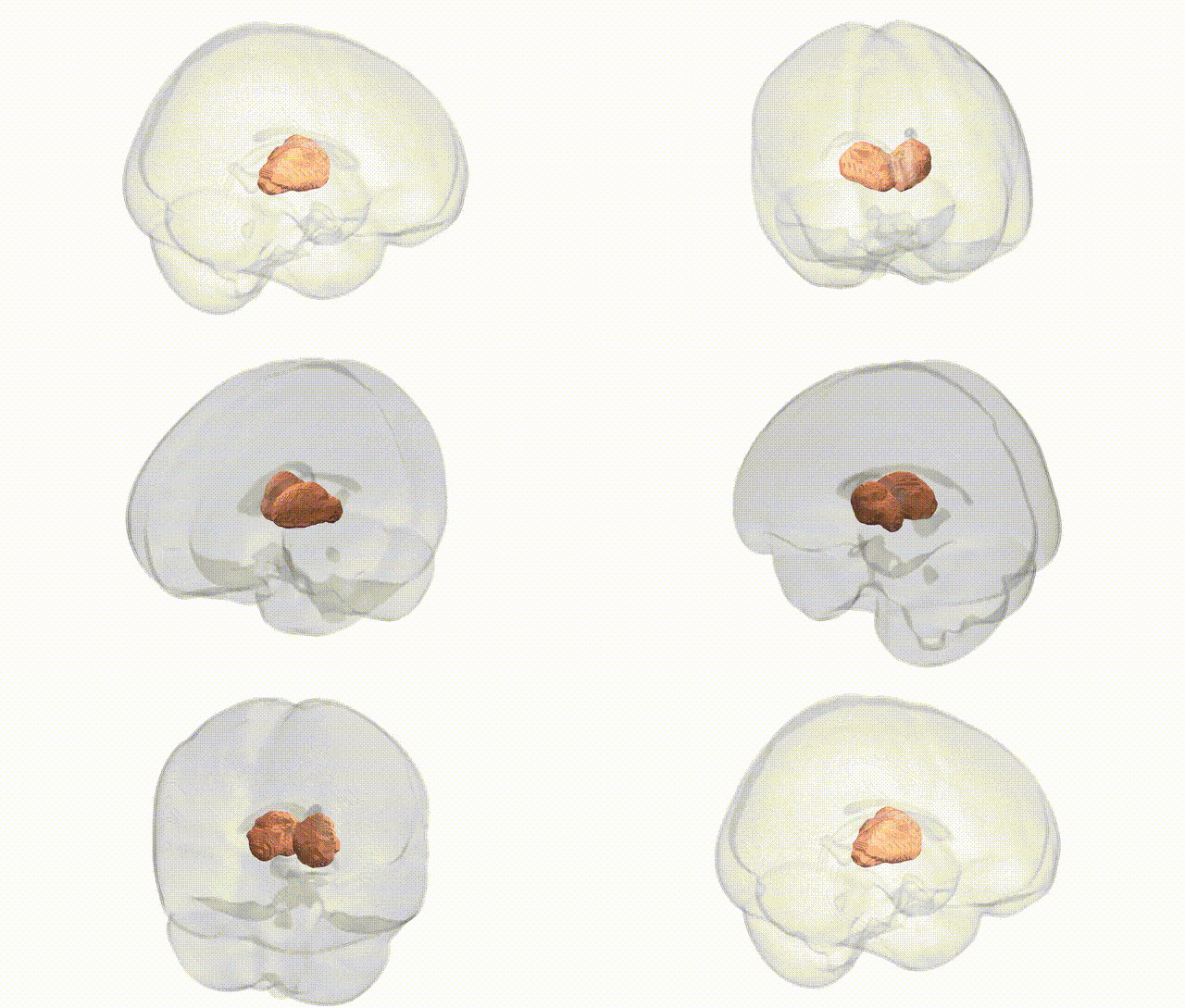
Full Quality Version: Download MP4
Wali Sidiqyar*, Gaurav Rudravaram*, Elyssa M. McMaster, Trent M. Schwartz, Adam M. Saunders, Kurt G. Schilling, Bennett A. Landman "Introducing SPINS: A Shared Public Visualization Library of Neuroanatomical Structures." Medical Imaging with Deep Learning- short paper
This resource is licensed under CC0 1.0 Universal (Public Domain).