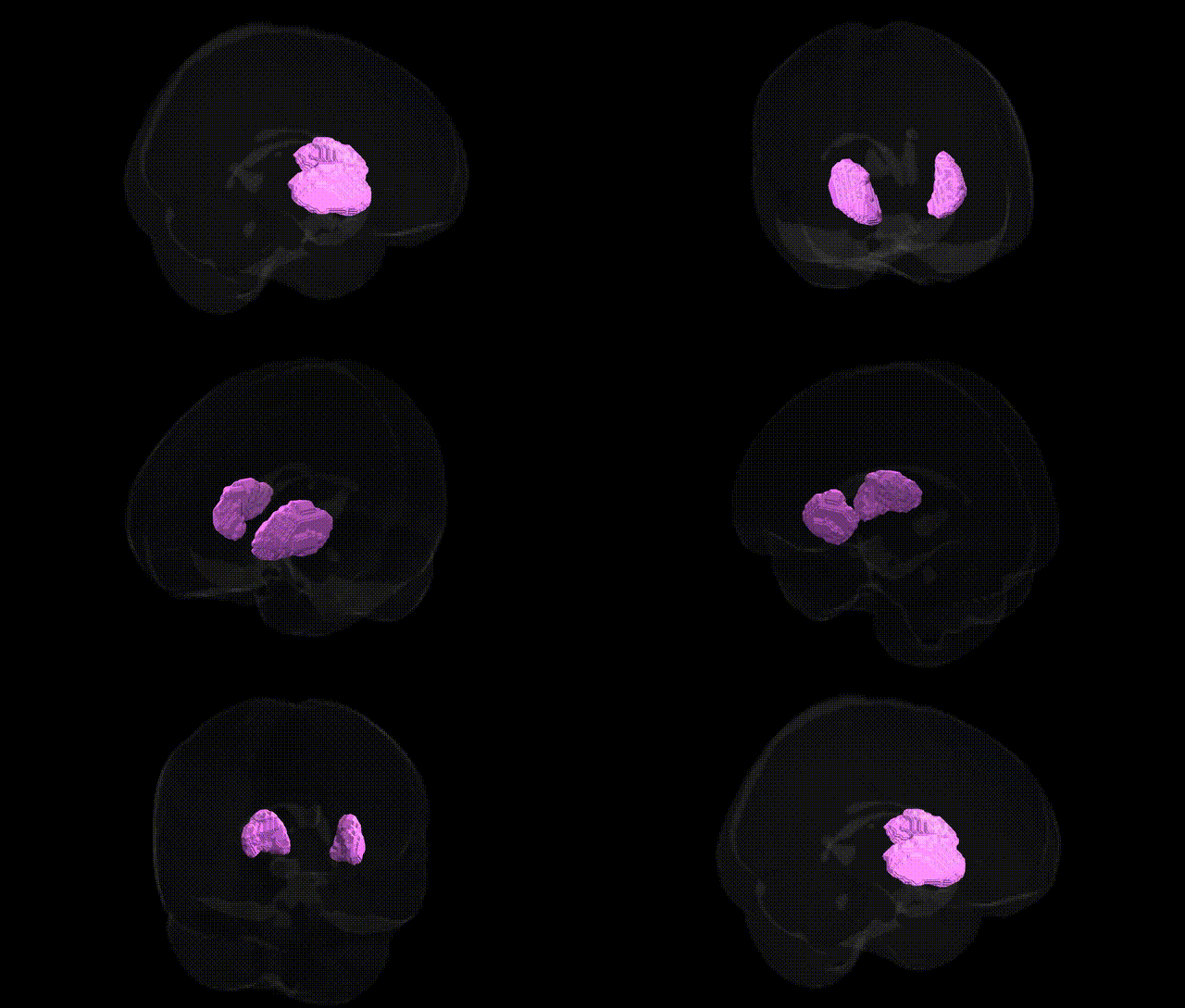
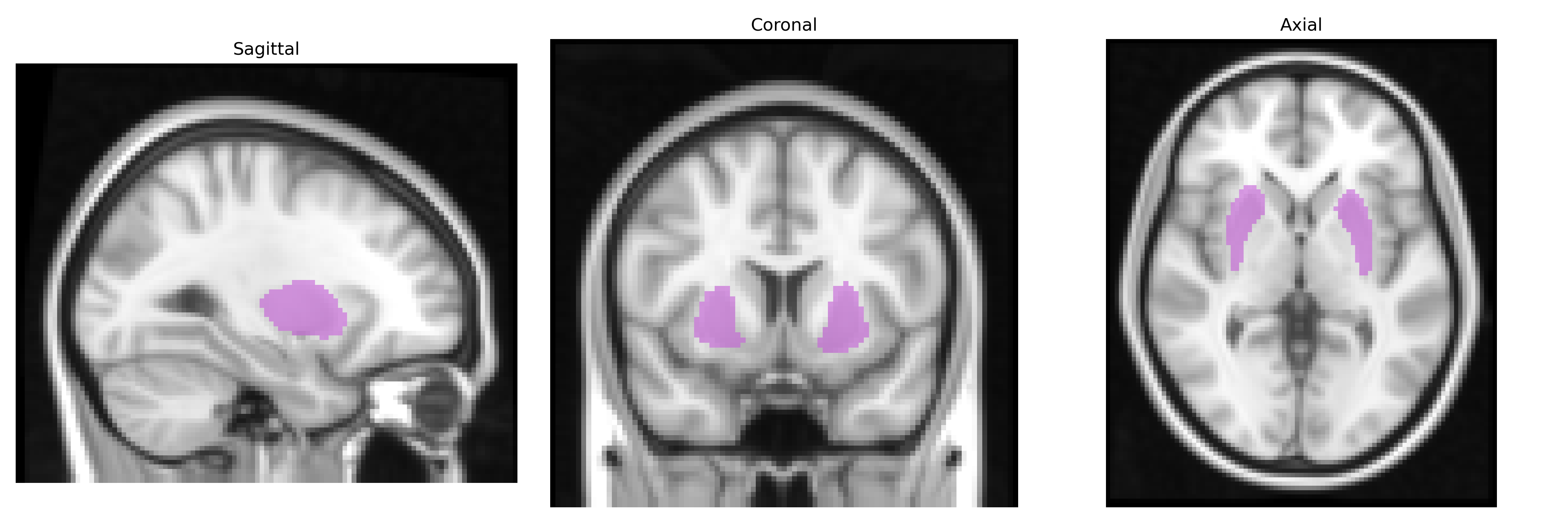
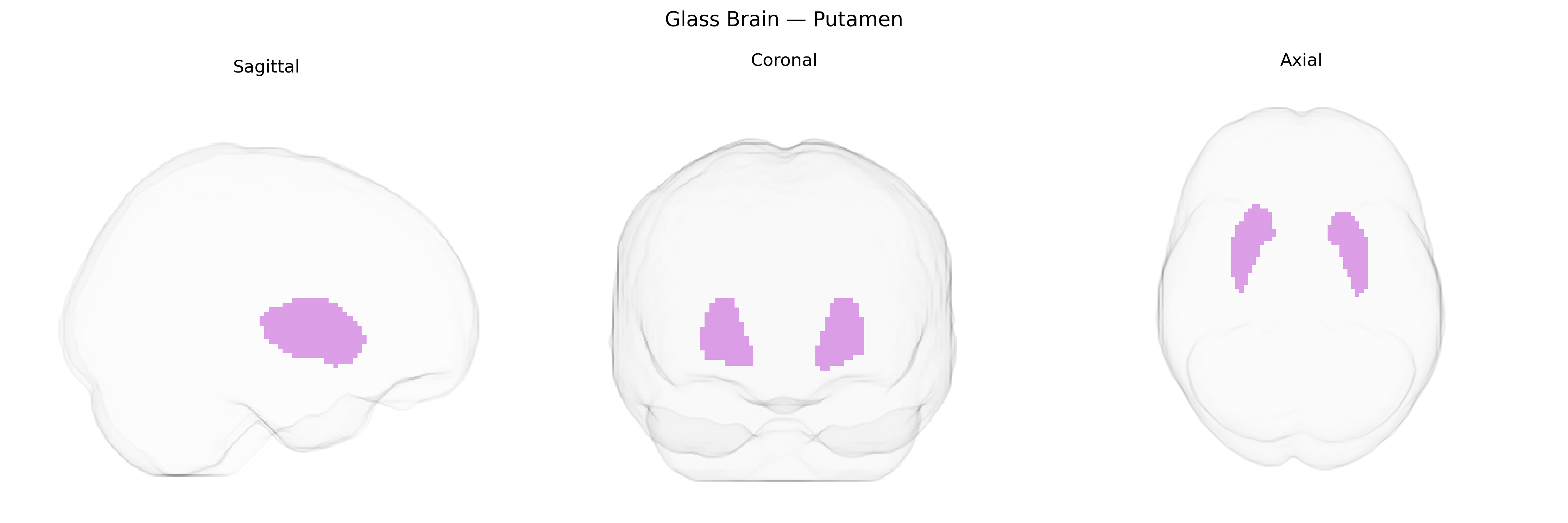
The bilateral putamen is a paired subcortical gray matter structure within the basal ganglia, located lateral to the globus pallidus and medial to the insular cortex, and is prominently involved in motor control, procedural learning, and habit formation. In the MNI Structural maxprob thr25 2mm atlas, it is delineated as a distinct functional-anatomical region receiving dense glutamatergic input from motor and association cortices and dopaminergic projections from the substantia nigra, integrating these signals to modulate thalamocortical output and fine-tune voluntary movement, motor sequencing, and reinforcement-based learning. The putamen also contributes to cognitive and limbic circuits, influencing aspects of motivation and action selection, and is frequently implicated in movement disorders such as Parkinson’s disease and Huntington’s disease as well as certain neuropsychiatric conditions. Putamen
Genetic associations with the bilateral putamen, a key basal ganglia structure involved in motor control, habit learning, and reward processing, have been identified across multiple GWAS and imaging genetics studies. Variants in genes related to dopaminergic signaling and synaptic function, such as DRD2, DAT1 (SLC6A3), and BDNF, have been linked to putamen volume and activity, consistent with its role in movement and reward pathways. Large-scale brain MRI GWAS (e.g., ENIGMA and UK Biobank) have found common variants influencing putamen volume in loci including KTN1, DLG2, and genes involved in neurodevelopment and axonal guidance. The putamen shows genetic correlations with Parkinson’s disease (e.g., LRRK2, SNCA-related pathways), Huntington’s disease (HTT), and dystonia, reflecting its involvement in extrapyramidal motor disorders. Imaging-genetic work has also associated putamen structure and function with risk alleles for schizophrenia (e.g., CACNA1C, GRIN2A, and polygenic risk scores for psychosis), attention-deficit/hyperactivity disorder, and substance use traits, particularly alcohol and nicotine dependence, where variants in CHRNA5–CHRNA3–CHRNB4 and dopaminergic genes modulate striatal responses to reward and addiction-related cues. Furthermore, polygenic influences on cognitive performance, habit formation, and impulsivity map partly onto putamen anatomy, indicating that common genetic variation contributes to inter-individual differences in this region’s structure and its involvement in neuropsychiatric and neurodegenerative phenotypes.
Overview generated by GPT-4o (2026).
Region ID: 7
Hemisphere: bilateral
Atlas: MNI Structural maxprob thr25 2mm
Full Quality Version: Download MP4
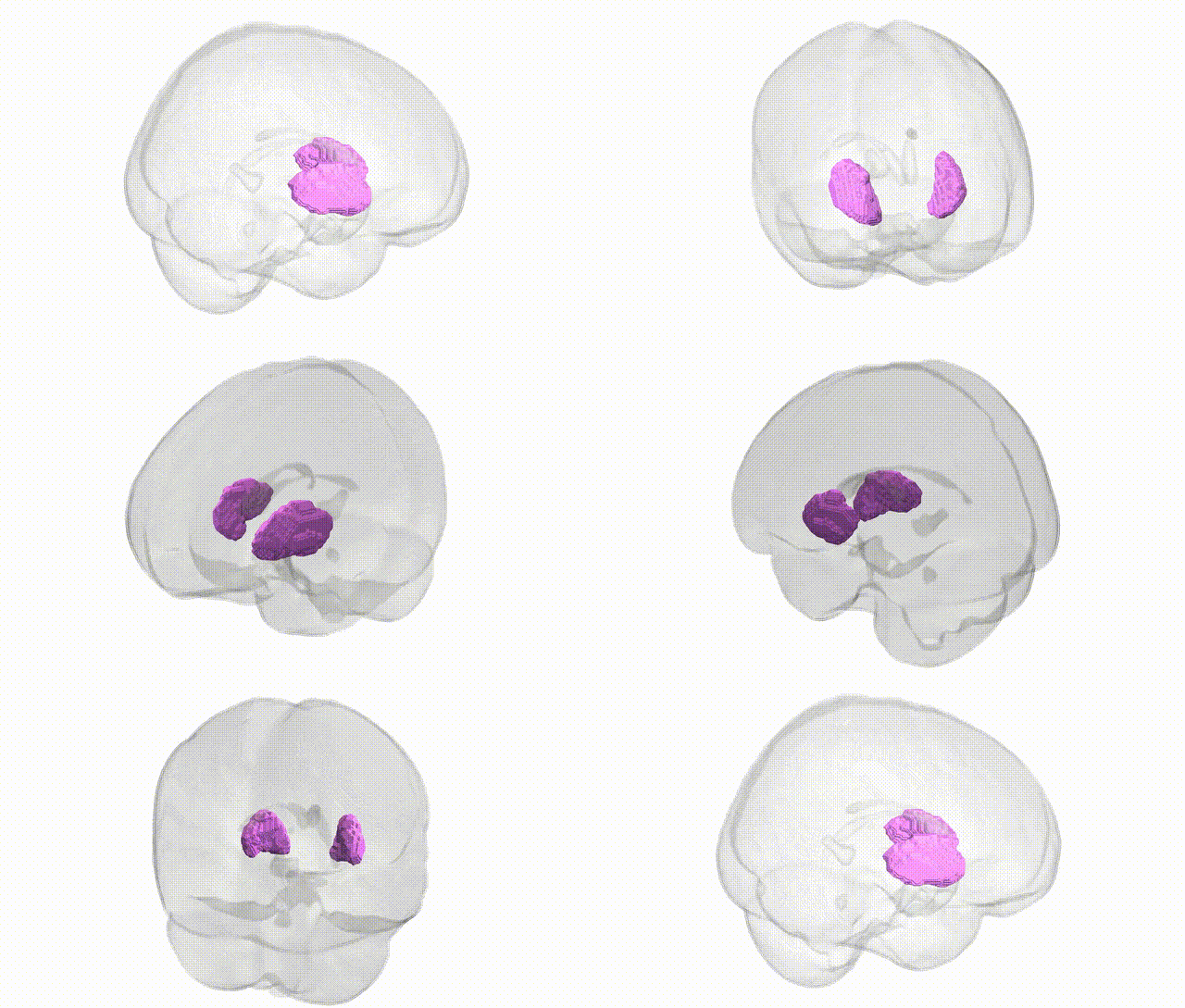
Full Quality Version: Download MP4
Wali Sidiqyar*, Gaurav Rudravaram*, Elyssa M. McMaster, Trent M. Schwartz, Adam M. Saunders, Kurt G. Schilling, Bennett A. Landman "Introducing SPINS: A Shared Public Visualization Library of Neuroanatomical Structures." Medical Imaging with Deep Learning- short paper
This resource is licensed under CC0 1.0 Universal (Public Domain).