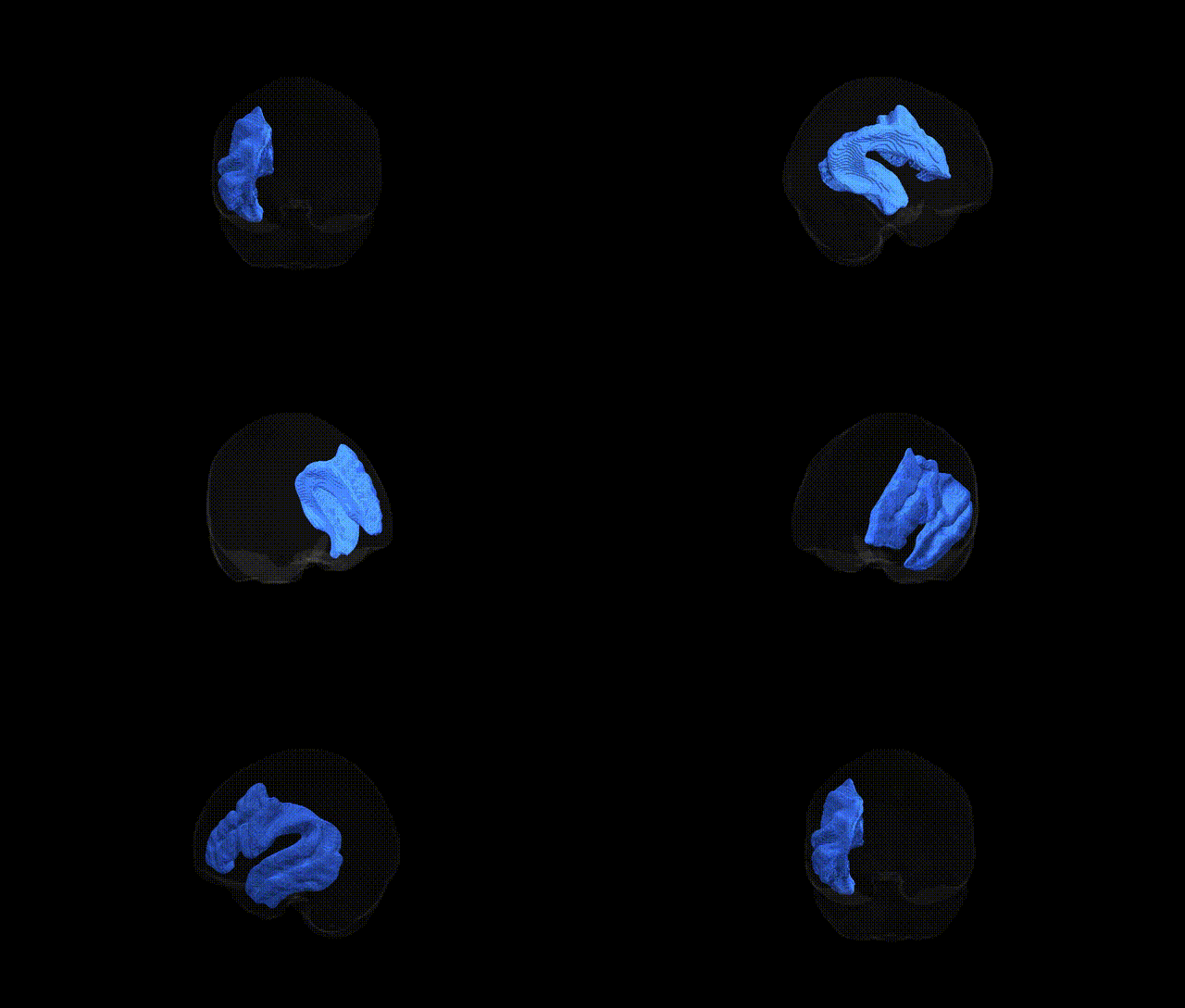
The Arcuate fascicle left is a major white matter association tract in the left cerebral hemisphere that forms a key component of the dorsal language pathway. It primarily connects posterior temporal regions, including Wernicke’s area and adjacent superior temporal areas, with frontal language regions, notably Broca’s area in the inferior frontal gyrus. Composed of heavily myelinated fibers arching around the posterior end of the Sylvian fissure, this tract supports phonological processing, repetition, and aspects of syntactic and semantic integration during language production and comprehension. Damage or disruption to the left arcuate fascicle is classically associated with conduction aphasia, characterized by impaired repetition and phonemic paraphasias despite relatively preserved comprehension and fluent speech. Although there is no dedicated Wikipedia page solely for the left arcuate fascicle, it is described as part of the broader Arcuate fasciculus.
Current genetic knowledge specifically focused on the left arcuate fasciculus as defined in the Pandora-TractSeg Atlas is limited, but broader imaging-genetics work on language-related white matter and diffusion MRI metrics provides some relevant context. Large GWAS of diffusion tensor imaging measures (e.g., UK Biobank) have identified polygenic influences on fractional anisotropy, mean diffusivity, and related metrics in major association tracts, including fronto-temporal pathways overlapping the arcuate fasciculus, implicating genes involved in axon guidance, myelination, and neurodevelopment (such as variants near CNTN4, PLP1, and genes in Wnt and semaphorin pathways), though these findings are often reported at the level of composite or lobar tracts rather than the arcuate fasciculus alone. Heritability analyses indicate substantial genetic contribution to microstructural variation in perisylvian language pathways, and several candidate-gene and smaller imaging-genetic studies have linked arcuate fasciculus structure or asymmetry to language-related traits and disorders, including developmental dyslexia and specific language impairment (with FOXP2, KIAA0319, DCDC2, and ATP2C2 among the genes most discussed), as well as to stuttering and schizophrenia, although results are heterogeneous and often underpowered. Overall, while converging evidence supports a genetic influence on the microstructure and lateralization of the arcuate fasciculus and its involvement in language and neurodevelopmental disorders, there are currently no well-established, tract-specific GWAS associations or robust, replicated variant-level findings uniquely tied to the left arcuate fasciculus as defined in the Pandora-TractSeg framework; most data remain indirect or coarse-grained with respect to this exact tract label.
Overview generated by GPT-4o (2026).
Region ID: 0
Hemisphere: left
Atlas: Pandora-TractSeg
Full Quality Version: Download MP4
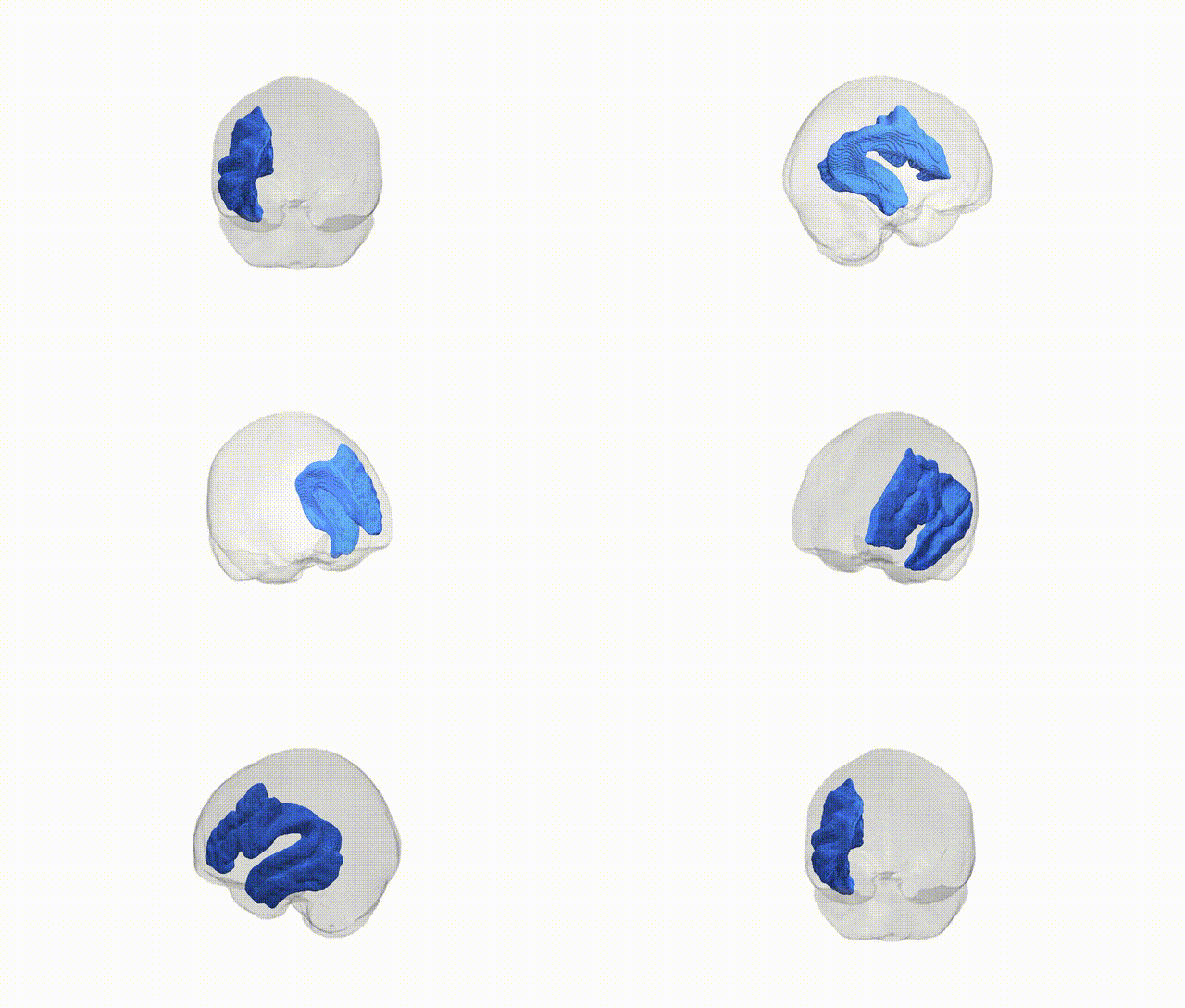
Full Quality Version: Download MP4
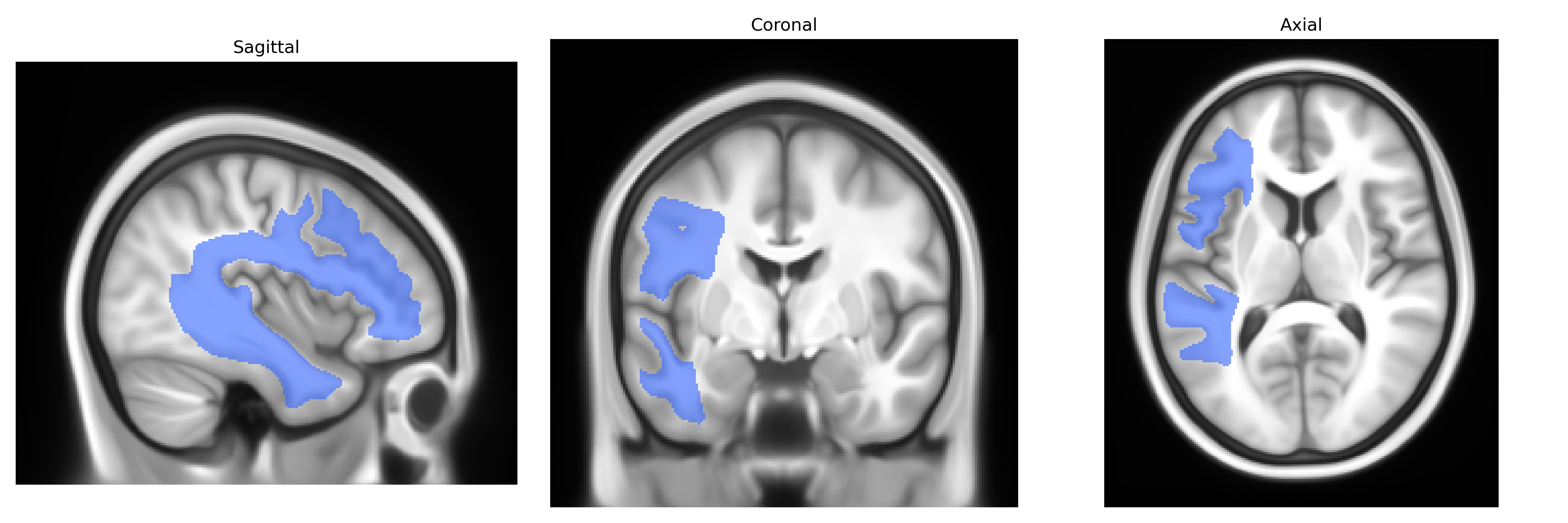
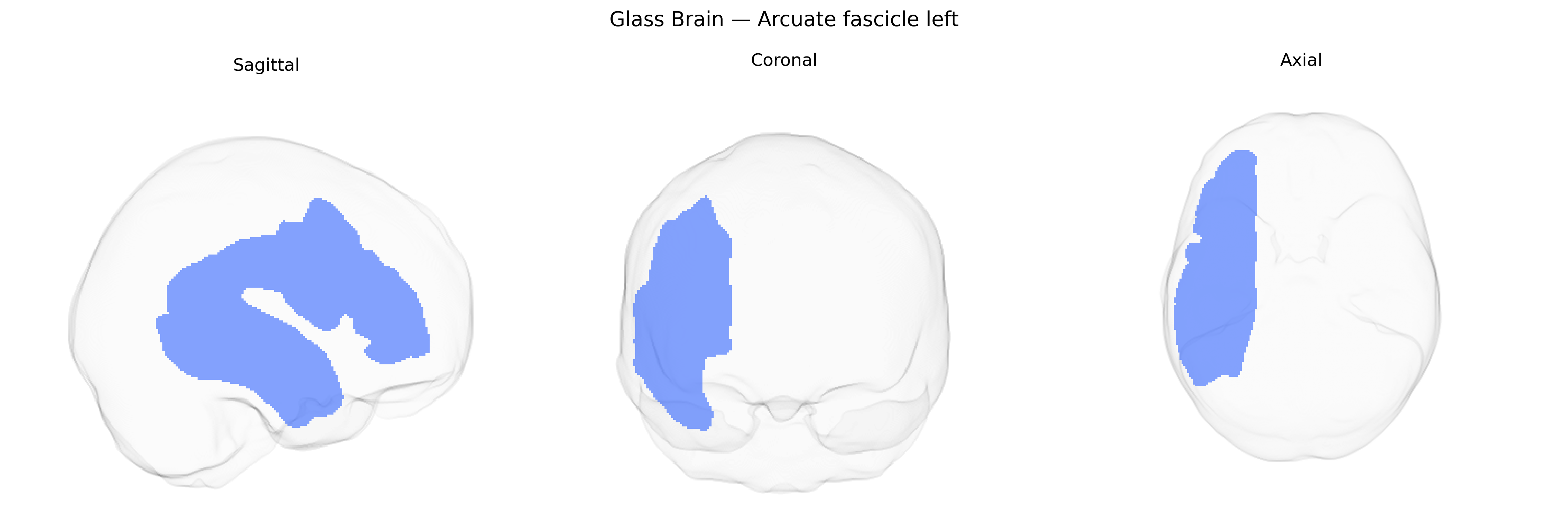
Wali Sidiqyar*, Gaurav Rudravaram*, Elyssa M. McMaster, Trent M. Schwartz, Adam M. Saunders, Kurt G. Schilling, Bennett A. Landman "Introducing SPINS: A Shared Public Visualization Library of Neuroanatomical Structures." Medical Imaging with Deep Learning- short paper
This resource is licensed under CC0 1.0 Universal (Public Domain).