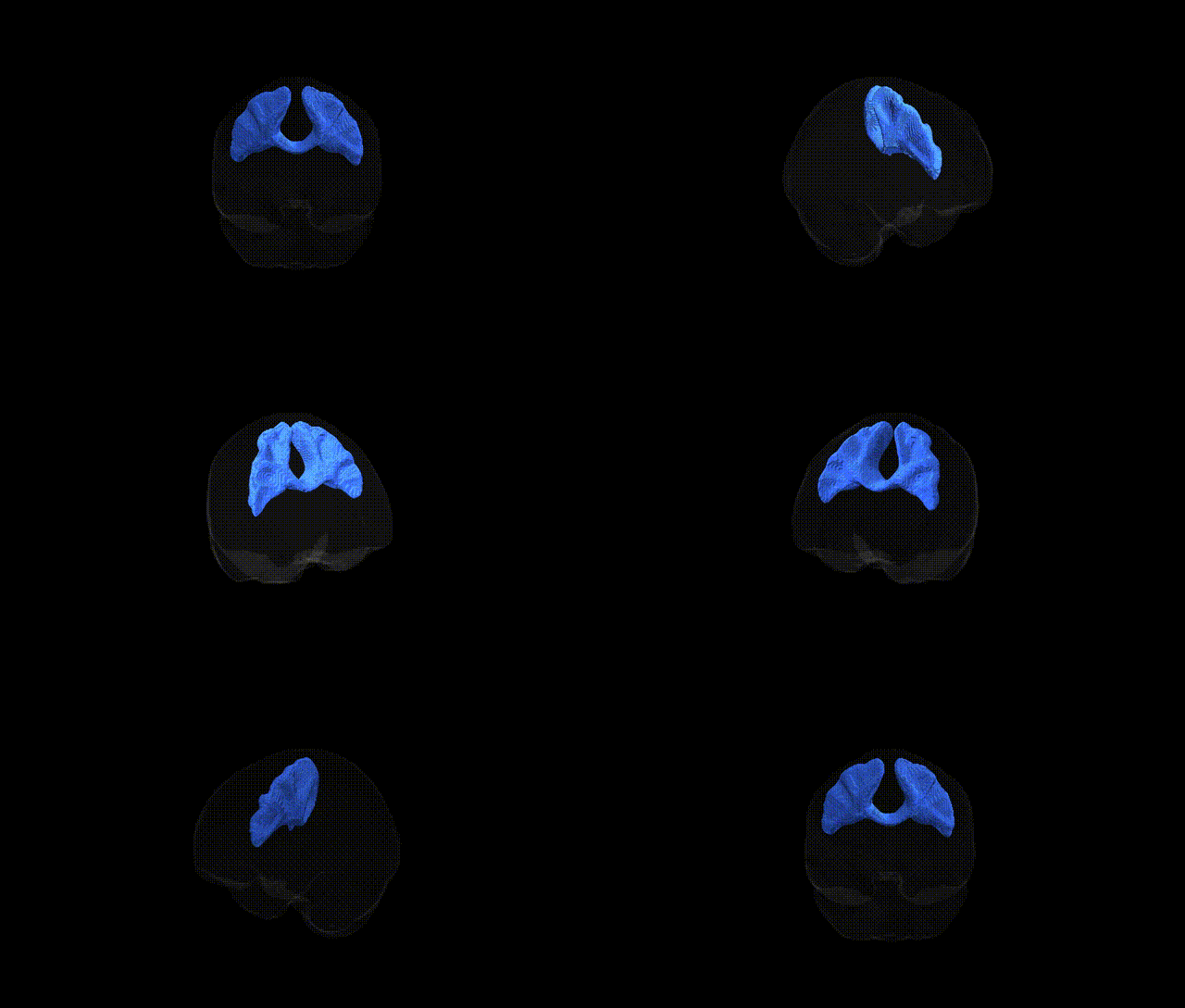
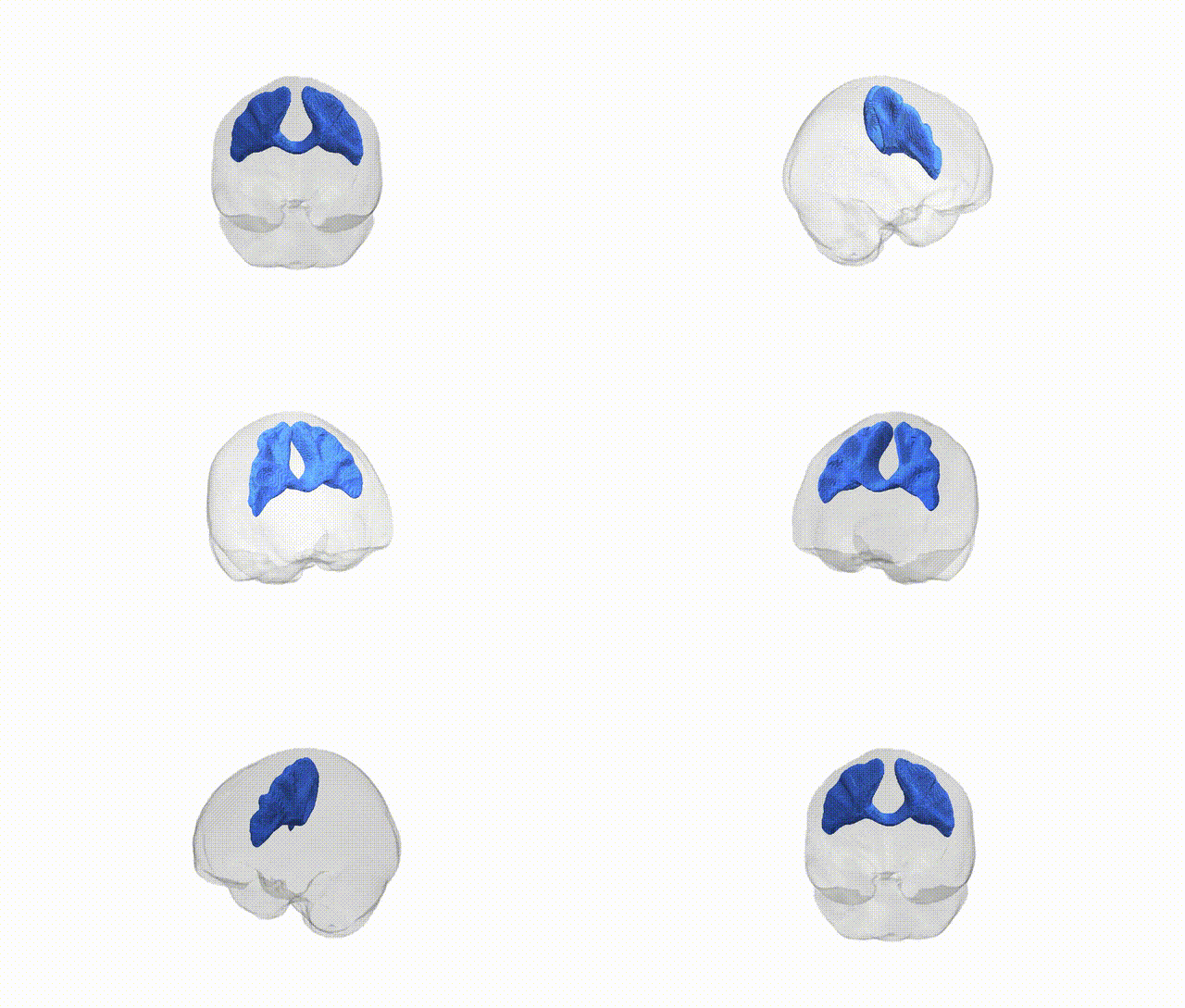
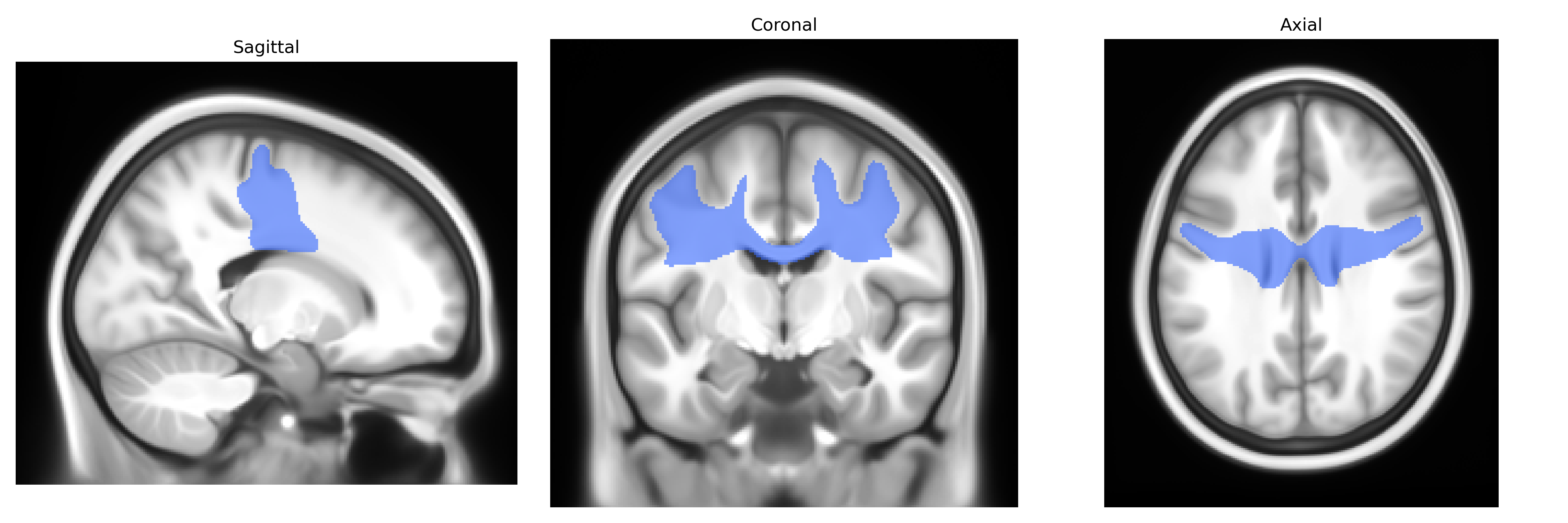
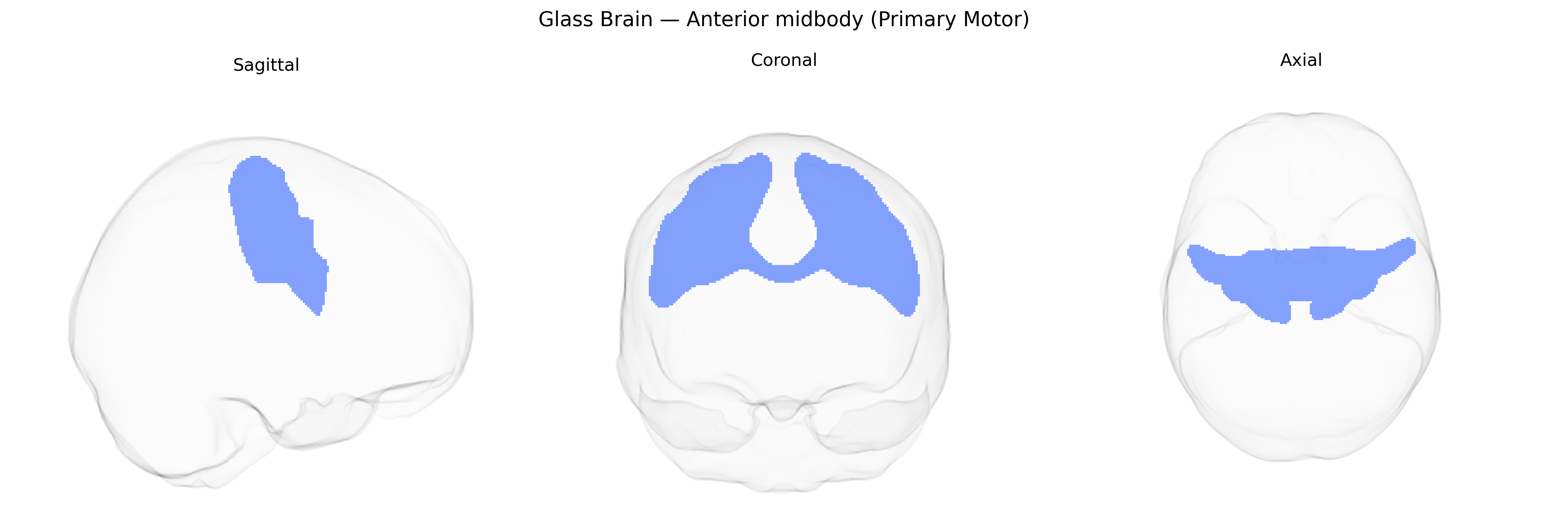
The Anterior midbody (Primary Motor) tract in the Pandora-TractSeg Atlas corresponds to callosal fibers interconnecting the primary motor cortices of both hemispheres within the mid-anterior segment of the Corpus callosum. These fibers course through the central portion of the corpus callosum and extend laterally into the precentral gyrus, linking homologous regions involved in voluntary motor control, particularly of trunk and proximal limb musculature. Functionally, this interhemispheric pathway supports bilateral coordination, integration of motor commands, and modulation of corticospinal output, contributing to fine-tuning of bimanual movements and postural adjustments. Disruption of this tract can impair interhemispheric motor communication, leading to deficits in coordinated motor behavior and altered motor cortex excitability.
As of current literature, there are no robust, tract-specific genetic association studies published explicitly for the Anterior midbody (Primary Motor) white matter tract as defined in the Pandora‑TractSeg Atlas, and most genetic findings involving primary motor white matter derive from broader regions (e.g., corticospinal tract, precentral gyrus connections, or global/vertex-wise diffusion metrics) rather than this precise bundle. Large diffusion MRI GWAS (e.g., UK Biobank–based studies) have identified numerous loci influencing fractional anisotropy, mean diffusivity, and other microstructural indices in motor-related white matter, implicating genes involved in axon guidance, myelination, and neural development (such as variants near or in BDNF, NCAM1, MAG, and other neurodevelopmental/myelin-related genes), and these effects often extend to tracts traversing the precentral (primary motor) region. Motor-tract microstructure has also shown polygenic overlap with neuropsychiatric and neurodevelopmental conditions (including schizophrenia, ADHD, and autism spectrum disorder), as well as traits such as general cognitive ability, handedness, and motor performance, but these associations have typically been reported at the level of larger motor pathways or global diffusion factors rather than the specific Anterior midbody (Primary Motor) tract. Consequently, while genetic influences on white matter microstructure in primary motor networks are well supported, direct, tract-resolved genetic associations for this particular Pandora‑TractSeg tract remain largely uncharacterized in current GWAS and imaging‑genetics studies.
Overview generated by GPT-4o (2026).
Region ID: 8
Hemisphere: bilateral
Atlas: Pandora-TractSeg
Full Quality Version: Download MP4
Full Quality Version: Download MP4
Wali Sidiqyar*, Gaurav Rudravaram*, Elyssa M. McMaster, Trent M. Schwartz, Adam M. Saunders, Kurt G. Schilling, Bennett A. Landman "Introducing SPINS: A Shared Public Visualization Library of Neuroanatomical Structures." Medical Imaging with Deep Learning- short paper
This resource is licensed under CC0 1.0 Universal (Public Domain).