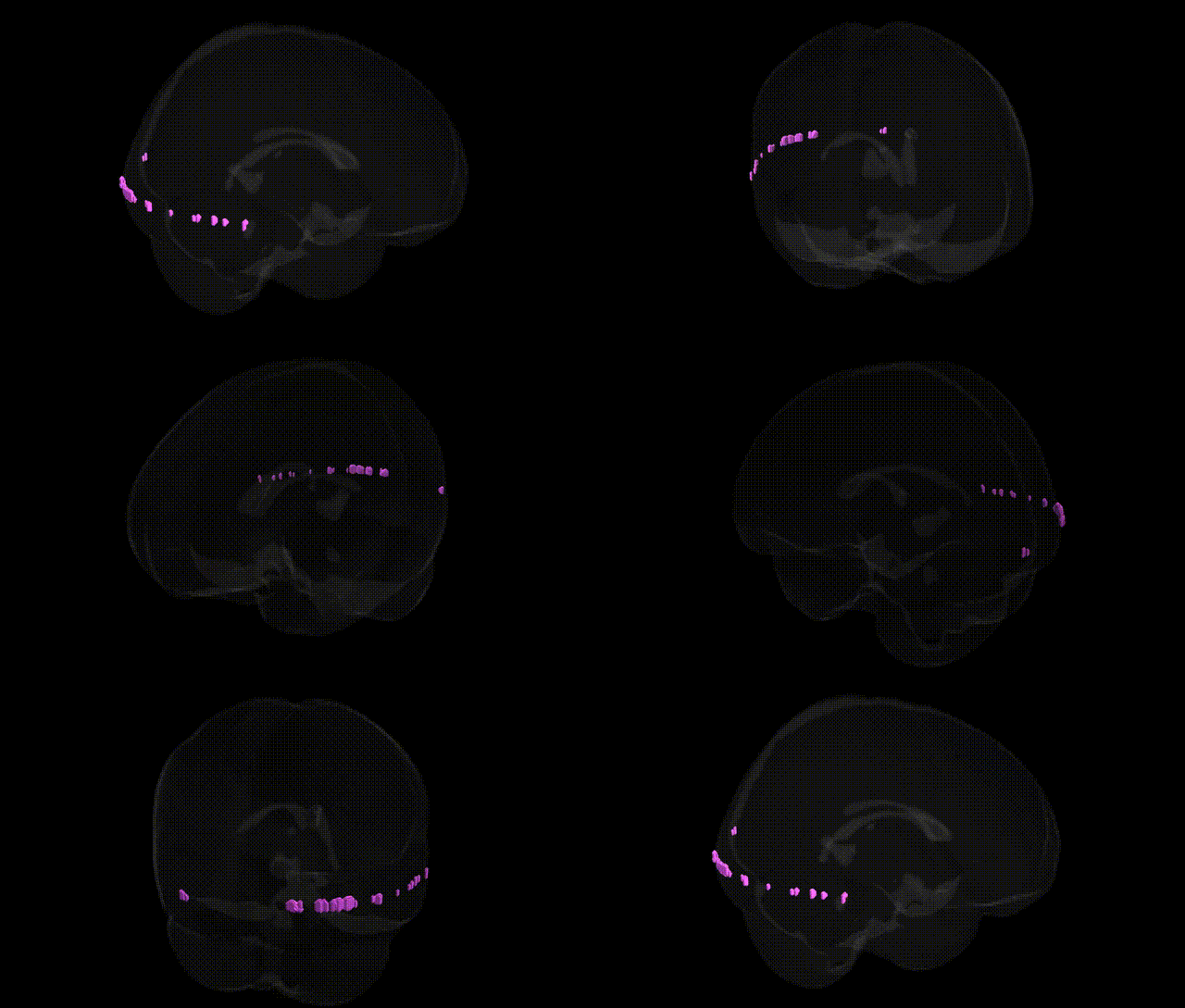
Gray matter refers to regions of the central nervous system that are rich in neuronal cell bodies, dendrites, unmyelinated axons, synapses, and supporting glial cells, in contrast to the myelin‑rich white matter that primarily contains long-range fiber tracts. In the brain, gray matter forms the cerebral cortex, subcortical nuclei (such as the basal ganglia and thalamus), and structures in the brainstem and cerebellum, and is critical for processing sensory input, executing motor commands, integrating information, and supporting higher cognitive functions such as memory, language, and decision-making. Bilaterally, gray matter is distributed throughout both hemispheres in a largely symmetrical fashion, with regional specializations that subserve distinct functional domains. There is no single Wikipedia article specifically titled “Gray Matter (bilateral, brain region),” but gray matter as a general structure is described here: Grey matter.
The bilateral “Gray Matter” label in the Talairach 1 mm atlas encompasses essentially the entire cortical and subcortical gray matter, so genetic associations reflect broad brain-structure and brain-function phenotypes rather than a single, circumscribed region. Large-scale GWAS using MRI-derived global or whole-brain gray matter volume (e.g., ENIGMA, UK Biobank) have identified numerous loci—especially in and around genes involved in neurodevelopment, synaptic function, and cell signaling—such as HMGA2, IGF1, MAPT, BDNF, and multiple loci in 3p24–p25, 6q, 12q, and 17q, among others. Polygenic architectures overlap substantially with psychiatric and neurological disorders, including schizophrenia, bipolar disorder, major depressive disorder, autism spectrum disorder, ADHD, and Alzheimer’s disease, where risk variants in genes like CACNA1C, GRIN2A, DRD2, APOE, and others correlate with altered global gray matter volume or thickness patterns. GWAS of cognitive traits (general intelligence, educational attainment) also implicate many of the same loci and pathways, suggesting that widespread gray matter morphology is partly shaped by pleiotropic genetic effects influencing both brain structure and behavior. Overall, genetic associations for bilateral gray matter reflect highly polygenic, distributed influences rather than region-specific effects, with considerable overlap across neurodevelopmental, psychiatric, cognitive, and neurodegenerative phenotypes.
Overview generated by GPT-4o (2026).
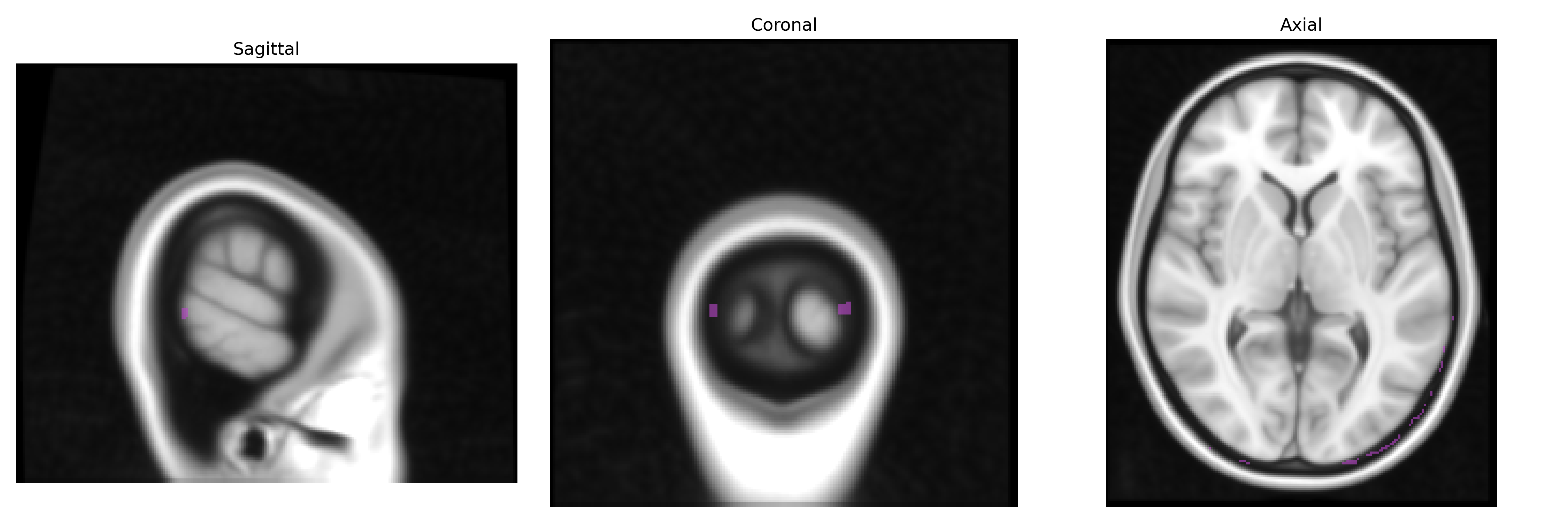
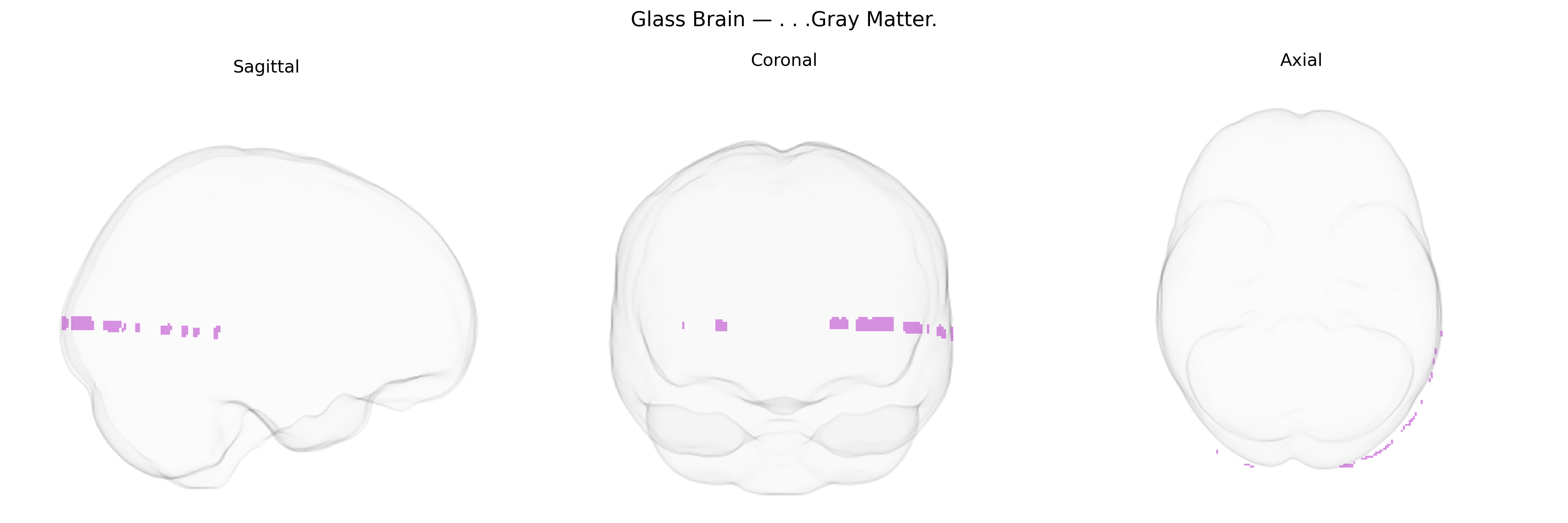
Region ID: 518
Hemisphere: bilateral
Atlas: Talairach labels 1mm
Full Quality Version: Download MP4
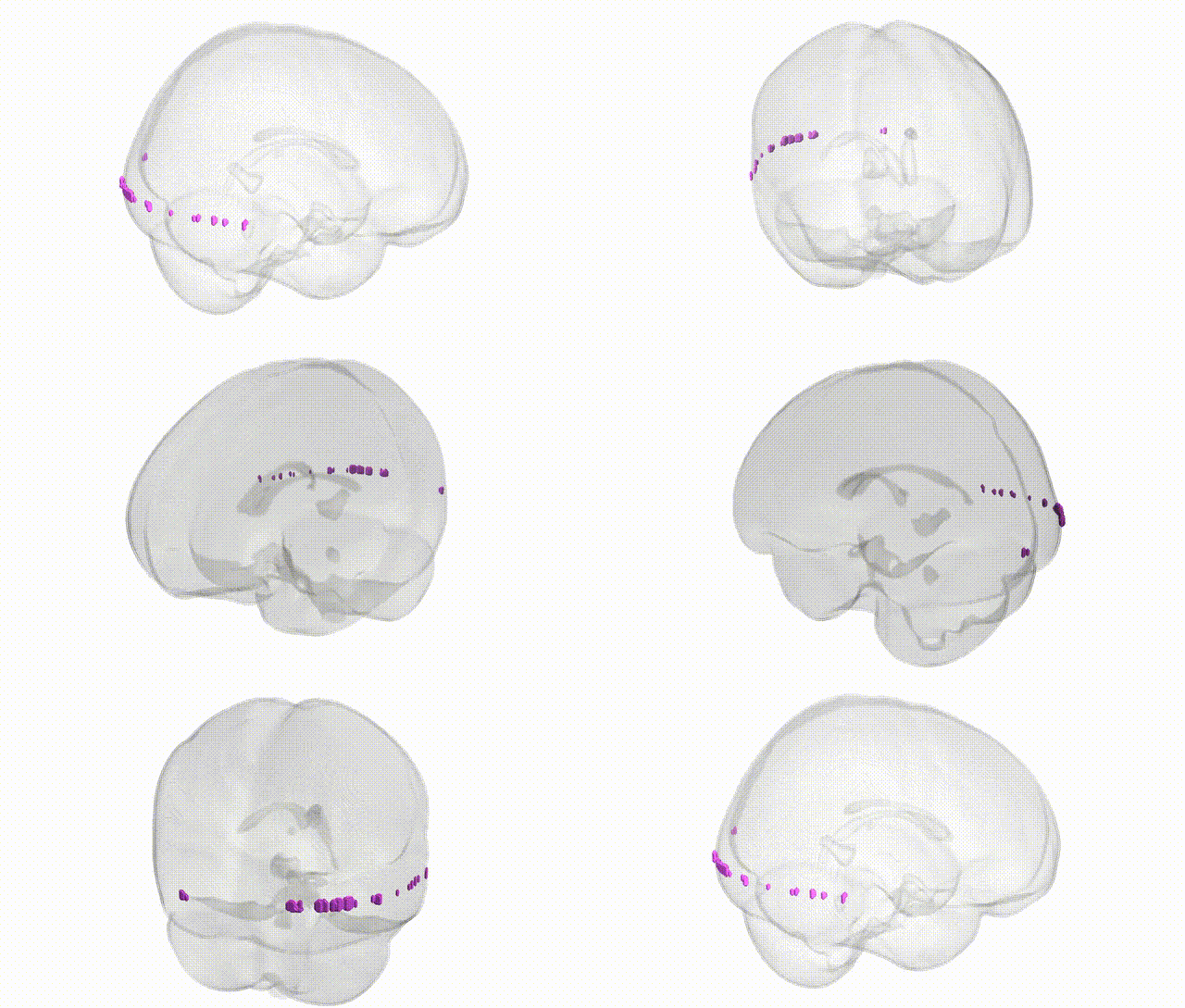
Full Quality Version: Download MP4
Wali Sidiqyar*, Gaurav Rudravaram*, Elyssa M. McMaster, Trent M. Schwartz, Adam M. Saunders, Kurt G. Schilling, Bennett A. Landman "Introducing SPINS: A Shared Public Visualization Library of Neuroanatomical Structures." Medical Imaging with Deep Learning- short paper
This resource is licensed under CC0 1.0 Universal (Public Domain).