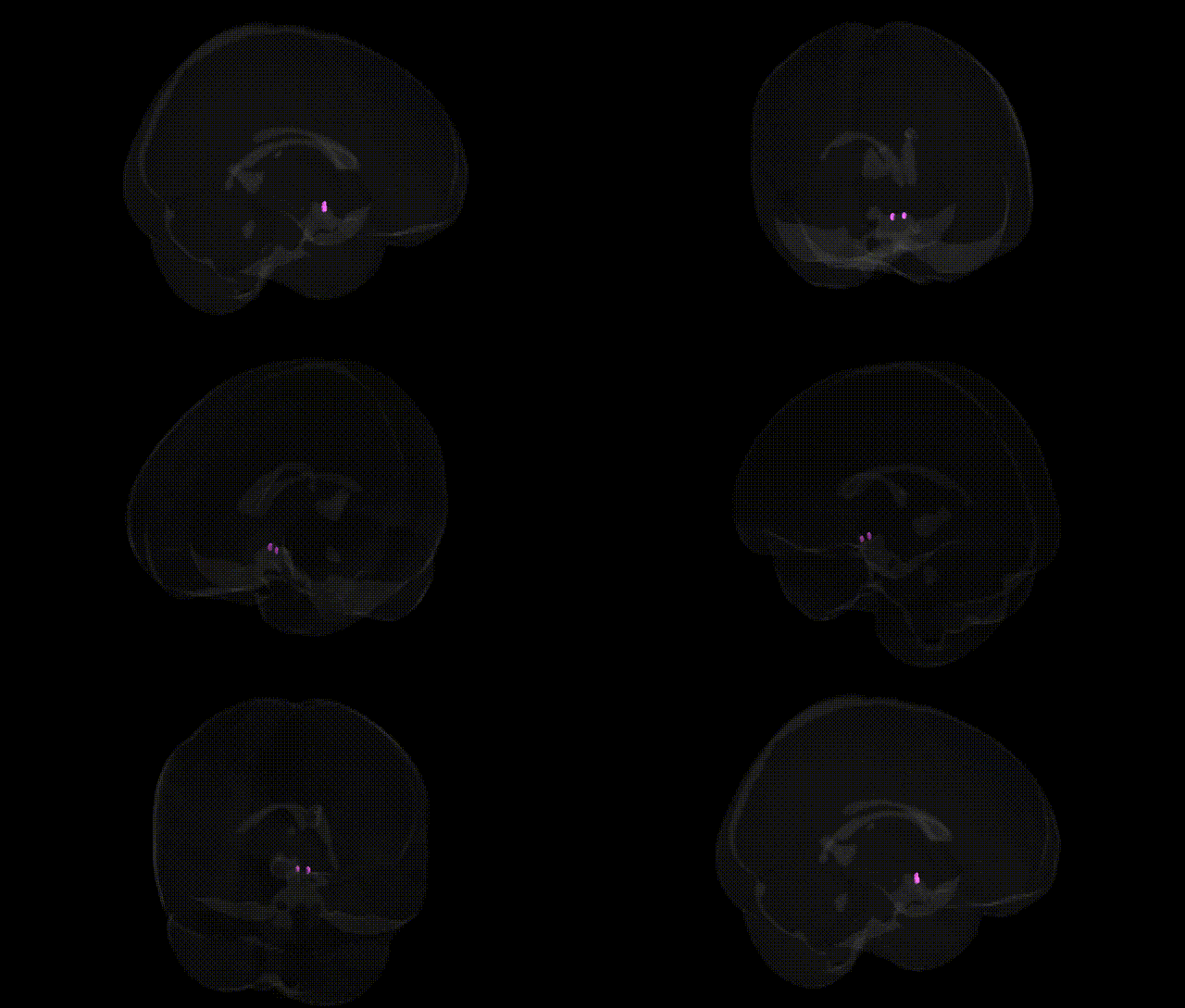
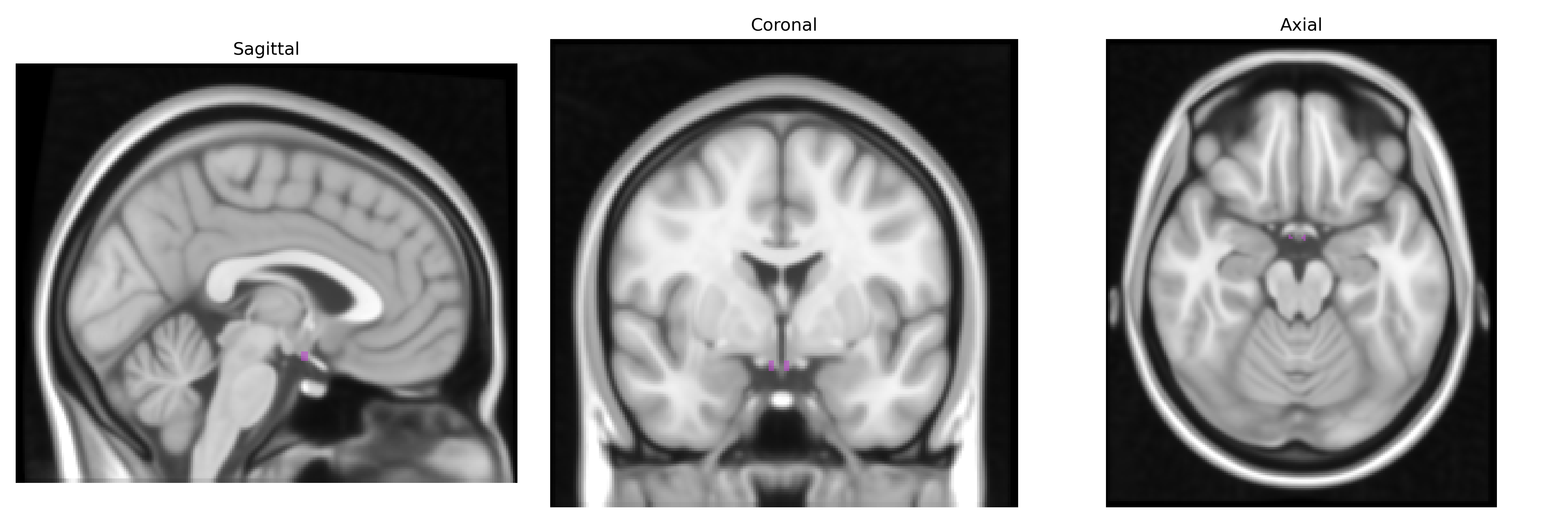
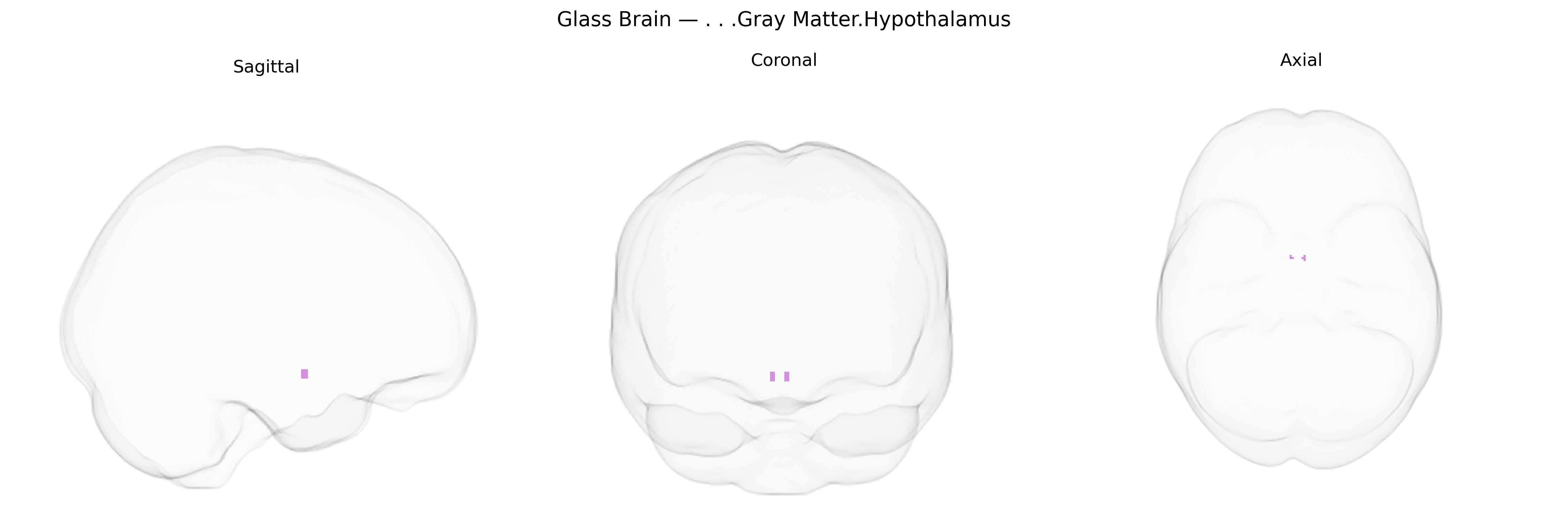
The bilateral gray matter of the hypothalamus is a diencephalic region located inferior to the thalamus and forming the walls and floor of the third ventricle, composed of numerous nuclei that integrate autonomic, endocrine, and behavioral functions. It plays a critical role in homeostasis, including regulation of body temperature, hunger and satiety, thirst, circadian rhythms, and reproductive and stress responses, largely through its control of the pituitary gland via neuroendocrine pathways. Major hypothalamic nuclei (such as the suprachiasmatic, paraventricular, supraoptic, arcuate, and ventromedial nuclei) coordinate input from cortical, limbic, and brainstem structures to modulate sympathetic and parasympathetic output, hormone release, and motivated behaviors. The gray matter of the hypothalamus is richly vascularized and contains diverse neuronal populations that utilize neurotransmitters and neuropeptides (e.g., vasopressin, oxytocin, CRH) to exert widespread influence on the central nervous system and peripheral organs.
Hypothalamus
The bilateral hypothalamus, a gray-matter region critical for homeostatic, neuroendocrine, and motivational functions, shows robust genetic influences in imaging–genetics and GWAS studies, with SNP-based heritability estimates for hypothalamic volume typically in the moderate range and implicating variants in neurodevelopmental, metabolic, and hormone-regulatory pathways (e.g., genes involved in axon guidance, growth factors, and hypothalamic–pituitary signaling). Large MRI-based GWAS have linked hypothalamic volume or morphology to loci near or within genes such as MAPT and other neurodegeneration-related loci for subcortical structures, and more targeted work on hypothalamic subregions has highlighted associations with leptin, melanocortin, and other energy-balance pathways in the context of obesity and body mass index. Genetic variants affecting the hypothalamus and its circuits have been associated with neuropsychiatric and neurodevelopmental disorders, including major depressive disorder, schizophrenia, and autism spectrum disorder, often via genes influencing stress-axis regulation (e.g., CRH pathway components), circadian rhythm (e.g., CLOCK-related genes), or synaptic plasticity. Additional associations arise in GWAS of sleep duration, chronotype, and reproductive and metabolic traits (such as type 2 diabetes and polycystic ovary syndrome), reflecting the hypothalamus’s central role in sleep–wake regulation, appetite and energy homeostasis, and gonadal hormone control.
Overview generated by GPT-4o (2026).
Region ID: 274
Hemisphere: bilateral
Atlas: Talairach labels 1mm
Full Quality Version: Download MP4
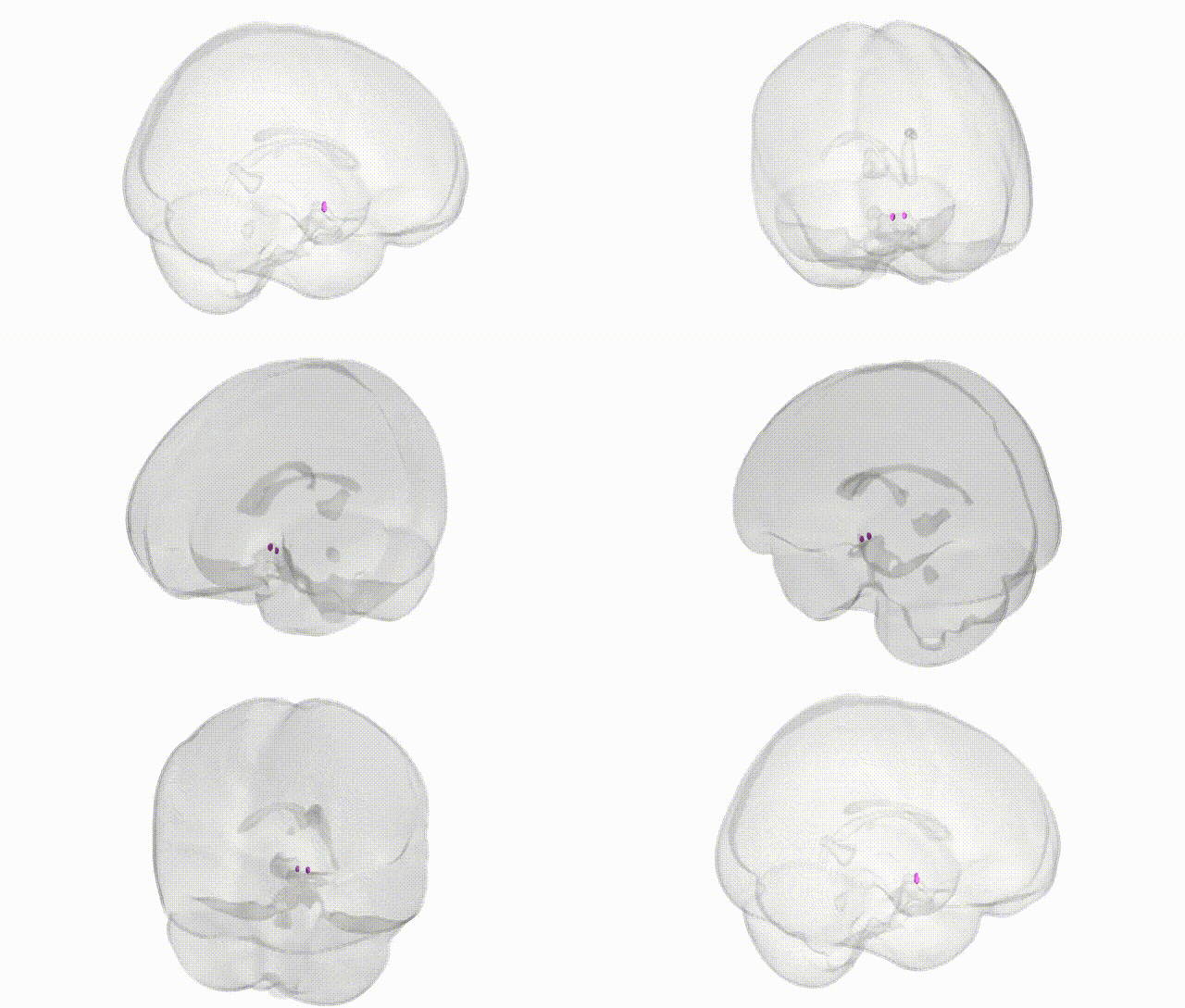
Full Quality Version: Download MP4
Wali Sidiqyar*, Gaurav Rudravaram*, Elyssa M. McMaster, Trent M. Schwartz, Adam M. Saunders, Kurt G. Schilling, Bennett A. Landman "Introducing SPINS: A Shared Public Visualization Library of Neuroanatomical Structures." Medical Imaging with Deep Learning- short paper
This resource is licensed under CC0 1.0 Universal (Public Domain).