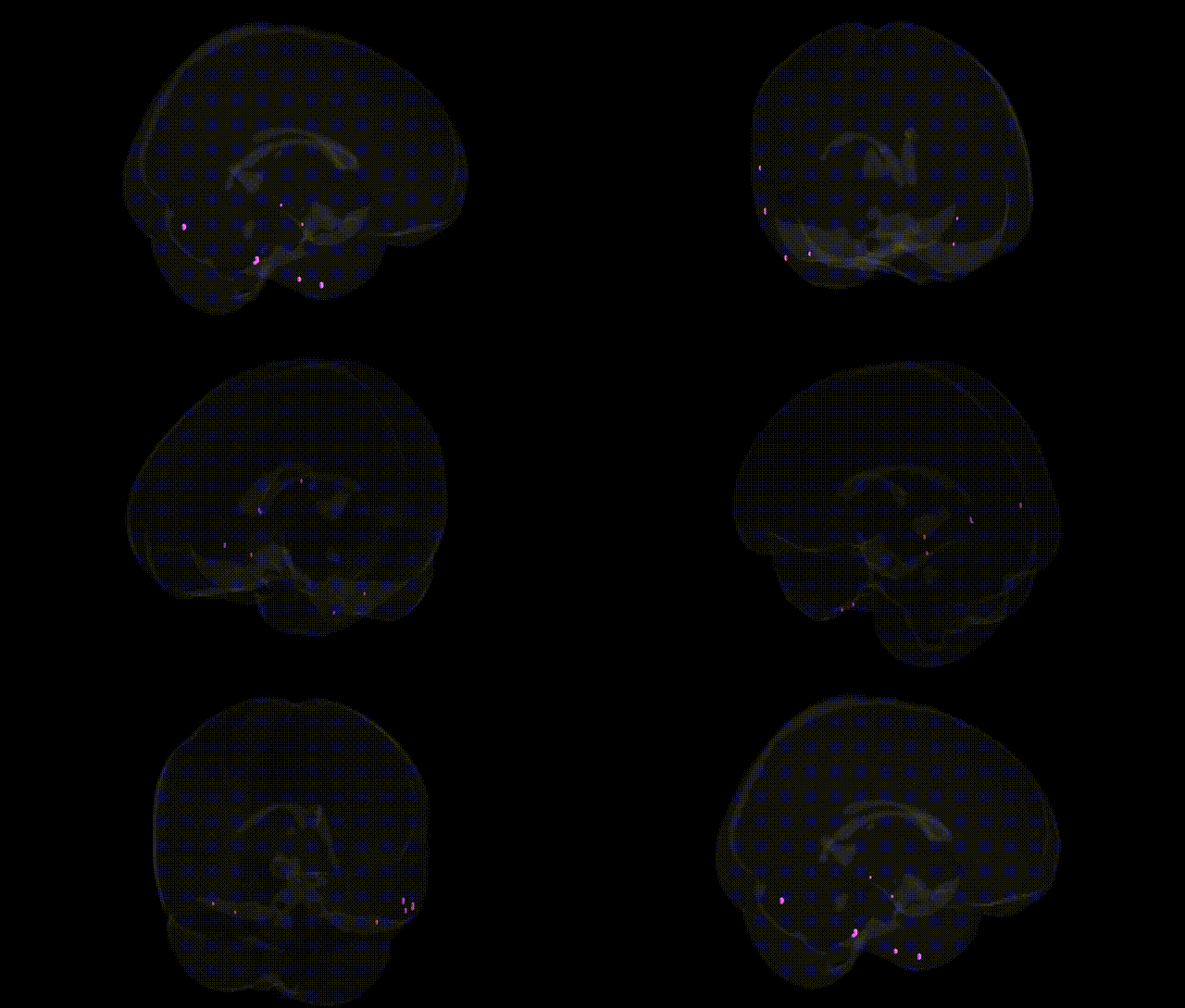
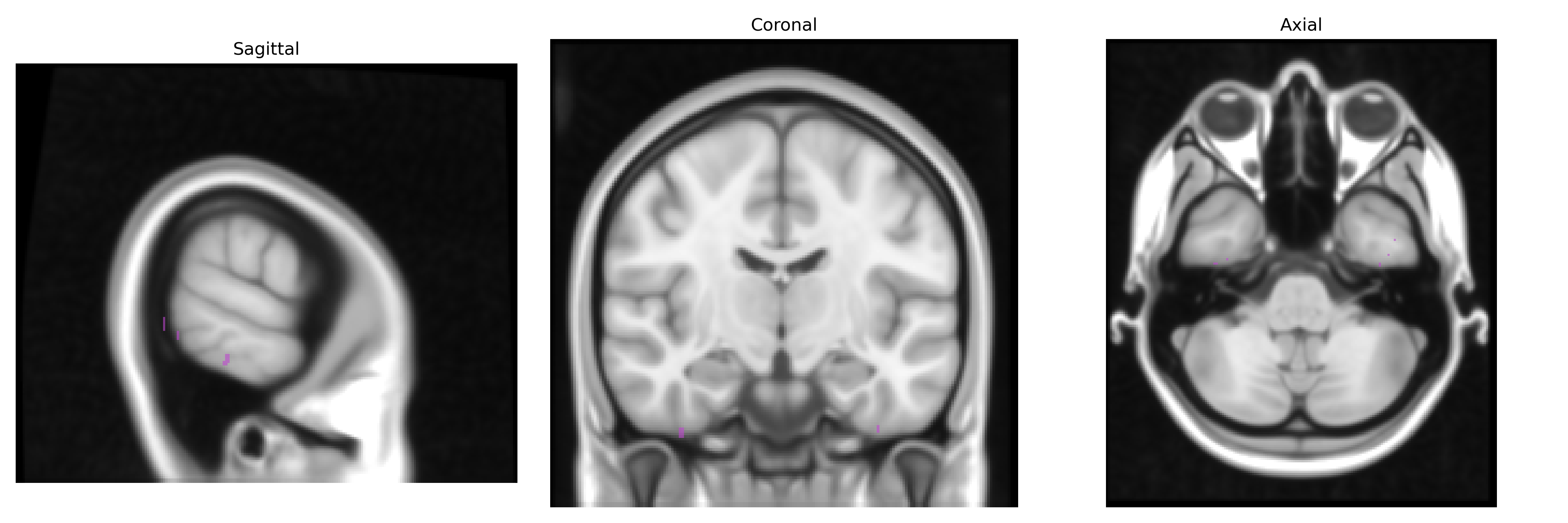
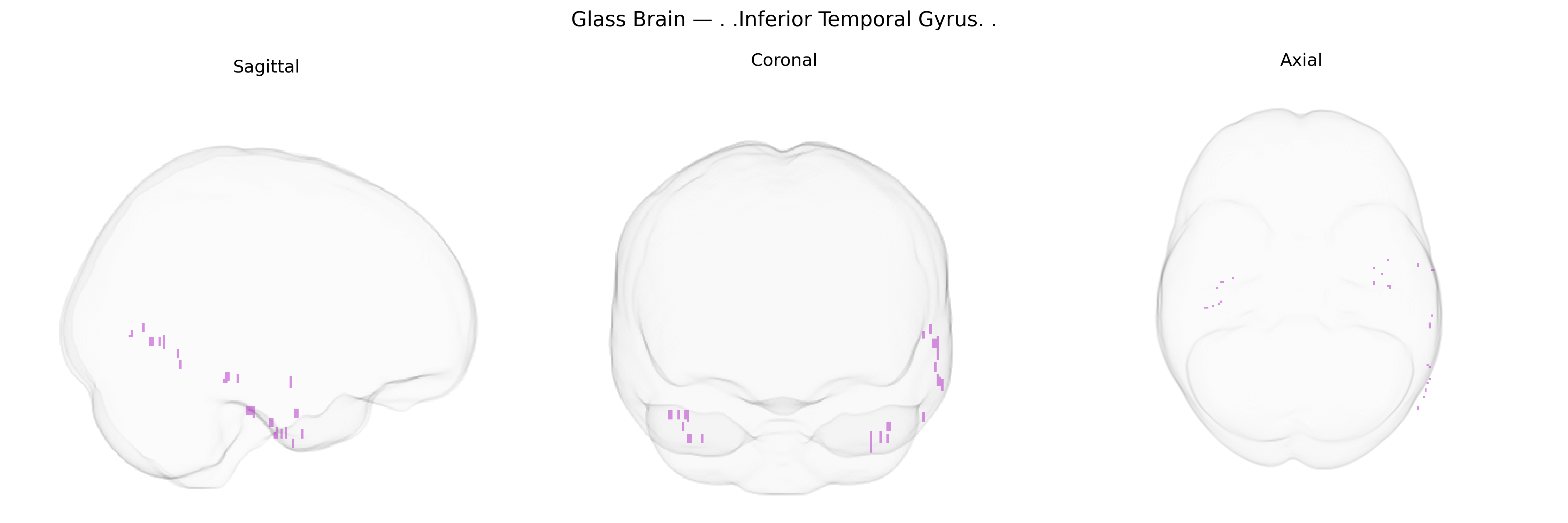
The bilateral Inferior Temporal Gyrus is a neocortical structure located on the ventrolateral surface of the temporal lobe, extending from the occipitotemporal junction anteriorly toward the temporal pole, inferior to the middle temporal gyrus and lateral to the fusiform gyrus. It is primarily associated with high-level visual processing, including object recognition, complex feature analysis, and aspects of visual memory, and is part of the ventral “what” visual pathway. Cytoarchitectonically, it encompasses portions of Brodmann areas 20 and 21, with rich reciprocal connectivity to occipital visual areas, other temporal association cortices, and prefrontal regions, supporting the integration of visual information with semantic and contextual representations. Lesions in this region can contribute to visual agnosias and category-specific recognition deficits. There is no direct Wikipedia article titled “Inferior Temporal Gyrus”; a closely related and encompassing structure is the Temporal lobe.
The bilateral inferior temporal gyrus, a key ventral visual and high-level object-processing region, has been implicated in multiple genetic and GWAS findings, particularly through imaging-genetics and neuropsychiatric studies. Structural and functional variation in this region has been associated with common polymorphisms in genes involved in synaptic plasticity and neurodevelopment (for example BDNF, APOE, and COMT), as well as large-scale polygenic effects captured by cortical thickness and surface-area GWAS, which consistently identify heritable variance in inferior temporal morphology. GWAS of Alzheimer’s disease and other dementias have linked risk loci (including APOE and several immune- and lipid-related genes) to atrophy patterns that prominently involve inferior temporal cortex, while schizophrenia, bipolar disorder, and major depression GWAS, via imaging endophenotypes, indicate polygenic influences on inferior temporal volume and activation during face, object, and language tasks. Autism spectrum disorder and developmental language disorder studies report associations between risk genes affecting synapse formation or cortical patterning (such as CNTNAP2, SHANK family genes, and others) and atypical structure or connectivity in inferior temporal regions, particularly for social and visual processing. Large consortia such as ENIGMA have demonstrated that inferior temporal gyrus measures are highly heritable and influenced by polygenic scores for cognition, education, and psychiatric risk, underscoring this region as a convergent node where genetic variation that affects visual recognition, semantic processing, and higher-order cognition manifests in measurable anatomical and functional differences.
Overview generated by GPT-4o (2026).
Region ID: 7
Hemisphere: bilateral
Atlas: Talairach labels 1mm
Full Quality Version: Download MP4
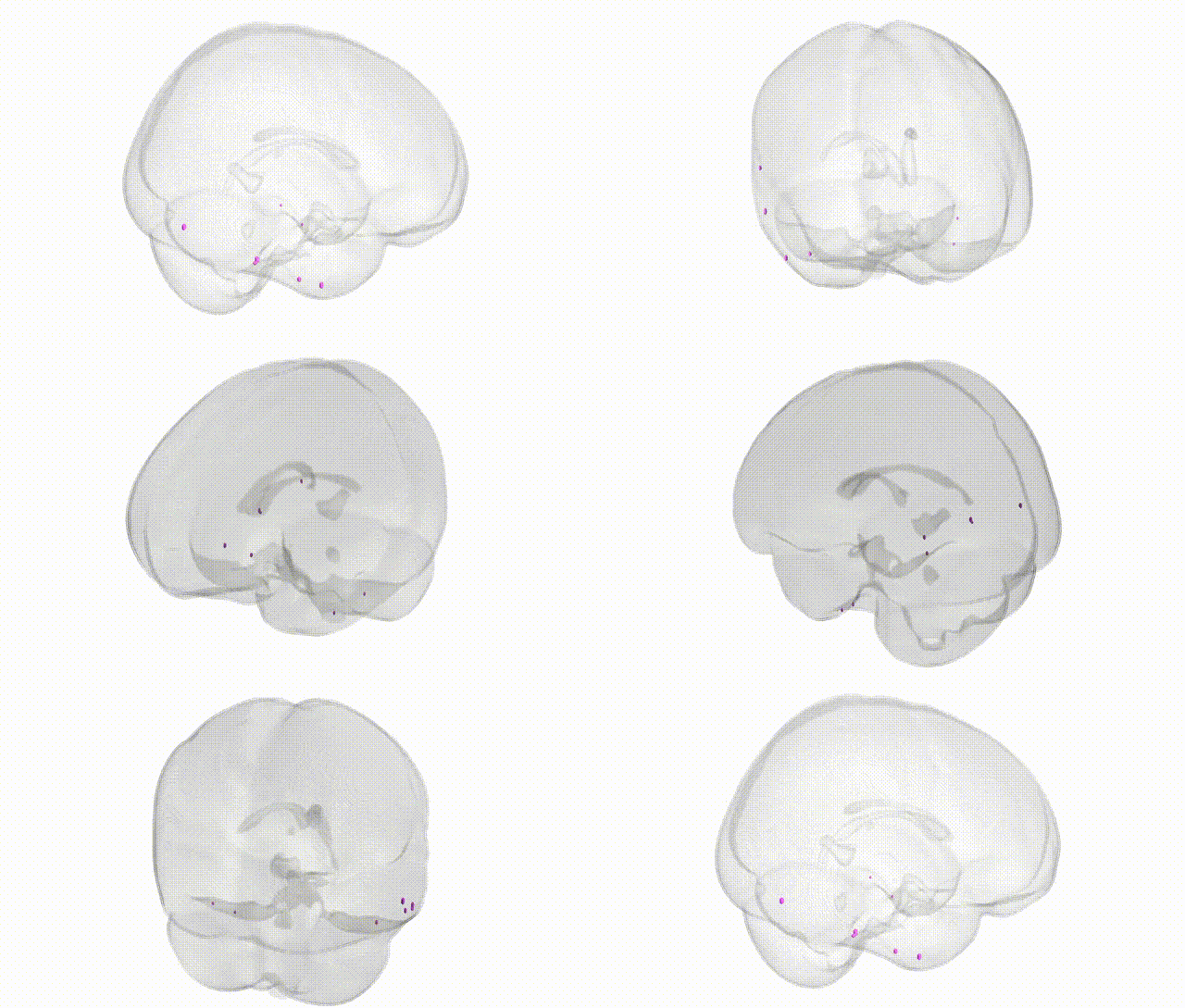
Full Quality Version: Download MP4
Wali Sidiqyar*, Gaurav Rudravaram*, Elyssa M. McMaster, Trent M. Schwartz, Adam M. Saunders, Kurt G. Schilling, Bennett A. Landman "Introducing SPINS: A Shared Public Visualization Library of Neuroanatomical Structures." Medical Imaging with Deep Learning- short paper
This resource is licensed under CC0 1.0 Universal (Public Domain).