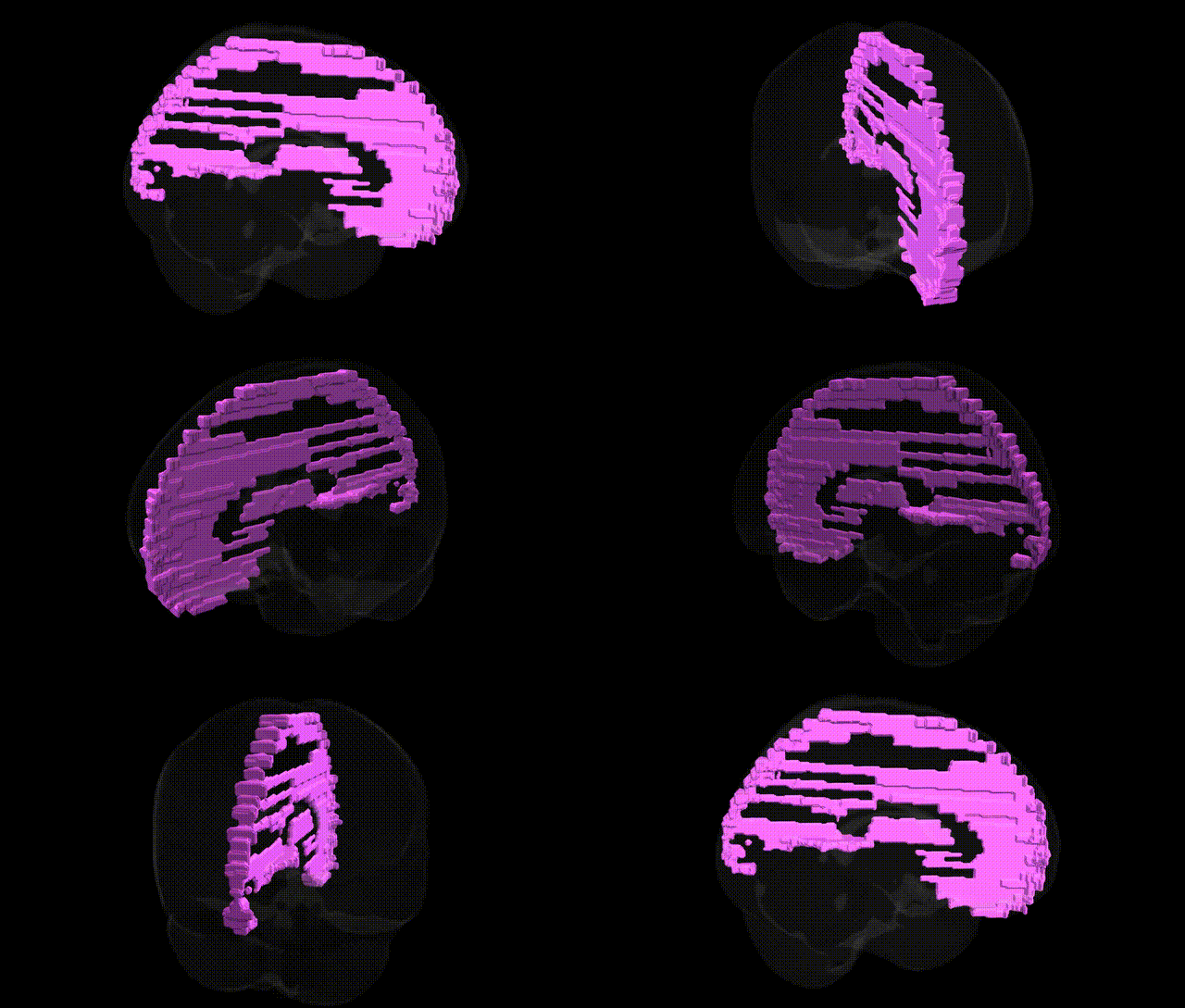
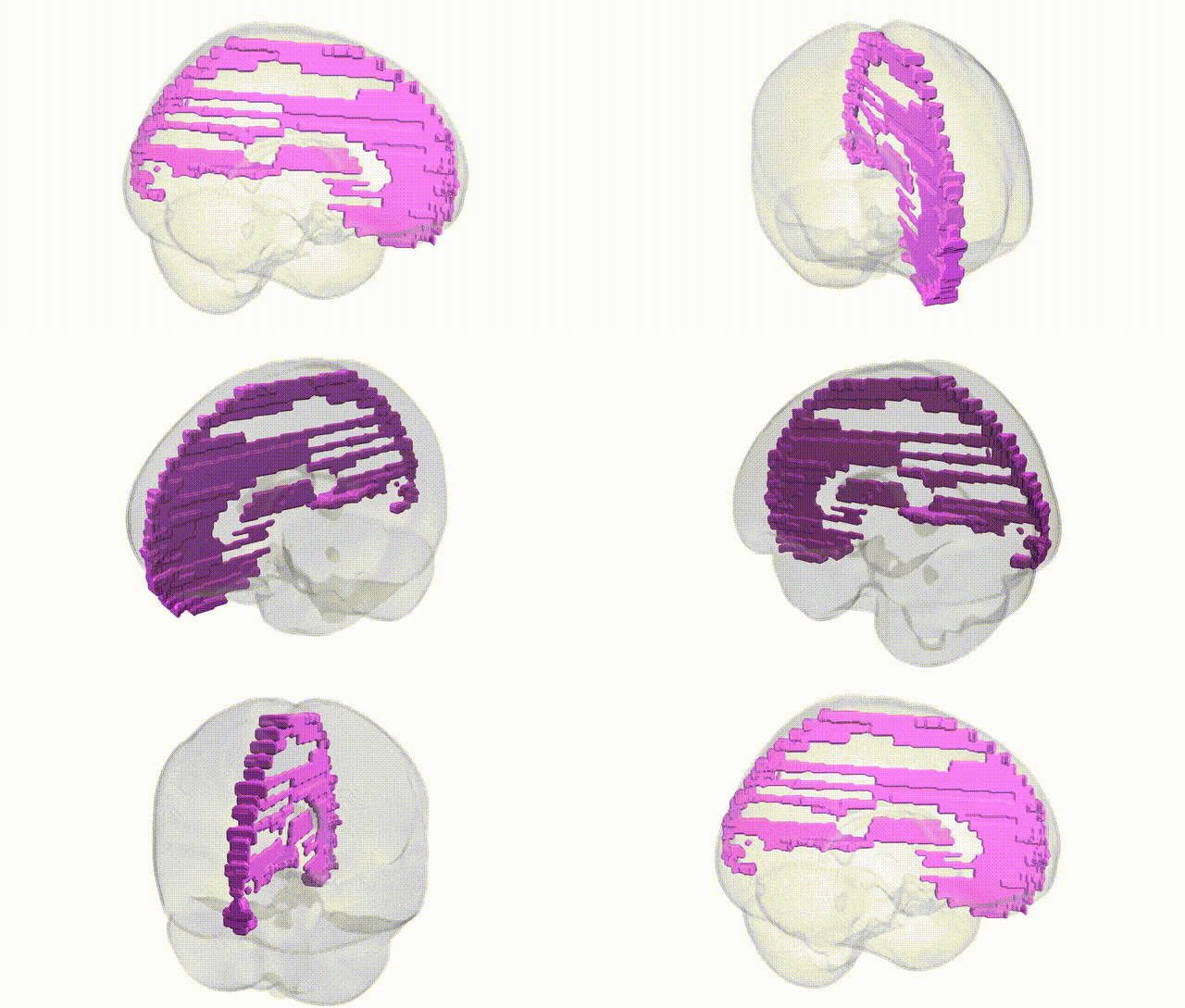
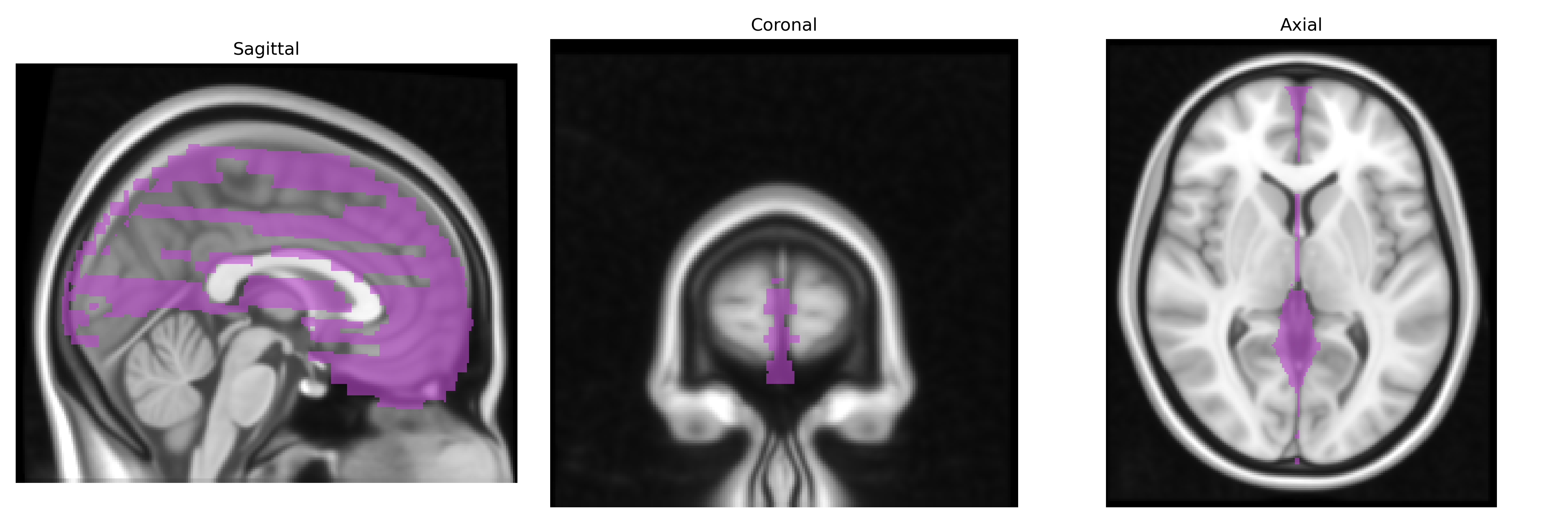
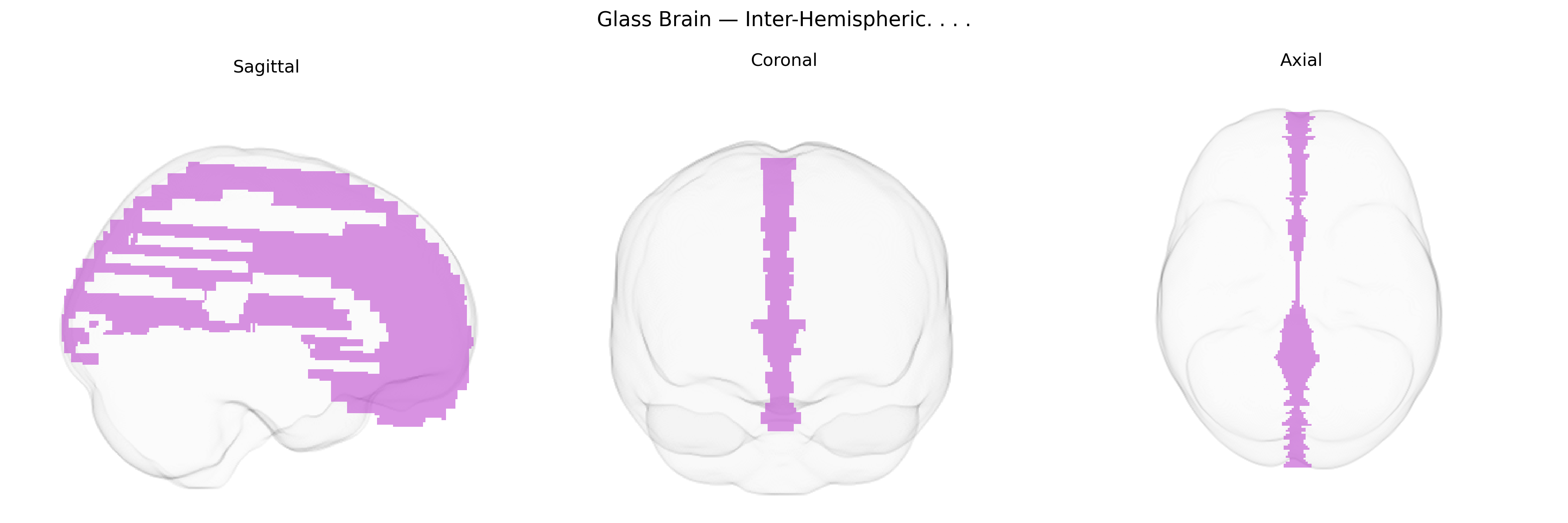
The bilateral inter-hemispheric region in the Talairach 1 mm Atlas refers to midline brain structures located between the left and right cerebral hemispheres, largely encompassing tissue surrounding the longitudinal fissure and the medial aspects of frontal, parietal, and occipital lobes. This region includes components of the corpus callosum and associated cingulate and medial cortical areas that facilitate communication and functional integration between hemispheres, supporting coordinated sensorimotor processing, higher-order cognition, and emotional regulation. Because “inter-hemispheric” in this atlas denotes a topographical designation rather than a single discrete anatomical structure, there is no direct Wikipedia article for this label; a closely related and central structure is the Corpus Callosum.
The bilateral inter-hemispheric region, broadly encompassing midline white-matter tracts such as the corpus callosum and adjacent cingulate and medial cortical areas as defined in the Talairach 1 mm atlas, has been implicated in multiple genetic and genome-wide association studies through traits that reflect callosal and midline structure or function rather than through direct “inter-hemispheric” labels. Numerous GWAS and imaging-genetics studies have reported heritable variation in corpus callosum volume, thickness, and microstructure linked to loci involved in axon guidance, myelination, and neurodevelopment (for example, genes in the ROBO/SLIT, NRG1/ERBB, and cell-adhesion pathways), and polygenic scores for brain size and white-matter integrity show robust associations with midline callosal measures. Rare, high-impact variants in genes such as L1CAM, ARX, and others involved in commissural development cause agenesis or hypoplasia of the corpus callosum, producing severe neurodevelopmental syndromes. Common-variant GWAS have connected inter-hemispheric white-matter metrics with risk for autism spectrum disorder, schizophrenia, attention-deficit/hyperactivity disorder, and major depressive disorder, as well as with cognitive traits such as intelligence, processing speed, and educational attainment, typically via large consortia such as ENIGMA and UK Biobank that link genetic variation to diffusion MRI–derived indices (e.g., fractional anisotropy) in callosal and midline tracts.
Overview generated by GPT-4o (2026).
Region ID: 107
Hemisphere: bilateral
Atlas: Talairach labels 1mm
Full Quality Version: Download MP4
Full Quality Version: Download MP4
Wali Sidiqyar*, Gaurav Rudravaram*, Elyssa M. McMaster, Trent M. Schwartz, Adam M. Saunders, Kurt G. Schilling, Bennett A. Landman "Introducing SPINS: A Shared Public Visualization Library of Neuroanatomical Structures." Medical Imaging with Deep Learning- short paper
This resource is licensed under CC0 1.0 Universal (Public Domain).