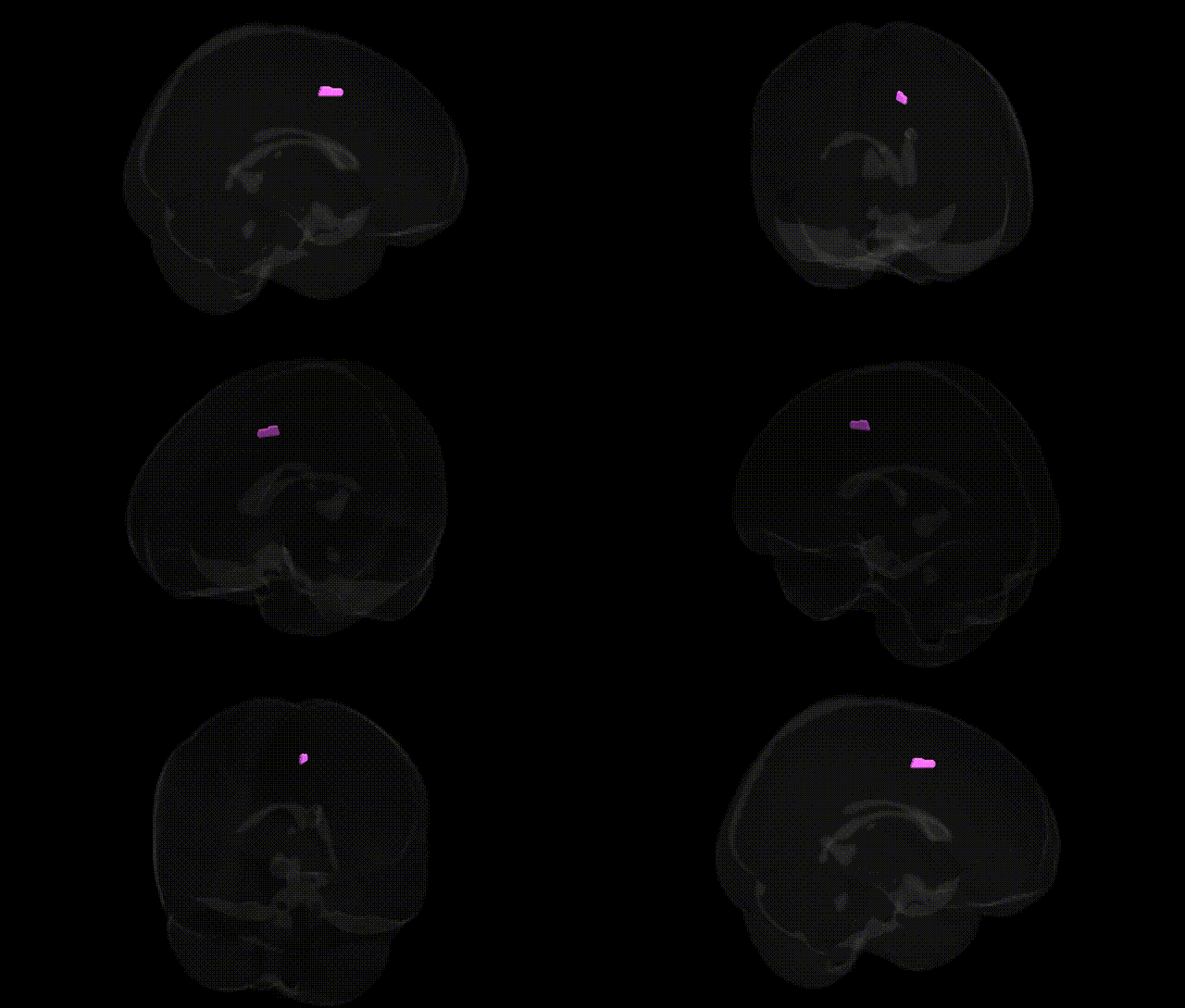
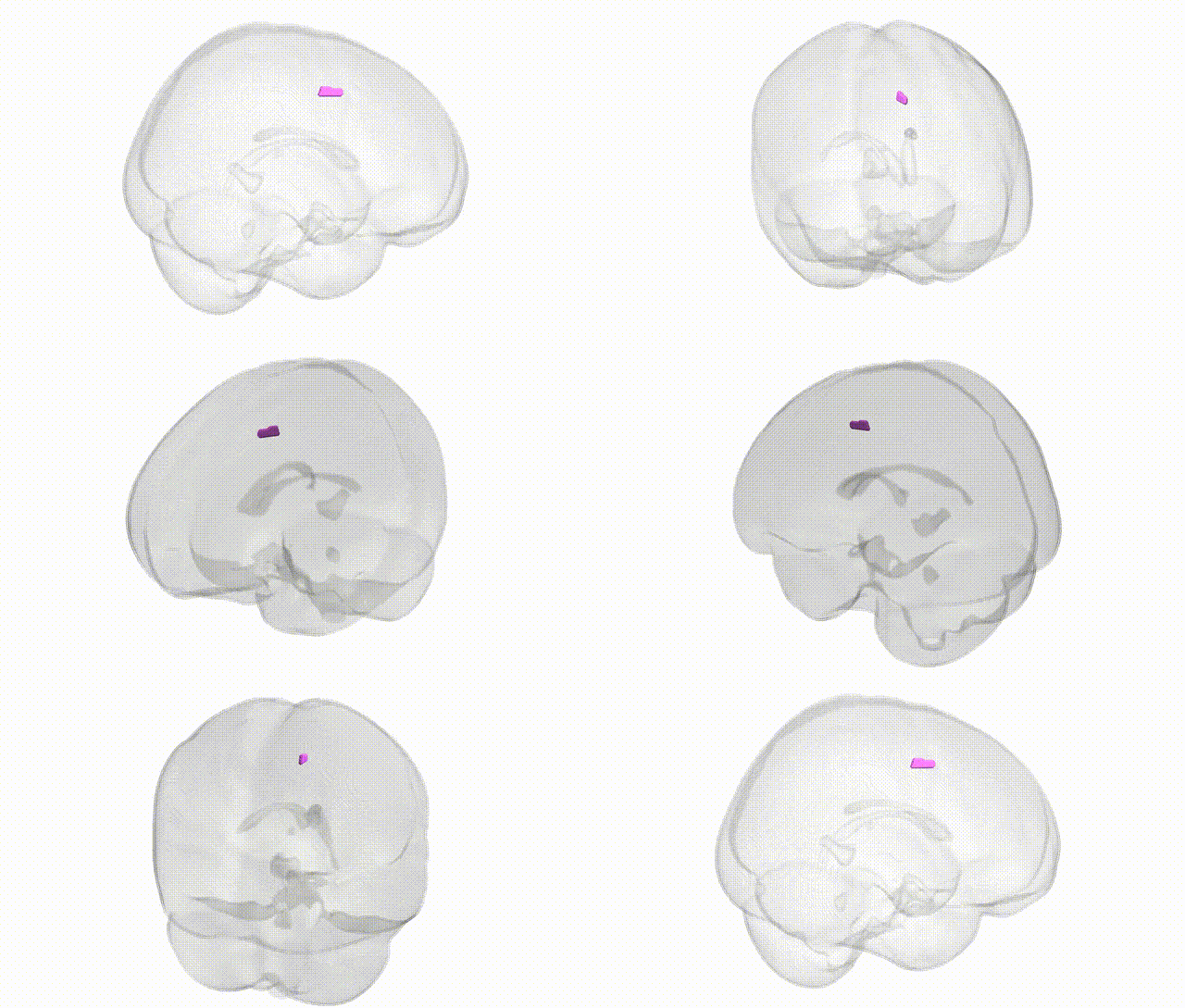
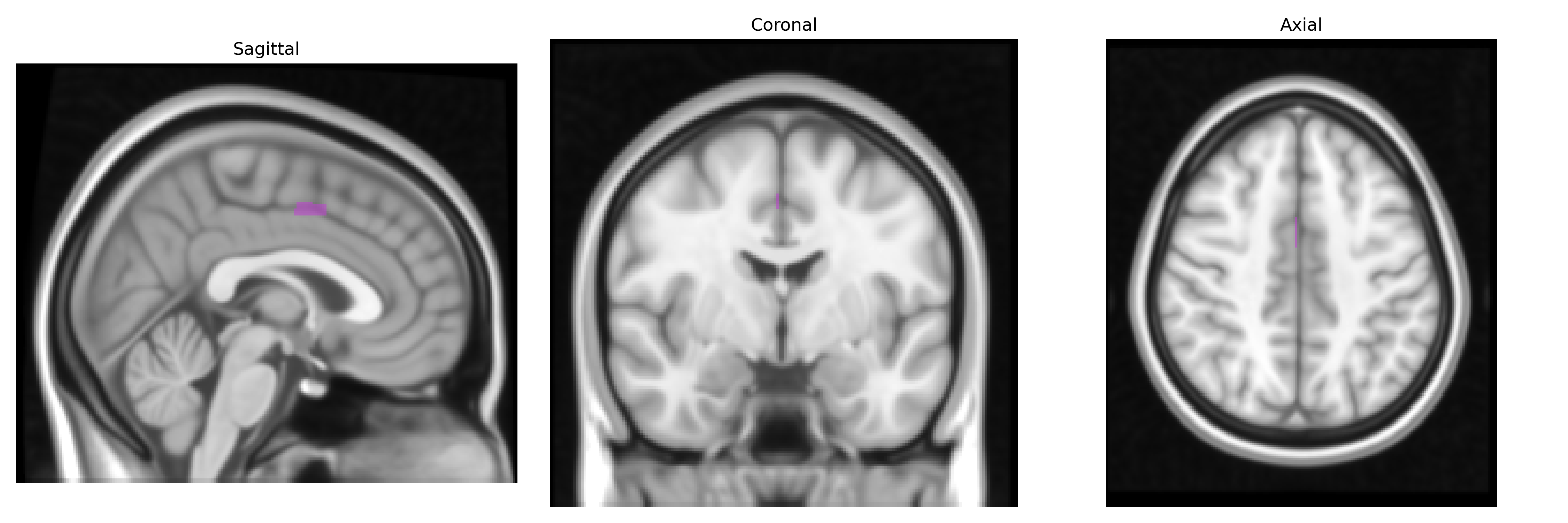
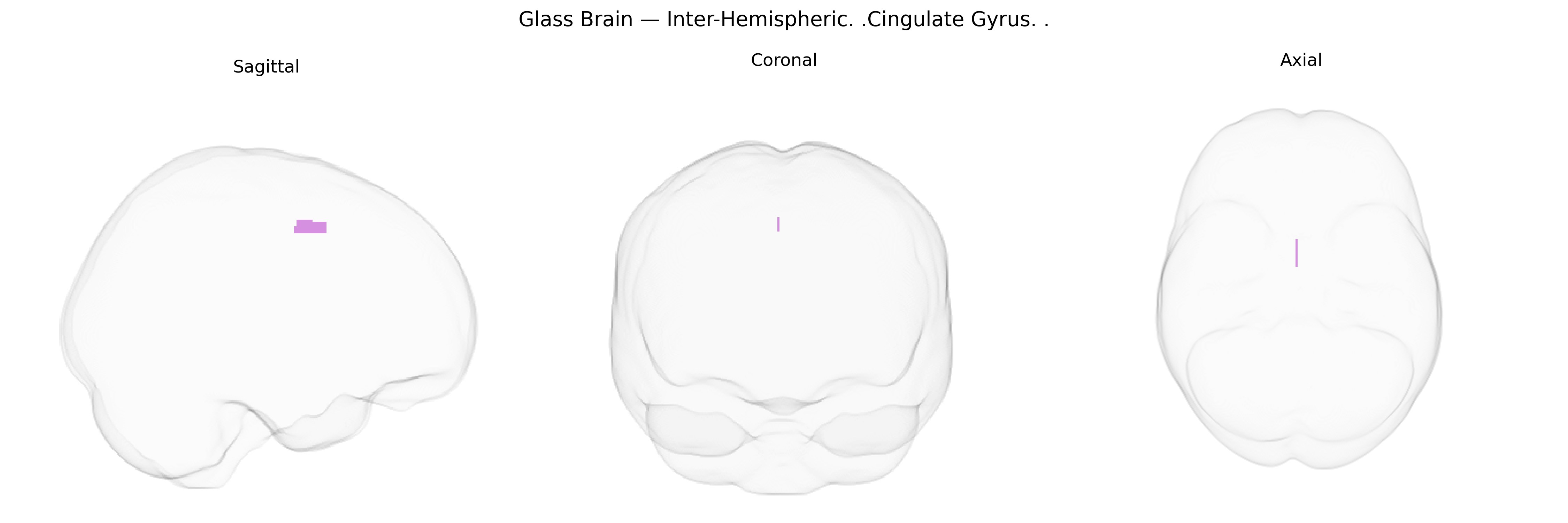
The bilateral inter-hemispheric cingulate gyrus is a midline cortical structure arching over the corpus callosum, forming a major component of the limbic system and spanning both cerebral hemispheres. It is involved in integrating emotional, cognitive, autonomic, and pain-related information, with anterior portions contributing to motivation, error detection, and affective processing, and more posterior regions participating in visuospatial and memory functions. This region receives extensive inputs from prefrontal, parietal, and limbic areas and projects to subcortical structures including the thalamus and basal ganglia, thereby influencing attention, decision-making, and behavioral responses to internal and external stimuli. Cingulate cortex
The bilateral inter-hemispheric cingulate gyrus, a core component of the medial limbic and default mode networks, shows multiple genetic associations from GWAS and imaging-genetics studies, particularly involving anterior and mid-cingulate subregions related to emotion, pain, and cognitive control. Variants in genes such as SLC6A4 (serotonin transporter), BDNF (notably Val66Met), COMT, and DRD2, as well as polygenic risk scores for major depressive disorder, schizophrenia, bipolar disorder, and anxiety, have been repeatedly associated with altered cingulate volume, cortical thickness, connectivity, or activation. Large consortia (e.g., ENIGMA, UK Biobank) have identified common SNPs in loci including 12q14, 17q21, and 3p26, among others, that influence cingulate morphology and functional coupling, with overlap in risk variants for depression, ADHD, autism spectrum disorder, and chronic pain conditions. In addition, cingulate structural and functional metrics show heritabilities often in the 30–60% range, and GWAS of traits such as neuroticism, cognitive performance, pain sensitivity, and rumination implicate cingulate-related networks, positioning the inter-hemispheric cingulate gyrus as a convergent site where pleiotropic psychiatric and cognitive risk alleles exert measurable effects on brain structure and function.
Overview generated by GPT-4o (2026).
Region ID: 1058
Hemisphere: bilateral
Atlas: Talairach labels 1mm
Full Quality Version: Download MP4
Full Quality Version: Download MP4
Wali Sidiqyar*, Gaurav Rudravaram*, Elyssa M. McMaster, Trent M. Schwartz, Adam M. Saunders, Kurt G. Schilling, Bennett A. Landman "Introducing SPINS: A Shared Public Visualization Library of Neuroanatomical Structures." Medical Imaging with Deep Learning- short paper
This resource is licensed under CC0 1.0 Universal (Public Domain).