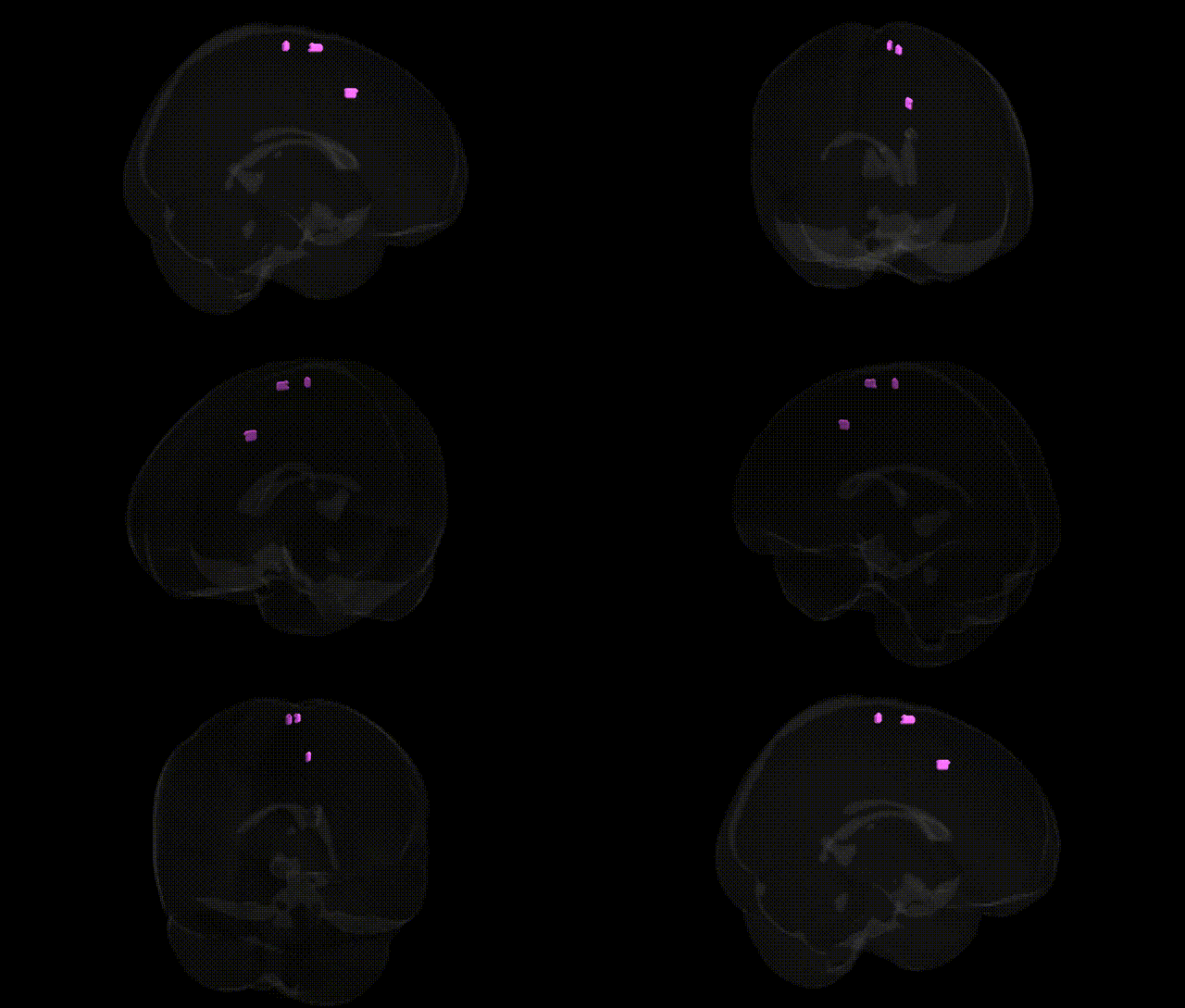
The bilateral inter-hemispheric medial frontal gyrus, as defined in the Talairach 1 mm atlas, refers to the medial portions of the superior and middle frontal regions along the interhemispheric fissure, encompassing parts of the medial prefrontal cortex and often overlapping with areas such as the anterior cingulate and supplementary motor regions. This region participates in higher-order executive functions, including decision-making, conflict monitoring, error detection, and volitional motor control, as well as aspects of social cognition and internal mentation. Neural activity within this territory is frequently implicated in tasks requiring sustained attention, response inhibition, and evaluation of action outcomes, and it forms part of large-scale networks such as the default mode and cingulo-opercular control systems. There is no direct link for this exact Talairach label; a related structure is the Medial prefrontal cortex.
The bilateral inter-hemispheric medial frontal gyrus (often encompassing medial prefrontal and anterior cingulate–adjacent cortex in the Talairach 1 mm atlas) has been implicated in multiple genetic and genome‑wide association studies, largely through imaging genetics and psychiatric GWAS that highlight this region in downstream neural correlates. Variants in genes related to monoaminergic neurotransmission (e.g., COMT, DRD2, SLC6A4) and glutamatergic signaling (e.g., GRM3) have been associated with altered medial frontal activation or structure during tasks involving cognitive control, error monitoring, and decision‑making. Large‑scale neuroimaging GWAS consortia such as ENIGMA and UK Biobank have reported heritable variation in medial frontal cortical thickness and surface area, with significant associations near loci including 15q14, 17q21.31 (MAPT/KANSL1 region), and 3p26–p25, though these findings often refer to broader medial prefrontal or anterior cingulate parcels that overlap the Talairach medial frontal gyrus label. Psychiatric and behavioral GWAS, particularly for major depressive disorder, schizophrenia, bipolar disorder, attention‑deficit/hyperactivity disorder, and neuroticism, consistently implicate medial frontal and anterior cingulate–centered networks in functional and structural follow‑ups, with polygenic risk scores for these conditions predicting variation in medial frontal activity and morphology. In addition, GWAS of cognitive performance, educational attainment, and risk‑taking/impulsivity link polygenic load to differences in medial frontal function during executive tasks, further supporting a genetically influenced role of this region in higher‑order control and affect regulation, although single, region-specific genetic variants with strong, direct effects on the bilateral inter‑hemispheric medial frontal gyrus alone have not been conclusively identified.
Overview generated by GPT-4o (2026).
Region ID: 1059
Hemisphere: bilateral
Atlas: Talairach labels 1mm
Full Quality Version: Download MP4
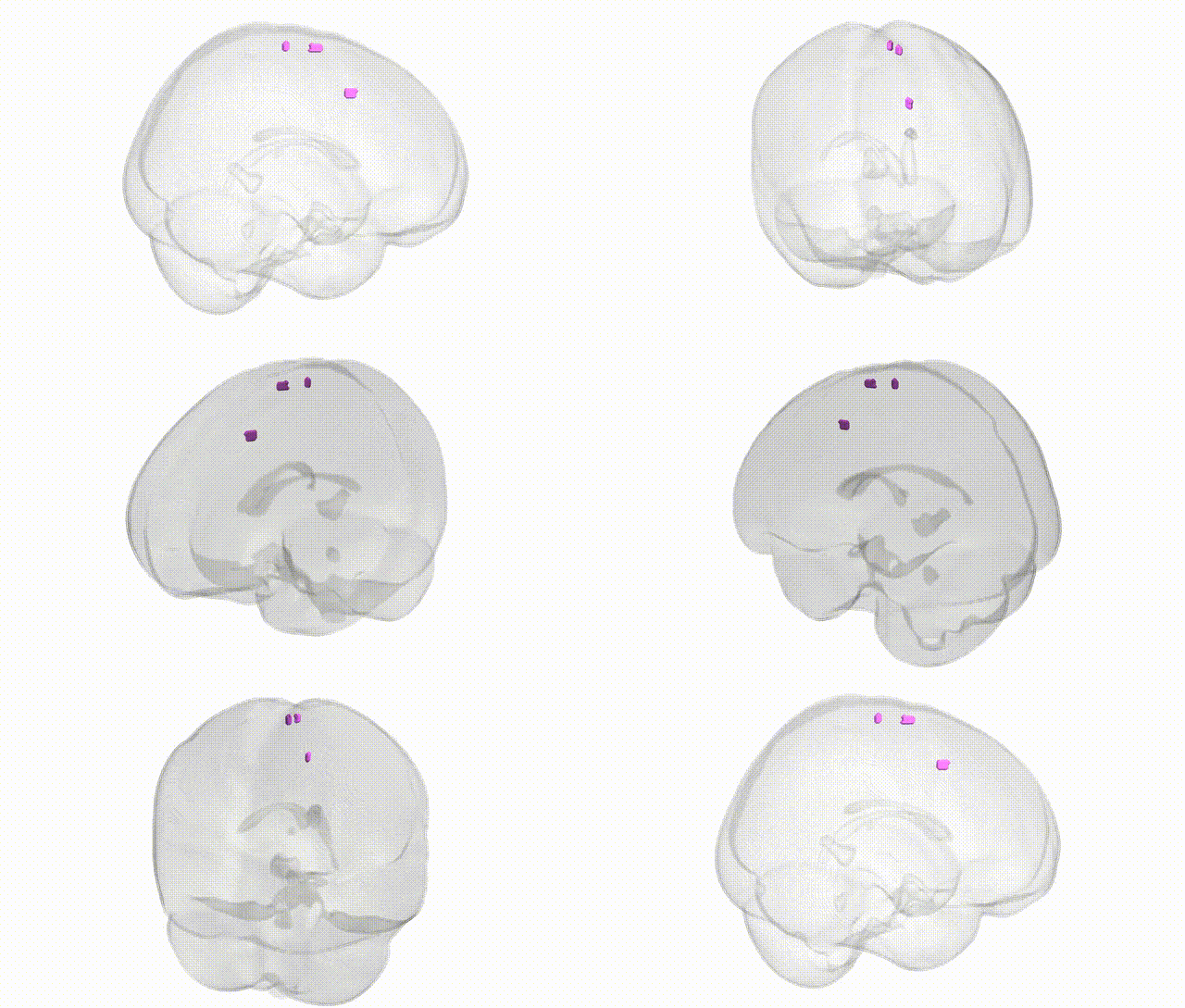
Full Quality Version: Download MP4
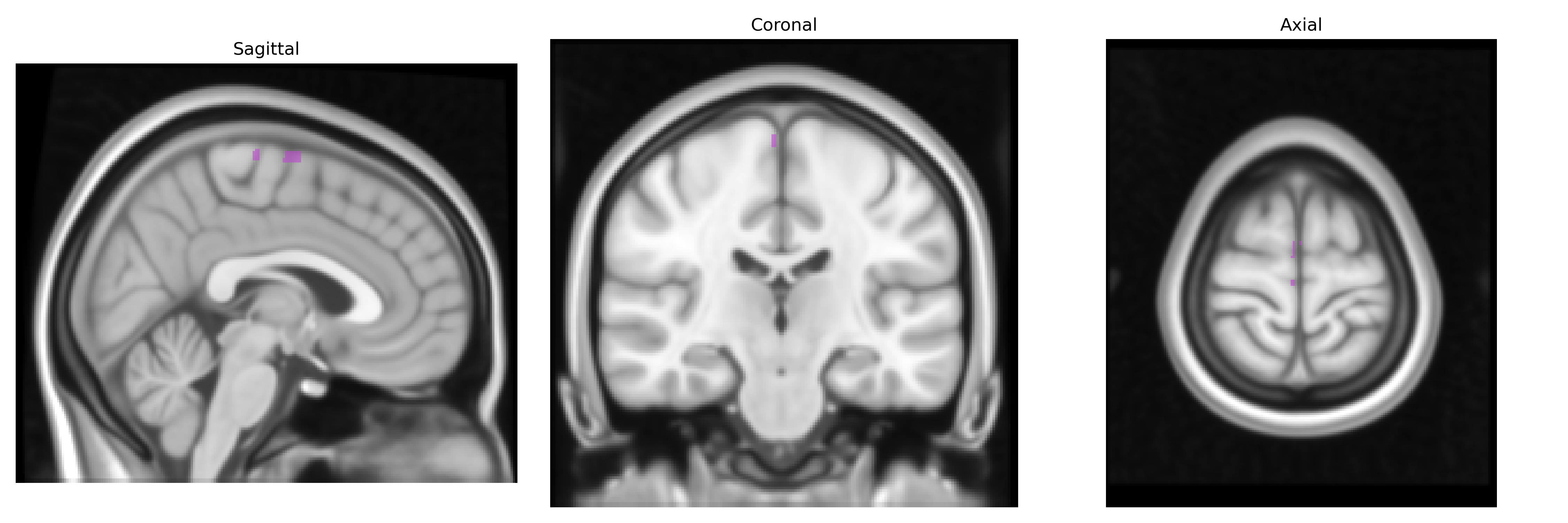
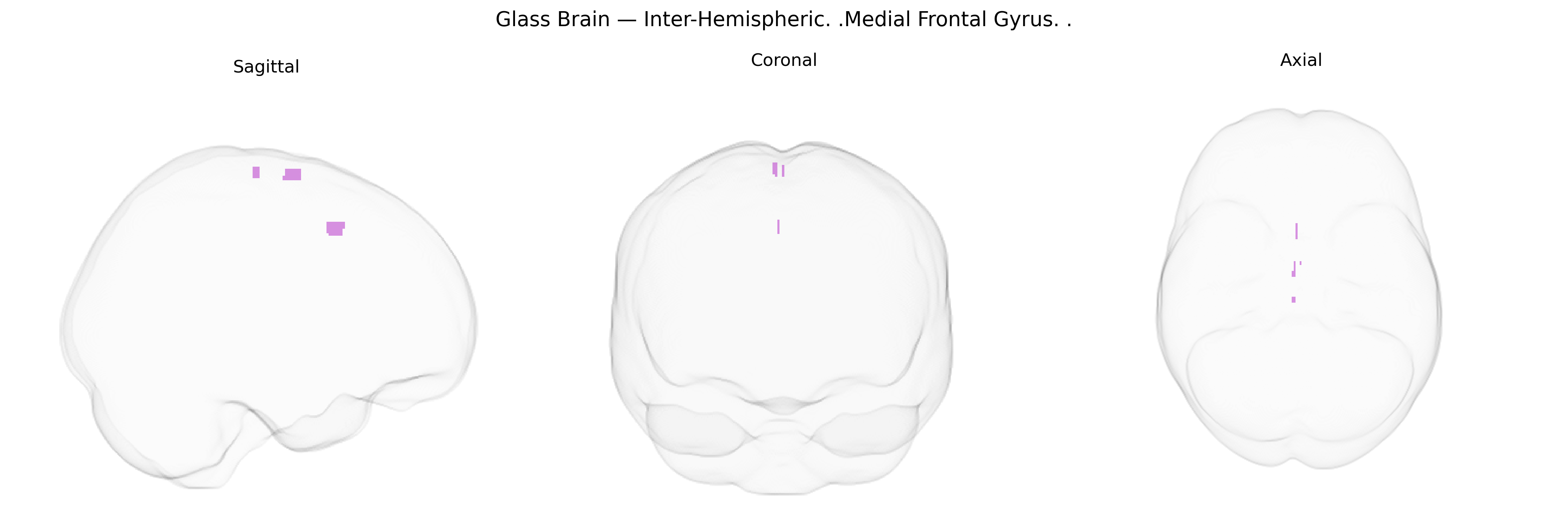
Wali Sidiqyar*, Gaurav Rudravaram*, Elyssa M. McMaster, Trent M. Schwartz, Adam M. Saunders, Kurt G. Schilling, Bennett A. Landman "Introducing SPINS: A Shared Public Visualization Library of Neuroanatomical Structures." Medical Imaging with Deep Learning- short paper
This resource is licensed under CC0 1.0 Universal (Public Domain).