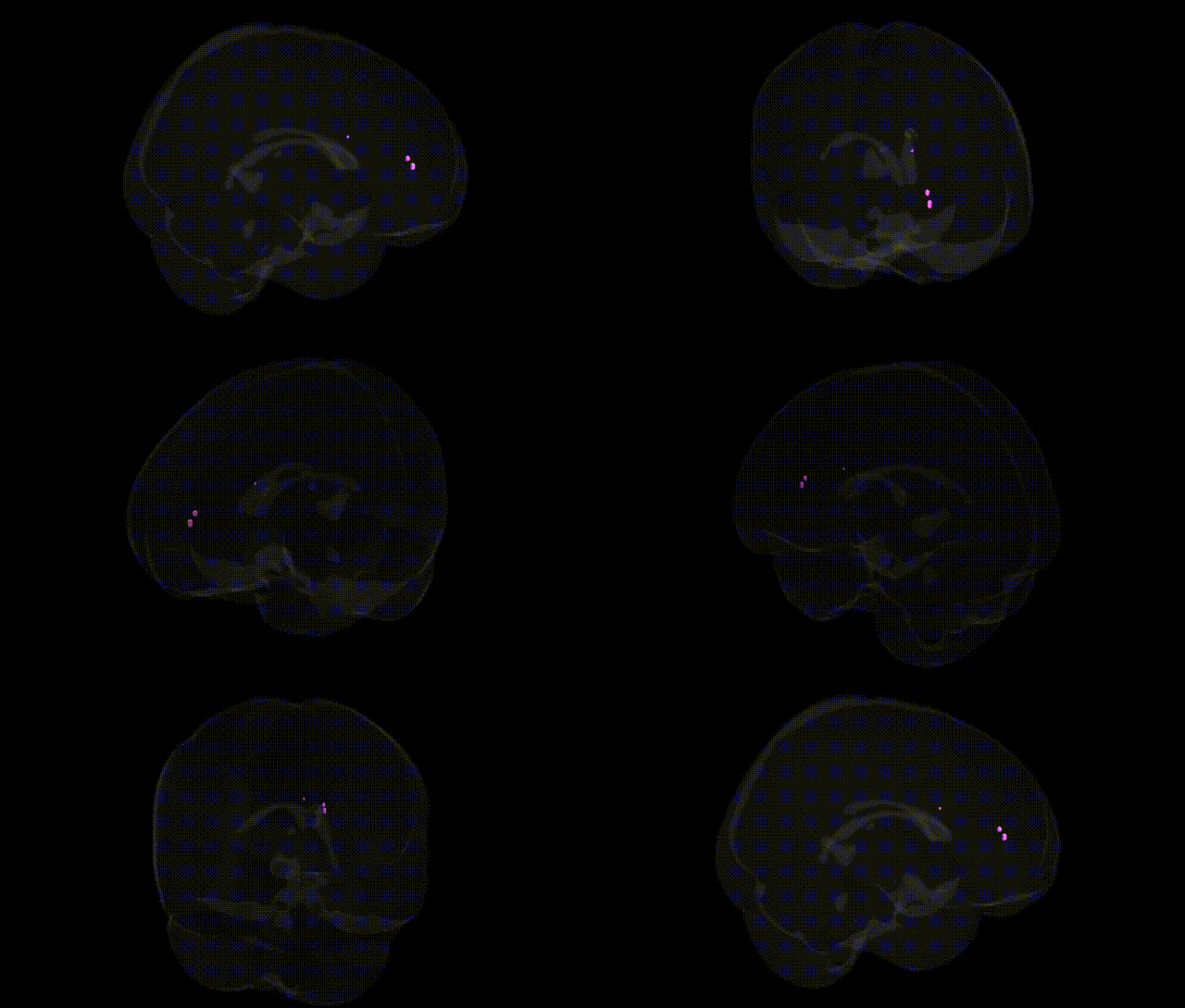
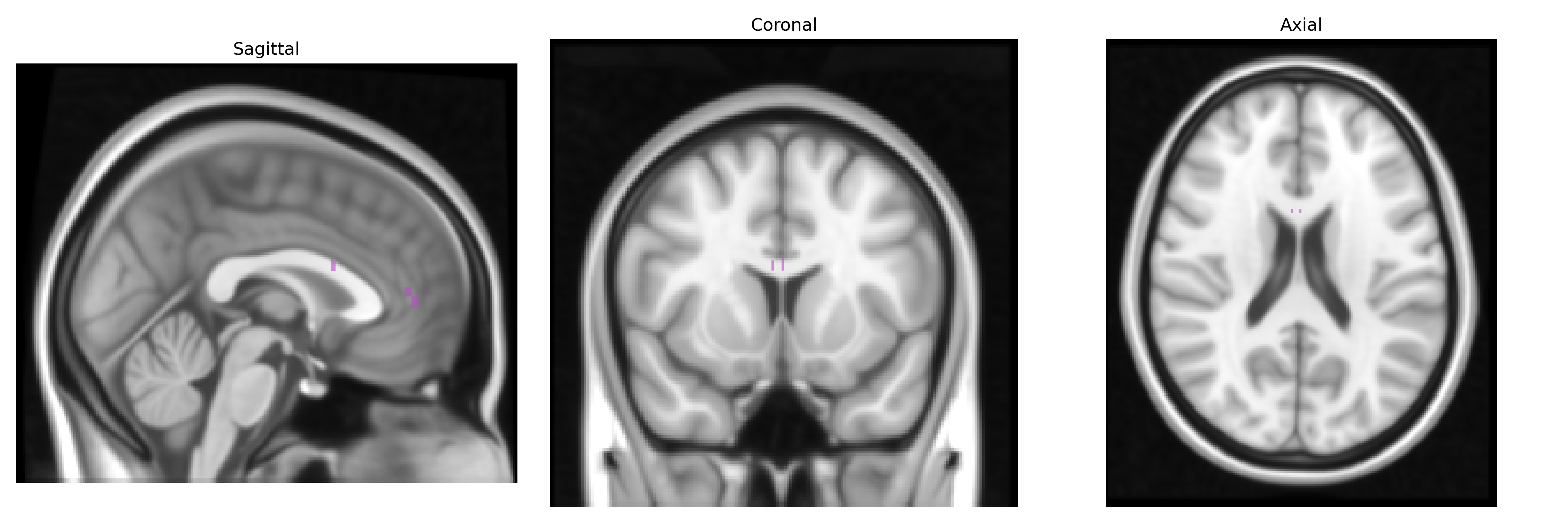
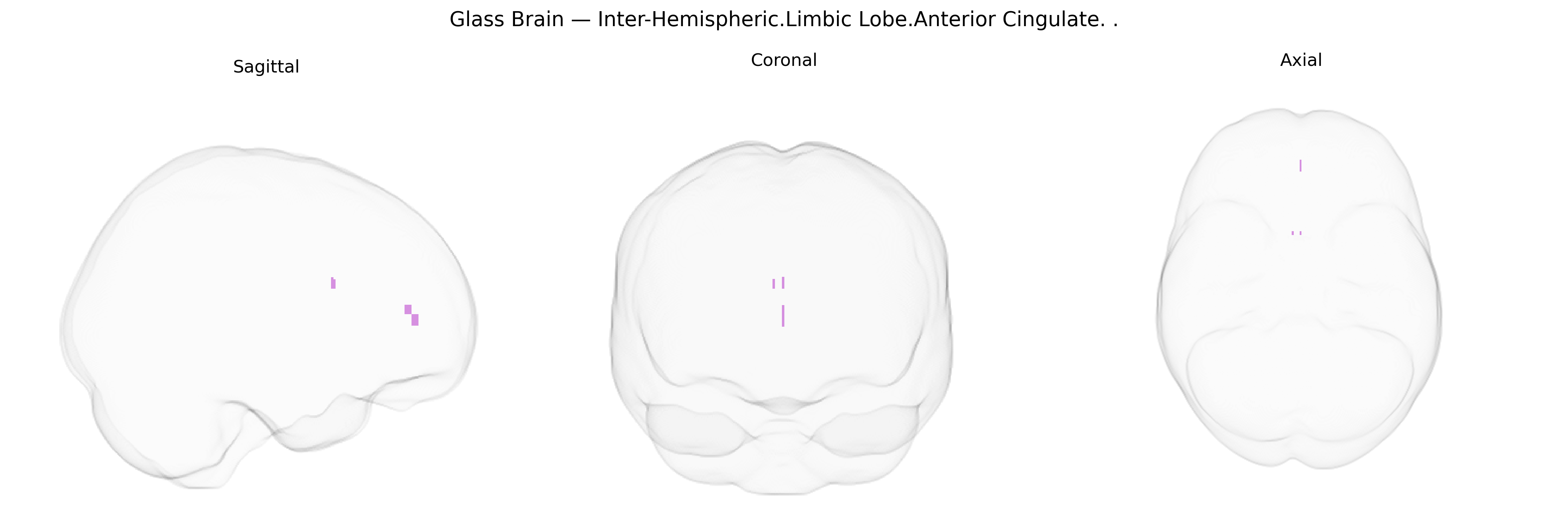
The bilateral Inter-Hemispheric Limbic Lobe Anterior Cingulate corresponds to the anterior segment of the cingulate cortex situated on the medial surface of both cerebral hemispheres, arching above the corpus callosum within the limbic lobe and spanning the interhemispheric fissure. This region is critically involved in emotion processing, motivation, autonomic regulation, and aspects of cognitive control, including conflict monitoring, decision-making, and error detection. It forms dense connections with prefrontal, limbic (especially amygdala and hippocampus), and autonomic structures, enabling integration of affective and cognitive information with visceral responses. In the Talairach 1 mm Atlas, this label designates voxels assigned to the anterior cingulate portion of the limbic lobe that lie near the midline and extend bilaterally. There is no single dedicated Wikipedia page for this exact Talairach label; a closely related and encompassing structure is the Anterior cingulate cortex.
The bilateral inter-hemispheric anterior cingulate (limbic lobe) from the Talairach 1 mm atlas has been repeatedly implicated in genetic and genome-wide association studies (GWAS) of psychiatric, cognitive, and pain-related traits, although most findings reference functionally or anatomically similar anterior cingulate cortex (ACC) parcels rather than this exact atlas label. Polygenic risk for major depressive disorder, schizophrenia, bipolar disorder, autism spectrum disorder, and attention-deficit/hyperactivity disorder has been associated with structural and functional variation in the ACC, including altered cortical thickness, volume, and connectivity; several large consortia (e.g., ENIGMA, UK Biobank) report that common variants in genes related to synaptic function (e.g., GRIN2A, CACNA1C), neurodevelopment (e.g., NRGN, DISC1), and serotonergic and dopaminergic signaling contribute to ACC morphology and activation differences. GWAS of anxiety, neuroticism, and stress reactivity also implicate ACC-related circuits, linking variants in HPA-axis and glutamatergic genes to ACC activity during emotional and conflict-processing tasks. Pain and nociception GWAS and candidate-gene studies (e.g., involving COMT, OPRM1) have associated genetic variation with ACC activation during pain perception, consistent with its role in affective pain processing. Additionally, ACC structural and functional measures show significant SNP-based heritability, and imaging-genetics work indicates that polygenic scores for cognition and educational attainment relate to ACC thickness and connectivity, highlighting this region as a convergent hub where distributed genetic influences on emotion regulation, cognitive control, and psychopathology manifest.
Overview generated by GPT-4o (2026).
Region ID: 752
Hemisphere: bilateral
Atlas: Talairach labels 1mm
Full Quality Version: Download MP4
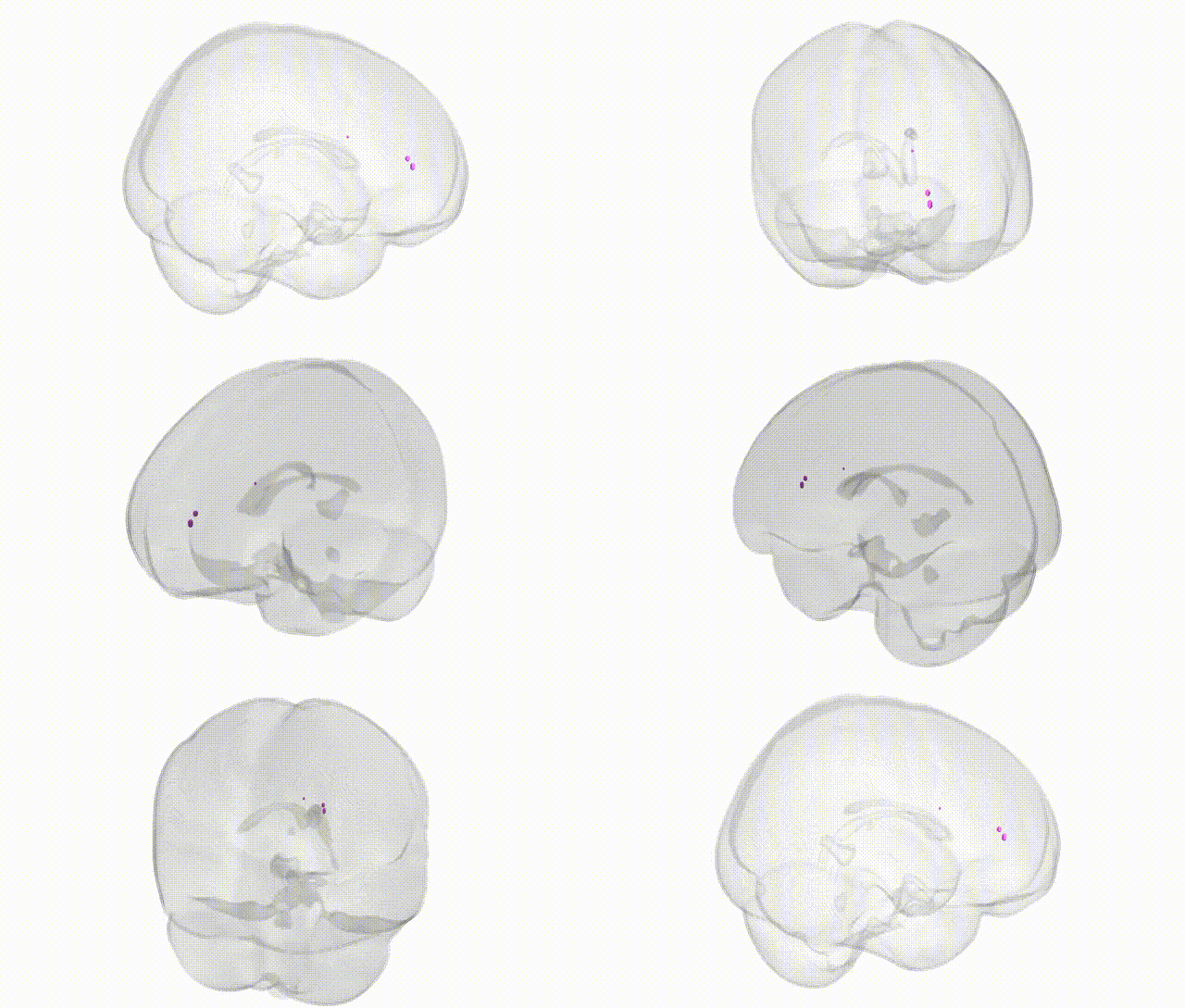
Full Quality Version: Download MP4
Wali Sidiqyar*, Gaurav Rudravaram*, Elyssa M. McMaster, Trent M. Schwartz, Adam M. Saunders, Kurt G. Schilling, Bennett A. Landman "Introducing SPINS: A Shared Public Visualization Library of Neuroanatomical Structures." Medical Imaging with Deep Learning- short paper
This resource is licensed under CC0 1.0 Universal (Public Domain).