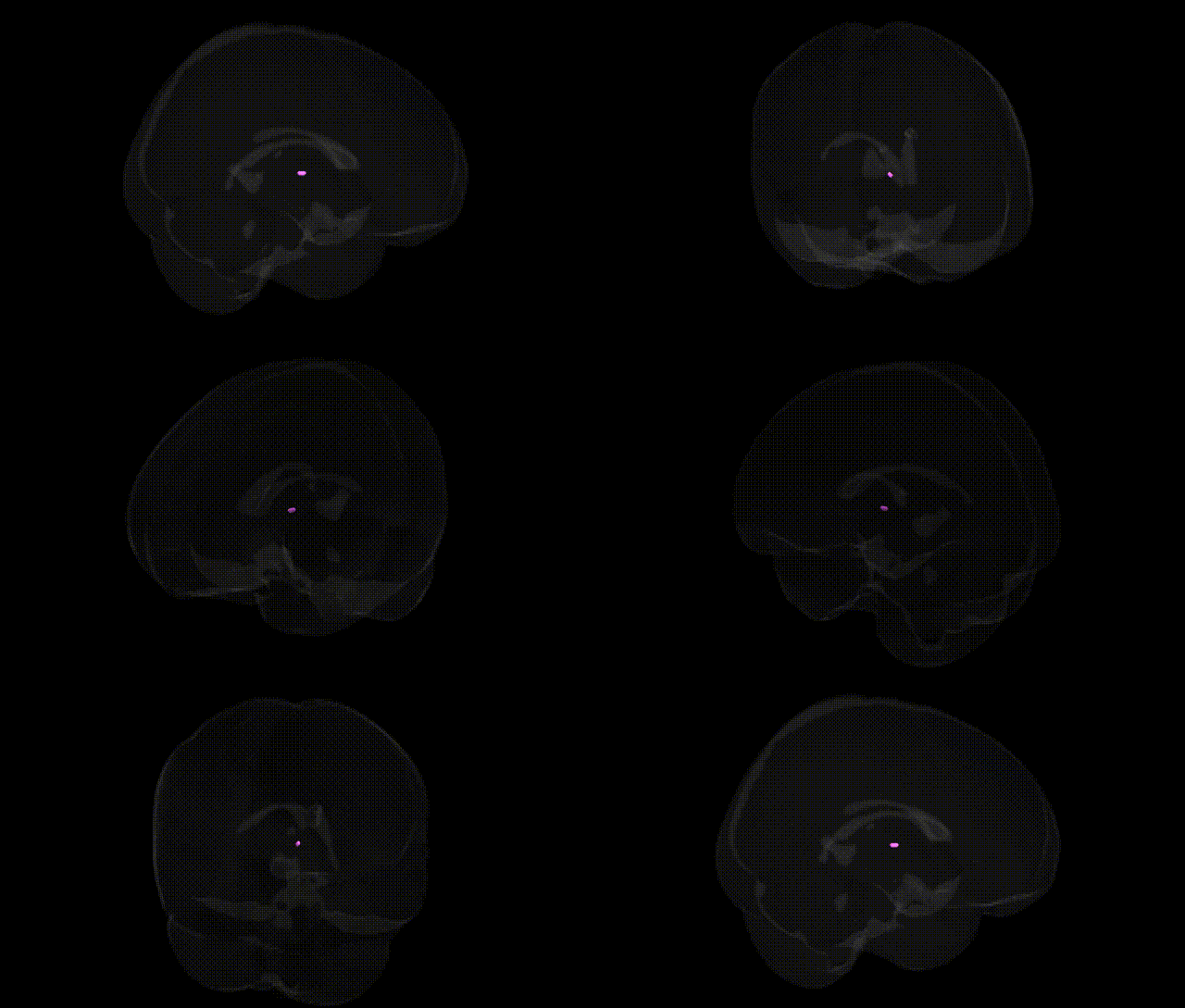
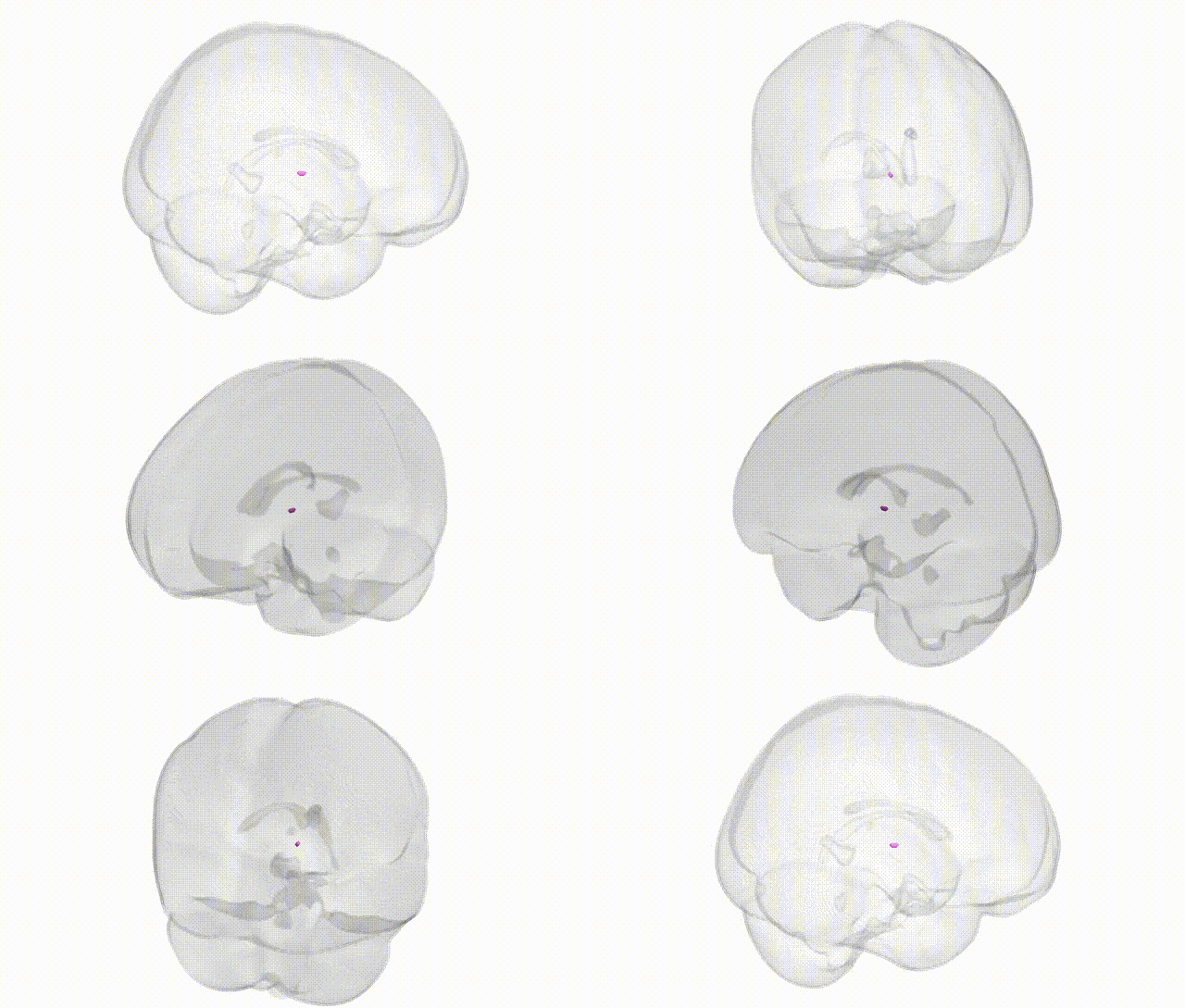
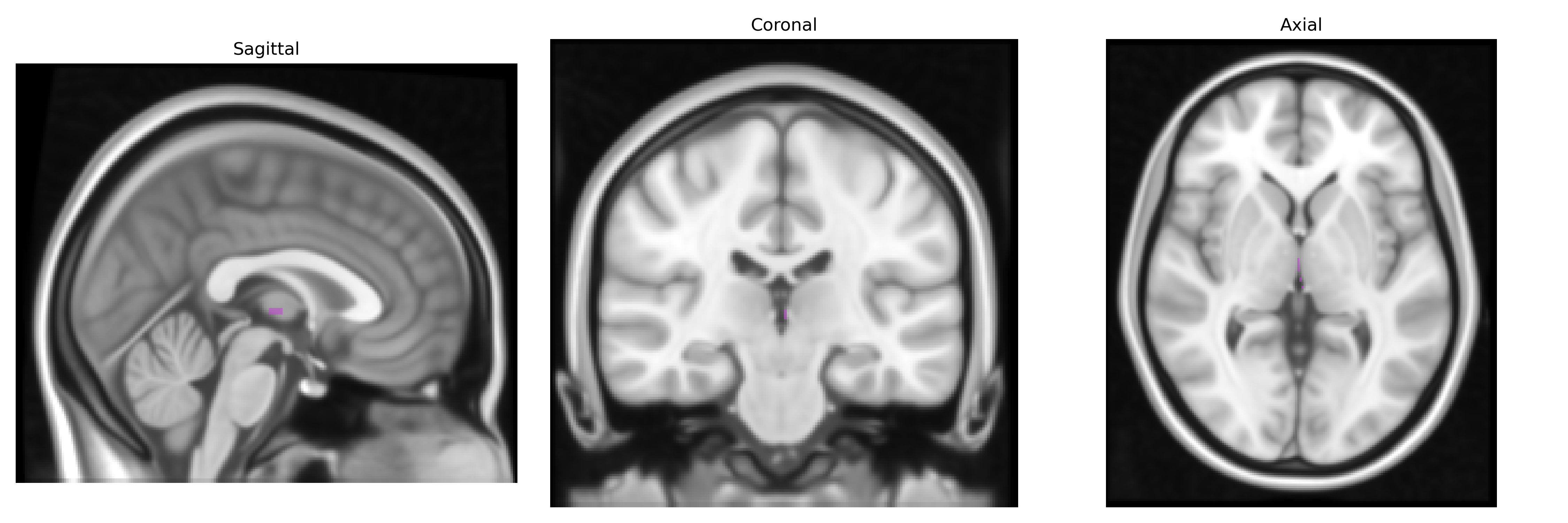
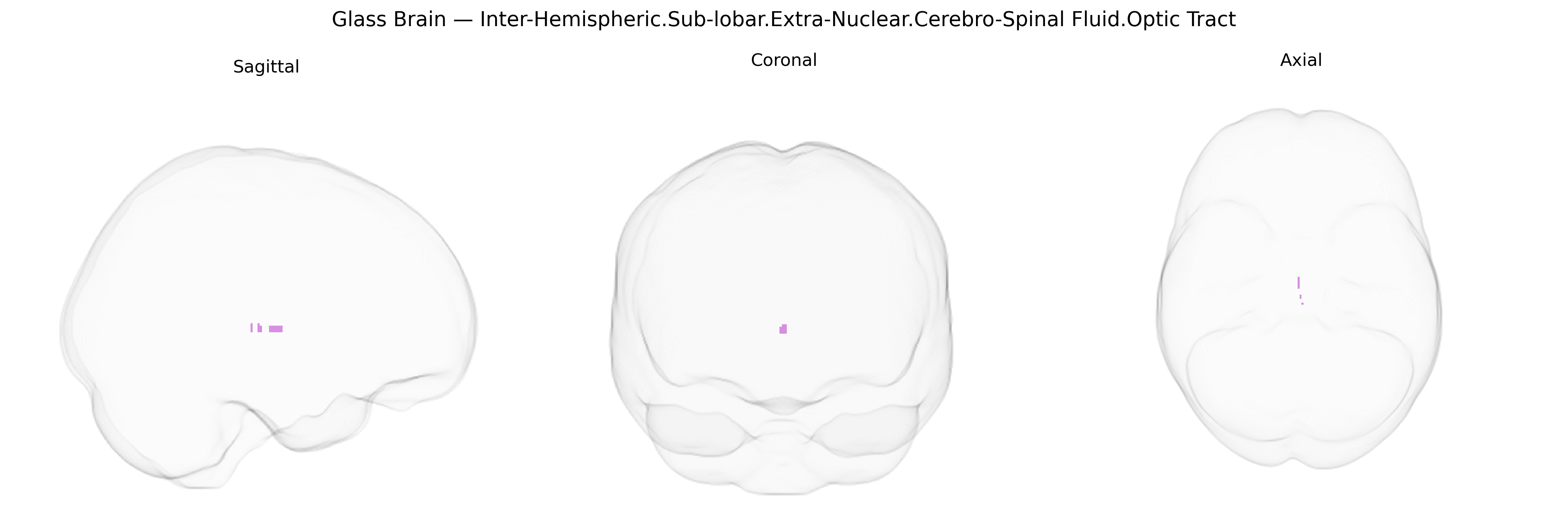
The bilateral Inter-Hemispheric Sub-lobar Extra-Nuclear Cerebro-Spinal Fluid Optic Tract region in the Talairach 1 mm atlas corresponds to cerebrospinal fluid space and adjacent tissue along the midline where the optic tracts course from the optic chiasm toward the lateral geniculate nuclei. Functionally, the optic tracts carry visual information from the retinal ganglion cells after partial decussation at the optic chiasm, conveying signals from the contralateral visual hemifield. Structurally, this region lies in the basal forebrain and diencephalic area, bordering CSF-filled spaces such as the suprasellar cistern, and is classified as “extra-nuclear” because it is lateral to major subcortical nuclei rather than within them. This grouping thus captures white matter visual pathways and neighboring CSF compartments rather than a discrete gray-matter nucleus. There is no direct Wikipedia article for this composite Talairach label; a related structure is the Optic tract.
The bilateral Inter-Hemispheric.Sub-lobar.Extra-Nuclear.Cerebro-Spinal Fluid.Optic Tract region, as defined in the Talairach 1 mm atlas, corresponds primarily to white-matter visual pathways rather than a gray-matter structure, and currently has no robust, region-specific genome-wide association study (GWAS) signals directly tied to its labeled volume or morphology. Instead, genetic associations involving this pathway are inferred from broader neuroimaging-genetics work on visual system white matter, optic radiation/tract integrity, and global white-matter microstructure, where common variants in genes related to myelination, axonal development, and neuroinflammation (for example, loci near or involving oligodendrocyte and axon guidance genes) have been associated with diffusion MRI measures across major tracts. Disorders that affect the optic tract and adjacent cerebrospinal-fluid spaces—such as multiple sclerosis, neuromyelitis optica spectrum disorders (with strong HLA and AQP4 associations), Leber hereditary optic neuropathy (MT-ND gene variants), and other hereditary optic neuropathies—have clear genetic underpinnings, but these are usually studied at the level of disease diagnosis or optic nerve involvement rather than Talairach-defined tract volumes. Large consortia (e.g., ENIGMA, UK Biobank imaging genetics) have reported polygenic influences on global white-matter and visual system structure, yet have not isolated a consistent, replicated set of loci specifically for this Talairach-defined optic tract/CSF label, so current knowledge largely reflects general genetic determinants of white-matter and visual pathway integrity rather than a uniquely characterized genetic architecture for this exact region.
Overview generated by GPT-4o (2026).
Region ID: 633
Hemisphere: bilateral
Atlas: Talairach labels 1mm
Full Quality Version: Download MP4
Full Quality Version: Download MP4
Wali Sidiqyar*, Gaurav Rudravaram*, Elyssa M. McMaster, Trent M. Schwartz, Adam M. Saunders, Kurt G. Schilling, Bennett A. Landman "Introducing SPINS: A Shared Public Visualization Library of Neuroanatomical Structures." Medical Imaging with Deep Learning- short paper
This resource is licensed under CC0 1.0 Universal (Public Domain).