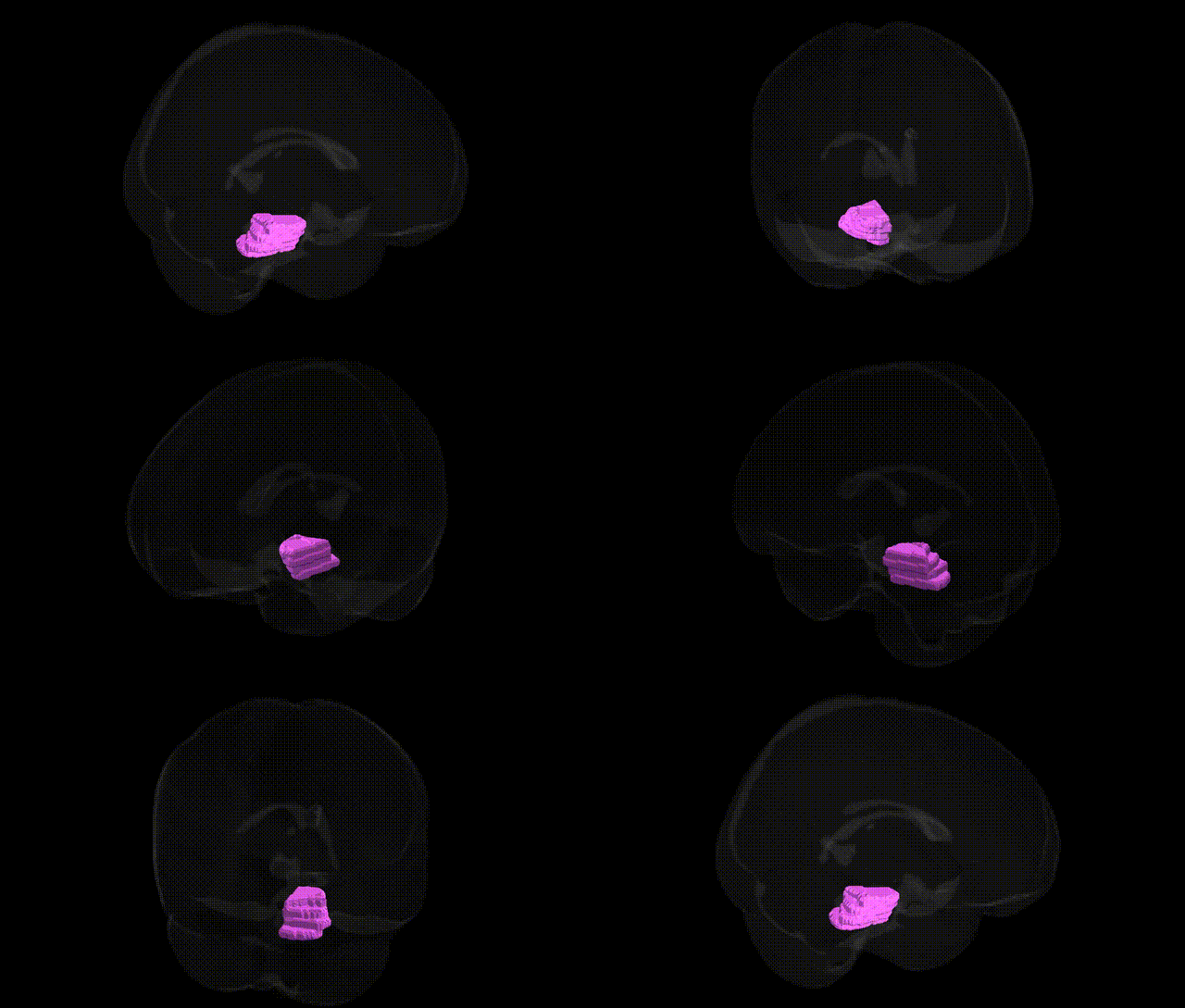
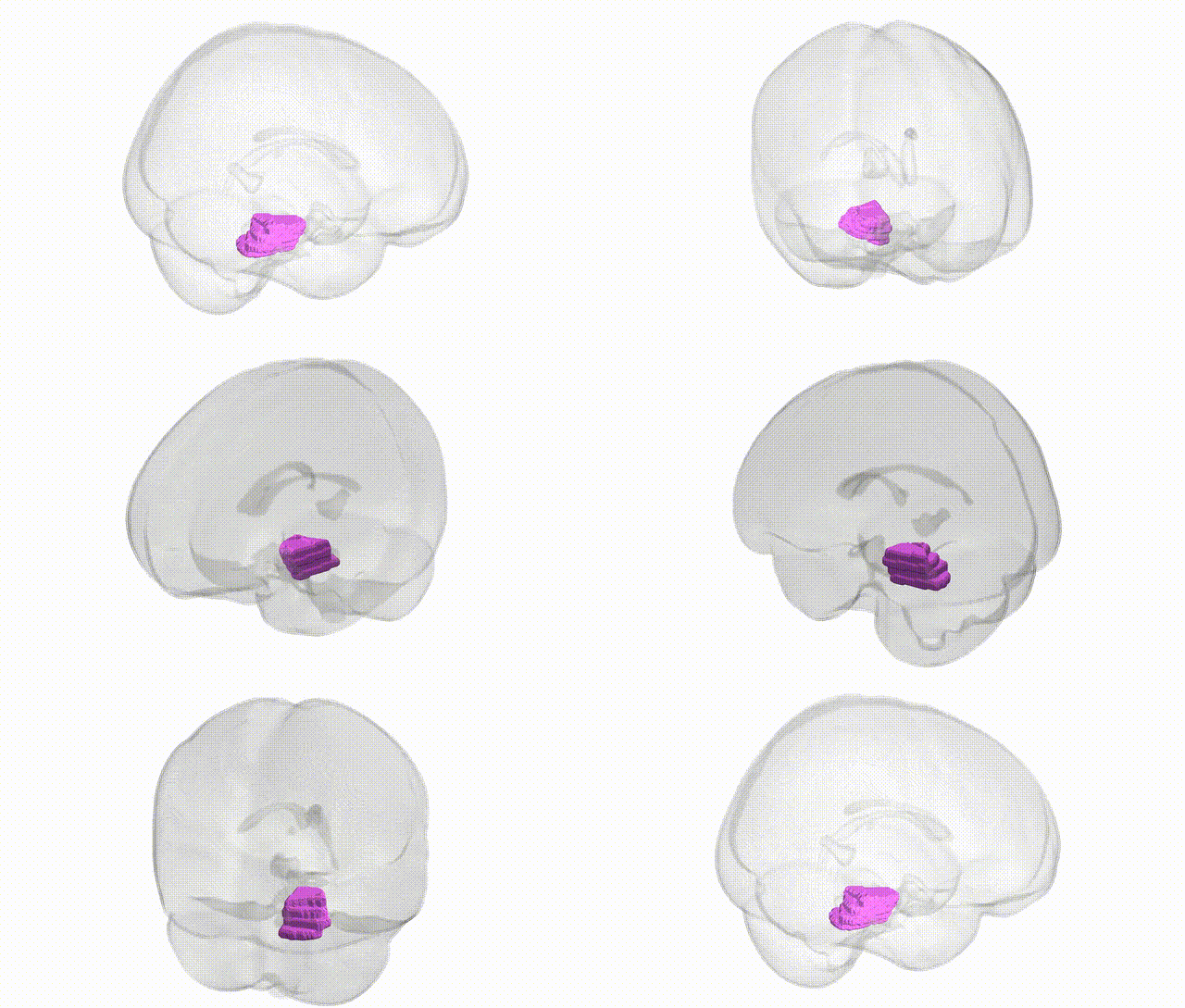
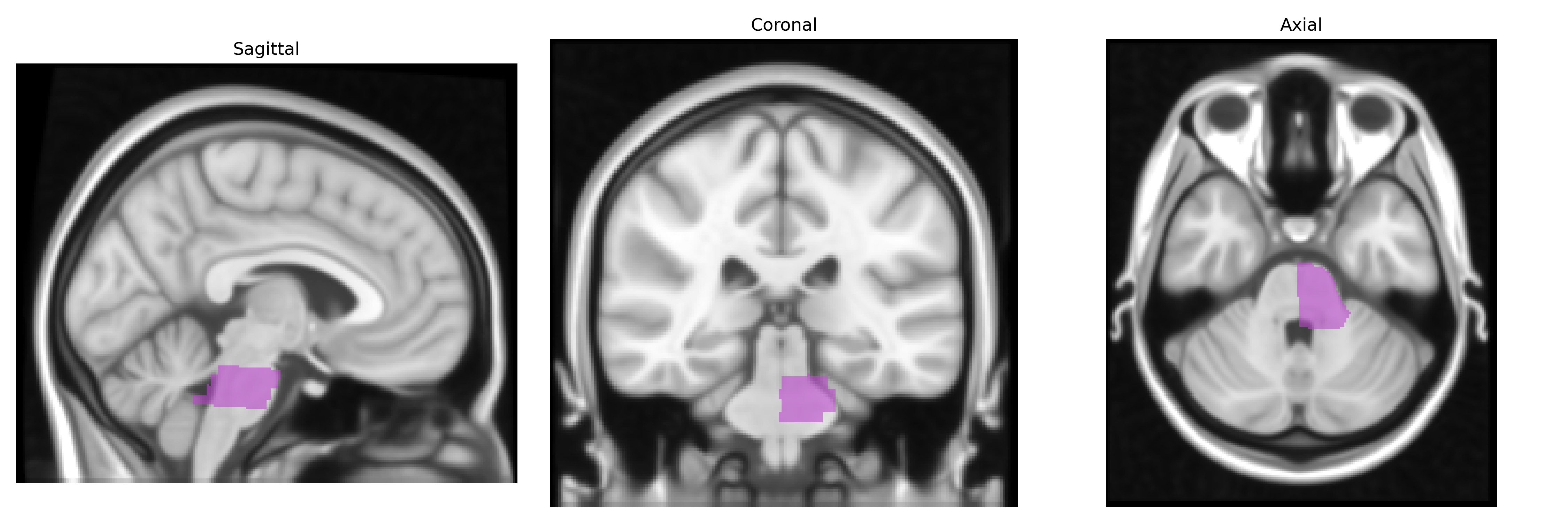
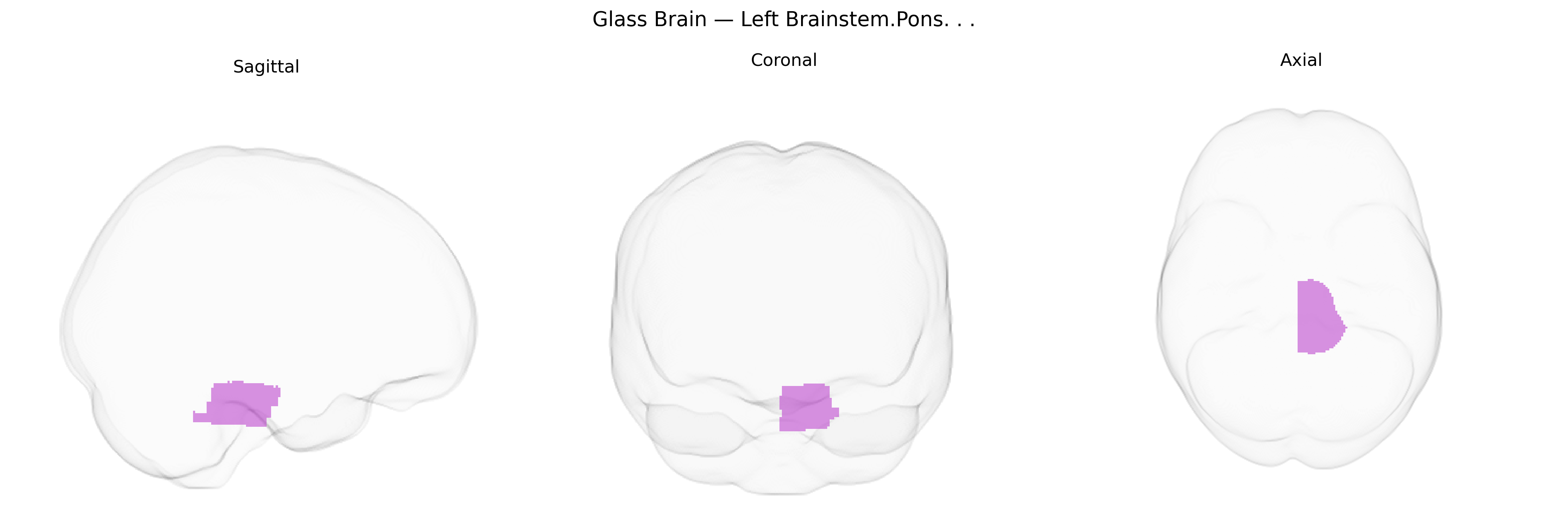
The bilateral Left Brainstem.Pons corresponds to the pontine portion of the brainstem, a bulbous structure situated between the midbrain and medulla that contains dense ascending and descending fiber tracts and critical nuclei for motor, sensory, and autonomic functions. It houses pontine nuclei that relay cortical information to the cerebellum, contributing to coordination, posture, and motor learning, and contains portions of the corticospinal, corticobulbar, and corticopontine pathways. Cranial nerve nuclei within or adjacent to the pons (notably V–VIII) support facial sensation, mastication, eye movements, facial expression, hearing, and balance, while reticular and autonomic centers participate in arousal, sleep-wake regulation, and respiratory control. The region is richly interconnected with the cerebellum via the middle cerebellar peduncles and with supratentorial structures through long tracts, making it a key hub for integrating motor and sensory information. Pons
The bilateral left brainstem pons, as defined in the Talairach 1 mm atlas, has been implicated indirectly in genetic studies through its roles in white matter integrity, brainstem volume, and functional connectivity rather than through region-specific GWAS hits. Large-scale imaging-genetics consortia such as ENIGMA and UK Biobank have identified common variants in genes involved in neurodevelopment, myelination, and axonal guidance (for example, loci near genes like NRG1, BDNF, and various cell-adhesion and synaptic genes) that influence global and regional brainstem or pontine volumes, although these associations are generally not specific to the left pons alone. Pontine and broader brainstem structural measures show polygenic overlap with neuropsychiatric and neurodegenerative disorders, including major depressive disorder, schizophrenia, and Parkinson’s disease, as well as with traits like cognitive performance and sleep regulation, consistent with the pons’ role in arousal and motor and autonomic control. Rare monogenic or high-impact variants affecting hindbrain development (e.g., in genes such as L1CAM or certain HOX and ROBO family members) can lead to congenital brainstem malformations that include pontine abnormalities, but these are typically described at the level of syndromic hindbrain dysgenesis rather than a discrete Talairach-defined “left brainstem pons” region. Overall, genetic associations involving this region reflect broad, distributed neurodevelopmental and neurodegenerative mechanisms rather than tightly localized, pons-specific GWAS signals.
Overview generated by GPT-4o (2026).
Region ID: 71
Hemisphere: bilateral
Atlas: Talairach labels 1mm
Full Quality Version: Download MP4
Full Quality Version: Download MP4
Wali Sidiqyar*, Gaurav Rudravaram*, Elyssa M. McMaster, Trent M. Schwartz, Adam M. Saunders, Kurt G. Schilling, Bennett A. Landman "Introducing SPINS: A Shared Public Visualization Library of Neuroanatomical Structures." Medical Imaging with Deep Learning- short paper
This resource is licensed under CC0 1.0 Universal (Public Domain).