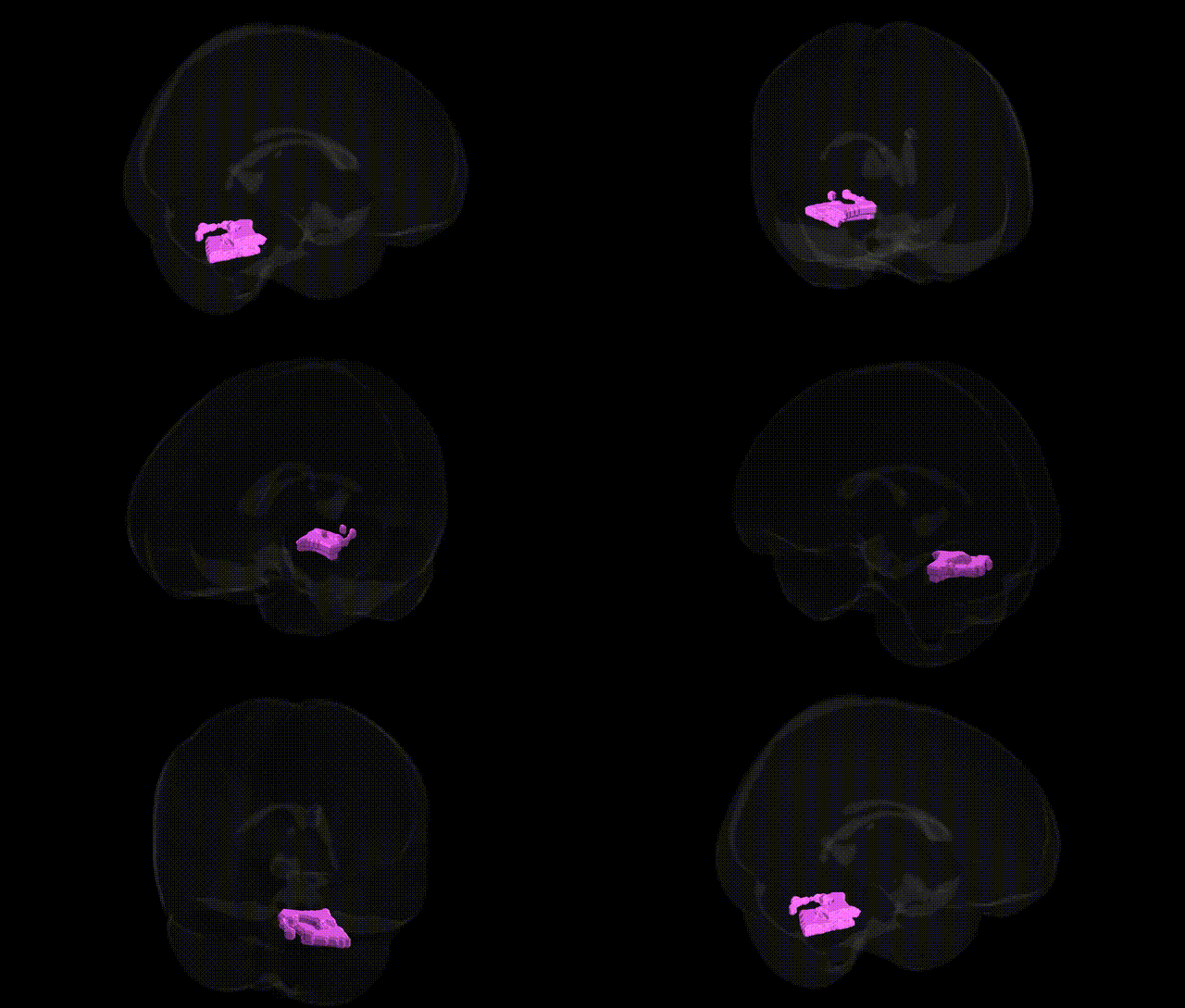
The bilateral Left Cerebellum, Anterior Lobe, Gray Matter corresponds to the cortical portion of the anterior lobe of the cerebellar hemisphere, primarily involved in the regulation of muscle tone, posture, and the coordination of skilled voluntary movements, especially of the trunk and proximal limbs. It receives substantial input from spinal pathways (notably the spinocerebellar tracts) conveying proprioceptive information, and projects via deep cerebellar nuclei—particularly the interposed nuclei—to motor-related regions of the brainstem and thalamus, thereby influencing descending motor pathways. Functionally, this region is essential for error detection and motor adaptation, contributing to the fine-tuning of ongoing movements and the maintenance of balance and gait. Histologically, it consists of the classic cerebellar cortical layers (molecular, Purkinje cell, and granule cell layers) organized into sagittal zones that integrate sensory and motor information to support precise timing and scaling of motor outputs. Anterior lobe of cerebellum
The bilateral left cerebellum anterior lobe gray matter, as defined in the Talairach 1 mm atlas, has been implicated indirectly in genetic studies of brain structure and neuropsychiatric traits, although few GWAS target this region in isolation. Large-scale imaging genetics consortia such as ENIGMA and UK Biobank have identified polygenic influences on cerebellar gray matter volume and cortical thickness, with significant associations involving common variants in genes related to neurodevelopment (e.g., MAPT region on 17q21, CNTNAP2, and synaptic/neurite outgrowth pathways), general brain morphometry (e.g., HMGA2 and IGF1 signaling), and global neurodevelopmental risk loci. Cerebellar structural measures, including anterior lobe volume, often show shared genetic architecture with cognitive performance, general intelligence, motor coordination, and psychiatric conditions such as schizophrenia, bipolar disorder, major depressive disorder, and autism spectrum disorder, reflecting pleiotropic effects rather than region-specific loci. Polygenic risk scores for these disorders and for traits like educational attainment and ADHD have been associated with variation in cerebellar gray matter, suggesting that the anterior lobe participates in distributed, genetically influenced networks for cognition, affect regulation, and sensorimotor control, though precise, uniquely attributable genetic variants for the bilateral left anterior cerebellar gray matter remain incompletely characterized.
Overview generated by GPT-4o (2026).
Region ID: 85
Hemisphere: bilateral
Atlas: Talairach labels 1mm
Full Quality Version: Download MP4
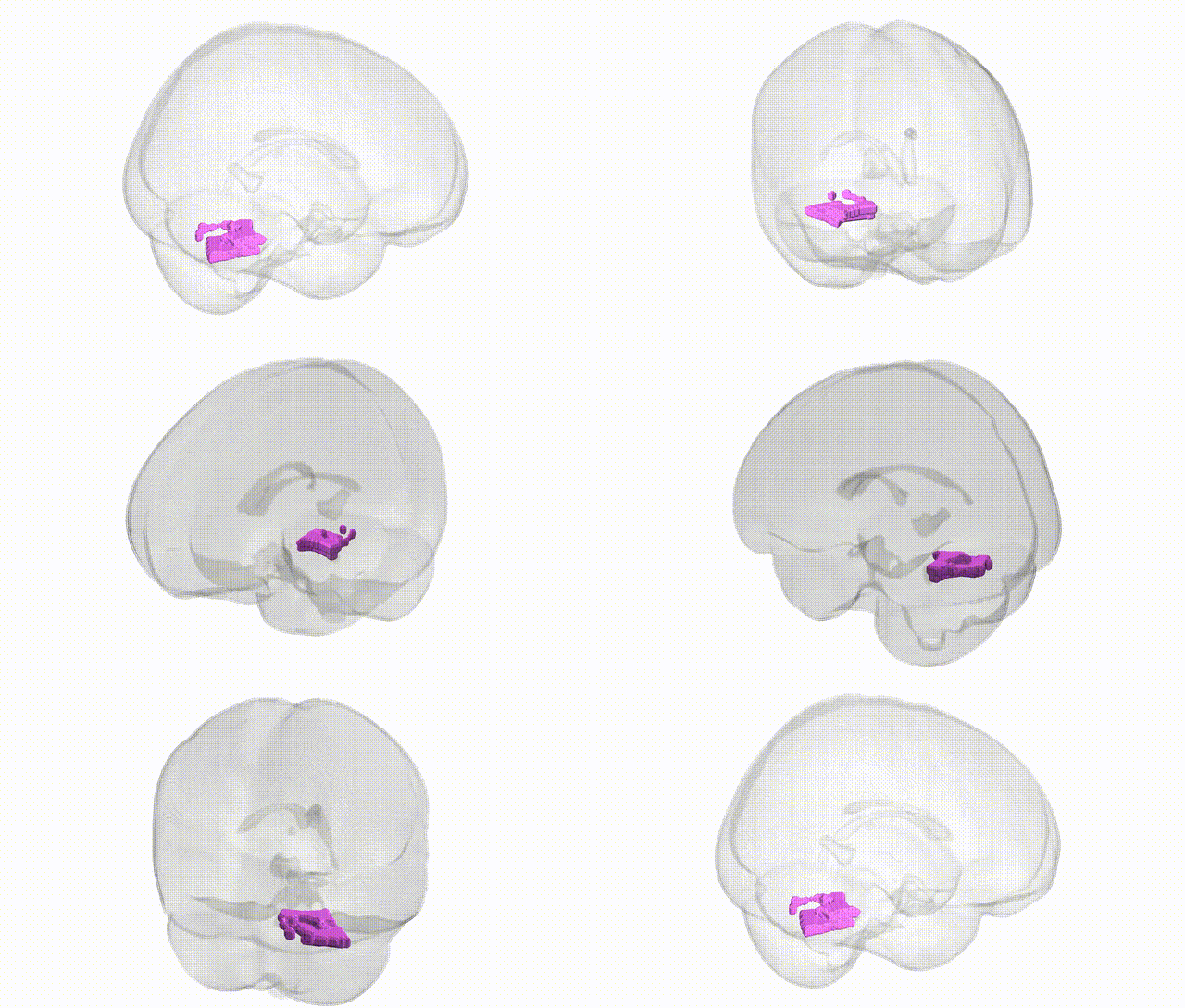
Full Quality Version: Download MP4
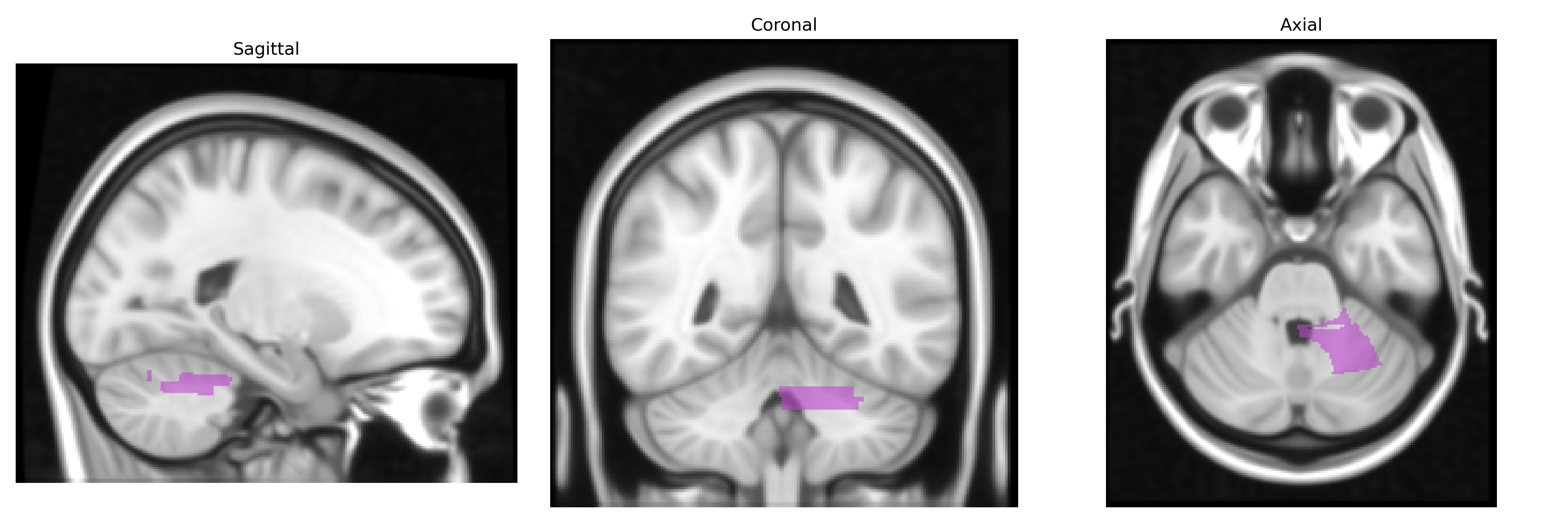
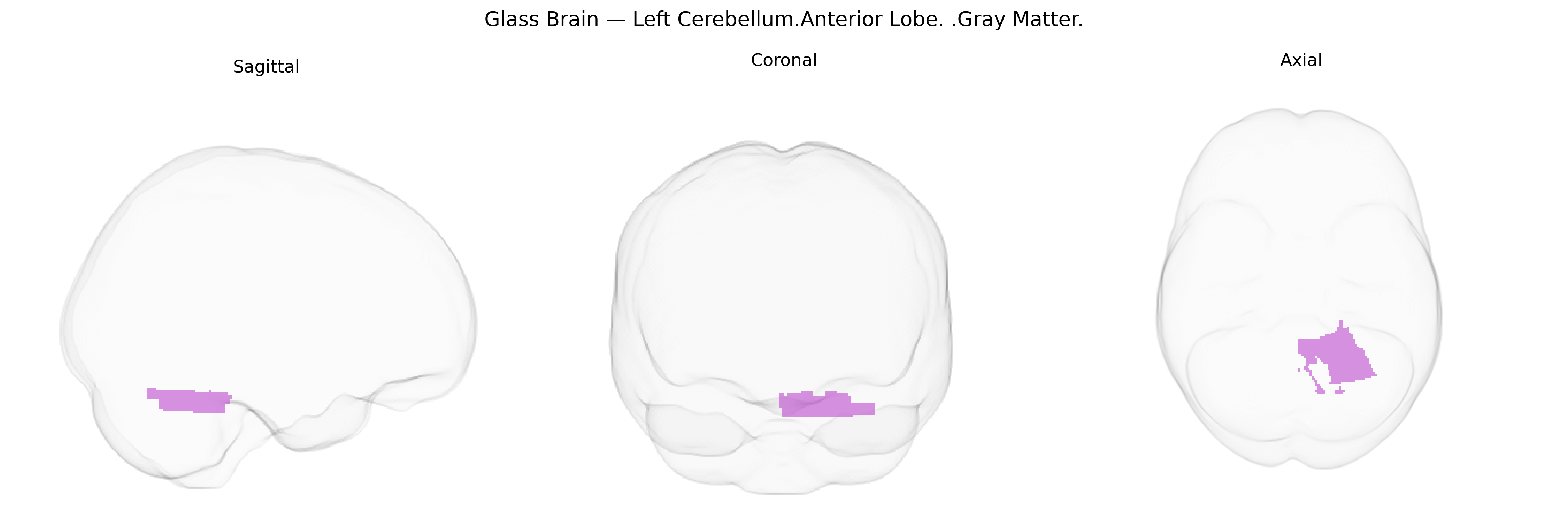
Wali Sidiqyar*, Gaurav Rudravaram*, Elyssa M. McMaster, Trent M. Schwartz, Adam M. Saunders, Kurt G. Schilling, Bennett A. Landman "Introducing SPINS: A Shared Public Visualization Library of Neuroanatomical Structures." Medical Imaging with Deep Learning- short paper
This resource is licensed under CC0 1.0 Universal (Public Domain).