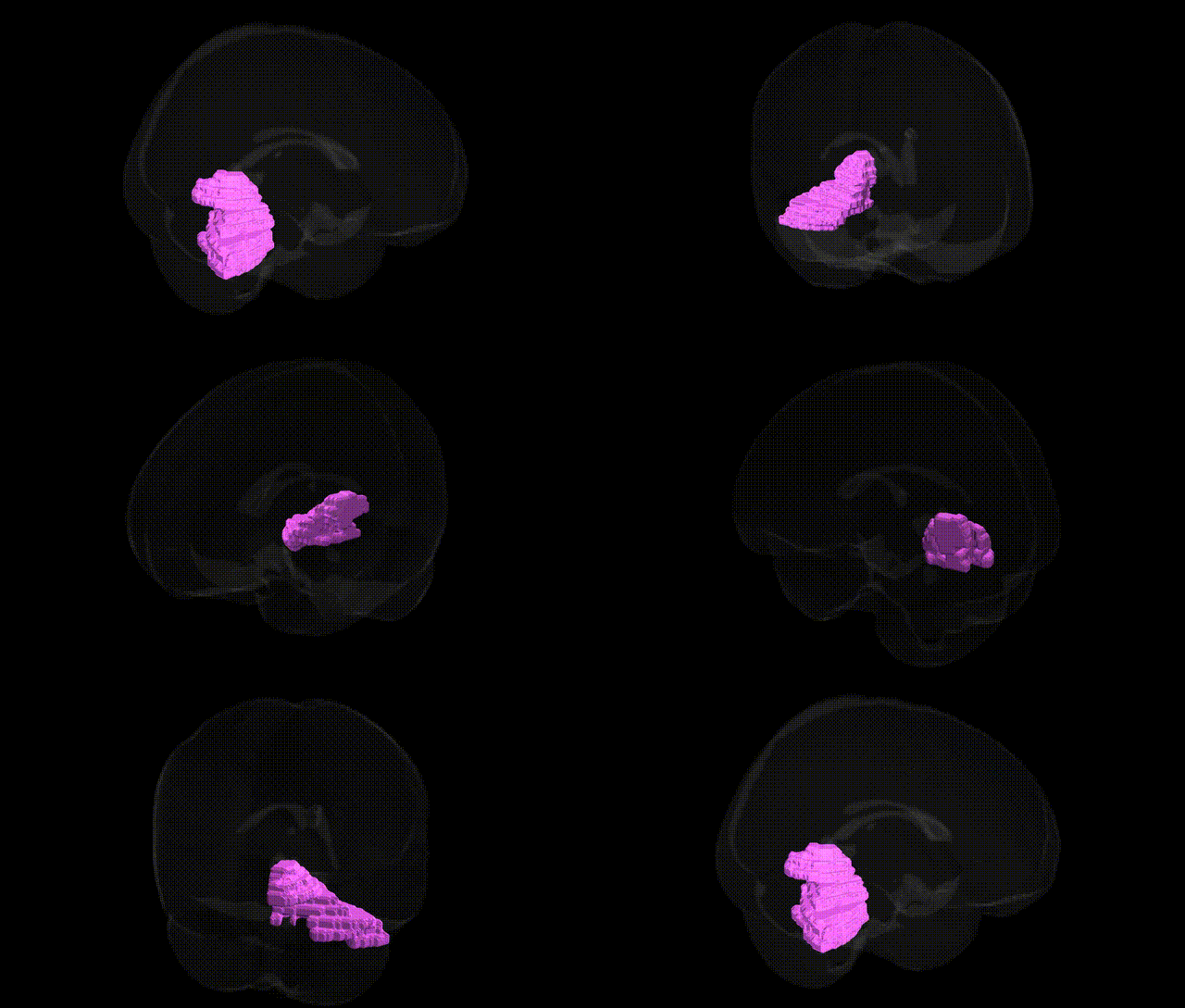
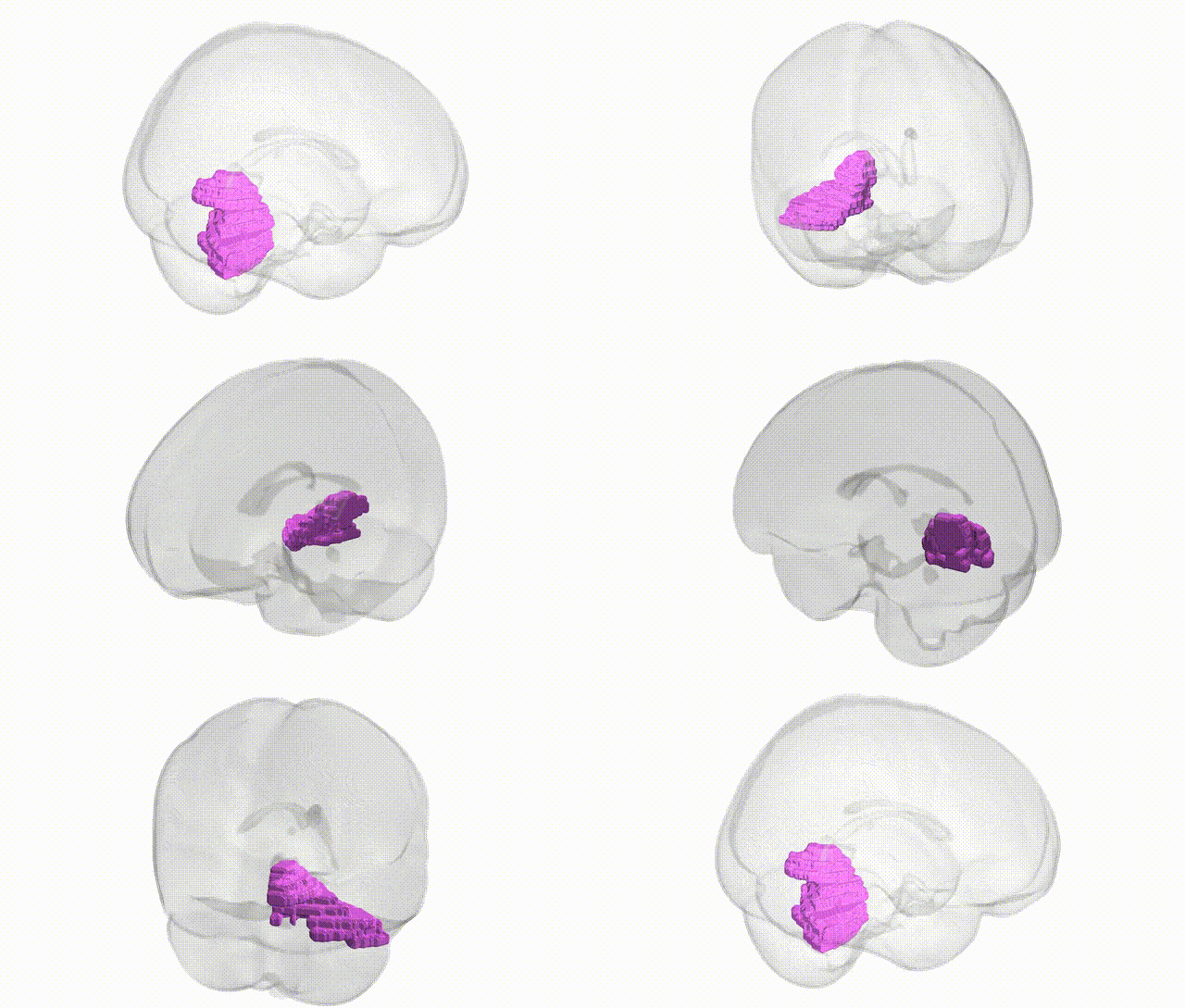
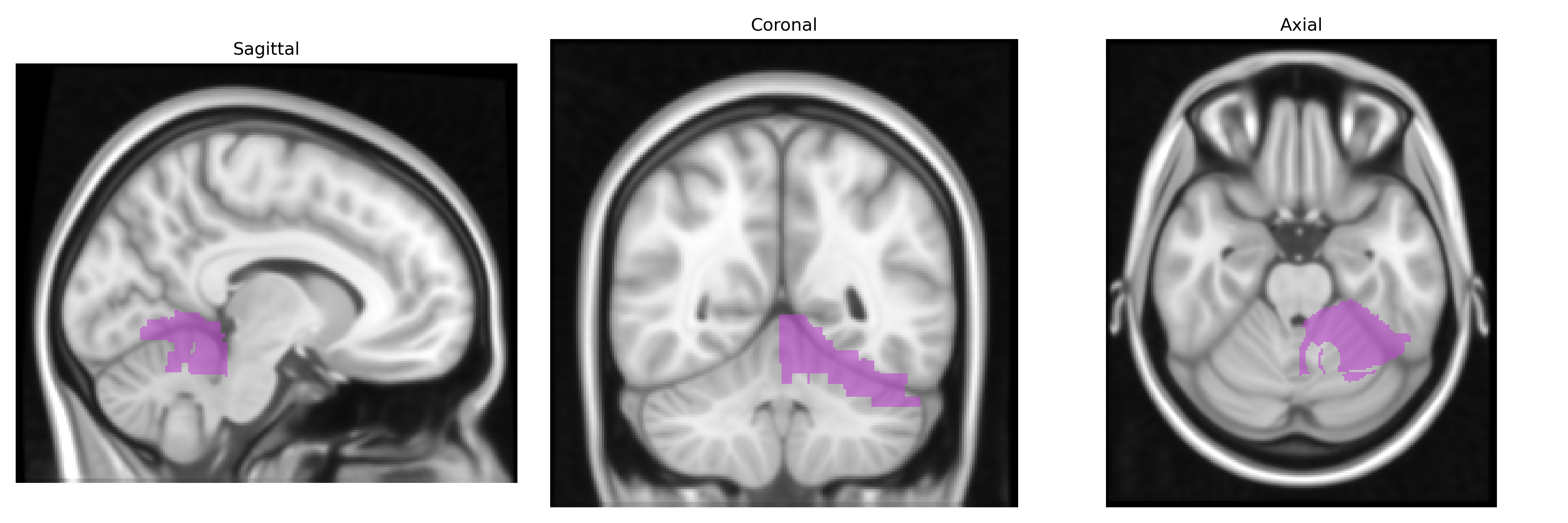
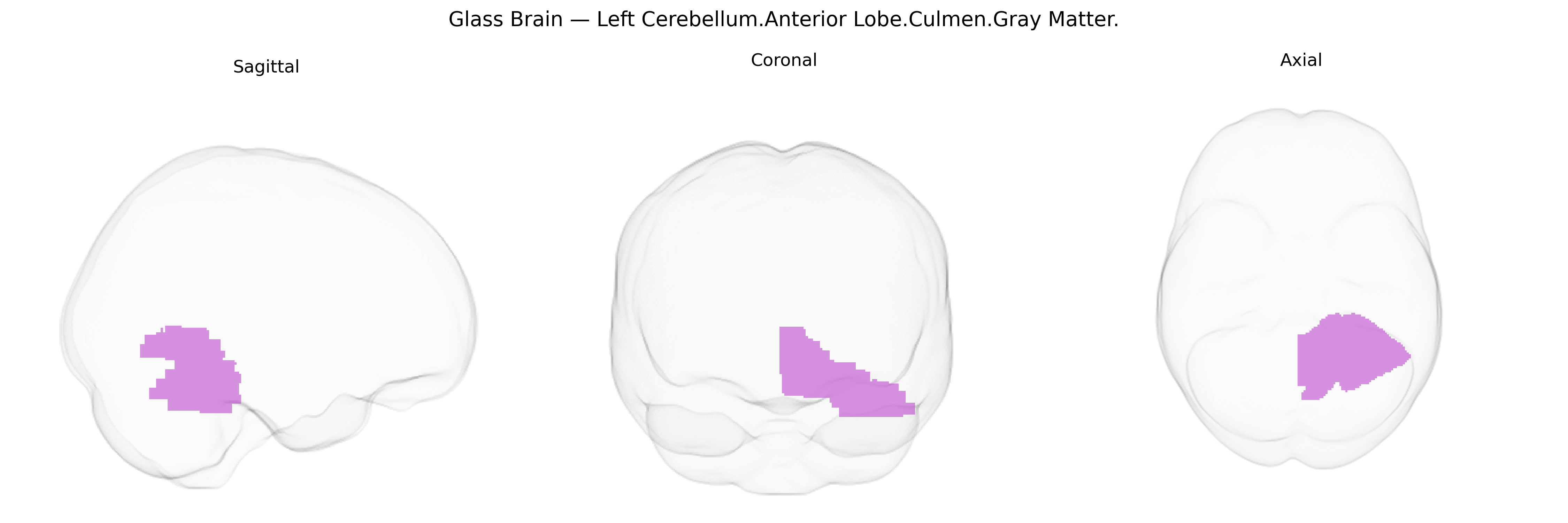
The bilateral Left Cerebellum.Anterior Lobe.Culmen.Gray Matter corresponds to gray matter within the culmen, a midline lobule of the anterior lobe of the cerebellum that lies superior to the primary fissure and contributes to the vermis. This region is primarily involved in the regulation of posture, muscle tone, and coordination of trunk and proximal limb movements, integrating somatosensory and motor information to fine-tune ongoing motion and maintain balance. As part of the spinocerebellum, the culmen receives input from spinal and brainstem pathways and projects via deep cerebellar nuclei to motor-related structures in the brainstem and thalamus, thereby influencing descending motor commands. There is no direct link for this specific labeled region; see the related structure Cerebellum.
The bilateral Left Cerebellum.Anterior Lobe.Culmen.Gray Matter region, as defined in the Talairach 1 mm atlas, lies within the anterior cerebellum and overlaps motor and sensorimotor zones that have been implicated in several genetic and genome‑wide association studies, although typically at coarser parcellations than this specific culmen label. Large neuroimaging‑genetics consortia (e.g., ENIGMA, UK Biobank) have shown that gray‑matter volume and surface measures in anterior cerebellar regions are heritable (SNP‑heritability often ~20–40%) and associated with polygenic scores for general cognitive ability, educational attainment, and psychiatric conditions such as schizophrenia, major depressive disorder, and bipolar disorder, as well as neurodevelopmental traits including autism spectrum disorder and ADHD. GWAS of cerebellar volume and lobular morphology have identified loci in or near genes involved in neurodevelopment, synaptic function, and axon guidance (e.g., variants around genes such as KIRREL3, APOE, and several chromatin‑regulating genes), with some signals overlapping those for neurodegenerative diseases (notably Alzheimer’s disease) and movement disorders. In neurological genetics, the anterior cerebellum, including culmen regions, is frequently affected in monogenic spinocerebellar ataxias (e.g., SCA1, SCA2, SCA3, SCA6, SCA7, SCA8, SCA17), where pathogenic expansions or mutations in genes such as ATXN1, ATXN2, ATXN3, CACNA1A, and TBP lead to characteristic anterior‑predominant cerebellar gray‑matter atrophy. Although few studies isolate this exact Talairach culmen label, convergent evidence from structural, functional, and connectivity‑based GWAS links anterior cerebellar gray matter with genetic risk for motor coordination deficits, cognitive performance, affective disorders, and neurodegenerative ataxias, indicating that this region participates in genetically influenced circuits subserving both motor and higher‑order functions.
Overview generated by GPT-4o (2026).
Region ID: 88
Hemisphere: bilateral
Atlas: Talairach labels 1mm
Full Quality Version: Download MP4
Full Quality Version: Download MP4
Wali Sidiqyar*, Gaurav Rudravaram*, Elyssa M. McMaster, Trent M. Schwartz, Adam M. Saunders, Kurt G. Schilling, Bennett A. Landman "Introducing SPINS: A Shared Public Visualization Library of Neuroanatomical Structures." Medical Imaging with Deep Learning- short paper
This resource is licensed under CC0 1.0 Universal (Public Domain).