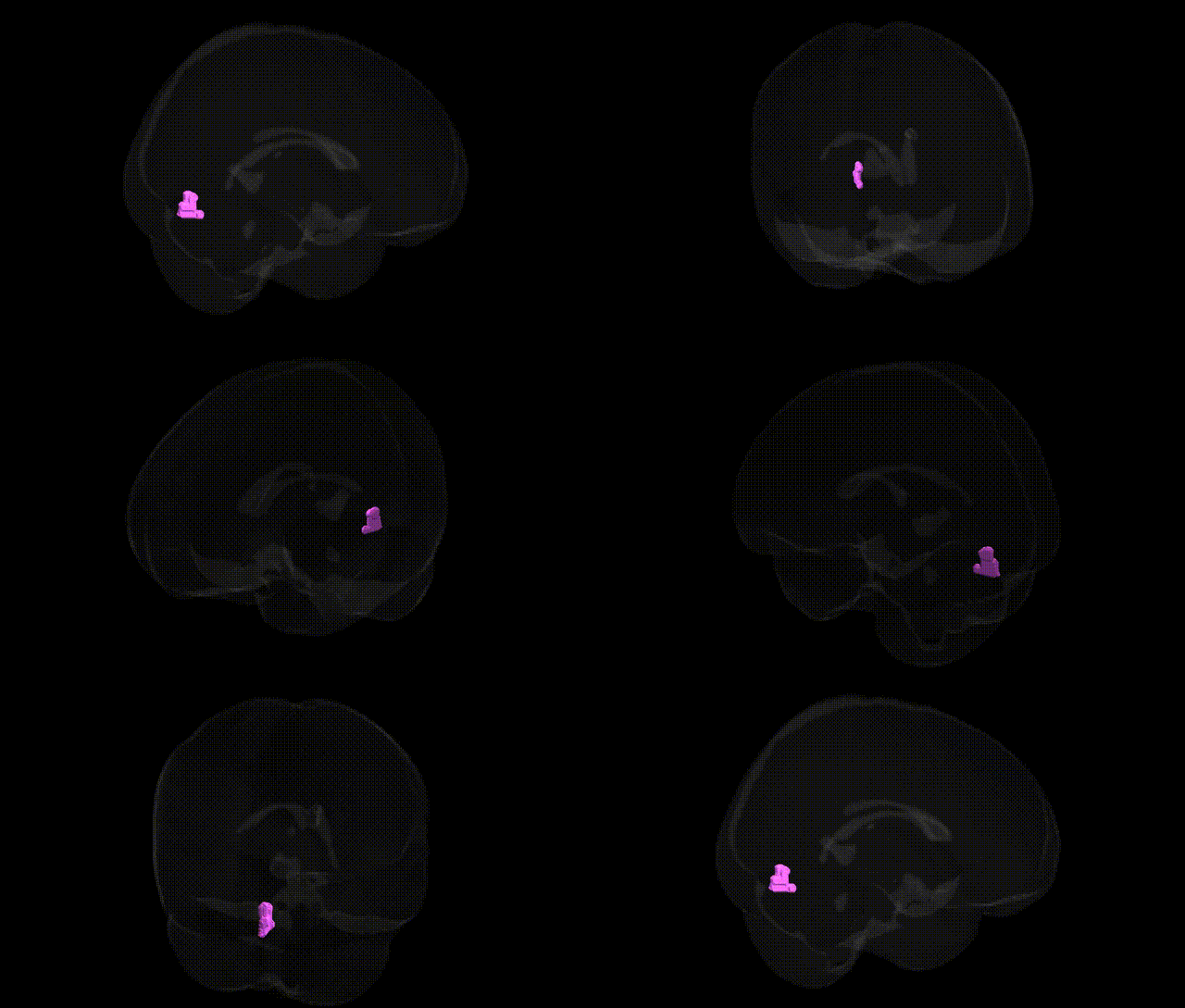
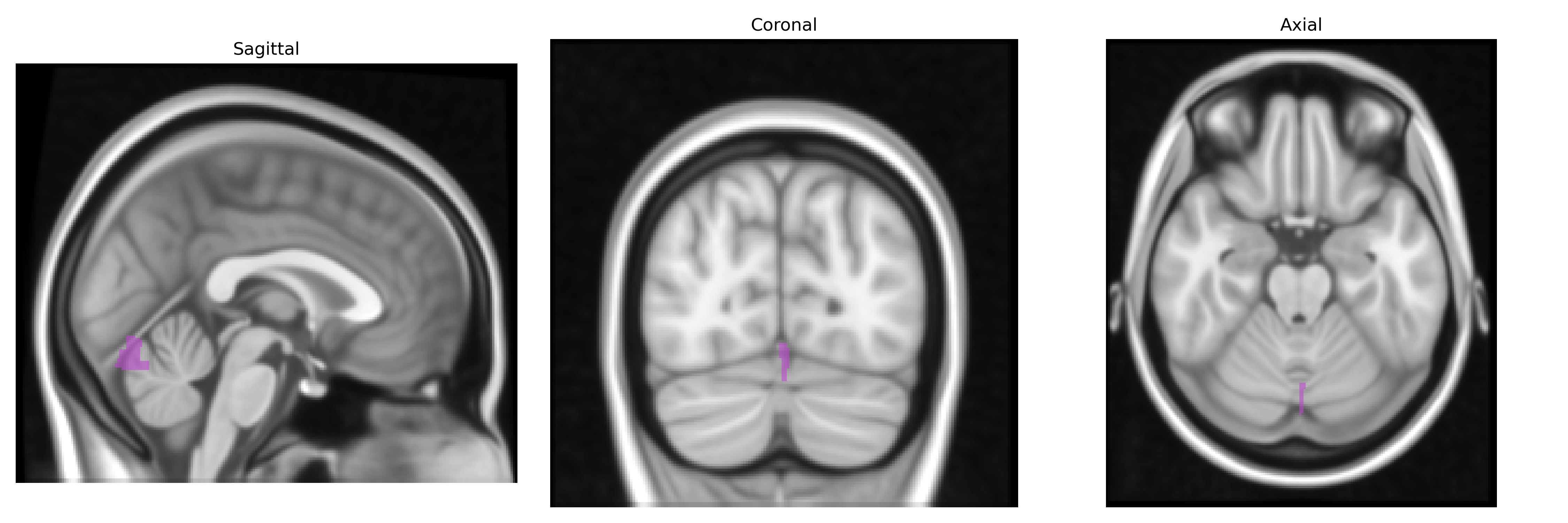
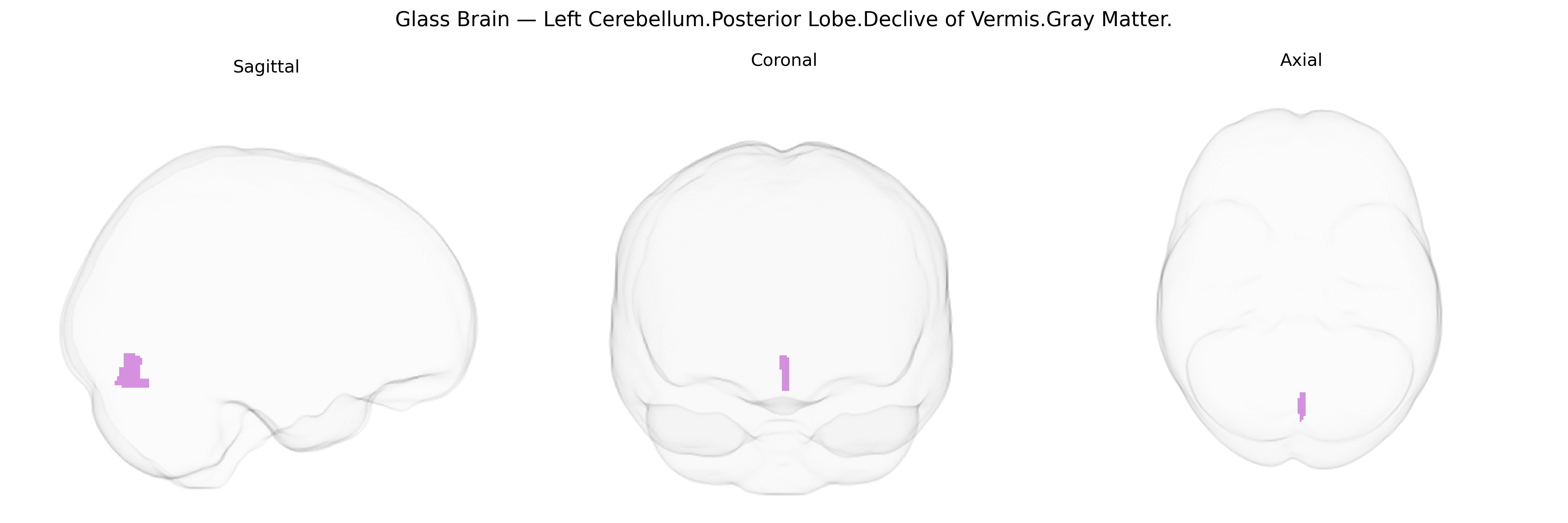
The bilateral Left Cerebellum, Posterior Lobe, Declive of Vermis, Gray Matter corresponds to a midline portion of the posterior cerebellar vermis involved in fine-tuning motor coordination, postural control, and aspects of sensorimotor integration. This region lies within the declive (lobule VI of the vermis), a part of the posterior lobe of the cerebellum that receives and integrates input from cortical and subcortical motor areas and projects to deep cerebellar nuclei to modulate output to motor pathways. Functionally, the declive of the vermis contributes to the temporal precision and adaptation of movements, ocular motor control, and possibly certain cognitive and affective processes linked to the cerebellar cognitive-affective network. There is no direct link for “declive of vermis”; a related structure in which it resides is the cerebellar vermis: Cerebellar vermis.
The bilateral left cerebellar posterior lobe, including the declive of the vermis gray matter as defined in the Talairach 1 mm atlas, has been implicated in genetic studies largely through broader cerebellar or posterior lobe measures rather than this micro-anatomical label specifically. GWAS of cerebellar volume and cortical thickness have identified loci near genes involved in neurodevelopment and synaptic function (for example, PPP2R2B, PPP1R9B, MAPT-region variants, and genes in calcium signaling and axon guidance pathways), with some effects most pronounced in posterior cerebellar regions that encompass the declive. Polygenic overlap has been reported between cerebellar structural variation and risk for neuropsychiatric and neurodevelopmental disorders, including schizophrenia, major depressive disorder, bipolar disorder, autism spectrum disorder, and ADHD, as well as cognitive traits such as general intelligence and educational attainment; these associations often localize to posterior cerebellar areas implicated in higher-order cognitive and affective regulation. Additional imaging-genetics work links cerebellar posterior lobe structure and function to genetic risk for ataxias and spinocerebellar degeneration (for example, expansions in ATXN genes), though these typically affect the cerebellum more diffusely. Overall, genetic associations for this region are best characterized at the level of global or lobular cerebellar phenotypes, indicating shared polygenic architectures with psychiatric, cognitive, and motor disorders, rather than region-exclusive variants specific to the declive of the vermis gray matter.
Overview generated by GPT-4o (2026).
Region ID: 159
Hemisphere: bilateral
Atlas: Talairach labels 1mm
Full Quality Version: Download MP4
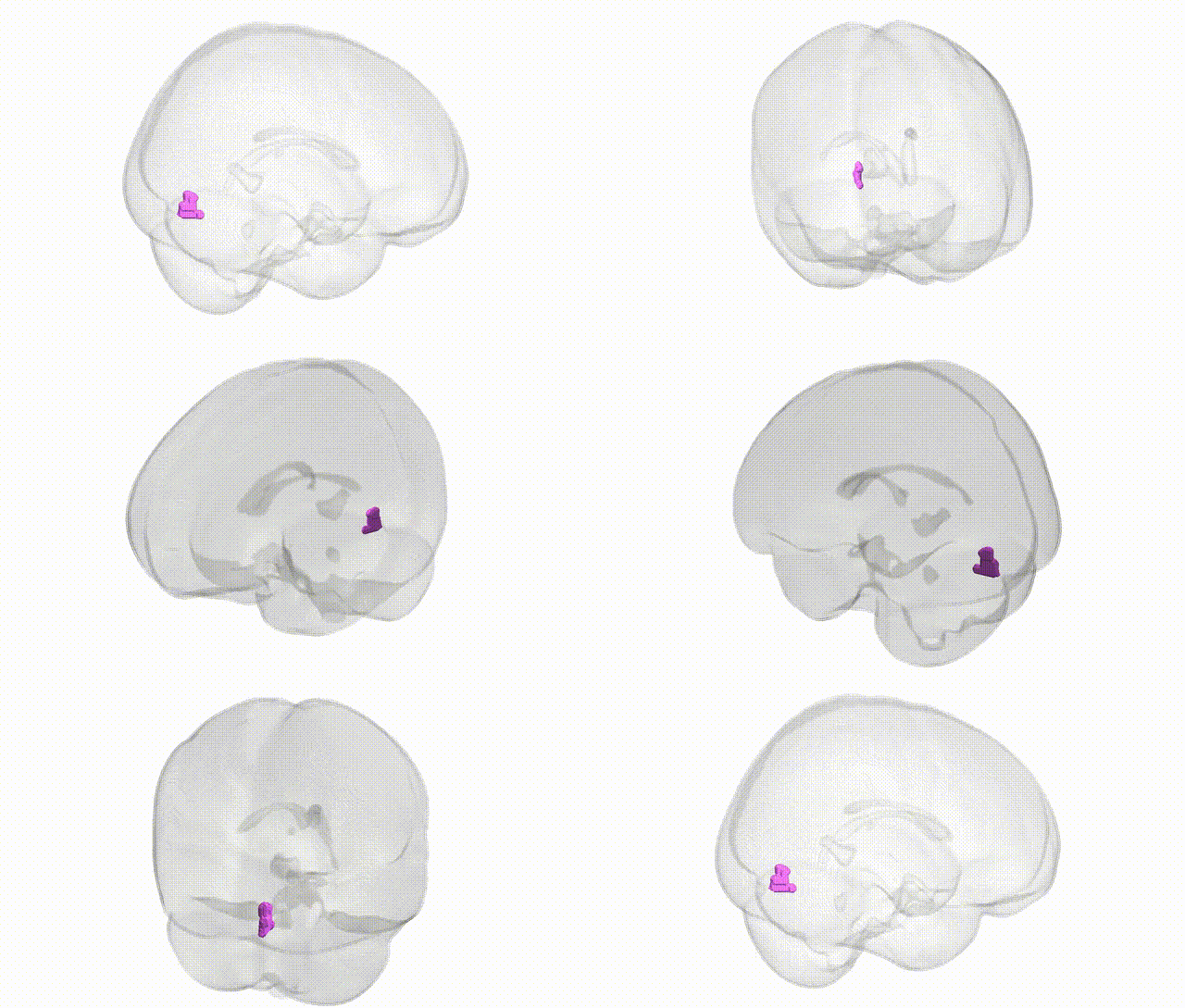
Full Quality Version: Download MP4
Wali Sidiqyar*, Gaurav Rudravaram*, Elyssa M. McMaster, Trent M. Schwartz, Adam M. Saunders, Kurt G. Schilling, Bennett A. Landman "Introducing SPINS: A Shared Public Visualization Library of Neuroanatomical Structures." Medical Imaging with Deep Learning- short paper
This resource is licensed under CC0 1.0 Universal (Public Domain).