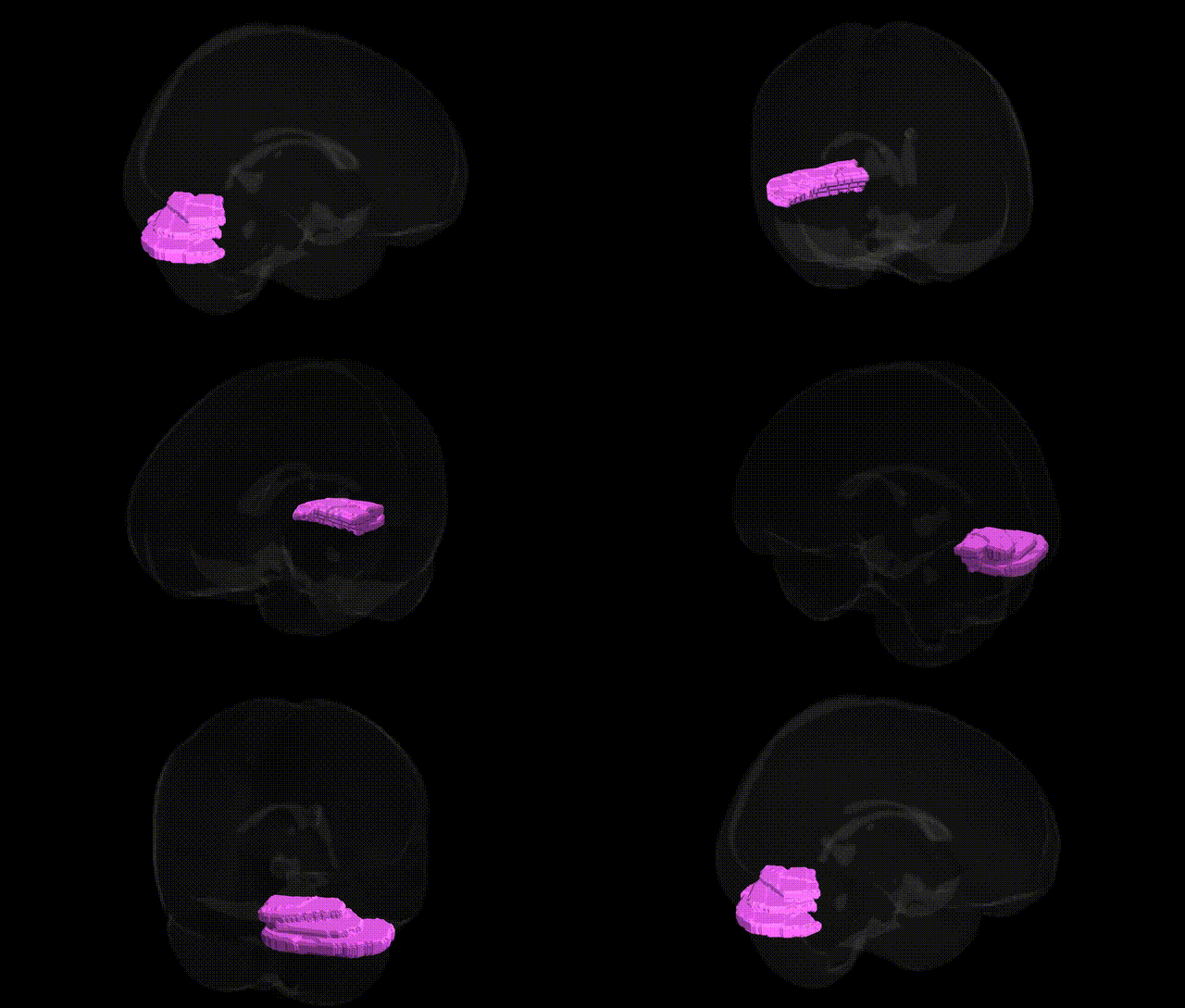
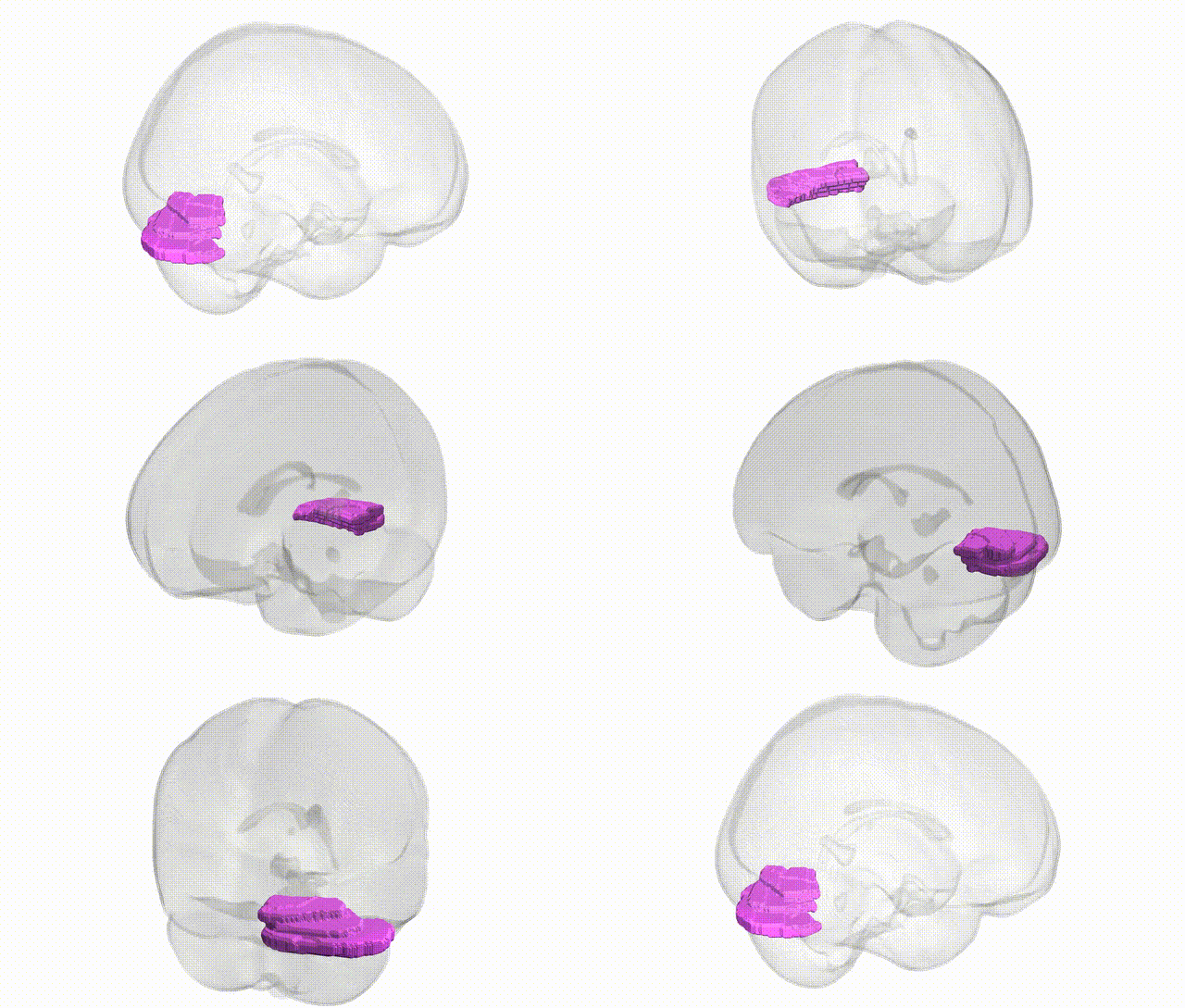
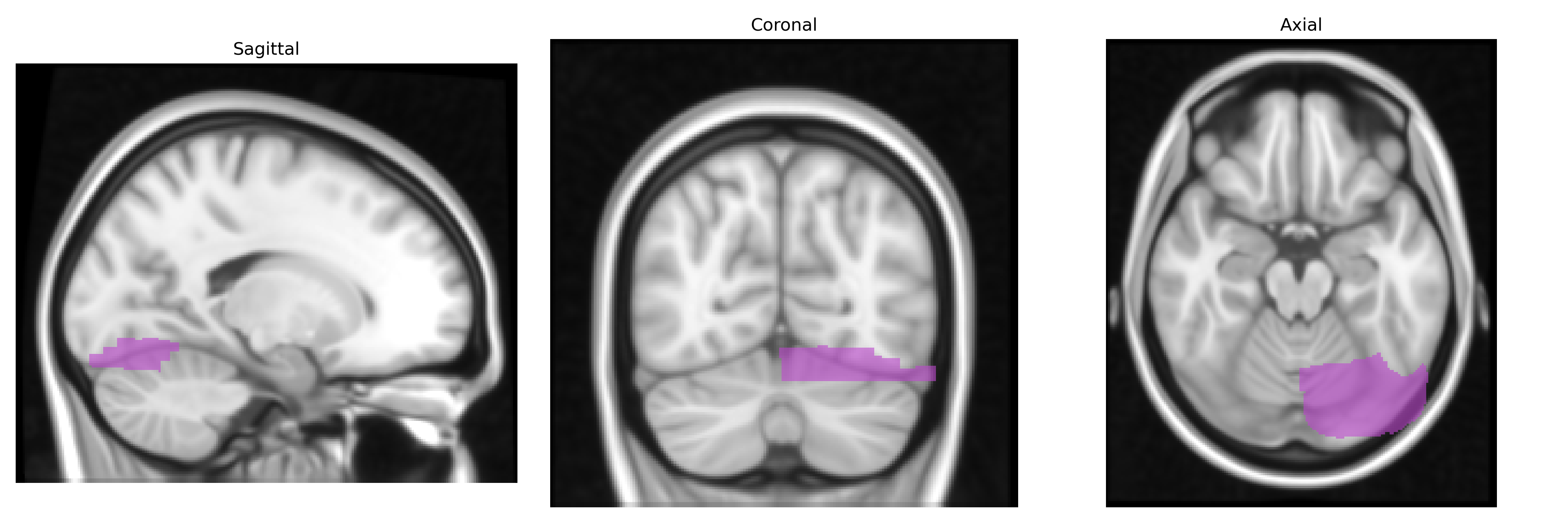
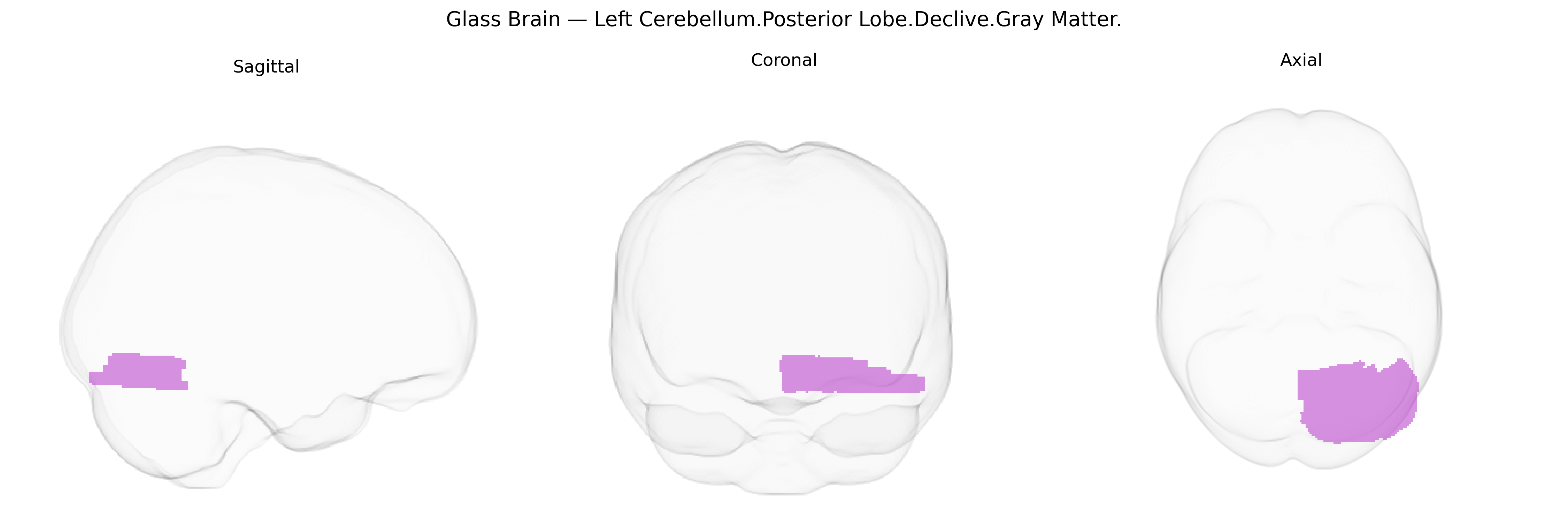
The bilateral Left Cerebellum Posterior Lobe Declive Gray Matter corresponds to the declive (lobule VI) of the posterior lobe of the cerebellar hemispheres, a cortical region implicated in fine-tuning motor coordination and in higher-order cognitive and affective functions. Located superiorly within the posterior lobe, the declive receives dense inputs from sensorimotor and association cortices via pontine nuclei and contributes to the calibration of eye movements, posture, and limb coordination, as well as to aspects of visuospatial processing, working memory, language, and executive control through its connections with thalamic and prefrontal networks. Histologically, it consists of the classic cerebellar cortical layers (molecular, Purkinje cell, and granular layers), with Purkinje cells projecting inhibitory outputs to deep cerebellar nuclei, particularly the dentate nucleus, thereby modulating cerebro-cerebellar loops essential for both motor and non-motor behavior. There is no direct link for this specific subregion; a related article is Cerebellum.
The Declive of the posterior lobe in the left cerebellum, as defined in the Talairach 1 mm atlas, has not been a primary target of region-specific genetic association studies, but genetic influences on its gray matter volume and function can be inferred from broader cerebellar and neuroimaging genetics research. Large GWAS and imaging-genetics studies (e.g., ENIGMA, UK Biobank) show that cerebellar gray matter volume and morphology are highly heritable and influenced by multiple loci, with frequent involvement of genes related to neurodevelopment, synaptic function, and axon guidance (such as variants near MAPT, KIAA0586, DLG2, and CADM2 in cerebellar or global brain-structure analyses). The posterior cerebellum, including the Declive, participates in cognitive, affective, and sensorimotor integration; variants affecting cerebellar structure and connectivity have been linked to neurodevelopmental and psychiatric disorders, including autism spectrum disorder, schizophrenia, major depressive disorder, and bipolar disorder, often via GWAS signals in polygenic pathways that impact cortical–cerebellar circuits. Cerebellar involvement is also reported in genetic ataxias (e.g., spinocerebellar ataxias with CAG-repeat expansions in genes such as ATXN1, ATXN2, ATXN3, CACNA1A), where widespread cerebellar degeneration includes the posterior lobe but is not specific to the Declive. Additionally, polygenic scores for cognitive ability, educational attainment, and neuroticism show associations with variation in cerebellar gray matter volume and functional activation in posterior regions, implicating distributed genetic architectures rather than single region-specific variants. Overall, current evidence supports a substantial but highly polygenic genetic contribution to structural and functional variation in the left posterior cerebellar Declive, embedded within broader cerebellar and brain-wide genetic influences on cognition, motor control, and psychiatric risk.
Overview generated by GPT-4o (2026).
Region ID: 157
Hemisphere: bilateral
Atlas: Talairach labels 1mm
Full Quality Version: Download MP4
Full Quality Version: Download MP4
Wali Sidiqyar*, Gaurav Rudravaram*, Elyssa M. McMaster, Trent M. Schwartz, Adam M. Saunders, Kurt G. Schilling, Bennett A. Landman "Introducing SPINS: A Shared Public Visualization Library of Neuroanatomical Structures." Medical Imaging with Deep Learning- short paper
This resource is licensed under CC0 1.0 Universal (Public Domain).