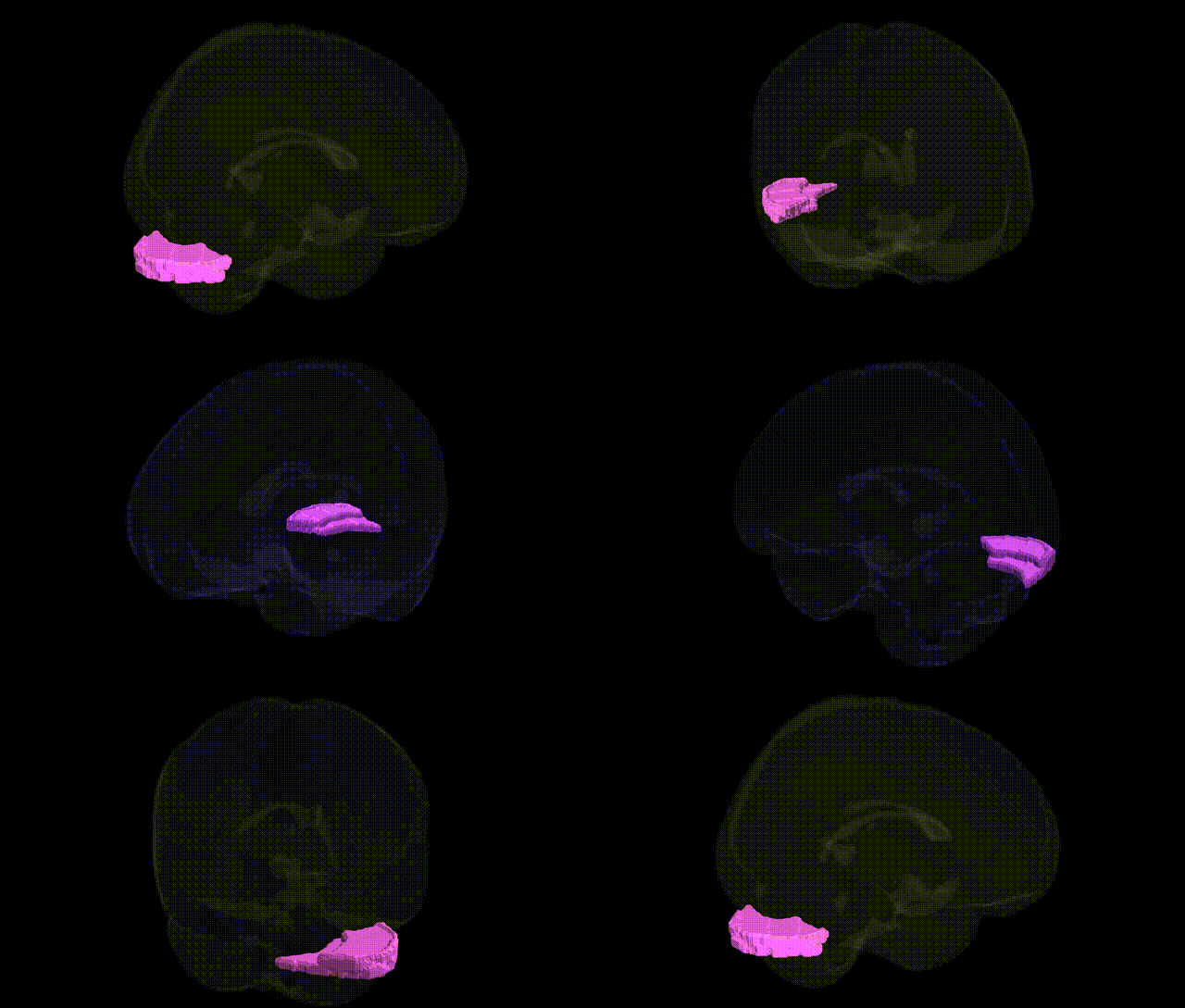
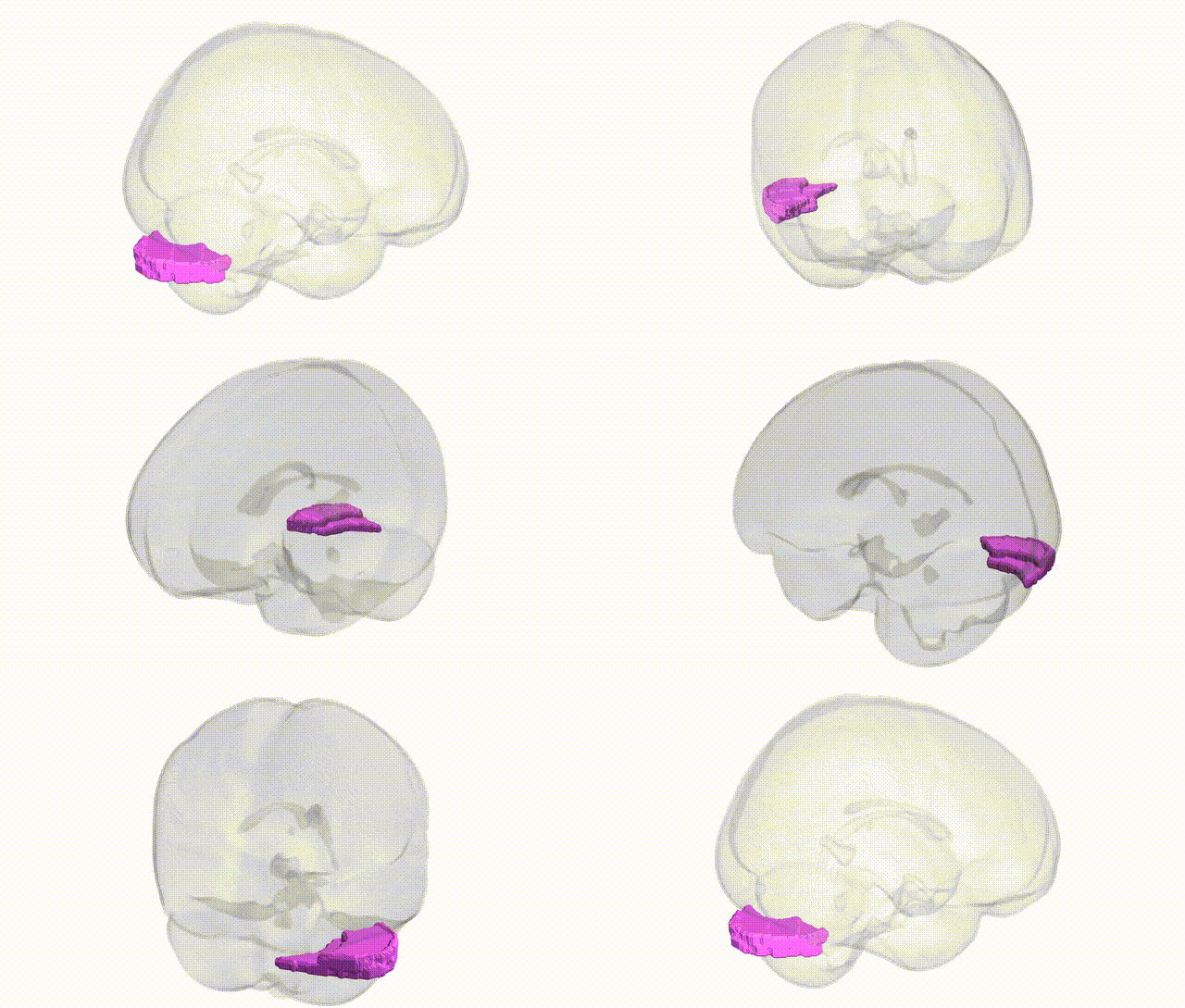
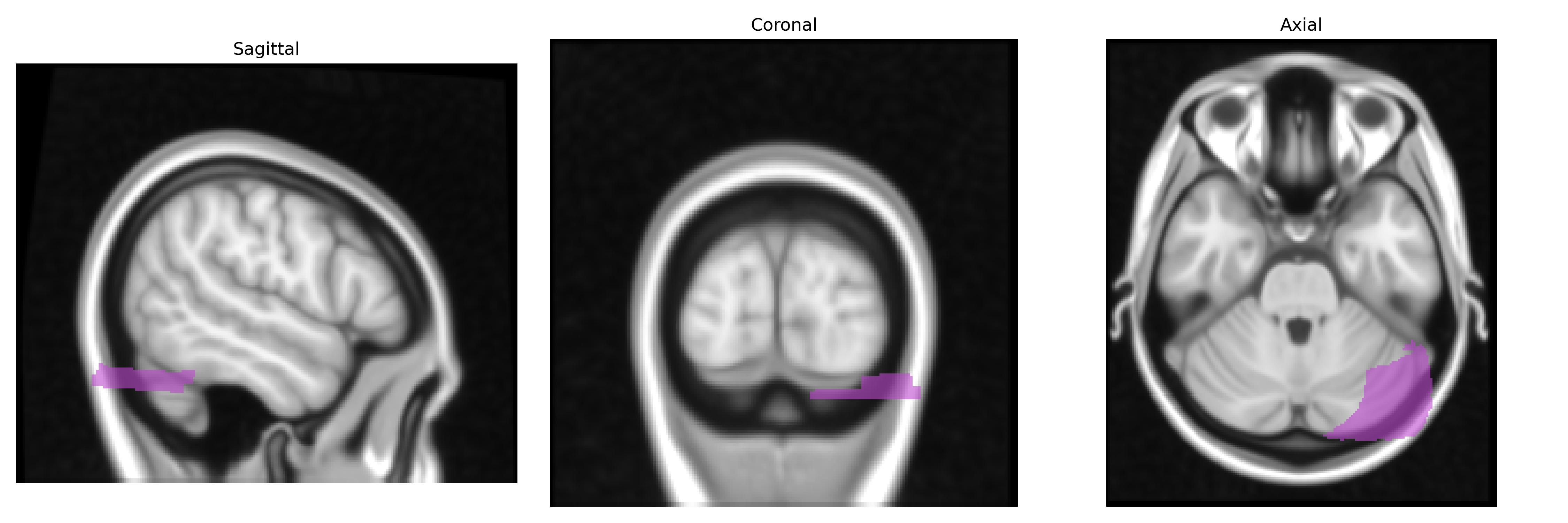
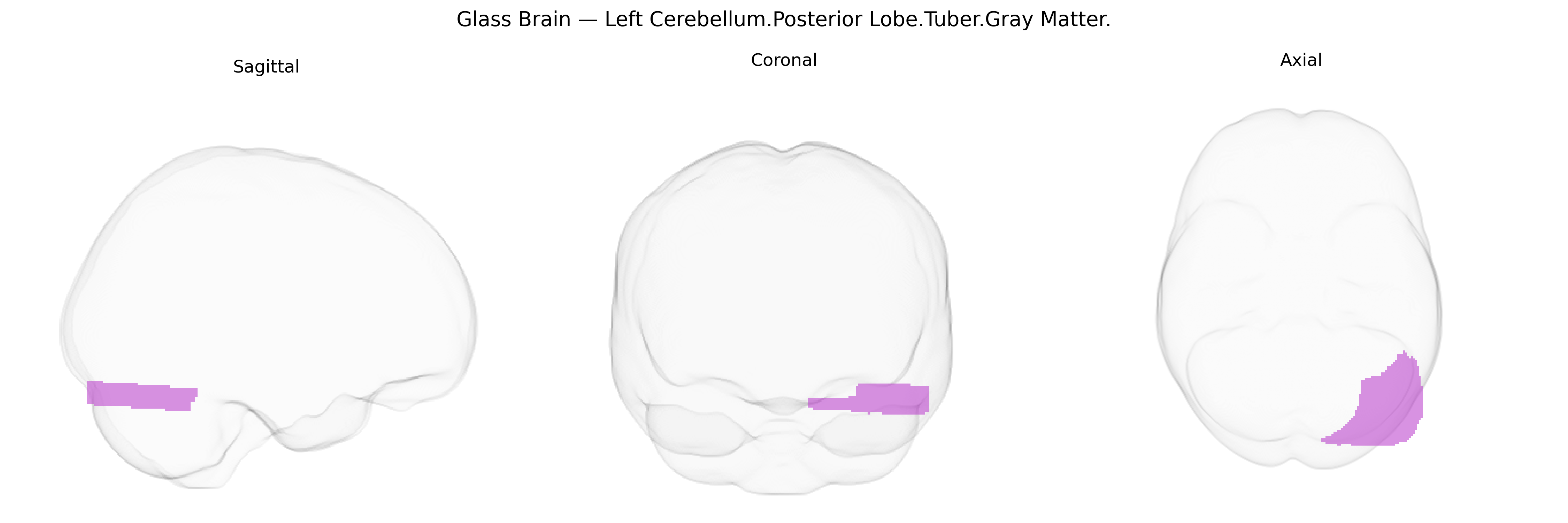
The bilateral Left Cerebellum Posterior Lobe Tuber gray matter corresponds to lobule VIIb of the cerebellar hemisphere, a portion of the posterior lobe involved in higher-order motor control and cognitive processing rather than primary movement execution. This region receives convergent input from cerebral association cortices via pontine nuclei and projects through the deep cerebellar nuclei, particularly the dentate nucleus, to thalamic and cortical targets, participating in fine-tuning of complex, sequential, and coordinated actions as well as aspects of attention, working memory, and language-related functions. The tuber is organized in a laminated cortex with a characteristic trilaminar structure (molecular, Purkinje cell, and granular layers), and its functional outputs are thought to modulate cerebro-cerebellar loops that integrate sensorimotor, cognitive, and affective information. There is no direct link for the “Cerebellar Tuber” as a standalone article; a related structure and context is the posterior lobe of the cerebellum: Cerebellum.
The bilateral left cerebellar posterior lobe tuber gray matter (Talairach 1 mm: Left Cerebellum.Posterior Lobe.Tuber.Gray Matter) falls within the posterior cerebellum, a region repeatedly implicated in imaging–genetics and GWAS-based brain-structure studies rather than being the direct focus of single-region candidate-gene work. Large-scale neuroimaging GWAS consortia such as ENIGMA and UK Biobank have shown that interindividual variation in cerebellar gray matter volume, including posterior lobes, is heritable and influenced by numerous common variants of small effect, with polygenic architectures overlapping genes involved in neurodevelopment (e.g., axon guidance, synaptic formation, neuronal migration) and general brain morphogenesis. Loci in or near genes related to neurodevelopmental and psychiatric risk—such as those involved in synaptic scaffolding, calcium signaling, and chromatin regulation—have been associated with global or lobule-specific cerebellar volume, and polygenic risk scores for schizophrenia, bipolar disorder, major depression, autism spectrum disorder, and ADHD correlate with altered cerebellar morphology and functional connectivity, though not specifically isolated to the tuber. Furthermore, GWAS of cognitive traits (general intelligence, educational attainment, working memory) and motor coordination traits show shared polygenic influences with posterior cerebellar structure, consistent with the known role of this territory in higher-order cognitive and affective processing; however, no robust, widely replicated single-gene association exists that uniquely identifies the bilateral left posterior lobe tuber gray matter as a discrete genetic target, and findings instead support a distributed, polygenic pattern influencing this and adjacent cerebellar subregions.
Overview generated by GPT-4o (2026).
Region ID: 80
Hemisphere: bilateral
Atlas: Talairach labels 1mm
Full Quality Version: Download MP4
Full Quality Version: Download MP4
Wali Sidiqyar*, Gaurav Rudravaram*, Elyssa M. McMaster, Trent M. Schwartz, Adam M. Saunders, Kurt G. Schilling, Bennett A. Landman "Introducing SPINS: A Shared Public Visualization Library of Neuroanatomical Structures." Medical Imaging with Deep Learning- short paper
This resource is licensed under CC0 1.0 Universal (Public Domain).