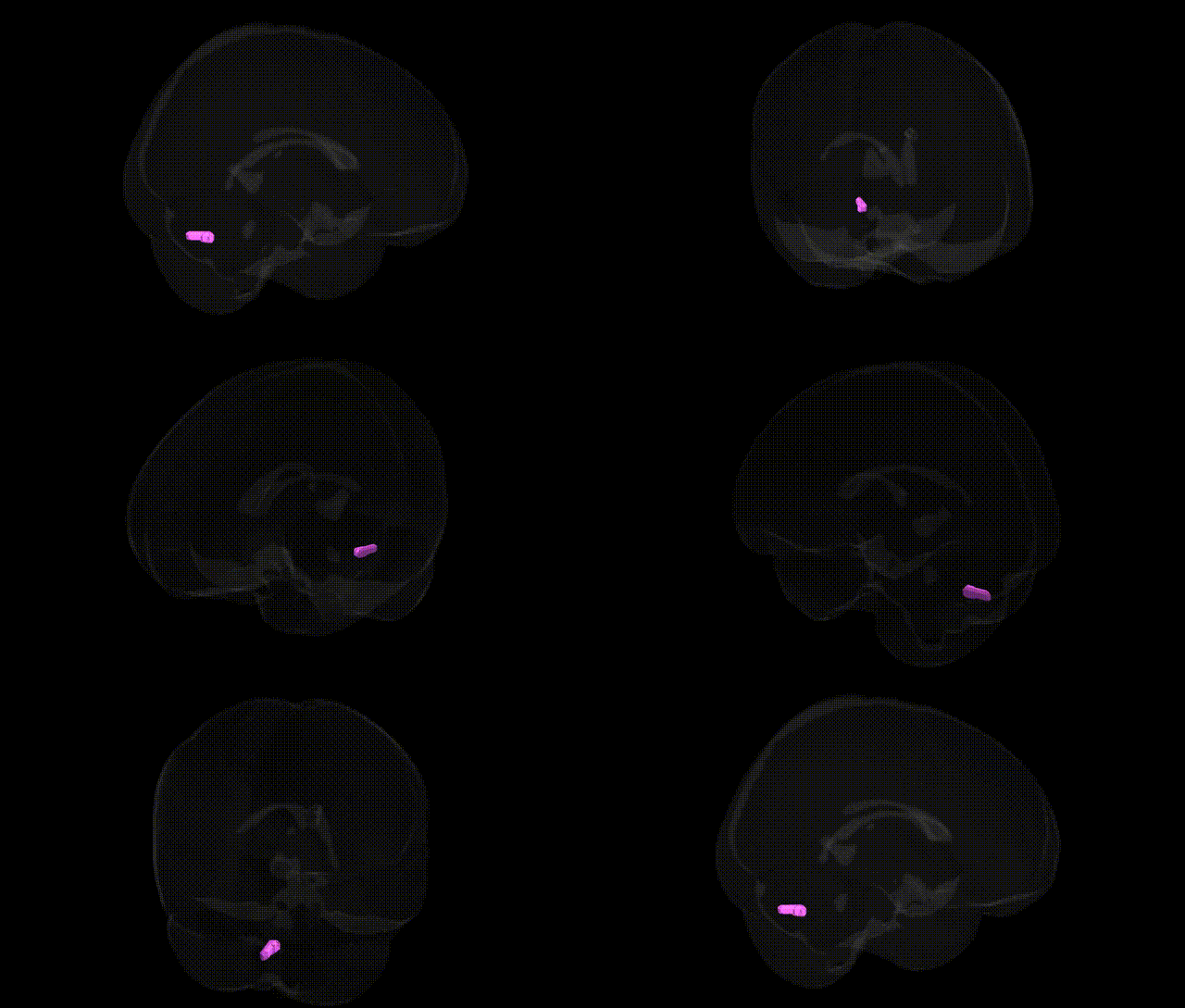
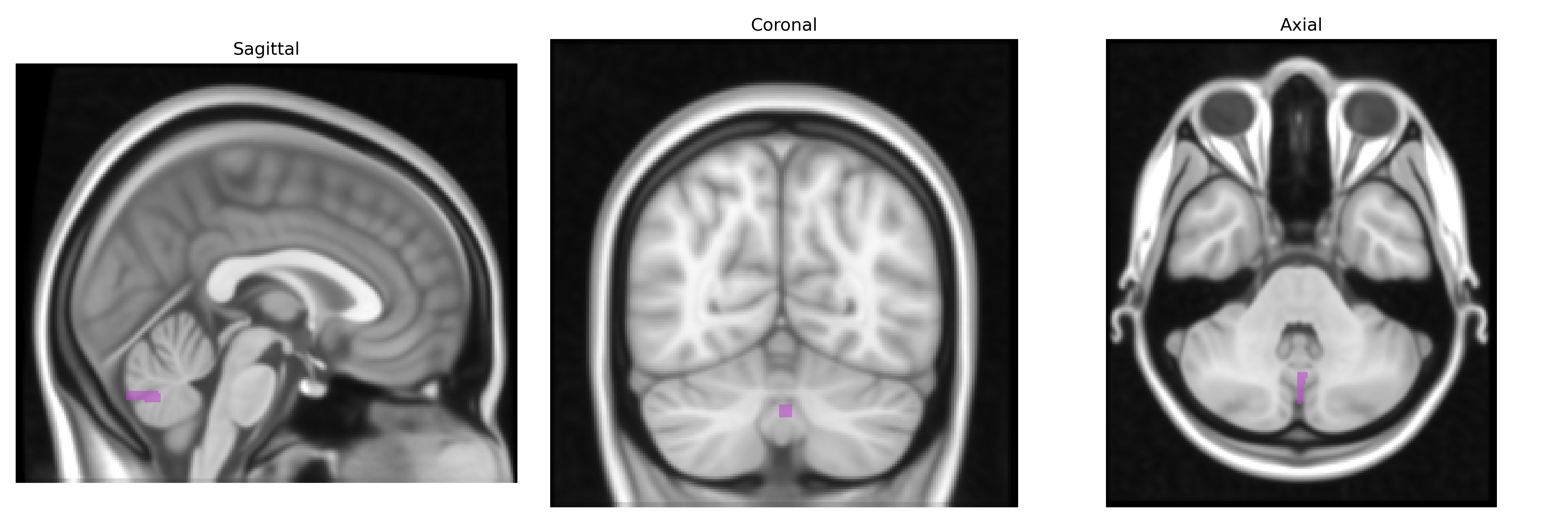
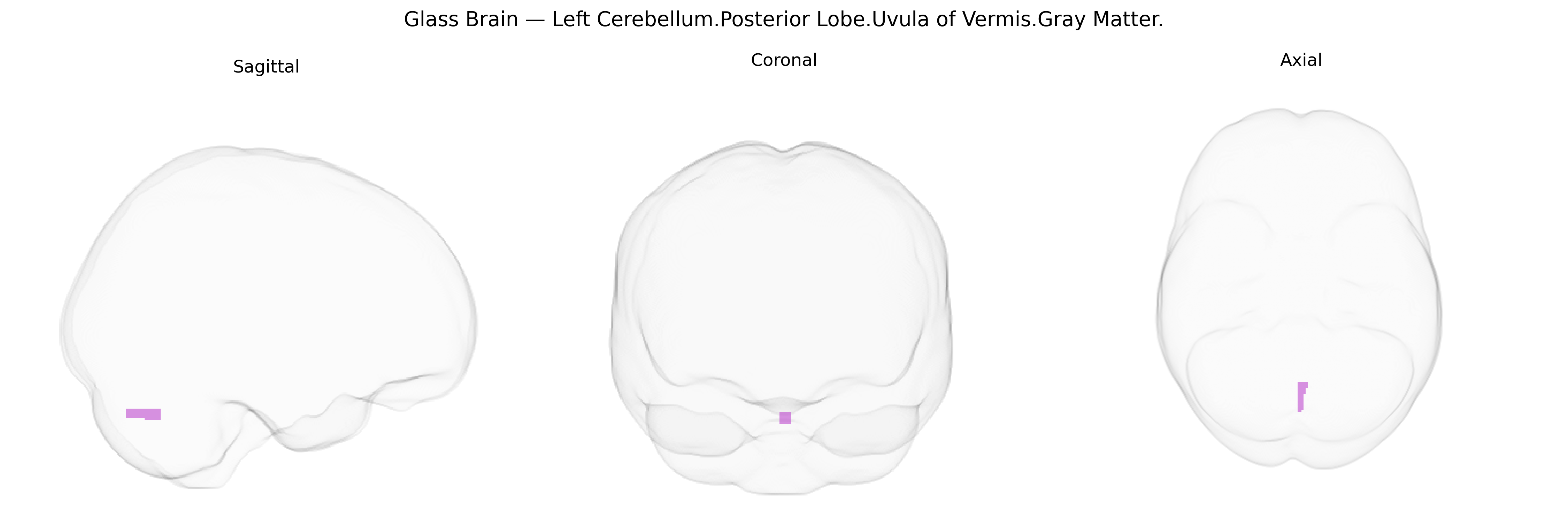
The bilateral Left Cerebellum, Posterior Lobe, Uvula of Vermis, Gray Matter corresponds to a midline portion of the cerebellar vermis located in the posterior lobe, composed predominantly of cortical gray matter that integrates sensory and motor information for the coordination of posture and balance. The uvula of the vermis participates in fine-tuning axial and proximal limb movements, particularly those related to stance and gait, and is interconnected with vestibular and spinal pathways that modulate muscle tone and equilibrium. Functionally, it is often grouped within the spinocerebellum, contributing to error correction during ongoing movements and adaptive motor learning. There is no direct Wikipedia article for this exact subregion; a related structure is the Cerebellar vermis.
The bilateral Left Cerebellum.Posterior Lobe.Uvula of Vermis.Gray Matter, corresponding to the uvular segment of the cerebellar vermis in the posterior lobe, has been implicated in genetic studies primarily through imaging-genetics and brain-structure GWAS that examine regional cerebellar volume, cortical thickness, and functional connectivity rather than this microanatomical label specifically; large consortia such as ENIGMA and UK Biobank–based analyses have identified polygenic influences on cerebellar morphology involving genes and loci related to neurodevelopment, synaptic signaling, and cytoskeletal organization (for example, variants in genes such as RELN, FOXP2, and general neurodevelopmental loci have been linked to cerebellar structure and function), with some studies reporting heritable variation in vermis and posterior cerebellar volumes. Although no major GWAS to date has isolated the uvula of vermis gray matter as a standalone locus of association, vermis and posterior cerebellar regions—including areas overlapping the uvula—have shown genetic correlations with neurodevelopmental and psychiatric disorders such as autism spectrum disorder, attention-deficit/hyperactivity disorder, major depressive disorder, schizophrenia, and bipolar disorder, as well as traits like general cognitive ability and neuroticism, reflecting shared polygenic architectures. Additionally, rare variant and family-based studies in cerebellar malformations and ataxias implicate genes involved in hindbrain development (e.g., mutations in genes such as ZIC1/ZIC4, FOXC1, and others in Dandy–Walker spectrum and midline cerebellar anomalies), which can structurally and functionally affect the posterior vermis, including the uvula, though these findings typically concern broader vermian or posterior fossa phenotypes rather than this exact Talairach-defined region.
Overview generated by GPT-4o (2026).
Region ID: 67
Hemisphere: bilateral
Atlas: Talairach labels 1mm
Full Quality Version: Download MP4
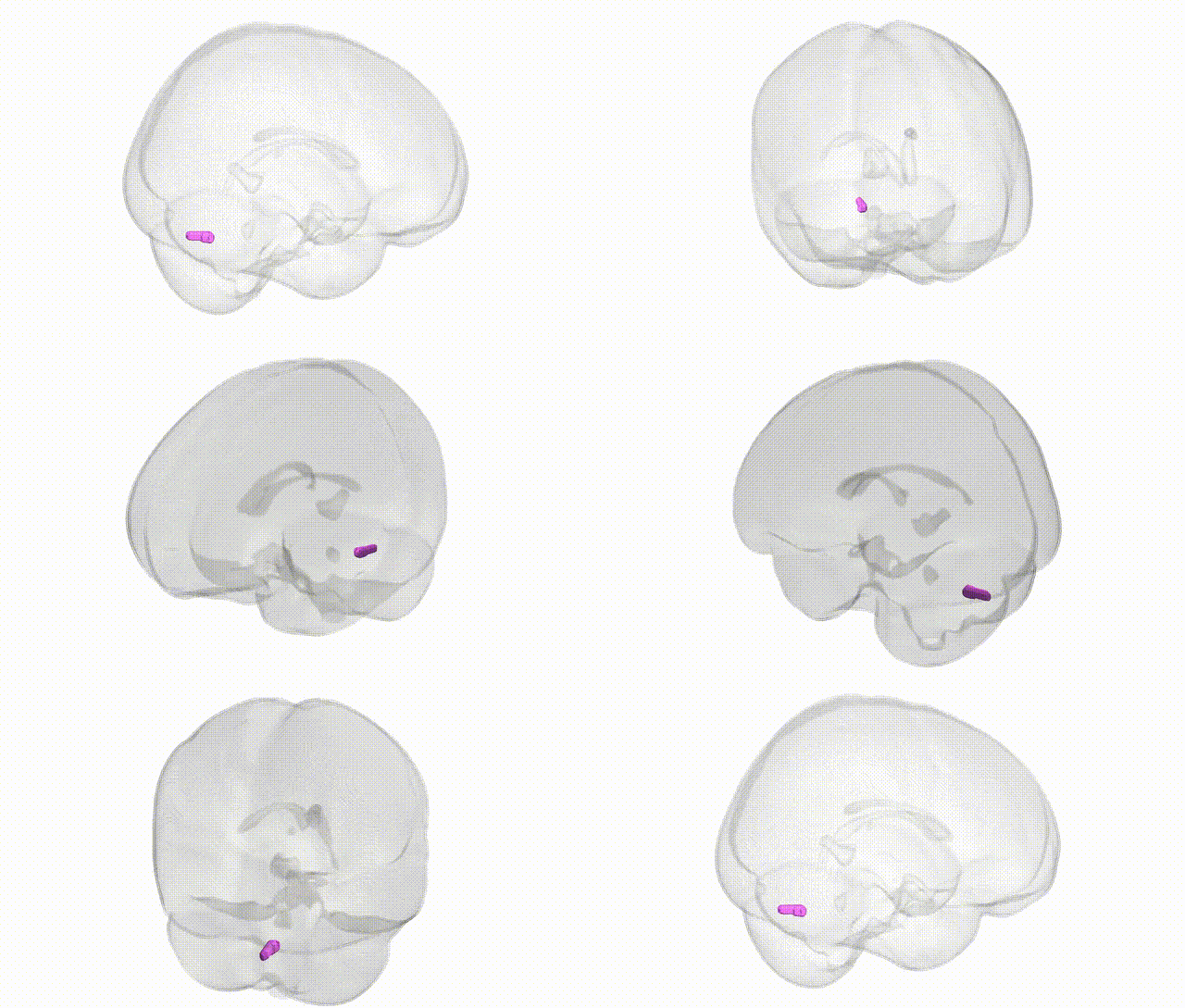
Full Quality Version: Download MP4
Wali Sidiqyar*, Gaurav Rudravaram*, Elyssa M. McMaster, Trent M. Schwartz, Adam M. Saunders, Kurt G. Schilling, Bennett A. Landman "Introducing SPINS: A Shared Public Visualization Library of Neuroanatomical Structures." Medical Imaging with Deep Learning- short paper
This resource is licensed under CC0 1.0 Universal (Public Domain).