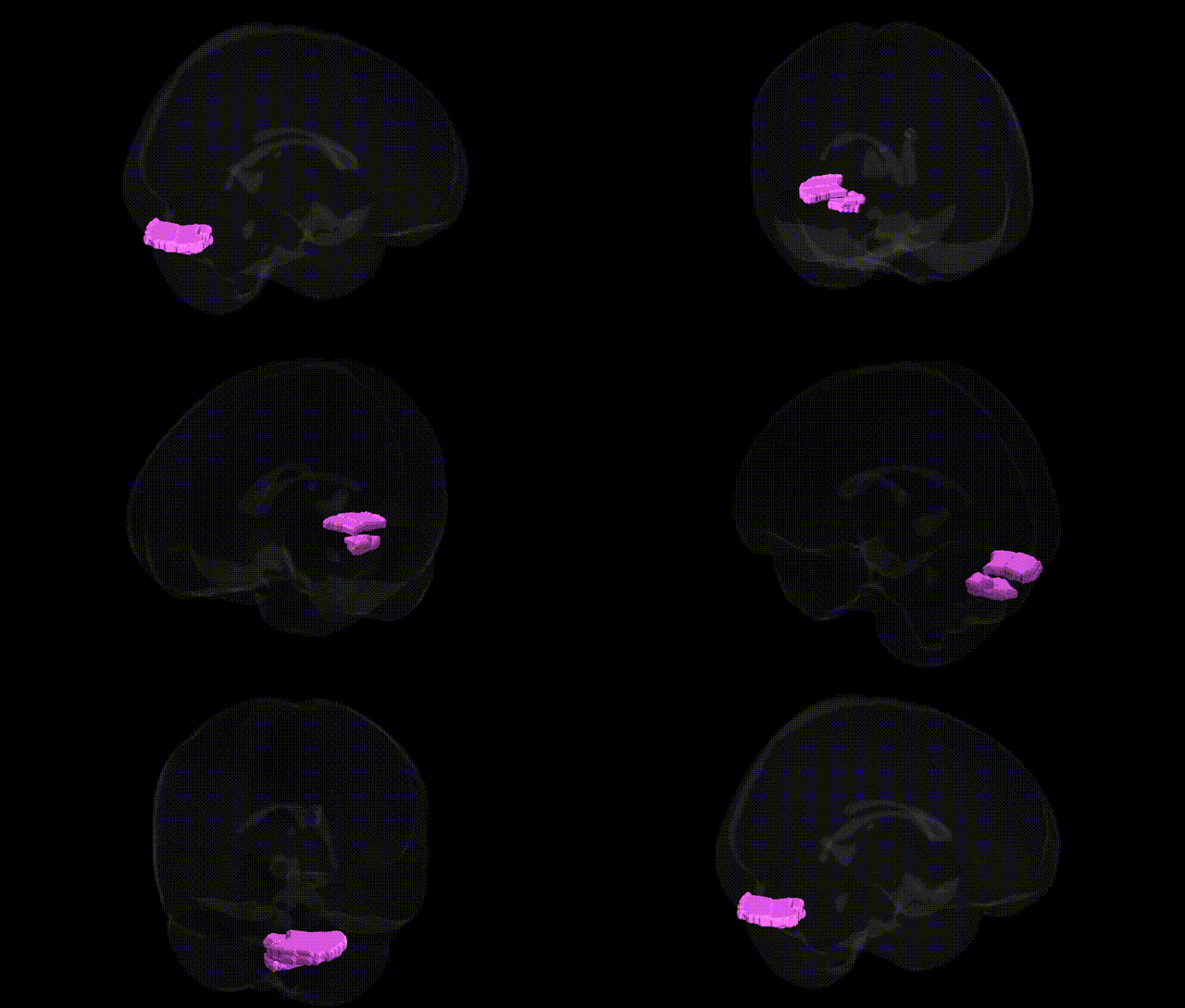
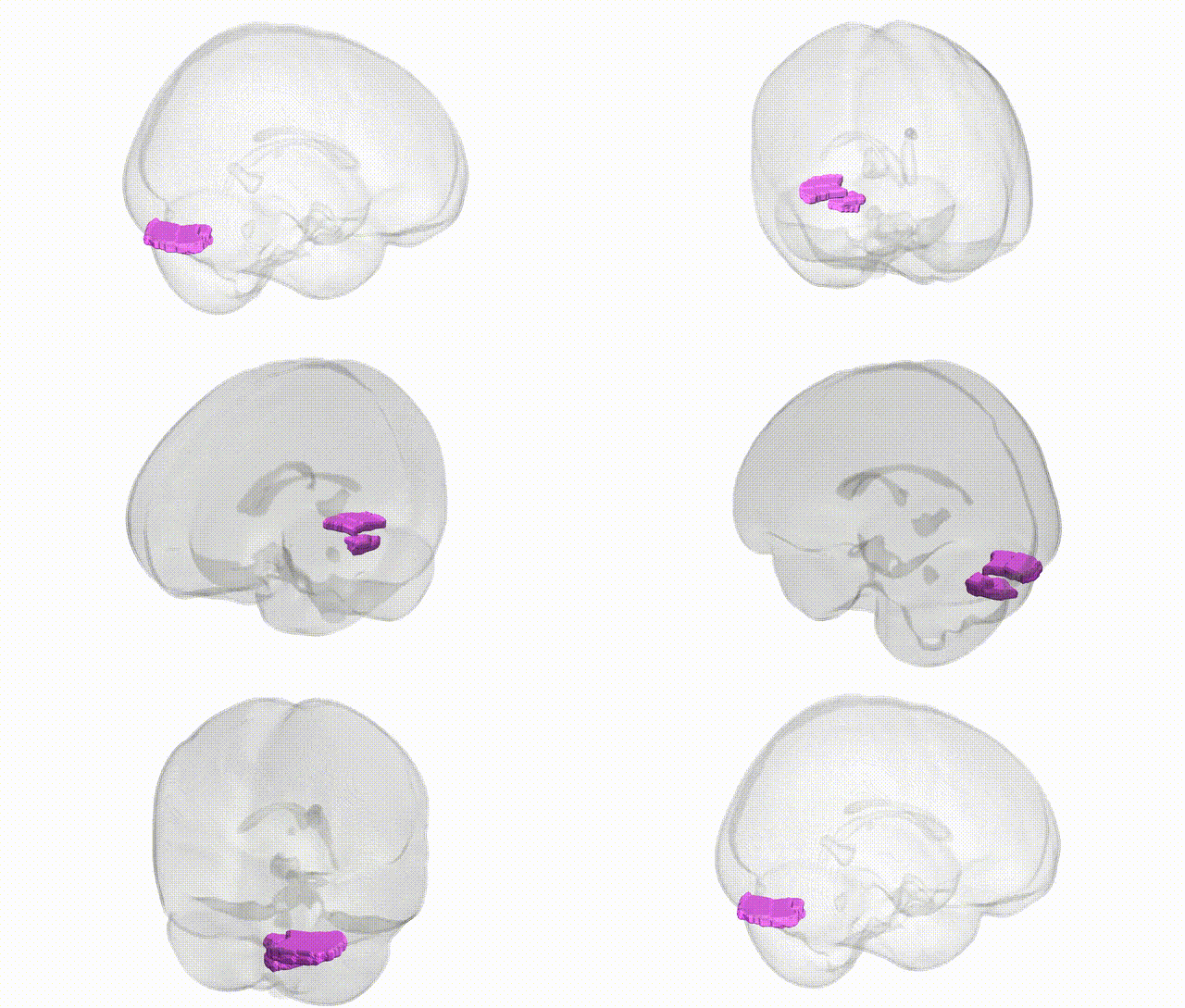
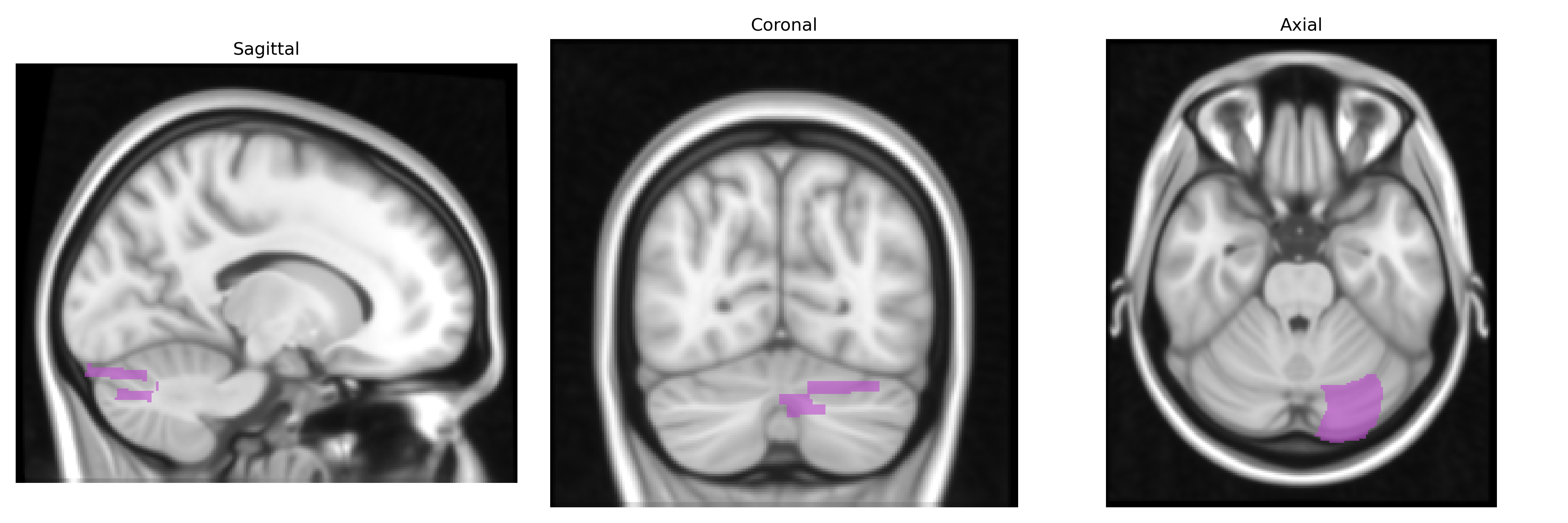
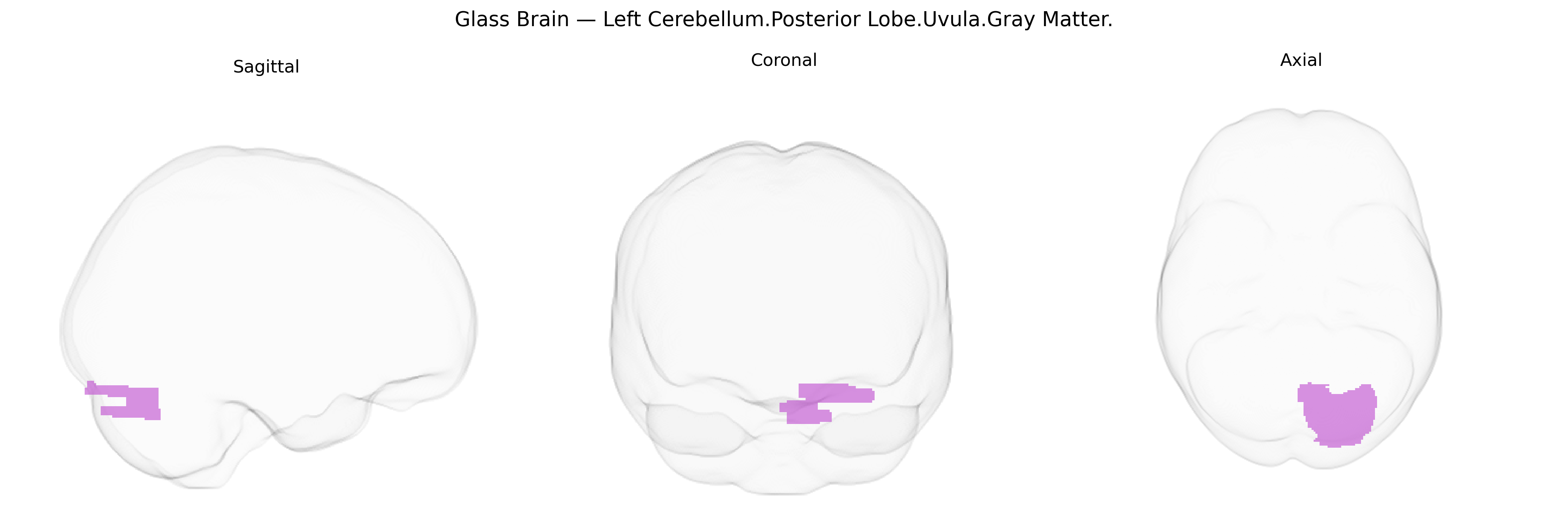
The bilateral Left Cerebellum Posterior Lobe Uvula Gray Matter corresponds to the cortical gray matter of the uvula, a midline vermal structure within the posterior lobe of the cerebellum involved in coordination of posture, balance, and axial (truncal) motor control. This region receives somatosensory and vestibular input and contributes to fine-tuning of movements and maintenance of equilibrium, particularly those involving the trunk and proximal musculature. Functionally, the uvula participates in integrating sensory feedback with motor commands to support smooth execution of ongoing movements and adaptive postural adjustments. There is no dedicated Wikipedia article specifically for the cerebellar uvula; a related structure and broader context is the Cerebellum.
The bilateral Left Cerebellum.Posterior Lobe.Uvula.Gray Matter, a fine-grained Talairach 1 mm parcellation within the posterior cerebellar cortex, has not itself been singled out in genome-wide association studies (GWAS), but genetic findings for the broader posterior cerebellum and cerebellar gray matter provide relevant context. Large imaging-genetics consortia such as ENIGMA and UK Biobank have shown that volumetric measures of cerebellar subregions, including posterior lobe gray matter, are highly heritable and influenced by common variants in genes involved in neurodevelopment, synaptic function, and axon guidance (e.g., variants near KIAA0586, PAPPA, and multiple loci regulating brain growth and cortical surface area). Polygenic risk for neurodevelopmental and psychiatric conditions—including schizophrenia, autism spectrum disorder, bipolar disorder, and major depression—has been associated with altered cerebellar structure and connectivity, which often involves posterior cerebellar territories implicated in cognitive and affective processing. Cerebellar gray matter changes, including in posterior lobe regions, have also been reported in genetically influenced ataxias (e.g., spinocerebellar ataxias caused by CAG-repeat expansions) and certain monogenic disorders affecting neuronal migration or Purkinje cell survival. Although these studies generally do not isolate the uvula subregion, they indicate that genetic variation affecting cerebellar development and maintenance contributes to individual differences in posterior cerebellar morphology and to susceptibility to motor, cognitive, and psychiatric phenotypes that engage this territory.
Overview generated by GPT-4o (2026).
Region ID: 63
Hemisphere: bilateral
Atlas: Talairach labels 1mm
Full Quality Version: Download MP4
Full Quality Version: Download MP4
Wali Sidiqyar*, Gaurav Rudravaram*, Elyssa M. McMaster, Trent M. Schwartz, Adam M. Saunders, Kurt G. Schilling, Bennett A. Landman "Introducing SPINS: A Shared Public Visualization Library of Neuroanatomical Structures." Medical Imaging with Deep Learning- short paper
This resource is licensed under CC0 1.0 Universal (Public Domain).