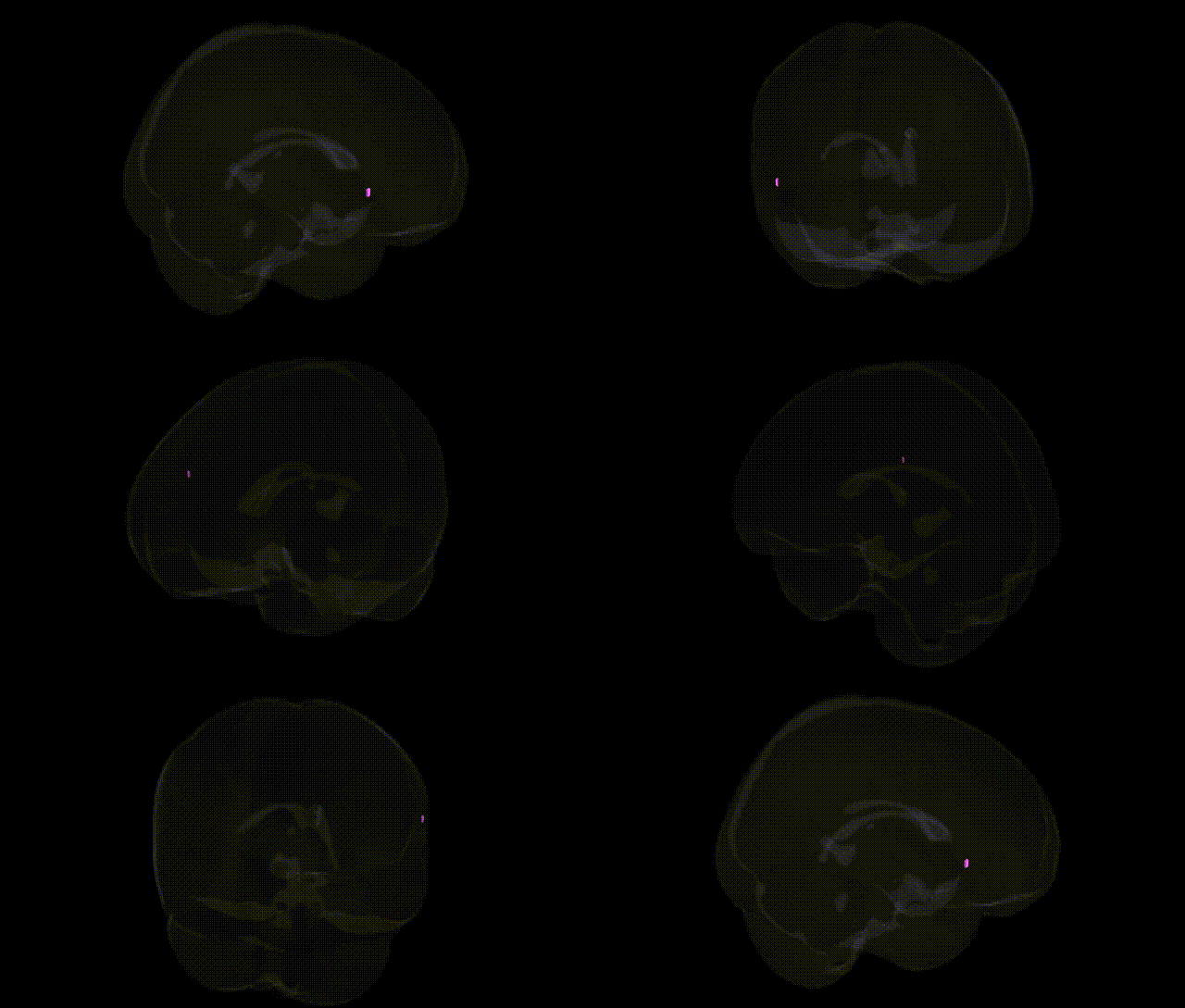
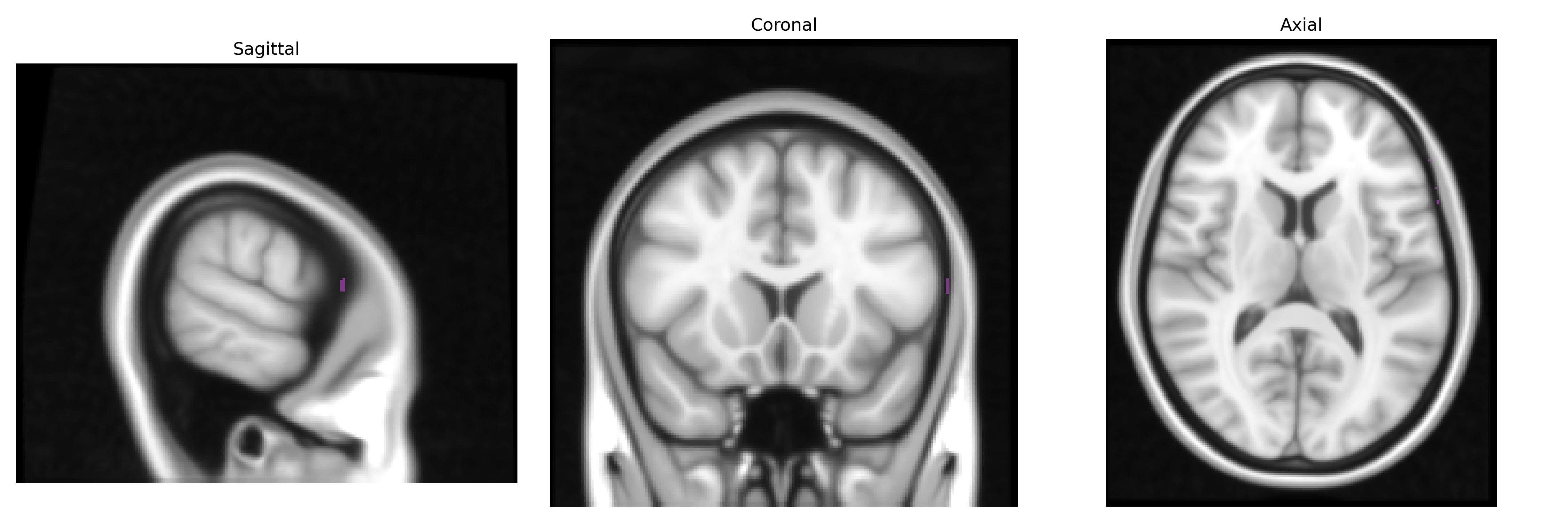
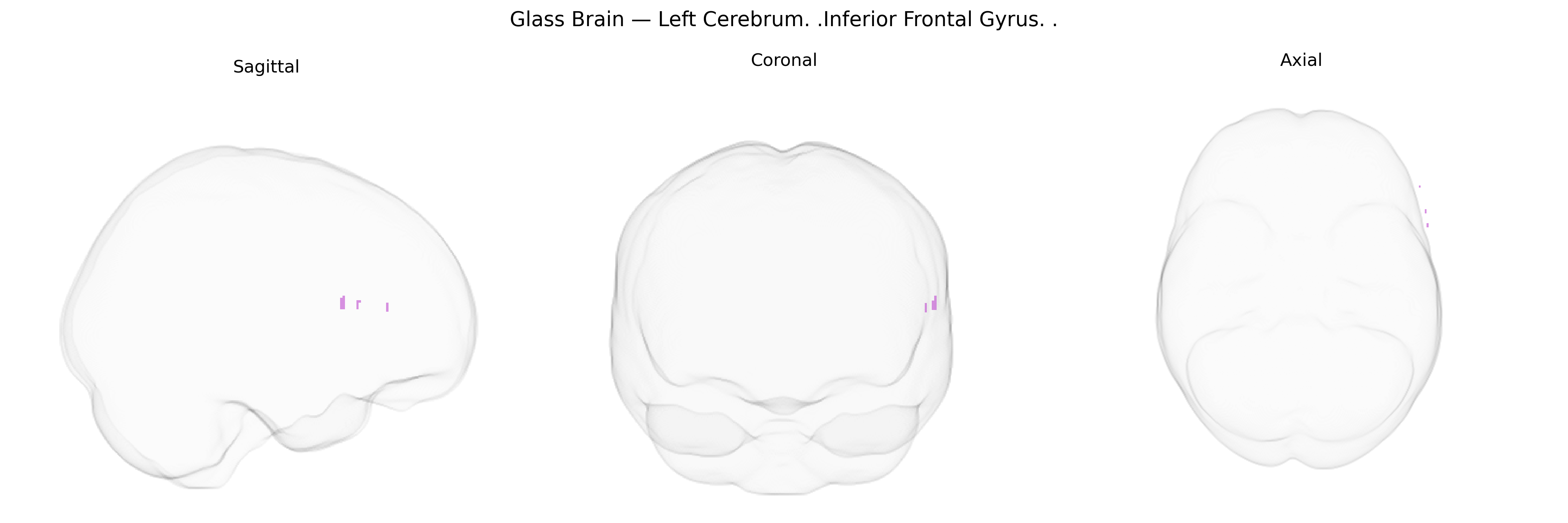
The bilateral left cerebrum inferior frontal gyrus is a cortical region of the frontal lobe located on the lateral surface of the left hemisphere, extending from the inferior frontal sulcus to the lateral fissure and bounded anteriorly by the frontal pole; it is commonly subdivided into the pars opercularis, pars triangularis, and pars orbitalis. This region forms a key component of the perisylvian language network, with the left inferior frontal gyrus (particularly Brodmann areas 44 and 45) critically involved in speech production, syntactic processing, verbal working memory, and executive aspects of language. It also contributes to higher-order cognitive control, including response inhibition, task switching, and integration of semantic and phonological information, and exhibits strong structural and functional connectivity with temporal and parietal association cortices as well as subcortical nuclei. Inferior frontal gyrus
The bilateral left inferior frontal gyrus (IFG) of the cerebrum, often overlapping Broca’s area, has been recurrently implicated in genetic studies of language, cognition, and neuropsychiatric disorders. GWAS and imaging-genetics work using atlases such as Talairach-based parcellations have linked common variants in genes including FOXP2, CNTNAP2, DCDC2, KIAA0319, and ROBO1 to structural and functional variation in left IFG, particularly in phonological processing, speech production, and reading-related tasks. Polygenic scores for educational attainment and general cognitive ability correlate with cortical thickness and activation in this region, suggesting that highly polygenic influences on intelligence and academic performance partly act through IFG circuitry. In psychiatric genetics, schizophrenia and major depressive disorder risk variants—such as those in CACNA1C, ZNF804A, and other synaptic and calcium-channel genes—have been associated with altered left IFG volume, connectivity, or activation patterns, while autism spectrum disorder and attention-deficit/hyperactivity disorder GWAS highlight pathways involved in synaptic development and excitation–inhibition balance that modulate IFG function during language and executive-control tasks. Additionally, stuttering, developmental language disorder, and dyslexia show heritable risk enriched in genes governing neuronal migration, axon guidance, and cortico-striatal connectivity, with neuroimaging consistently identifying atypical structure or activation in the left IFG, underscoring this region as a key convergence point where distributed genetic influences impact expressive language, verbal working memory, and higher-order cognitive control.
Overview generated by GPT-4o (2026).
Region ID: 811
Hemisphere: bilateral
Atlas: Talairach labels 1mm
Full Quality Version: Download MP4
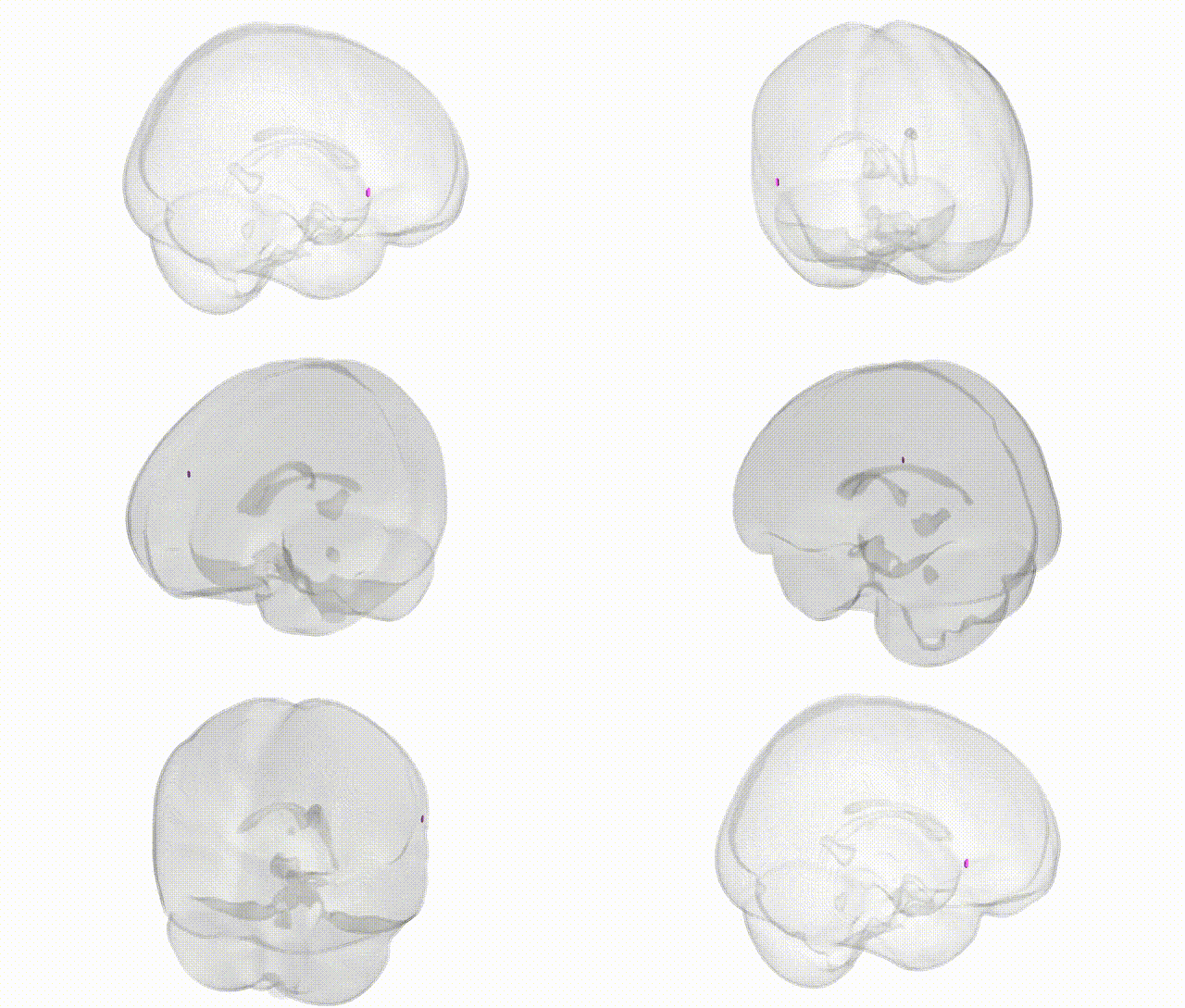
Full Quality Version: Download MP4
Wali Sidiqyar*, Gaurav Rudravaram*, Elyssa M. McMaster, Trent M. Schwartz, Adam M. Saunders, Kurt G. Schilling, Bennett A. Landman "Introducing SPINS: A Shared Public Visualization Library of Neuroanatomical Structures." Medical Imaging with Deep Learning- short paper
This resource is licensed under CC0 1.0 Universal (Public Domain).