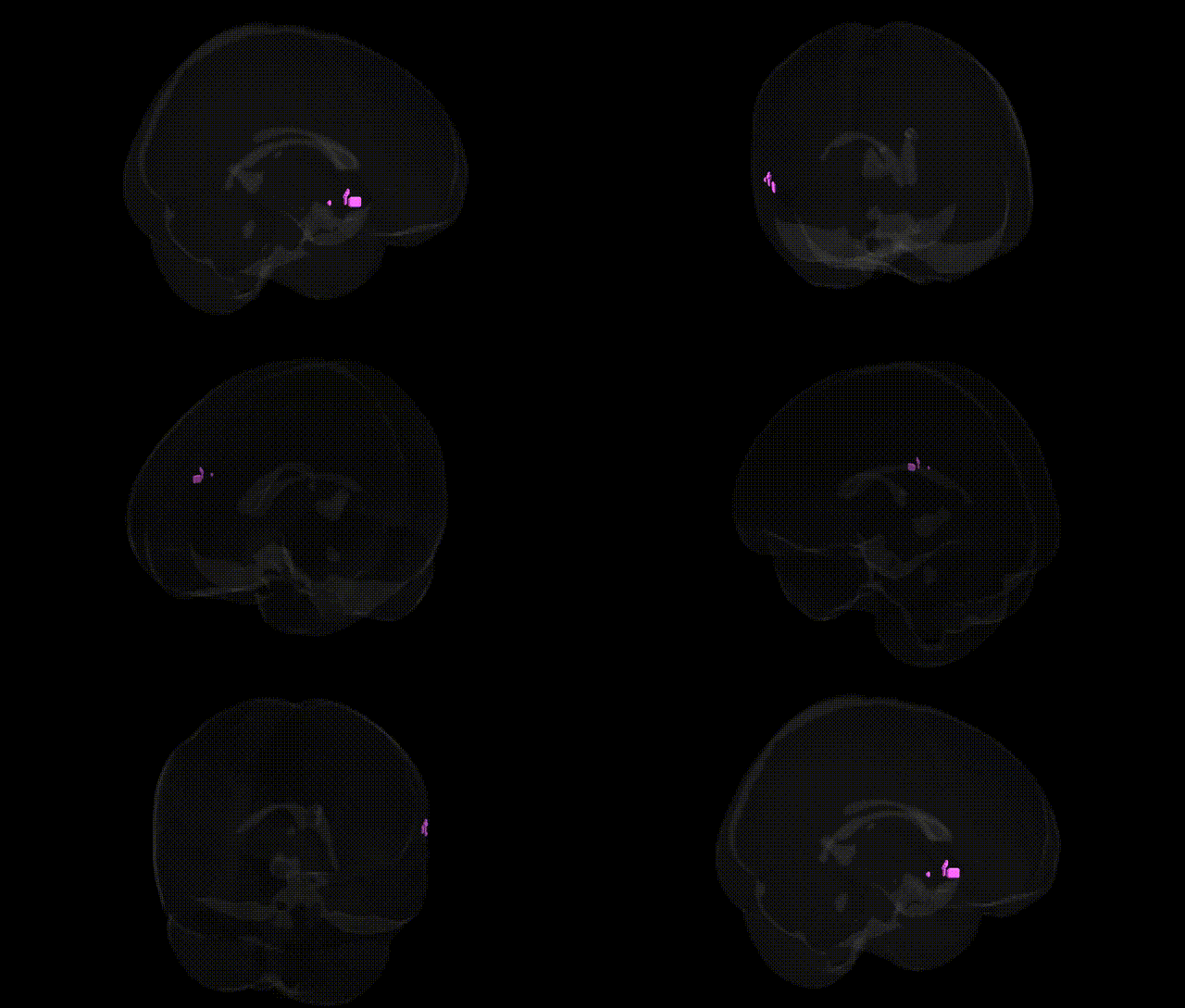
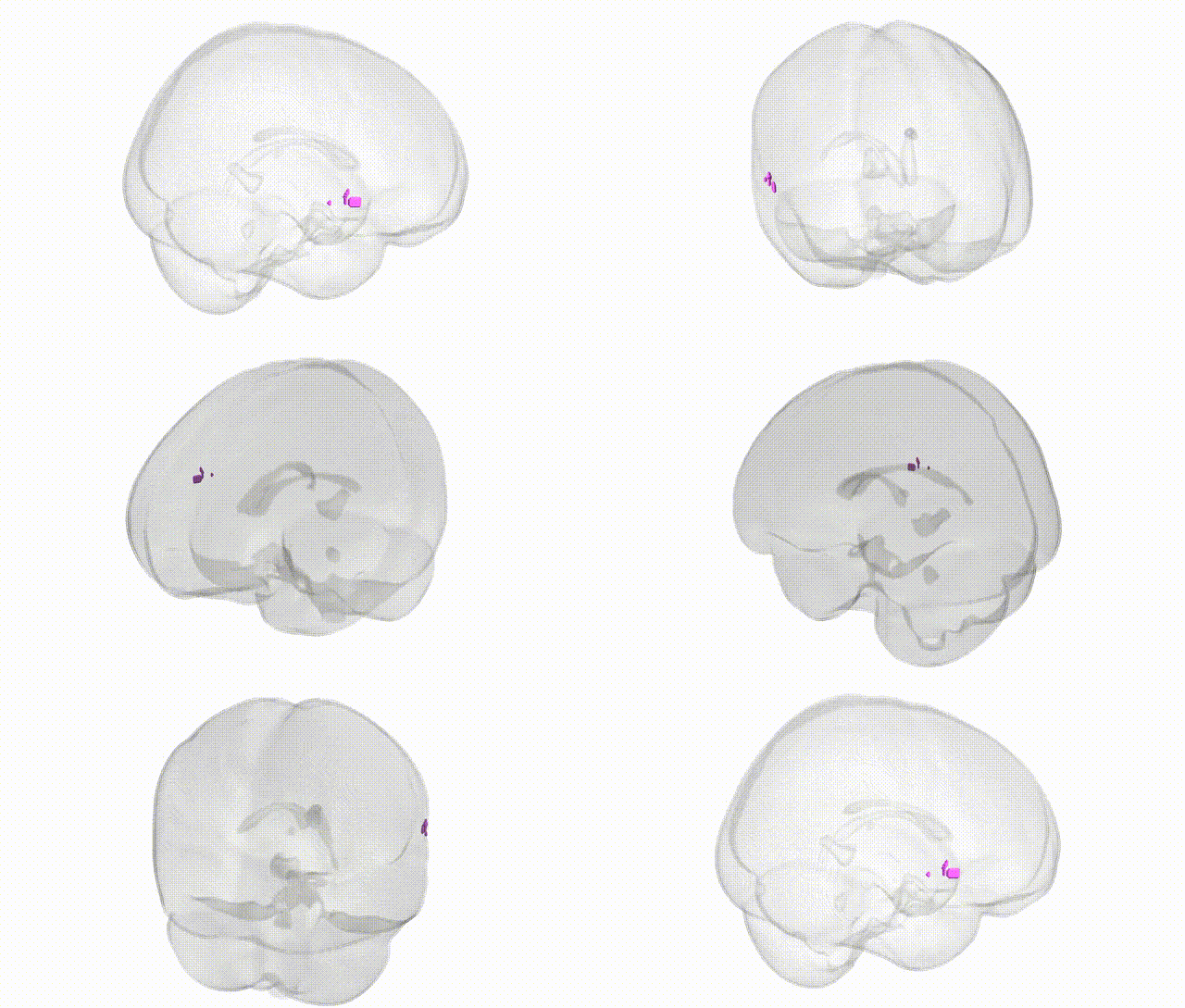
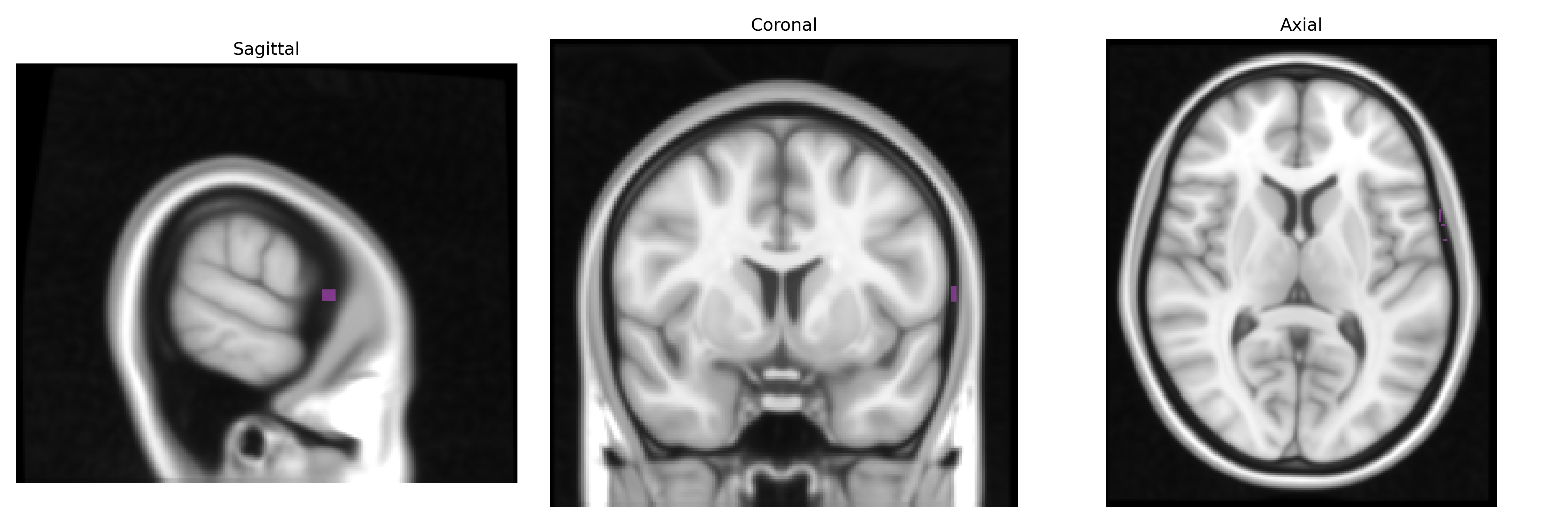
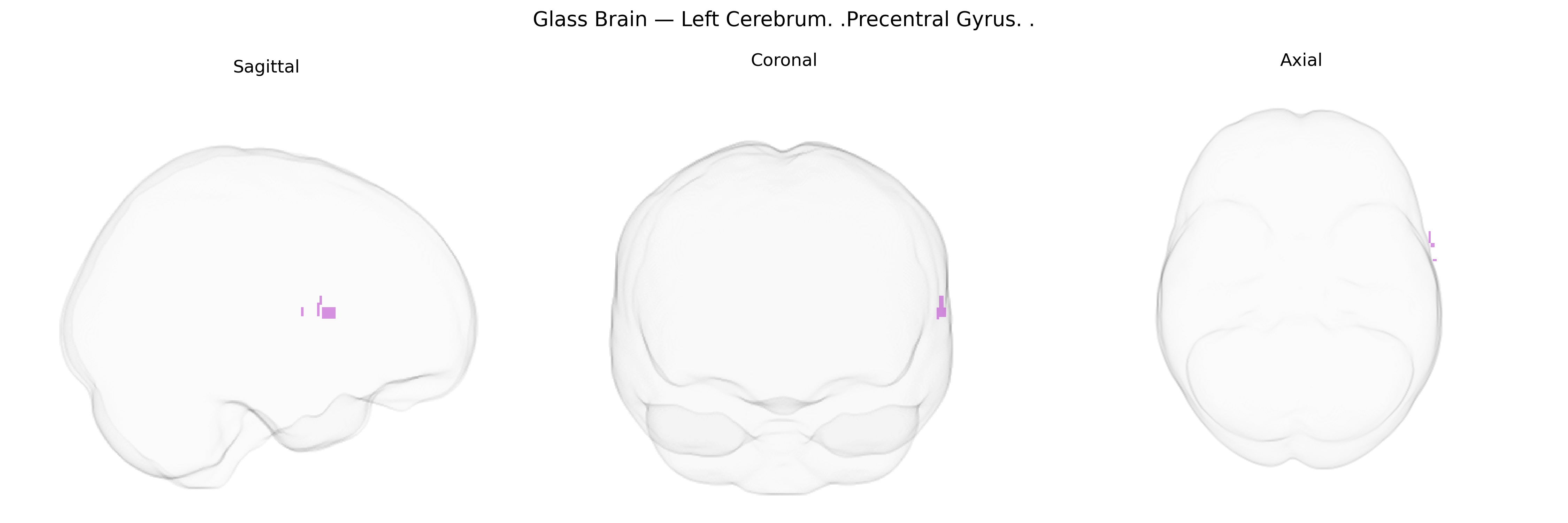
The bilateral left cerebrum precentral gyrus is a cortical region of the frontal lobe situated immediately anterior to the central sulcus, corresponding largely to the primary motor cortex (Brodmann area 4), and is somatotopically organized to give rise to the corticospinal and corticobulbar tracts that govern voluntary movement of contralateral skeletal musculature, with a disproportionate representation of face, hand, and orofacial effectors. Neurons in this region integrate inputs from premotor and supplementary motor areas, as well as somatosensory cortices, to specify the force, direction, and timing of motor commands, and lesions affecting the precentral gyrus can result in contralateral weakness, spasticity, and deficits in fine motor control. This structure is critical for execution of precise, goal-directed movements and contributes to motor learning and plasticity through activity-dependent changes in corticospinal connectivity. Precentral gyrus
The bilateral left precentral gyrus (primary motor cortex) has been implicated in multiple genetic and GWAS-based associations, particularly through imaging-genetics studies that link common variants to cortical thickness, surface area, and functional activation of this region; large ENIGMA and UK Biobank analyses have identified loci in genes involved in neurodevelopment and synaptic function (for example, near HMGA2, microtubule- and adhesion-related genes) that modulate precentral gyrus morphology and motor network organization. Variants affecting this region have been associated with neurodevelopmental and psychiatric disorders, including autism spectrum disorder, attention-deficit/hyperactivity disorder, and schizophrenia, where case–control and polygenic risk score studies show altered structure or activation of the precentral gyrus in individuals with higher genetic liability. Motor system–related diseases, notably amyotrophic lateral sclerosis and hereditary spastic paraplegia, also show genetic associations converging on corticospinal and motor cortex integrity, with risk variants in genes such as C9orf72, SOD1, TARDBP, FUS, and others contributing to degeneration or dysfunction of upper motor neurons whose cell bodies reside in the precentral gyrus. GWAS of motor traits (e.g., grip strength, reaction time, fine motor performance) have identified polygenic architectures that, when combined with imaging phenotypes, highlight the left precentral gyrus as a key mediator of genetically influenced motor abilities and lateralized motor control.
Overview generated by GPT-4o (2026).
Region ID: 743
Hemisphere: bilateral
Atlas: Talairach labels 1mm
Full Quality Version: Download MP4
Full Quality Version: Download MP4
Wali Sidiqyar*, Gaurav Rudravaram*, Elyssa M. McMaster, Trent M. Schwartz, Adam M. Saunders, Kurt G. Schilling, Bennett A. Landman "Introducing SPINS: A Shared Public Visualization Library of Neuroanatomical Structures." Medical Imaging with Deep Learning- short paper
This resource is licensed under CC0 1.0 Universal (Public Domain).