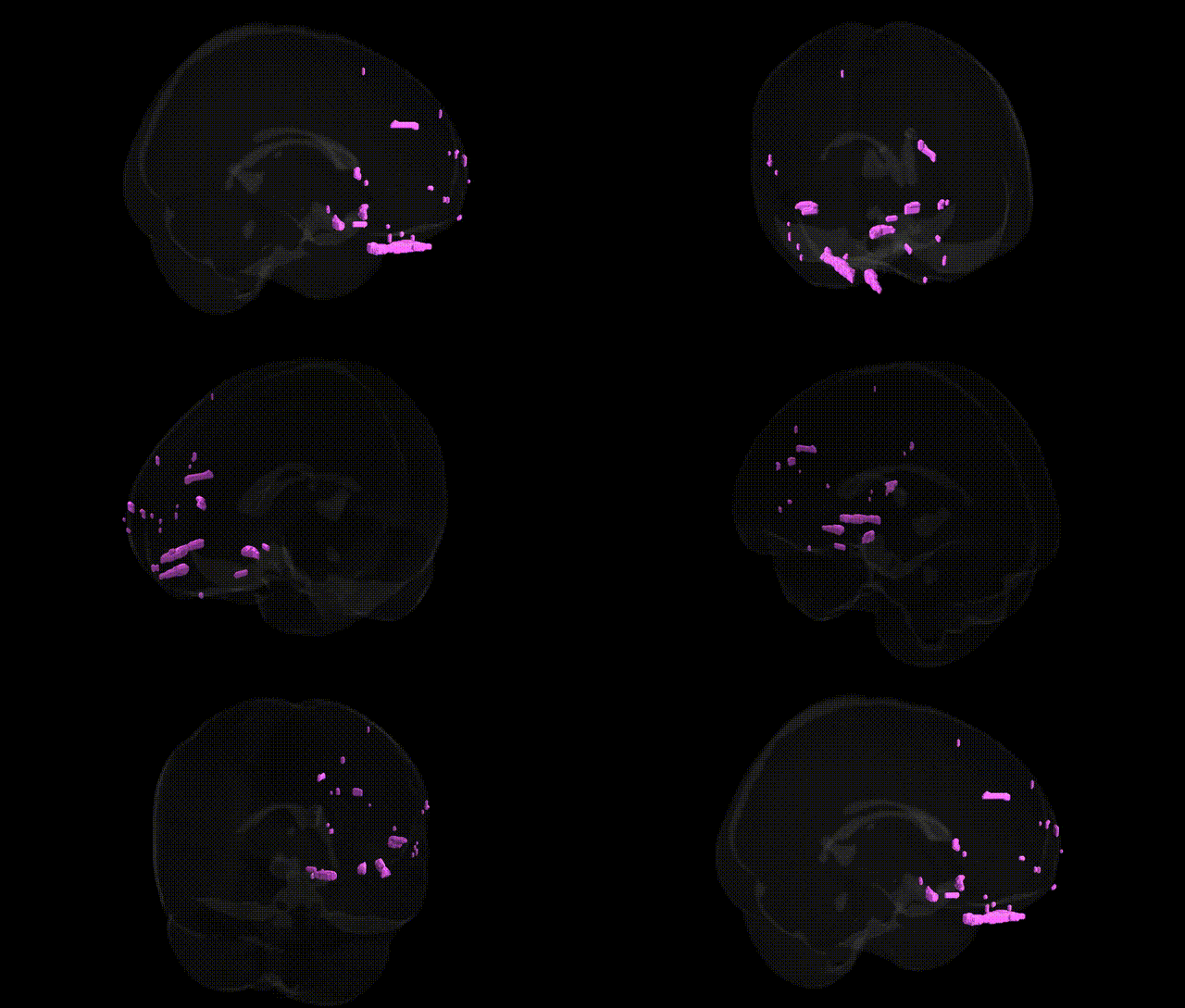
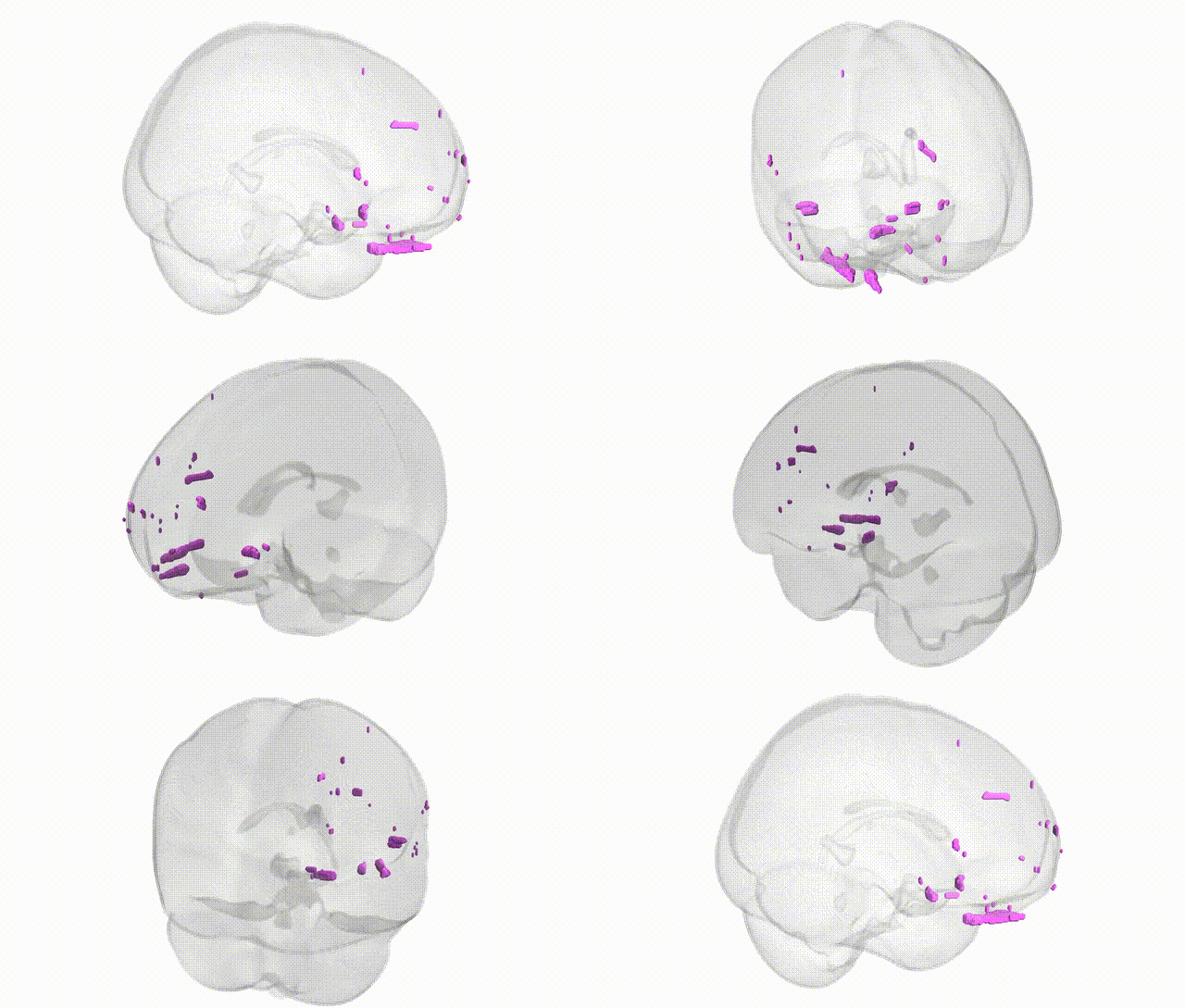
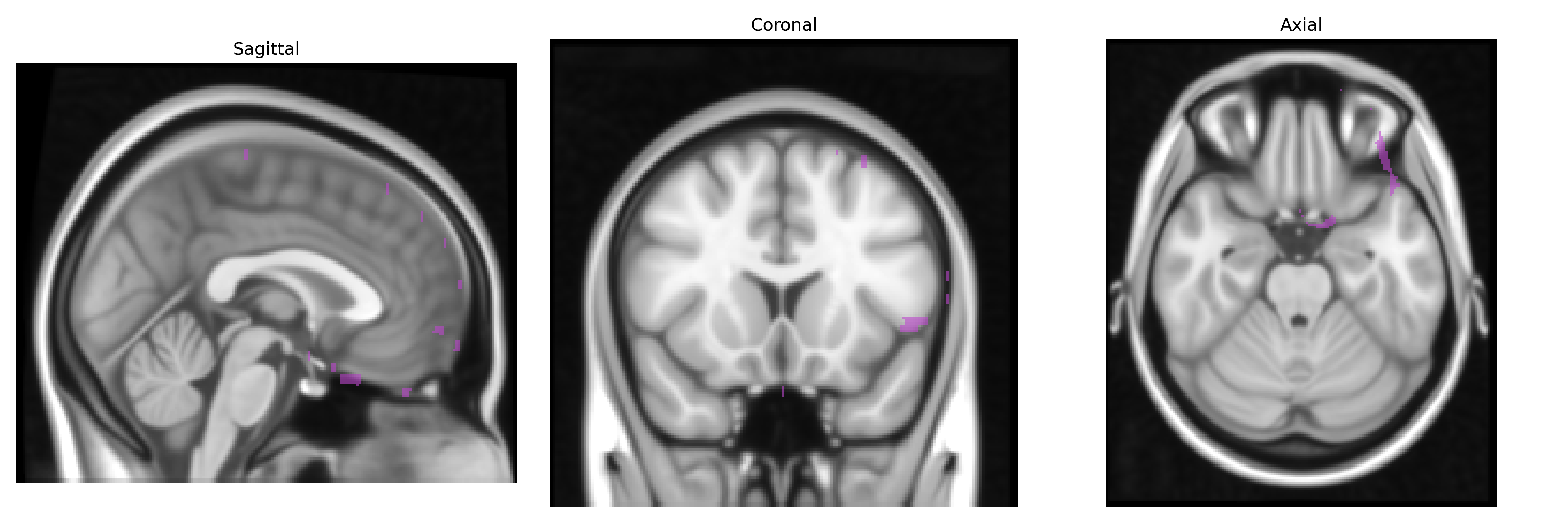
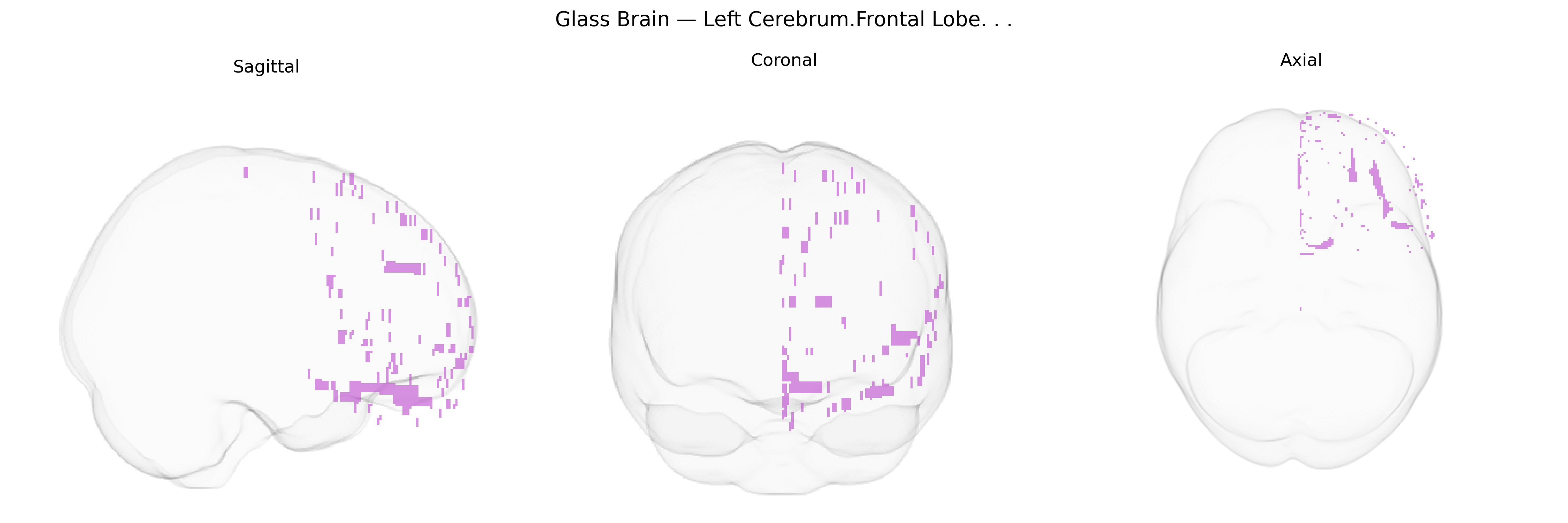
The bilateral Left Cerebrum.Frontal Lobe, as defined in the Talairach 1 mm Atlas, encompasses the anterior portion of the left cerebral hemisphere’s frontal lobe, including premotor, motor, and prefrontal territories involved in high-level cognitive and executive functions. This region participates in planning, decision-making, working memory, language production (notably in dominant-hemisphere Broca’s area), voluntary motor control of the contralateral body, and aspects of social cognition and emotional regulation. Cytoarchitectonically, it contains multiple Brodmann areas (e.g., BA 4, 6, 8, 9, 10, 44, 45, 46, 47), with distinct contributions to motor execution, eye movements, cognitive flexibility, and goal-directed behavior. Extensive connectivity with parietal, temporal, limbic, and subcortical structures supports its integrative role in coordinating complex behavior and adaptive responses. Related article: Frontal lobe.
The bilateral left cerebrum frontal lobe, as defined in the Talairach 1 mm atlas, has been repeatedly implicated in genetic studies linking common variants to cortical structure, cognition, and neuropsychiatric disease. Large-scale GWAS of cortical morphology (e.g., ENIGMA and UK Biobank) identify numerous loci (notably in or near genes such as HMGA2, MIR2113, KIAA0586, TBR1, and WNT signaling components) associated with frontal lobe surface area, thickness, and gyrification, often reflecting polygenic influences on neurodevelopmental pathways. Polygenic risk scores for schizophrenia, bipolar disorder, major depressive disorder, and ADHD show robust associations with structural and functional variation in the left frontal cortex, including dorsolateral and ventrolateral regions central to executive control, working memory, and affect regulation; specific risk loci include variants in CACNA1C, DRD2, GRIN2A, and genes related to synaptic plasticity and calcium channel function. GWAS of cognitive traits such as general intelligence, educational attainment, and executive function reveal substantial genetic overlap with left frontal cortical measures, with implicated genes enriched for synaptic and neuronal differentiation pathways, and imaging–genetics studies demonstrate that carriers of risk alleles for Alzheimer’s disease (e.g., APOE ε4) and frontotemporal dementia show altered frontal lobe structure and metabolism. Collectively, these findings indicate that the bilateral left frontal cerebrum is a major target of polygenic influences spanning neurodevelopment, synaptic signaling, and neurodegeneration, mediating genetic risk for both cognitive variation and multiple psychiatric and neurological disorders.
Overview generated by GPT-4o (2026).
Region ID: 106
Hemisphere: bilateral
Atlas: Talairach labels 1mm
Full Quality Version: Download MP4
Full Quality Version: Download MP4
Wali Sidiqyar*, Gaurav Rudravaram*, Elyssa M. McMaster, Trent M. Schwartz, Adam M. Saunders, Kurt G. Schilling, Bennett A. Landman "Introducing SPINS: A Shared Public Visualization Library of Neuroanatomical Structures." Medical Imaging with Deep Learning- short paper
This resource is licensed under CC0 1.0 Universal (Public Domain).