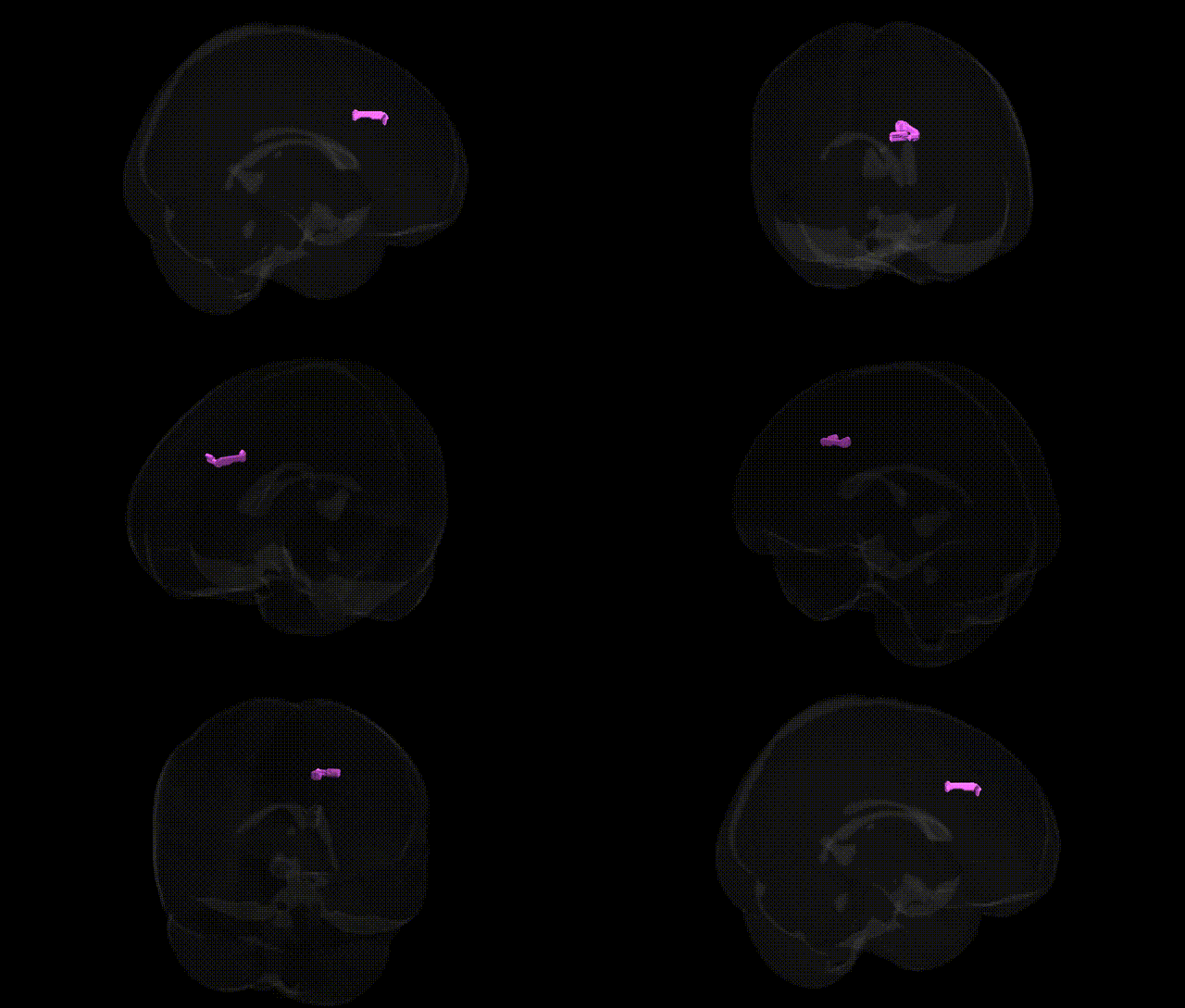
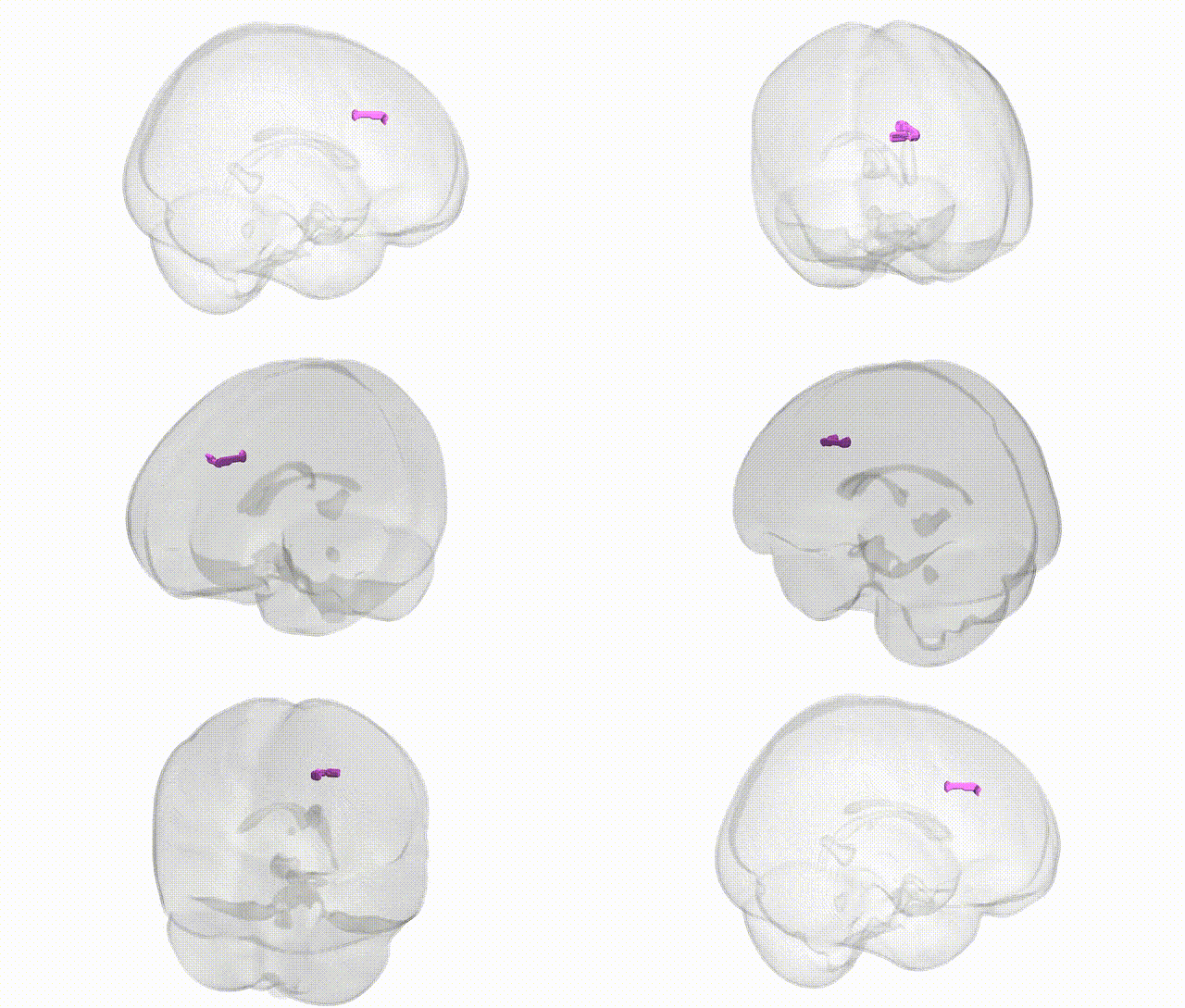
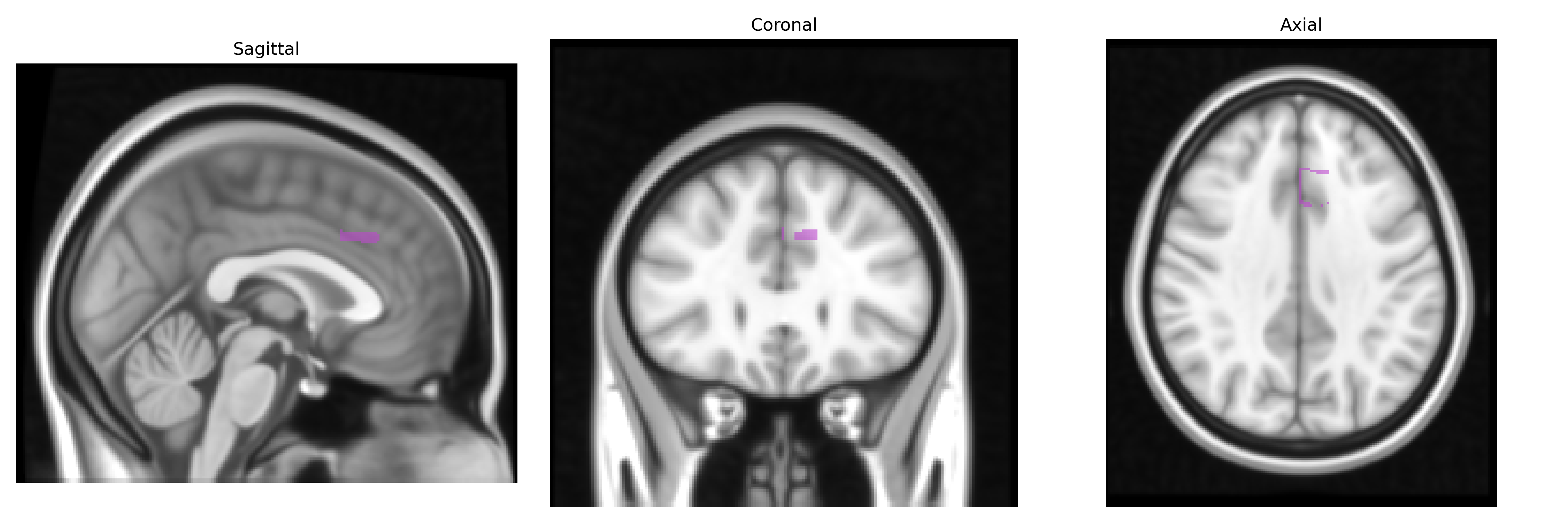
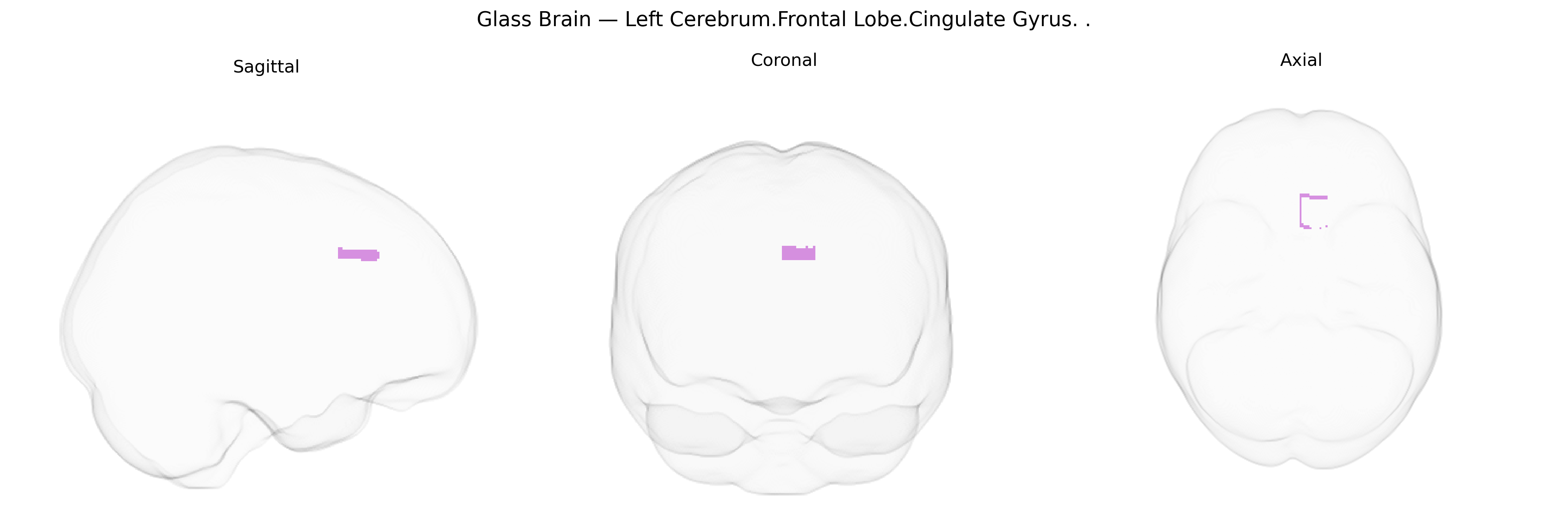
The bilateral Left Cerebrum.Frontal Lobe.Cingulate Gyrus, as defined in the Talairach 1 mm Atlas, refers to frontal portions of the cingulate gyrus situated on the medial surface of the cerebral hemisphere, arching above the corpus callosum and extending anteriorly into the frontal lobe. This region is a key component of the limbic and paralimbic network and is involved in higher-order functions such as motivation, conflict monitoring, performance adjustment, emotional regulation, and aspects of decision-making, particularly those integrating affective and cognitive information. It receives inputs from prefrontal, motor, and limbic structures and projects to both cortical and subcortical targets, supporting roles in attentional control, error detection, and autonomic responses associated with goal-directed behavior. There is no single dedicated article for this exact Talairach label; a closely related structure is the Anterior cingulate cortex.
The bilateral Left Cerebrum.Frontal Lobe.Cingulate Gyrus (as defined in the Talairach 1 mm atlas, largely overlapping anterior and mid‑cingulate cortex) has been implicated in numerous genetic associations through imaging–genetics and GWAS-related studies, particularly via endophenotypes such as cortical thickness, surface area, and functional activation. Common variants in genes related to synaptic plasticity, neurotransmission, and neurodevelopment—such as COMT, DRD2/DRD3, SLC6A4, BDNF, and DISC1—have been repeatedly linked to structural or functional differences in cingulate regions, often in the context of executive control, error monitoring, and affective regulation. Large-scale consortia (e.g., ENIGMA, UK Biobank) have reported genome‑wide significant associations between cingulate morphology and loci near genes involved in neuronal development and myelination (for example, variants in or near MIR2113, MEF2C, and other neurodevelopmental loci), as well as polygenic scores for intelligence, educational attainment, and major psychiatric disorders. The cingulate gyrus shows robust genetic correlations and specific variant associations with disorders such as major depressive disorder, schizophrenia, bipolar disorder, attention‑deficit/hyperactivity disorder, autism spectrum disorder, and anxiety disorders, in which risk alleles often predict altered cingulate volume, connectivity, or activation during cognitive control and emotion tasks. Additionally, genetic influences on pain sensitivity, obsessive–compulsive traits, and substance use (including variants in OPRM1 and dopaminergic genes) have been tied to cingulate function, underscoring this region’s role as a genetically modulated hub for cognitive–affective integration and behavioral regulation.
Overview generated by GPT-4o (2026).
Region ID: 1005
Hemisphere: bilateral
Atlas: Talairach labels 1mm
Full Quality Version: Download MP4
Full Quality Version: Download MP4
Wali Sidiqyar*, Gaurav Rudravaram*, Elyssa M. McMaster, Trent M. Schwartz, Adam M. Saunders, Kurt G. Schilling, Bennett A. Landman "Introducing SPINS: A Shared Public Visualization Library of Neuroanatomical Structures." Medical Imaging with Deep Learning- short paper
This resource is licensed under CC0 1.0 Universal (Public Domain).