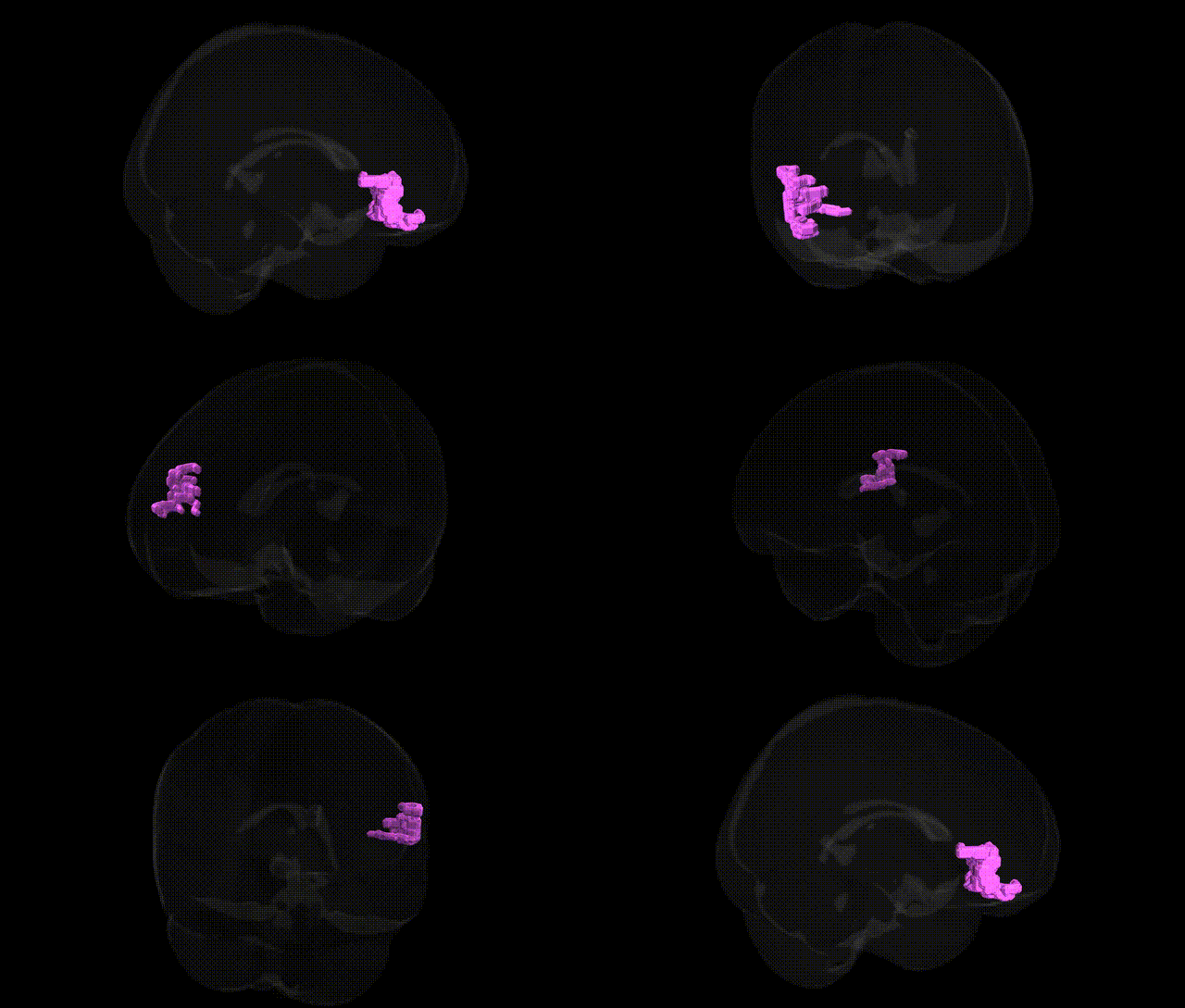
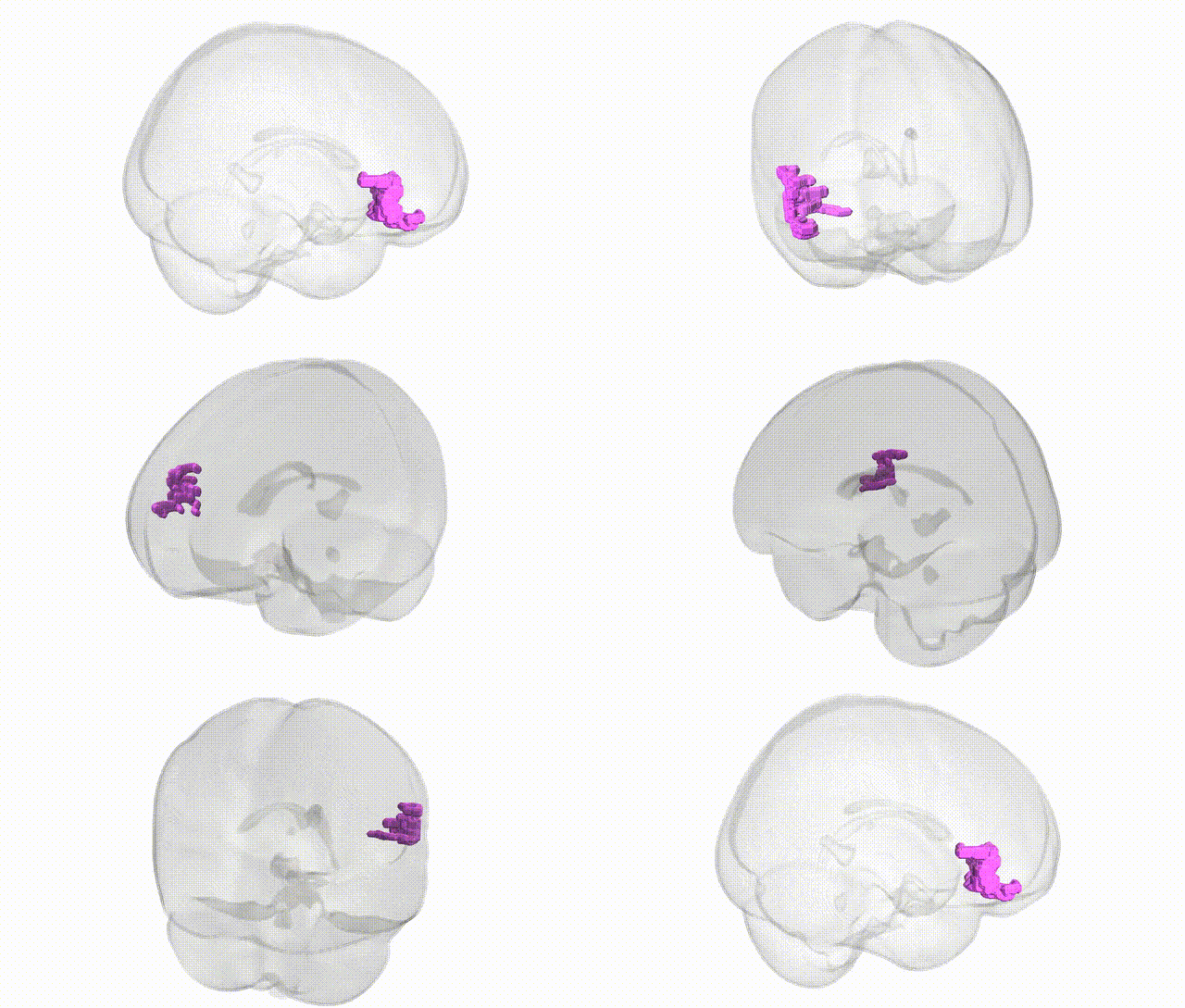
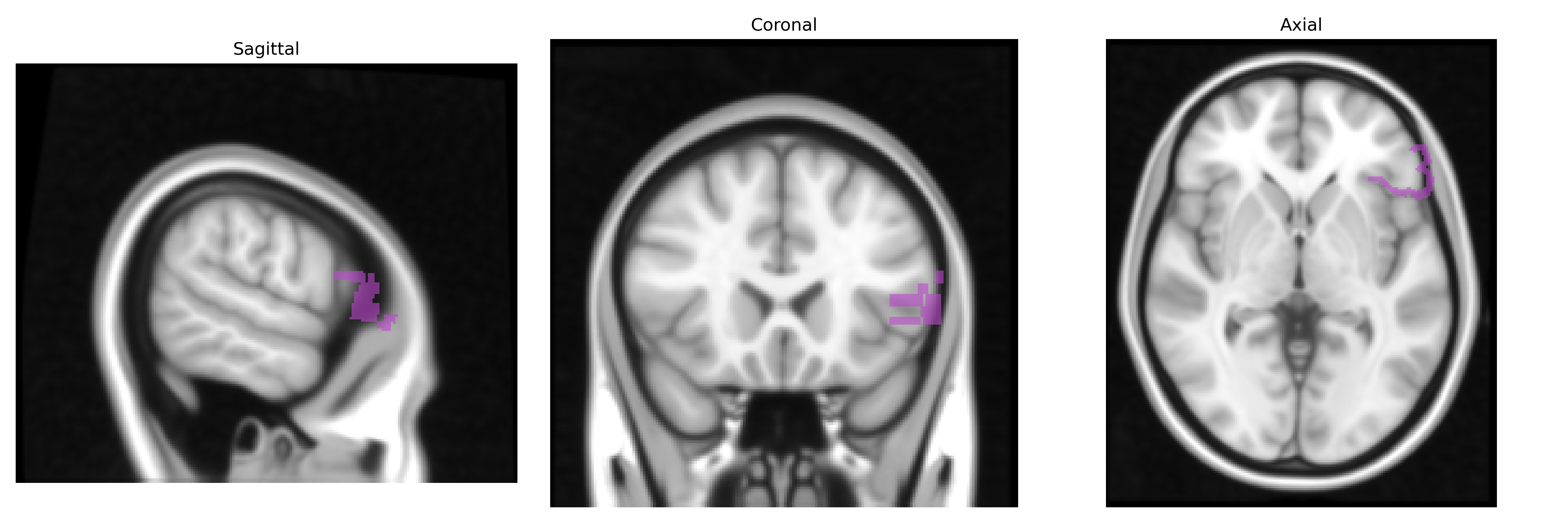
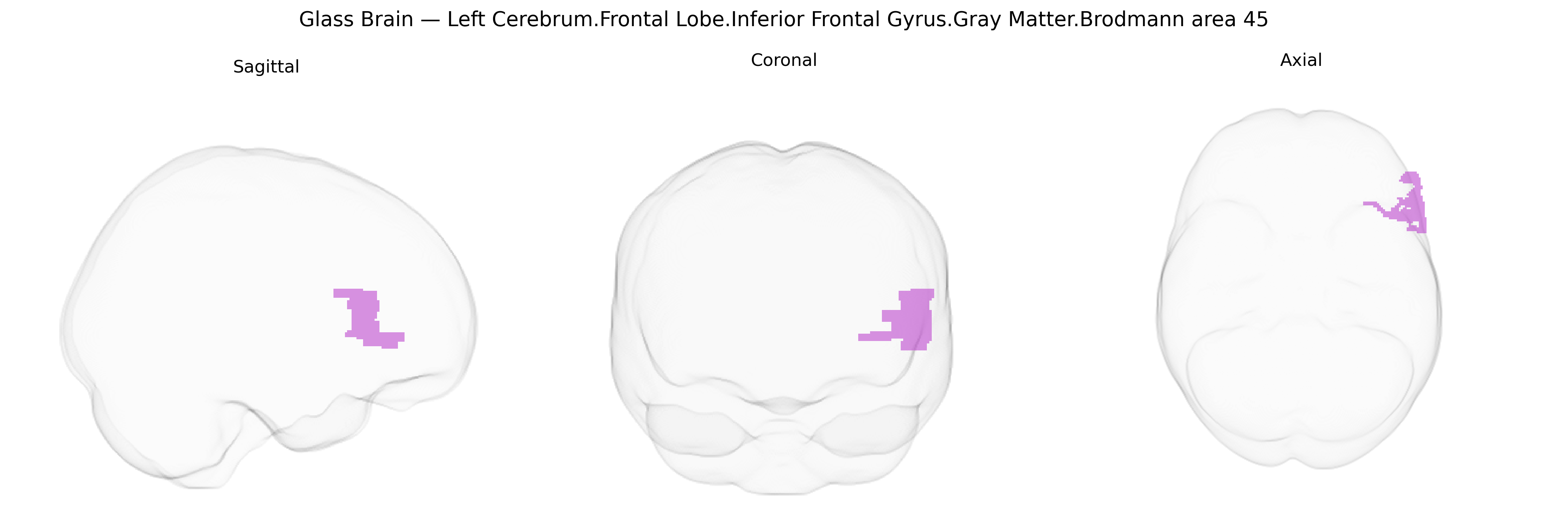
The bilateral Left Cerebrum.Frontal Lobe.Inferior Frontal Gyrus.Gray Matter.Brodmann area 45 corresponds to a subdivision of the inferior frontal gyrus in the dominant and non-dominant hemispheres, located anterior to Brodmann area 44 and posterior to area 47, within the pars triangularis region. Cytoarchitectonically, BA45 is characterized by a granular frontal cortex with distinct laminar differentiation and is heavily interconnected with temporal, parietal, and other frontal regions. Functionally, it plays a key role in language processing (especially semantic retrieval and controlled selection), aspects of working memory, and higher-order cognitive control, and in the left hemisphere is commonly associated with components of Broca’s region involved in speech and language production. A related entry can be found at Brodmann area 45.
The inferior frontal gyrus (IFG), particularly Brodmann area 45 (pars triangularis), has been repeatedly implicated in genetic studies of language, executive control, and psychiatric vulnerability, though most findings map to functional networks rather than to this anatomical label specifically. GWAS and imaging genetics work show that common variants in genes such as FOXP2, CNTNAP2, KIAA0319, DCDC2, and ROBO1, which are involved in language, speech, and reading, are associated with structural and functional variation in left IFG, including Broca’s region encompassing BA45. Polygenic scores for educational attainment, general cognitive ability, and reading ability correlate with gray matter volume and activation in left IFG during language and working memory tasks, and schizophrenia, bipolar disorder, major depression, and ADHD risk alleles have been linked to altered IFG morphology and connectivity within fronto-striatal and fronto-limbic circuits. Variants in glutamatergic (e.g., GRM3), dopaminergic (e.g., DRD2), and synaptic plasticity genes (e.g., BDNF Val66Met) have been associated with differences in IFG activation during inhibitory control and verbal fluency tasks, while autism spectrum disorder and social cognition–related loci show effects on IFG function within the mirror neuron and language networks. Although no single gene is specifically “for” BA45 in the Talairach labels, convergent imaging genetics and GWAS evidence indicates that polygenic influences on language, cognitive control, educational attainment, and psychiatric risk reliably manifest in structural and functional alterations of the bilateral inferior frontal gyrus, including Brodmann area 45.
Overview generated by GPT-4o (2026).
Region ID: 602
Hemisphere: bilateral
Atlas: Talairach labels 1mm
Full Quality Version: Download MP4
Full Quality Version: Download MP4
Wali Sidiqyar*, Gaurav Rudravaram*, Elyssa M. McMaster, Trent M. Schwartz, Adam M. Saunders, Kurt G. Schilling, Bennett A. Landman "Introducing SPINS: A Shared Public Visualization Library of Neuroanatomical Structures." Medical Imaging with Deep Learning- short paper
This resource is licensed under CC0 1.0 Universal (Public Domain).