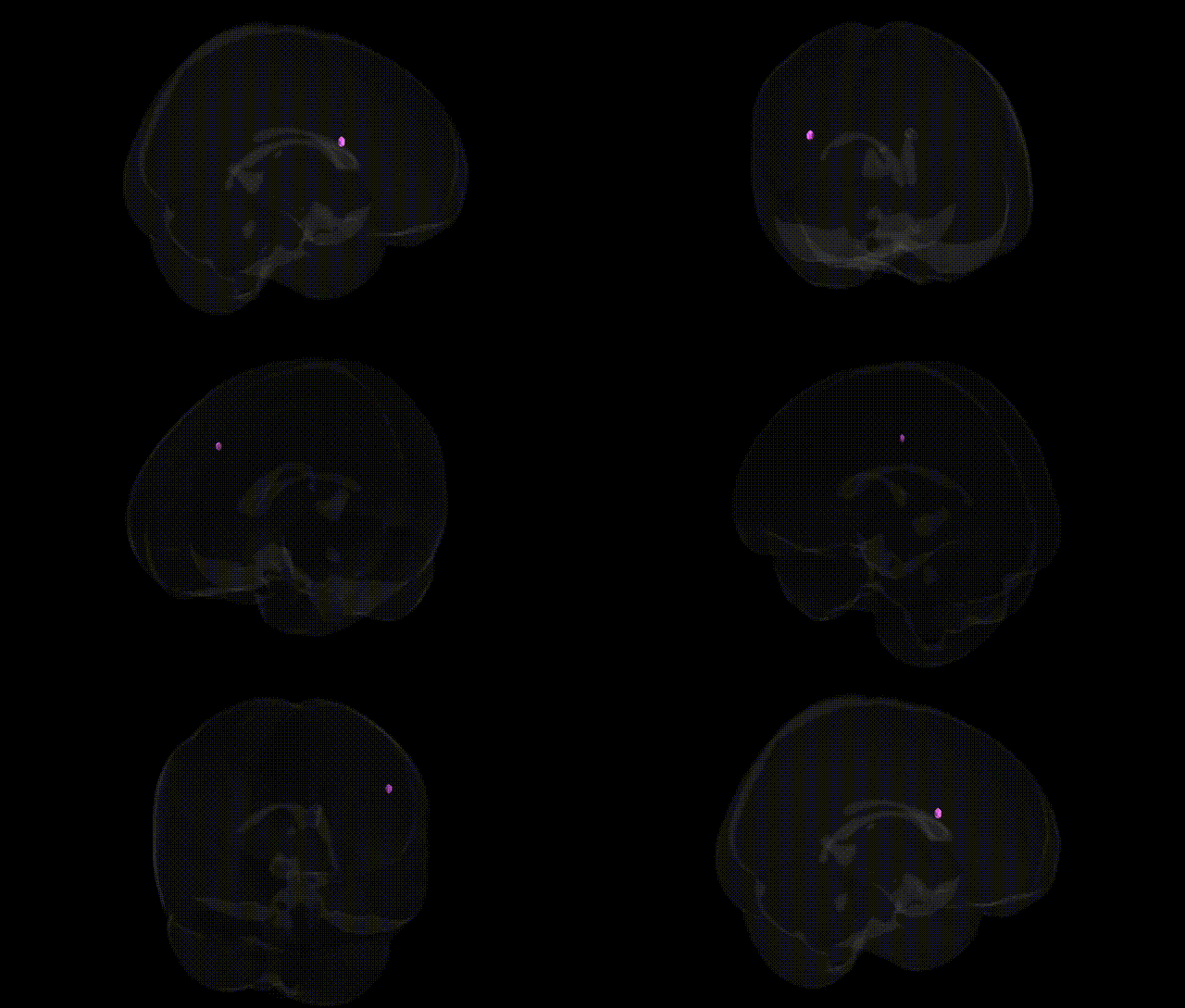
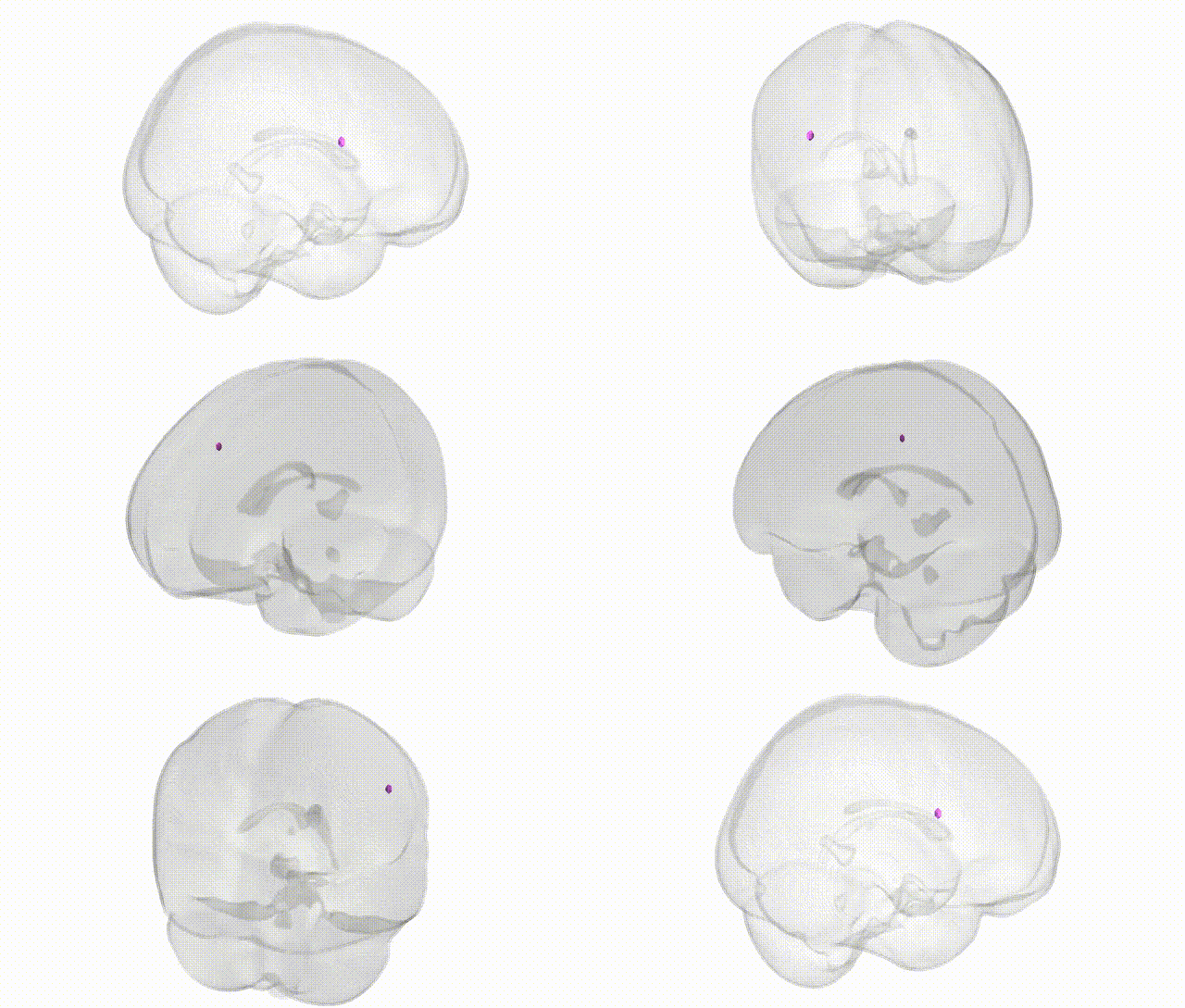
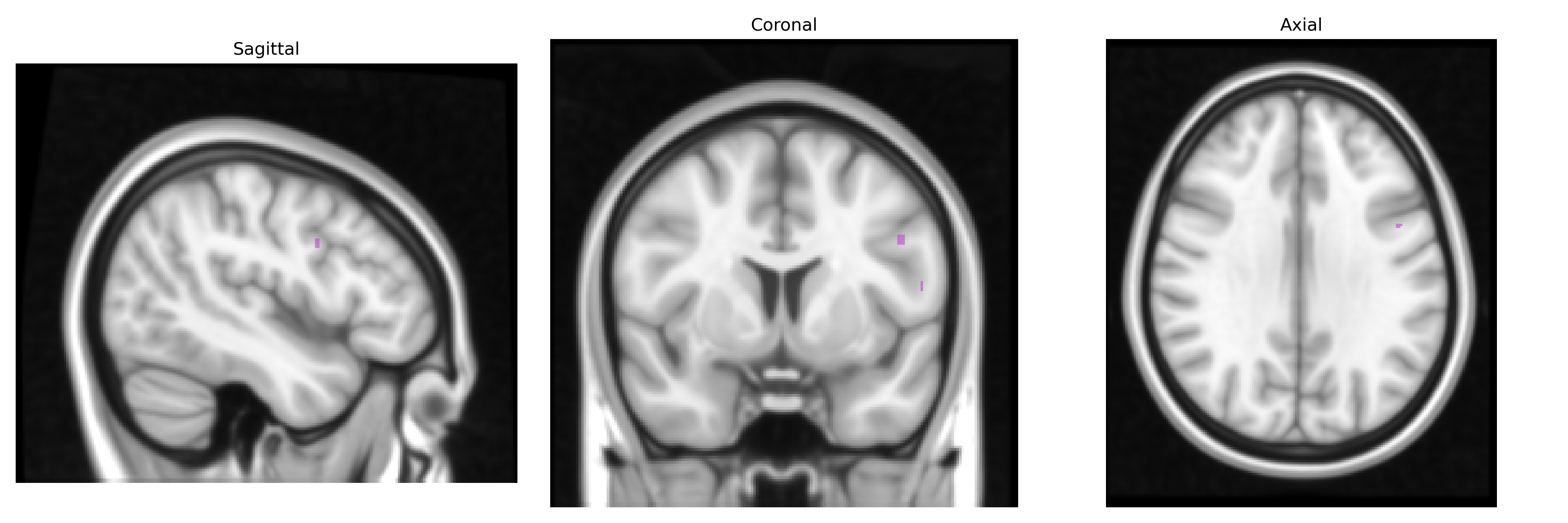
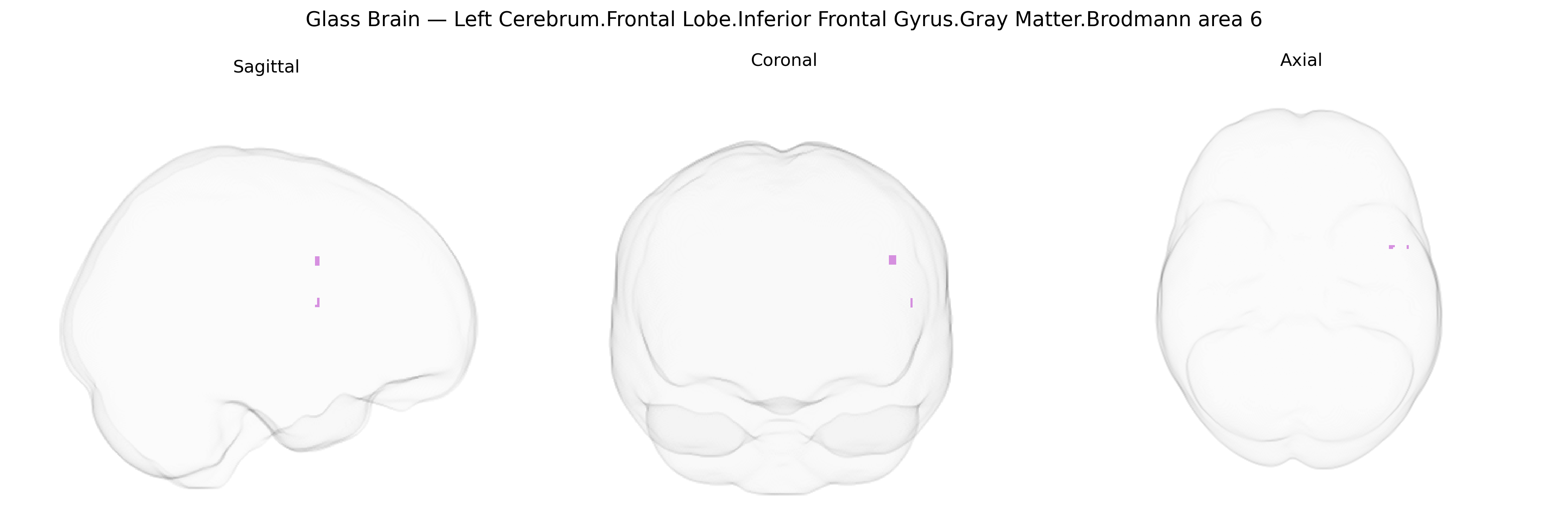
The bilateral Left Cerebrum.Frontal Lobe.Inferior Frontal Gyrus.Gray Matter.Brodmann area 6, as defined in the Talairach 1 mm atlas, corresponds to premotor portions of the inferior frontal gyrus involved in higher-order motor planning and preparation of complex, often language- and praxis-related movements. Brodmann area 6 is cytoarchitectonically agranular frontal cortex located anterior to primary motor cortex (BA4), integrating multimodal sensory input with subcortical signals from basal ganglia and cerebellum to organize sequences of actions, modulate motor output, and contribute to motor aspects of speech and gesture. This region participates in frontal motor networks supporting motor imagery, selection of appropriate motor programs, and the transformation of abstract goals into executable motor plans via extensive connectivity with parietal association cortex and supplementary motor regions. There is no direct Wikipedia article for this exact Talairach label; a closely related structure is Brodmann area 6.
The bilateral left inferior frontal gyrus (IFG) in Brodmann area 6, although classically a premotor region rather than the canonical BA44/45 language IFG, has been implicated in several genetic and GWAS-based associations that align with its roles in motor planning, speech-related articulation, and cognitive control. Large-scale imaging genetics consortia such as ENIGMA and UK Biobank have shown that cortical thickness, surface area, and gray-matter volume in the inferior frontal and adjacent premotor regions are heritable and influenced by common variants in genes involved in neurodevelopment, synaptic plasticity, and axon guidance (for example, loci near genes such as CNTNAP2, FOXP2-related networks, and neurodevelopmental genes like MAPT and DRD2 have been repeatedly implicated in frontal structural and functional variation, though not always restricted to BA6). GWAS of language, educational attainment, and general cognitive ability have identified polygenic influences that partially converge on structural differences in inferior frontal and premotor cortices, while studies in developmental speech and language disorders and stuttering have linked variants in FOXP2-pathway genes and other neurodevelopmental loci to altered activation and morphology in inferior frontal and pre-motor areas encompassing BA6. Psychiatric and neurodevelopmental conditions such as schizophrenia, autism spectrum disorder, attention-deficit/hyperactivity disorder, and obsessive–compulsive disorder, which show robust frontal lobe involvement, have been associated via imaging-genetics and polygenic risk score analyses with altered structure and connectivity in the IFG/premotor complex, including BA6, suggesting that many risk variants exert their effects through broad fronto-striatal and fronto-parietal circuits rather than a single gene–region link. Overall, genetic findings indicate that BA6 in the inferior frontal gyrus is a heritable, polygenically influenced hub whose structure and function are modulated by widespread neurodevelopmental and synaptic genes, contributing to susceptibility for traits and disorders involving motor control, speech production, and higher-order executive functions.
Overview generated by GPT-4o (2026).
Region ID: 809
Hemisphere: bilateral
Atlas: Talairach labels 1mm
Full Quality Version: Download MP4
Full Quality Version: Download MP4
Wali Sidiqyar*, Gaurav Rudravaram*, Elyssa M. McMaster, Trent M. Schwartz, Adam M. Saunders, Kurt G. Schilling, Bennett A. Landman "Introducing SPINS: A Shared Public Visualization Library of Neuroanatomical Structures." Medical Imaging with Deep Learning- short paper
This resource is licensed under CC0 1.0 Universal (Public Domain).