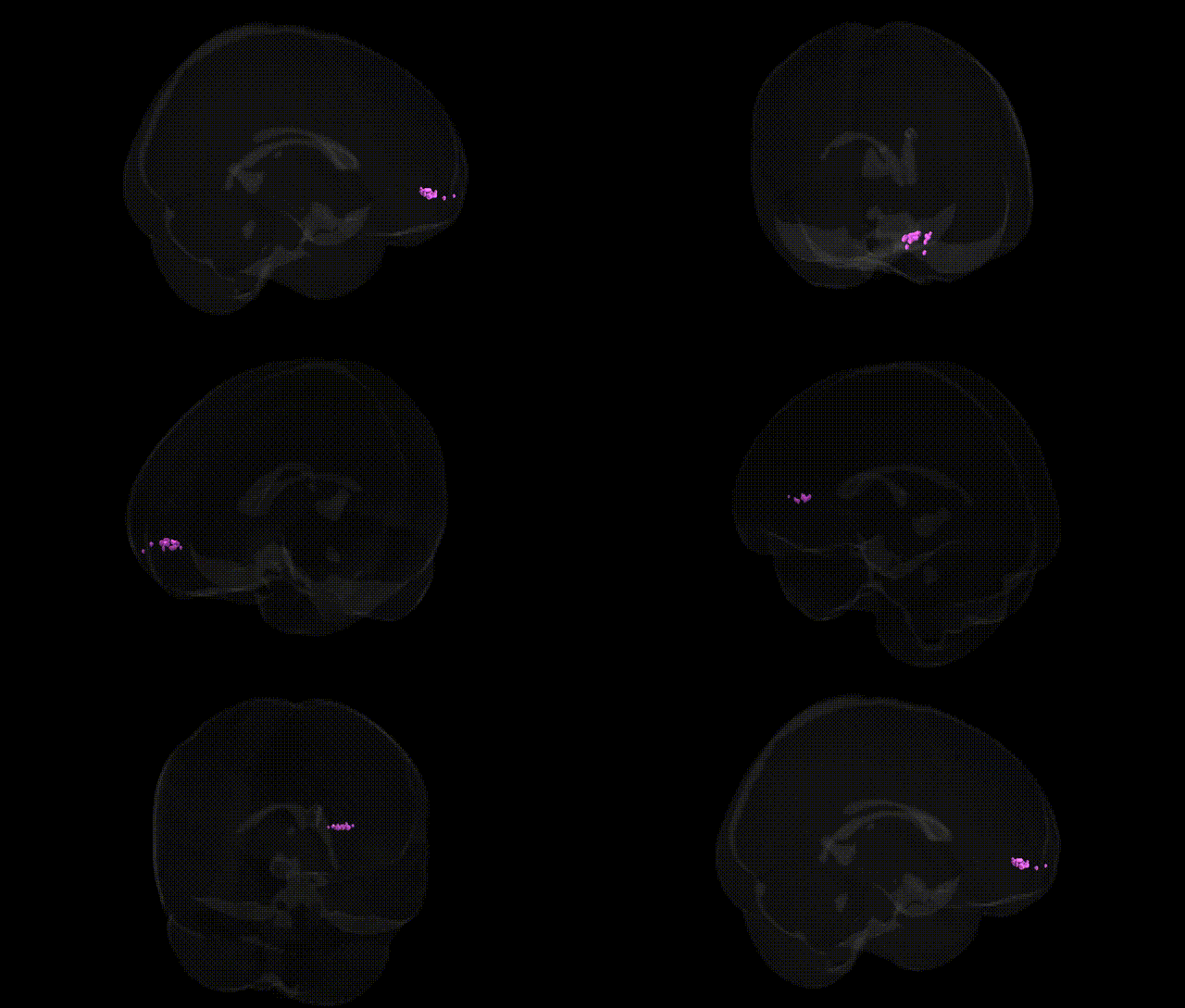
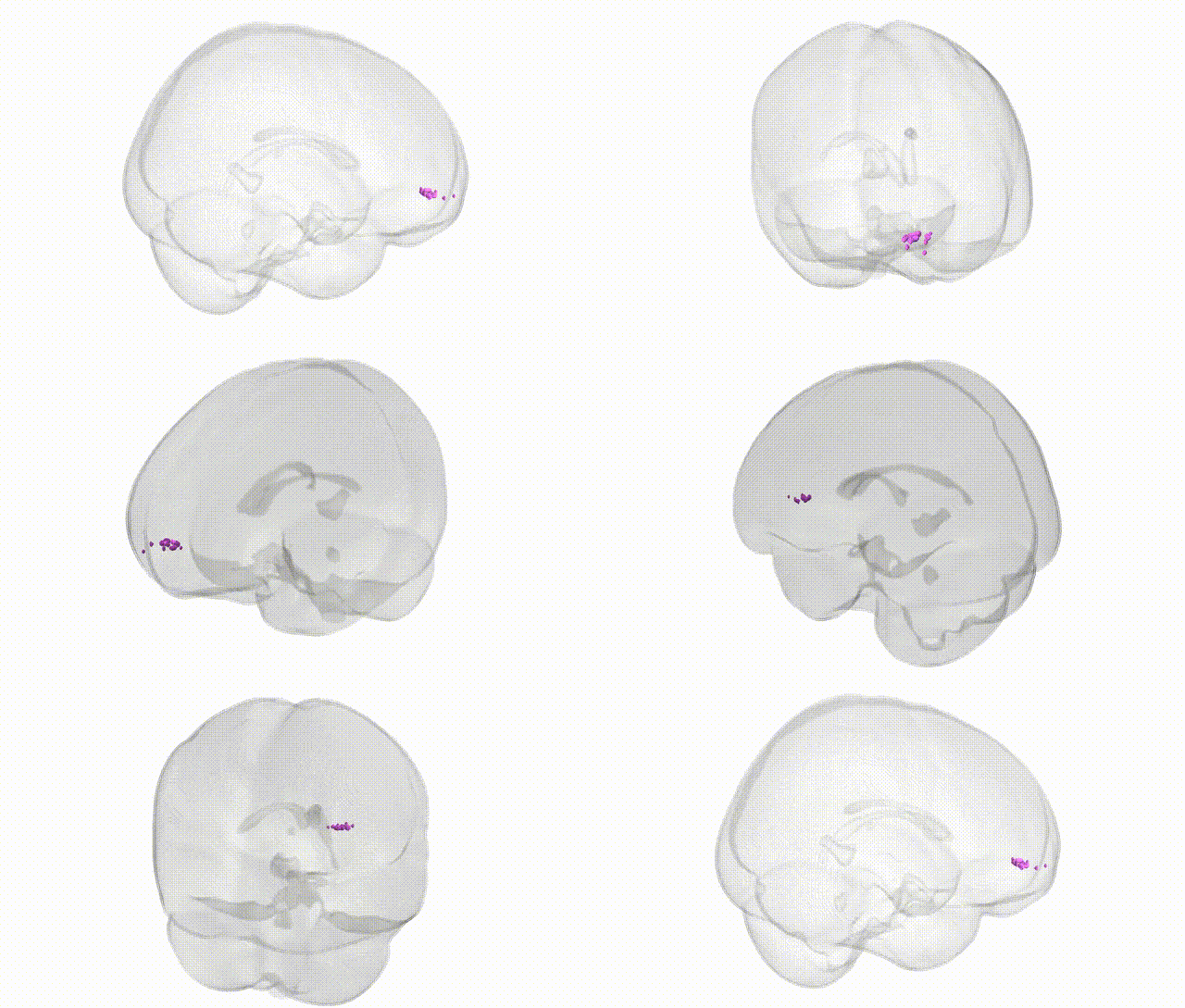
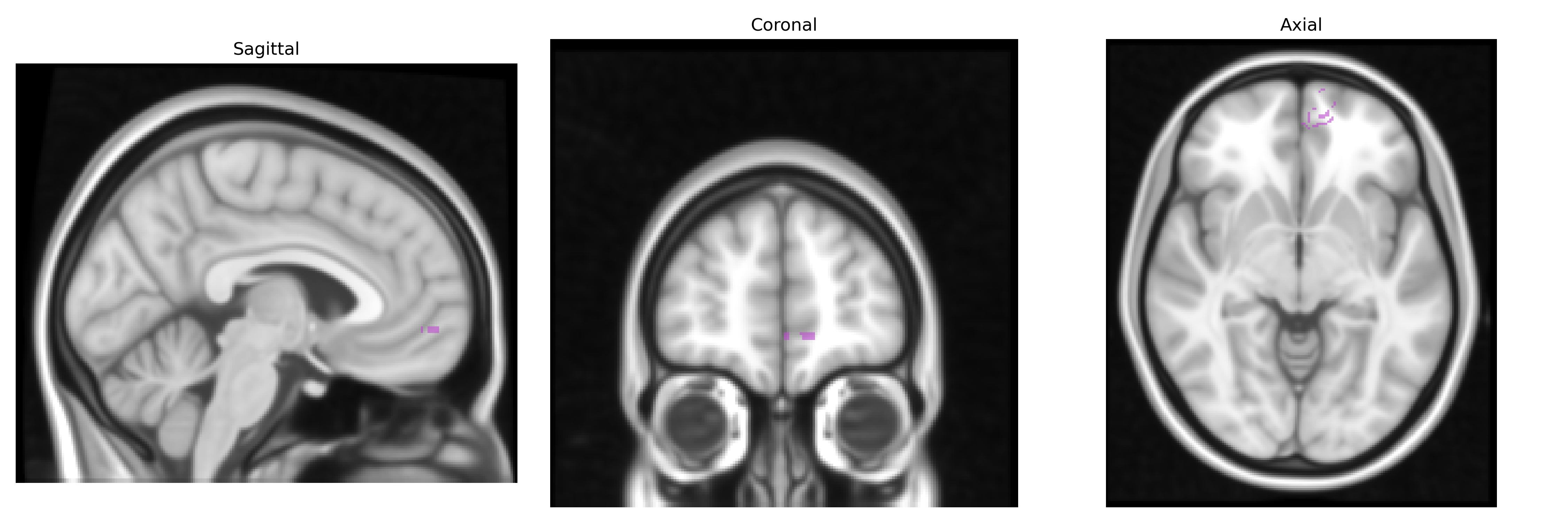
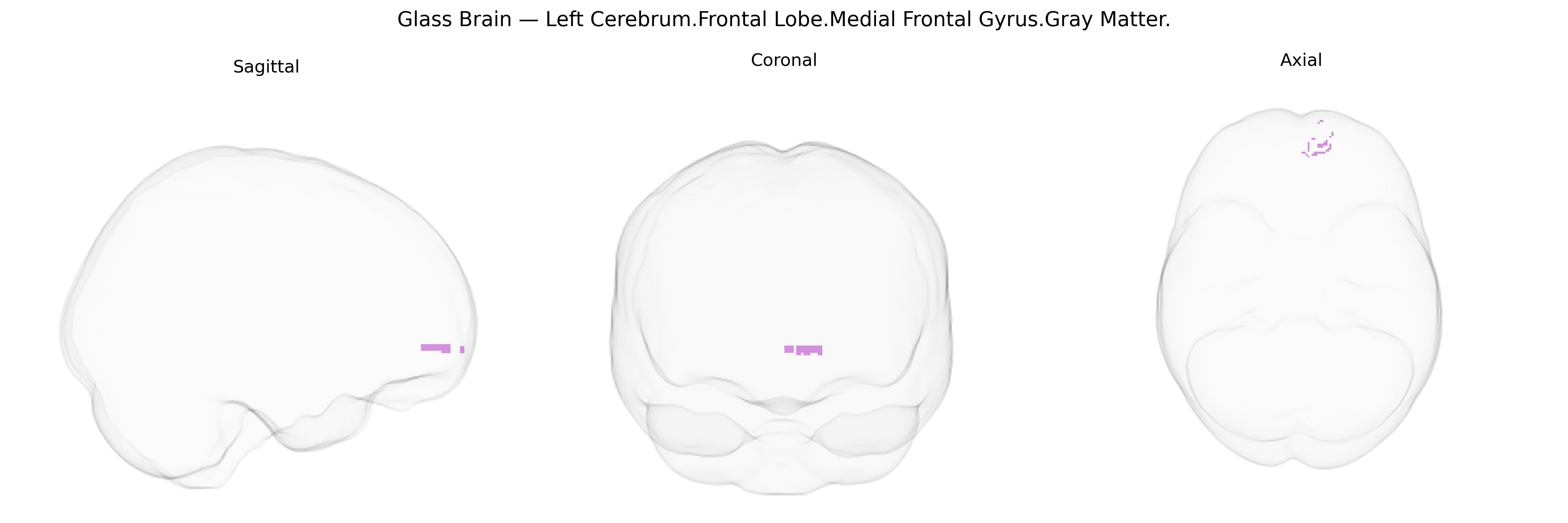
The bilateral Left Cerebrum.Frontal Lobe.Medial Frontal Gyrus.Gray Matter corresponds primarily to the medial segment of the superior frontal gyrus within the medial frontal cortex, encompassing portions of Brodmann areas 8, 9, 10, and 32 along the mesial surface of the frontal lobe. This gray matter region participates in higher-order executive functions, including planning, decision-making, performance monitoring, and aspects of working memory, as well as motivation and components of self-referential and internally directed cognition, often in interaction with the anterior cingulate and prefrontal cortices. It also contributes to motor-related processes such as the preparation and initiation of voluntary movements, particularly via supplementary and pre-supplementary motor areas located medially. There is no direct link for “medial frontal gyrus”; a closely related structure is the Superior frontal gyrus.
The medial frontal gyrus gray matter (bilateral, left cerebrum, frontal lobe) corresponds largely to medial prefrontal and anterior cingulate territories that have repeatedly emerged in genetic and imaging-genetics studies of cognition, affect, and psychiatric risk. GWAS of brain structure and cortical thickness (e.g., ENIGMA and UK Biobank) have identified polygenic influences on medial frontal morphology, with variants in genes related to synaptic function, neuronal development, and glutamatergic signaling (such as GRIN2B, CNTNAP2, and genes within major neurodevelopmental pathways) contributing to interindividual differences in volume and thickness of this region. Medial frontal gray matter has been implicated in schizophrenia, bipolar disorder, major depressive disorder, ADHD, and obsessive–compulsive disorder, where risk loci and polygenic risk scores for these conditions correlate with altered cortical thickness or volume in medial frontal areas. Moreover, genetic liability for traits including neuroticism, cognitive control, intelligence, and risk-taking has been associated with structural and functional variation in the medial frontal gyrus, highlighting its role as a convergence point for polygenic architectures underlying executive function and emotion regulation. Across studies, effects are highly polygenic and distributed, with no single variant specific to this Talairach-defined region, but consistent evidence that medial frontal gray matter serves as a key anatomical substrate through which widespread genetic risk factors for psychiatric and cognitive traits exert their influence.
Overview generated by GPT-4o (2026).
Region ID: 611
Hemisphere: bilateral
Atlas: Talairach labels 1mm
Full Quality Version: Download MP4
Full Quality Version: Download MP4
Wali Sidiqyar*, Gaurav Rudravaram*, Elyssa M. McMaster, Trent M. Schwartz, Adam M. Saunders, Kurt G. Schilling, Bennett A. Landman "Introducing SPINS: A Shared Public Visualization Library of Neuroanatomical Structures." Medical Imaging with Deep Learning- short paper
This resource is licensed under CC0 1.0 Universal (Public Domain).