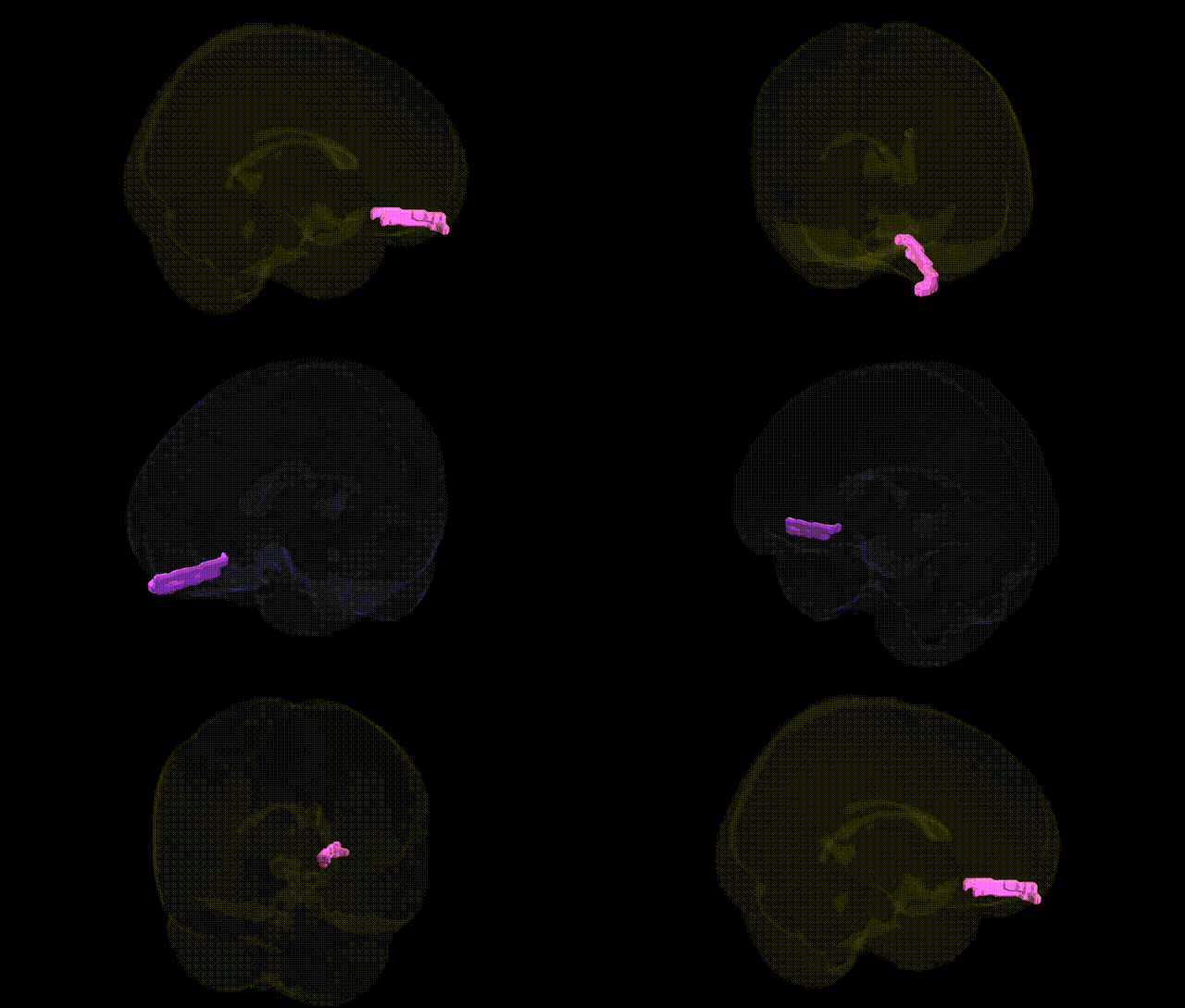
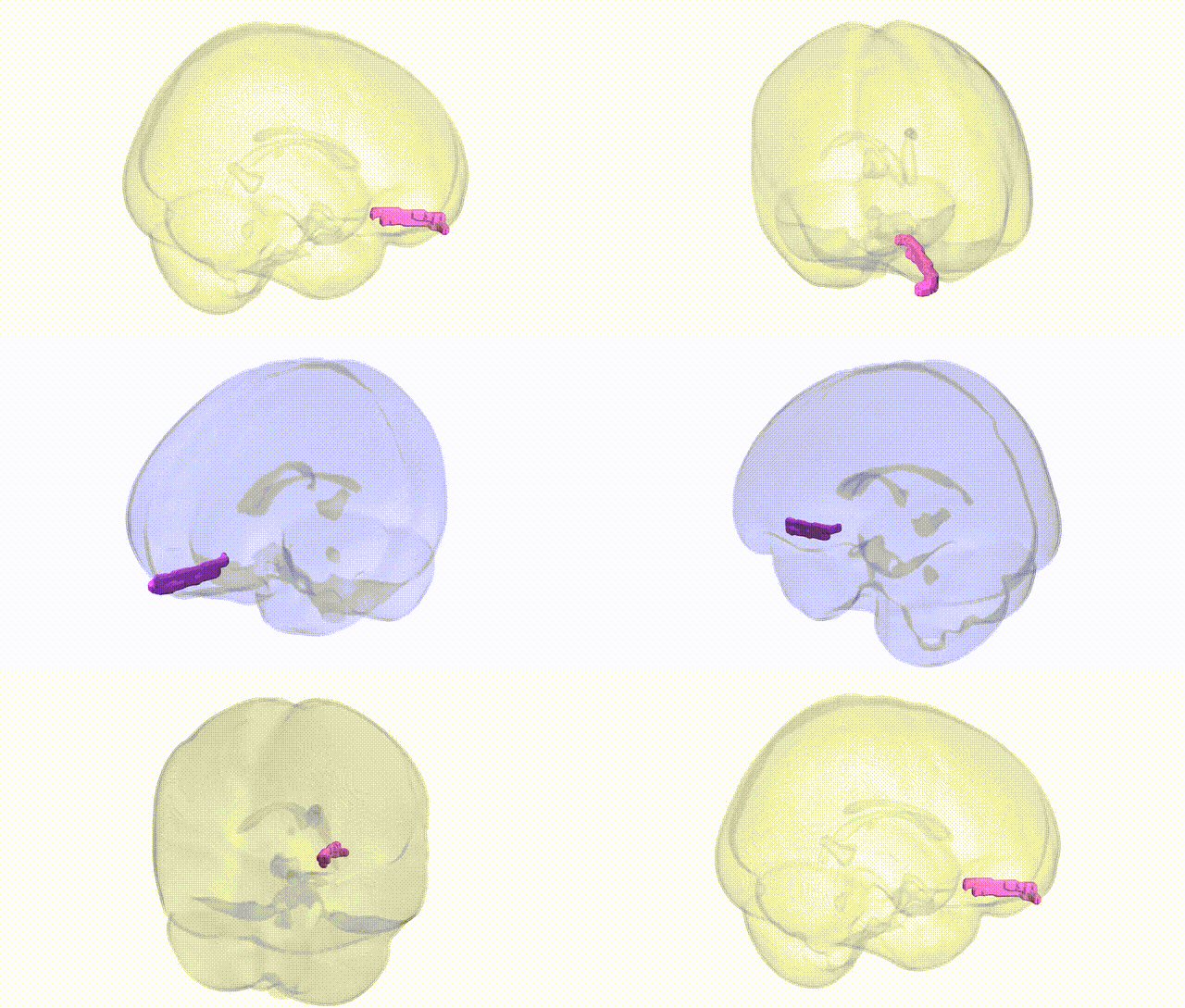
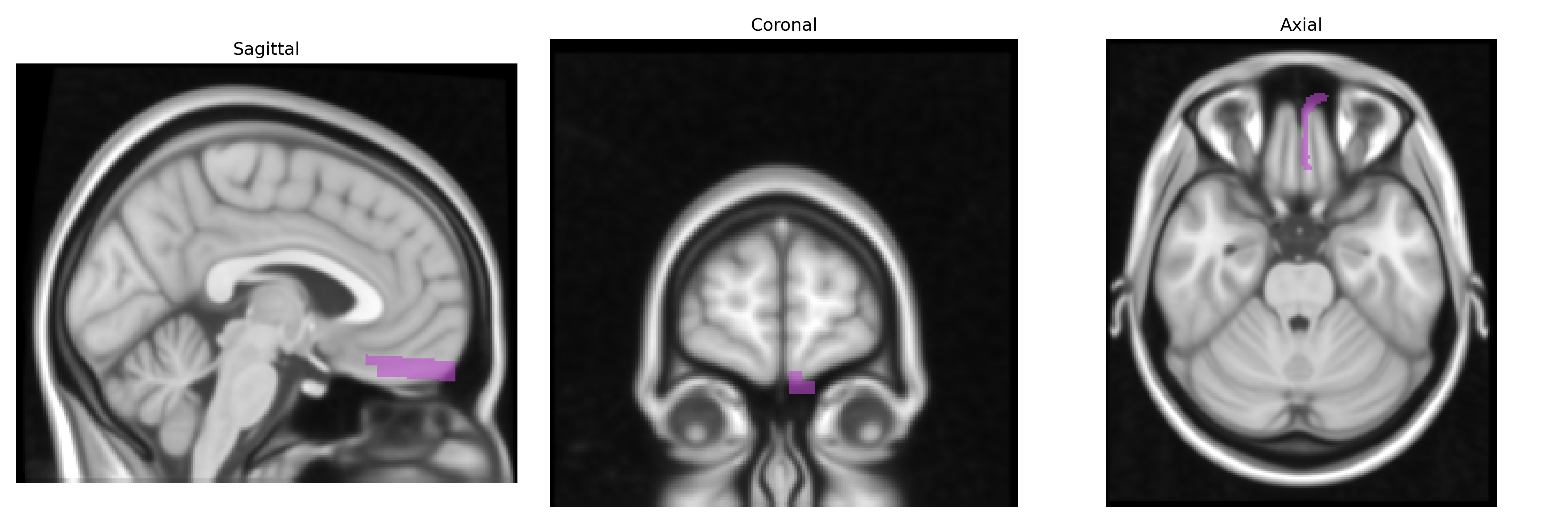
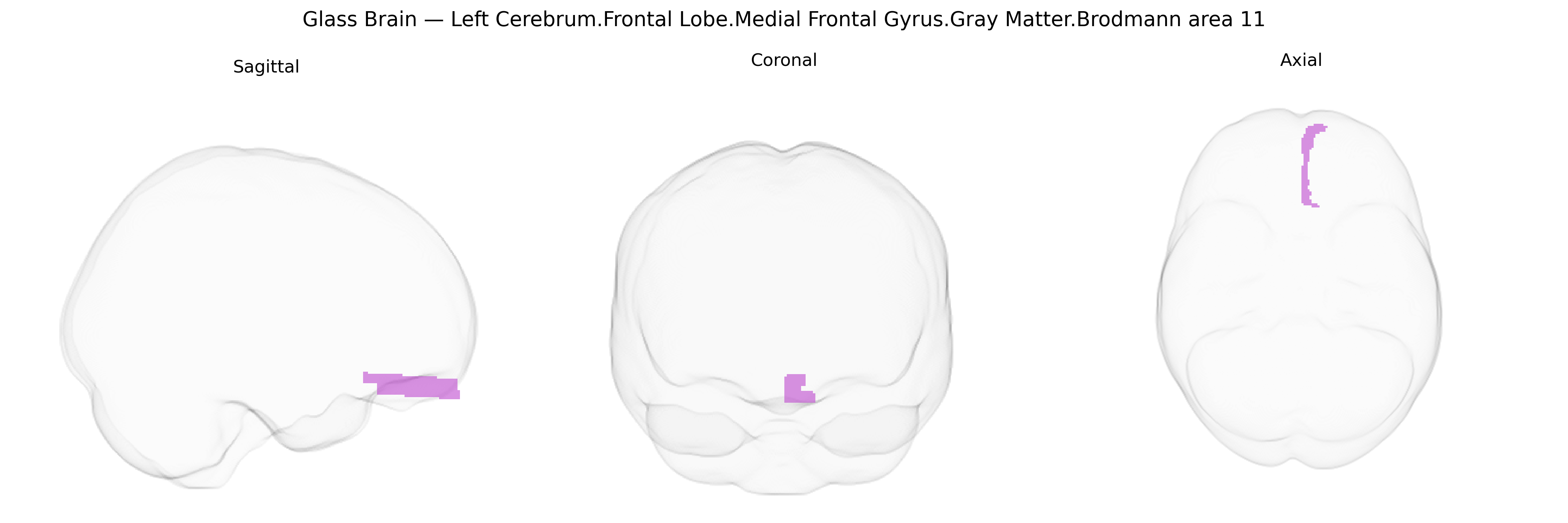
The bilateral Left Cerebrum.Frontal Lobe.Medial Frontal Gyrus.Gray Matter.Brodmann area 11 corresponds to the medial portion of the orbitofrontal cortex within the prefrontal cortex, situated on the ventral surface of the frontal lobe just above the orbits and extending medially along the gyrus rectus and adjacent medial frontal gyrus. This region is cytoarchitectonically defined by Brodmann area 11 and is implicated in reward valuation, decision-making, emotional and social behavior, and the integration of sensory, visceral, and limbic information to guide goal-directed actions and adaptive responses. It maintains dense reciprocal connections with limbic structures (including the amygdala and hippocampal formation), hypothalamus, and other prefrontal areas, supporting its role in affective regulation, expectation of outcomes, and behavioral inhibition; dysfunction in this area has been associated with disorders of mood, impulse control, and social cognition. Orbitofrontal cortex
The medial frontal gyrus gray matter within Brodmann area 11 (orbitomedial prefrontal cortex) has been repeatedly implicated in genetic studies of psychiatric, cognitive, and personality-related traits, although few GWAS pinpoint effects exclusively to this precise Talairach-defined region. Large-scale imaging–genetics consortia (e.g., ENIGMA, UK Biobank) have reported SNP heritability and polygenic influences on cortical thickness and surface area in medial/orbitofrontal prefrontal regions, with associated loci including variants near or in genes involved in neurodevelopment (e.g., HMGA2, FOXP2-related regions, and other neuronal signaling genes), synaptic function (e.g., GRM3, CACNA1C), and general brain morphology (e.g., IGF1-related loci), though these are typically reported at the level of broader frontal or orbitofrontal parcels rather than BA11 specifically. Genetic variants influencing medial/orbitofrontal structure and function have been associated with risk for major depressive disorder, bipolar disorder, schizophrenia, and anxiety disorders, as well as neuroticism, impulsivity, risk-taking, and related personality traits, consistent with the region’s role in valuation and affect regulation. GWAS of resting-state networks and task-evoked activation have shown that polygenic risk scores for depression, schizophrenia, and ADHD correlate with altered activation and connectivity in medial/orbitofrontal prefrontal areas, including BA11, while Alzheimer’s disease and other neurodegenerative GWAS highlight loci affecting frontal cortical atrophy patterns that sometimes encompass medial frontal regions. Overall, the bilateral medial frontal gyrus BA11 shows modest but robust heritability of structure and function and participates in genetically influenced networks underlying mood, cognition, and reward-related behavior, though current evidence primarily maps to larger orbitomedial prefrontal territories rather than this narrow atlas-defined subregion.
Overview generated by GPT-4o (2026).
Region ID: 235
Hemisphere: bilateral
Atlas: Talairach labels 1mm
Full Quality Version: Download MP4
Full Quality Version: Download MP4
Wali Sidiqyar*, Gaurav Rudravaram*, Elyssa M. McMaster, Trent M. Schwartz, Adam M. Saunders, Kurt G. Schilling, Bennett A. Landman "Introducing SPINS: A Shared Public Visualization Library of Neuroanatomical Structures." Medical Imaging with Deep Learning- short paper
This resource is licensed under CC0 1.0 Universal (Public Domain).