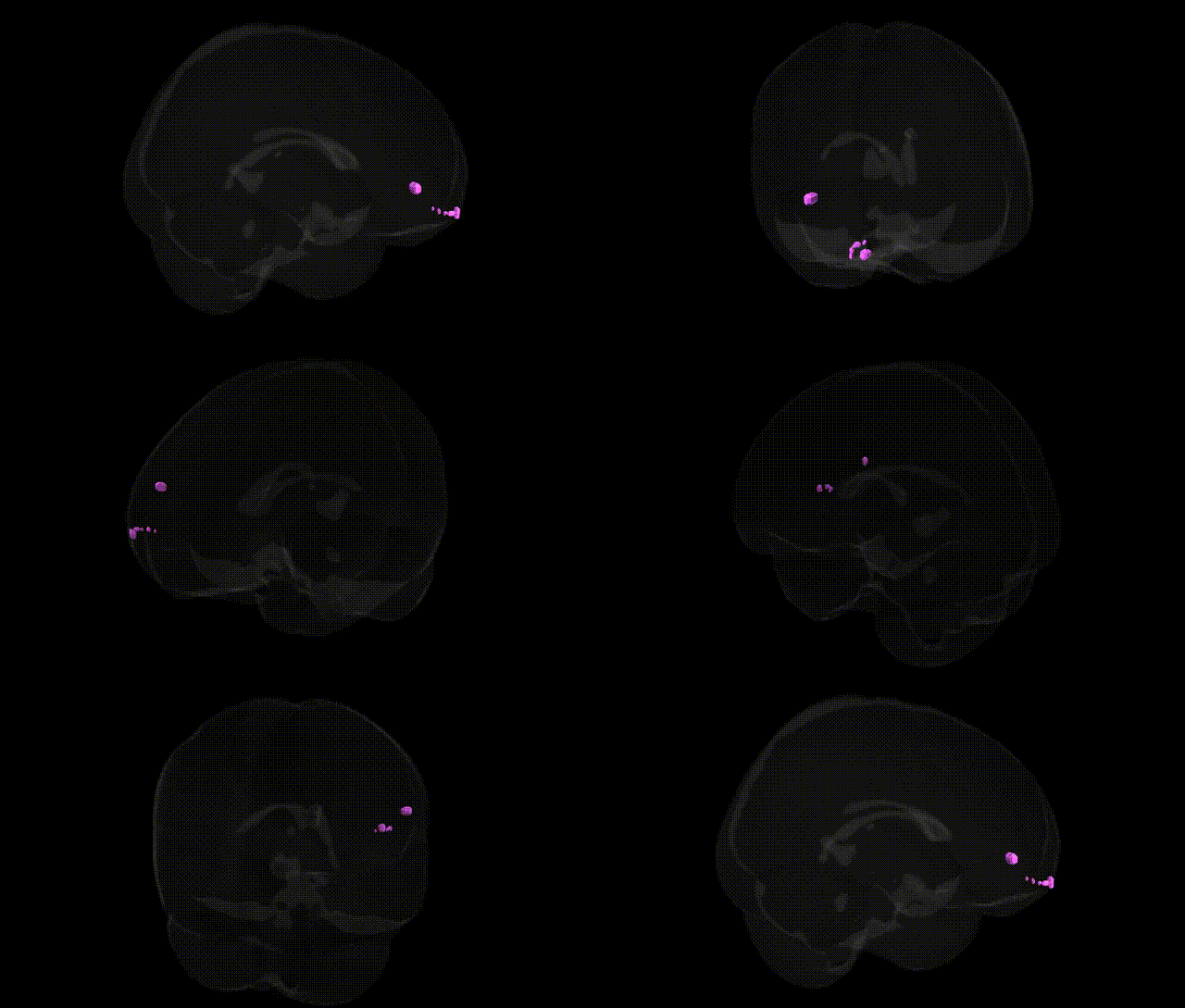
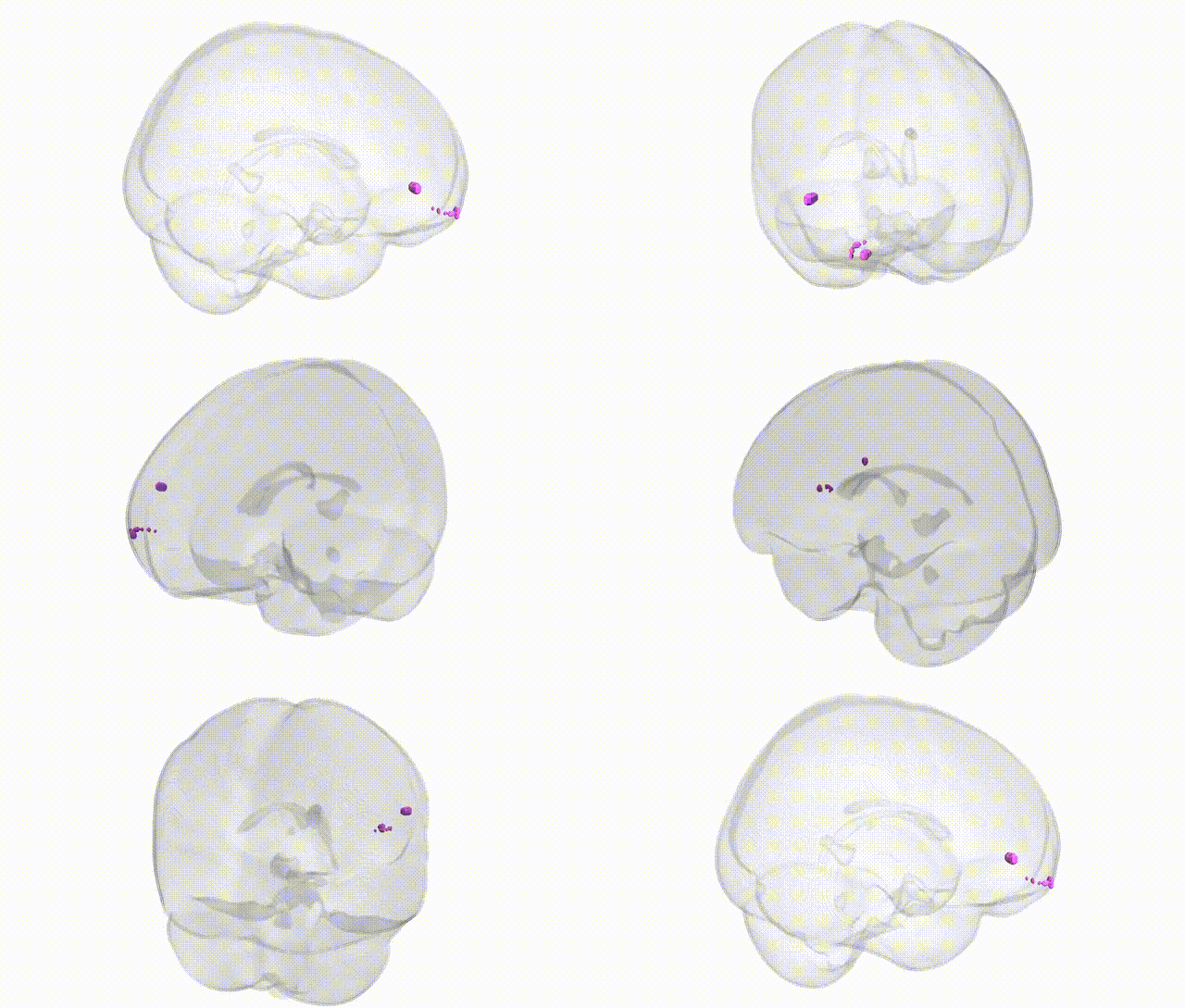
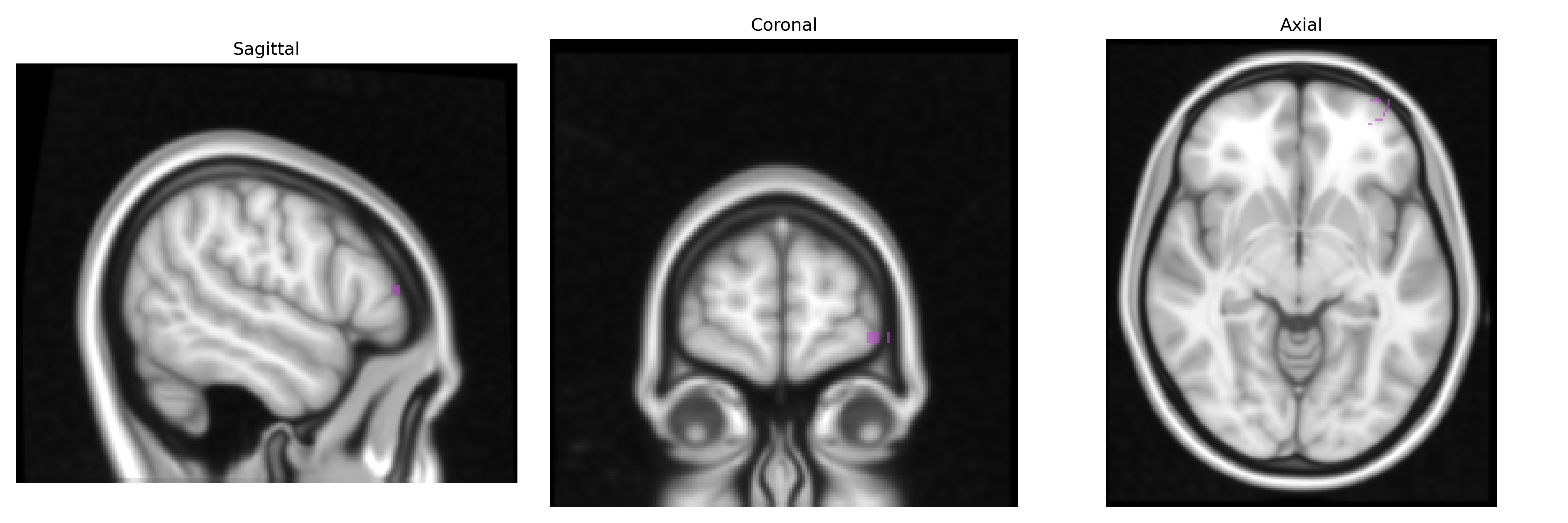
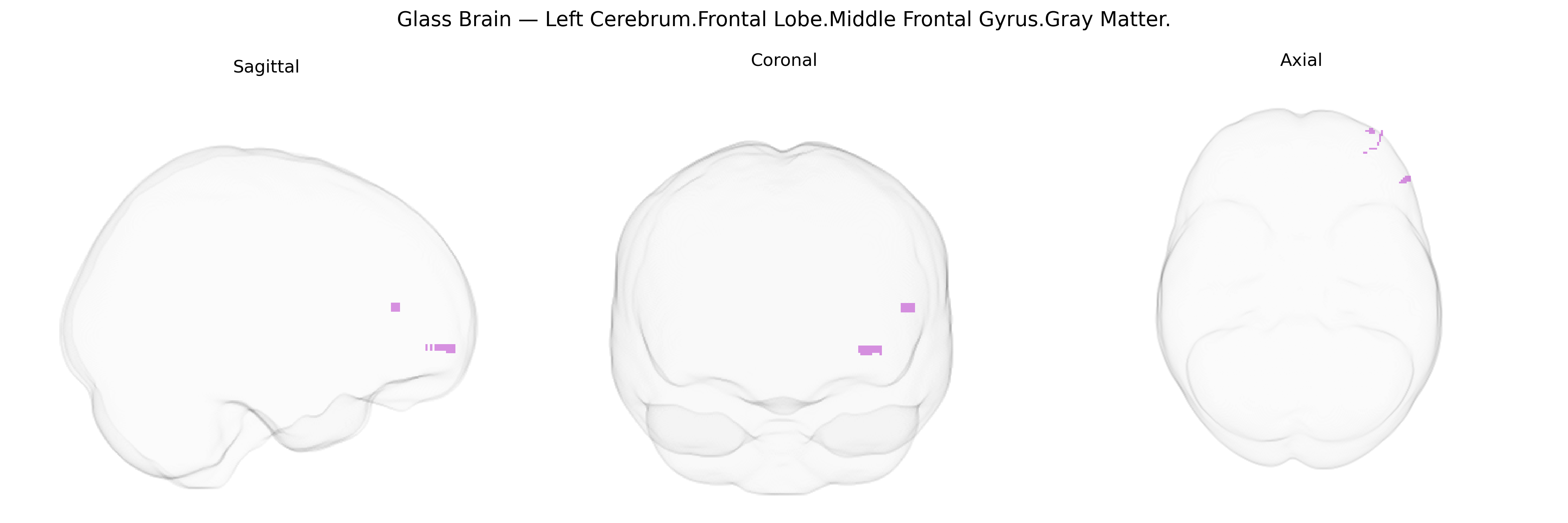
The bilateral Left Cerebrum.Frontal Lobe.Middle Frontal Gyrus.Gray Matter corresponds to cortical tissue in the middle frontal gyrus of the frontal lobe, a key component of the dorsolateral and rostral prefrontal regions implicated in higher-order cognitive and executive functions. This gray matter zone participates in working memory, attention control, planning, decision-making, and the regulation of goal-directed behavior, often through extensive connections with other prefrontal areas, premotor cortex, posterior parietal cortex, and subcortical structures such as the basal ganglia and thalamus. Functionally, it supports integration of sensory and mnemonic information to guide complex actions and abstract reasoning, and is frequently activated in neuroimaging studies of cognitive control, task switching, and problem solving. There is no direct link for this specific Talairach-labeled region; a closely related structure is the Middle frontal gyrus.
The bilateral middle frontal gyrus gray matter in the left cerebrum—part of the dorsolateral prefrontal cortex (DLPFC) as defined in Talairach 1 mm atlases—has been repeatedly implicated in imaging–genetics and GWAS-based neuroimaging studies, which link common variants to cortical thickness, surface area, and volume in this region. Large consortia such as ENIGMA and UK Biobank have reported associations between middle frontal morphology and variants in genes involved in neurodevelopment and synaptic function, including loci near HMGA2, IGF1, and microtubule- or cell-adhesion–related genes, as well as polygenic scores for global cortical structure. This area shows genetically correlated alterations in disorders such as schizophrenia, bipolar disorder, major depressive disorder, ADHD, and autism spectrum disorder, where risk variants (e.g., in CACNA1C, ZNF804A, and other GWAS-implicated loci) are associated with reduced gray matter volume or altered thickness in the middle frontal gyrus, consistent with its role in working memory, cognitive control, and executive function. GWAS of cognitive traits (general intelligence, educational attainment, and working memory) have identified polygenic influences that overlap with genetic determinants of middle frontal cortical structure, supporting a shared genetic architecture between this region’s morphology and higher-order cognition, while imaging–genetic work on personality, risk-taking, and substance use has similarly linked polygenic risk scores for these traits to structural differences in the middle frontal gyrus.
Overview generated by GPT-4o (2026).
Region ID: 617
Hemisphere: bilateral
Atlas: Talairach labels 1mm
Full Quality Version: Download MP4
Full Quality Version: Download MP4
Wali Sidiqyar*, Gaurav Rudravaram*, Elyssa M. McMaster, Trent M. Schwartz, Adam M. Saunders, Kurt G. Schilling, Bennett A. Landman "Introducing SPINS: A Shared Public Visualization Library of Neuroanatomical Structures." Medical Imaging with Deep Learning- short paper
This resource is licensed under CC0 1.0 Universal (Public Domain).