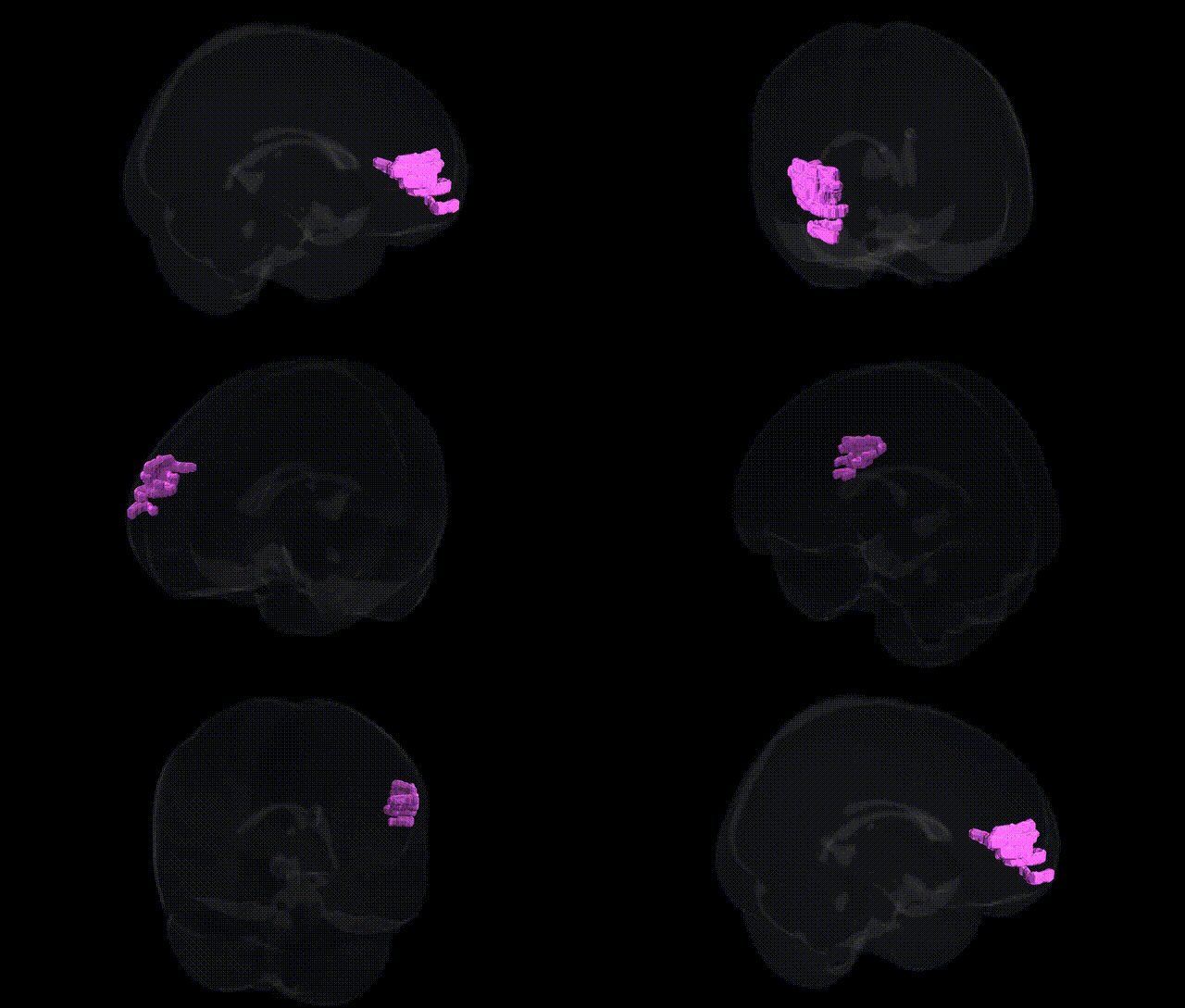
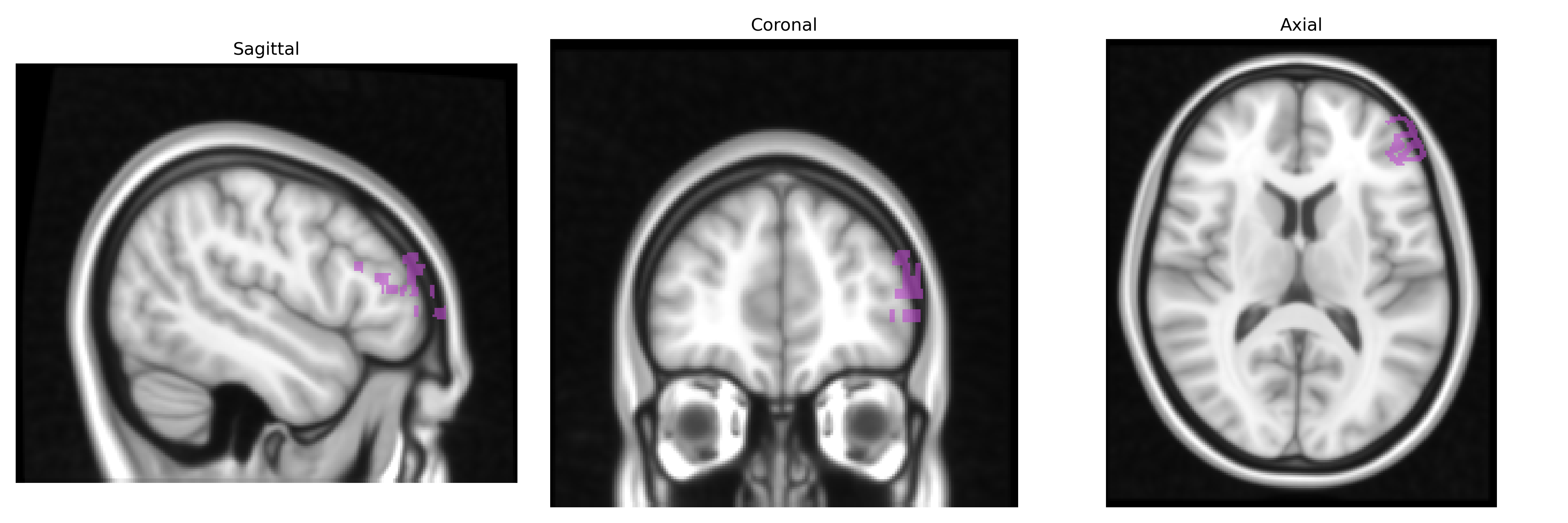
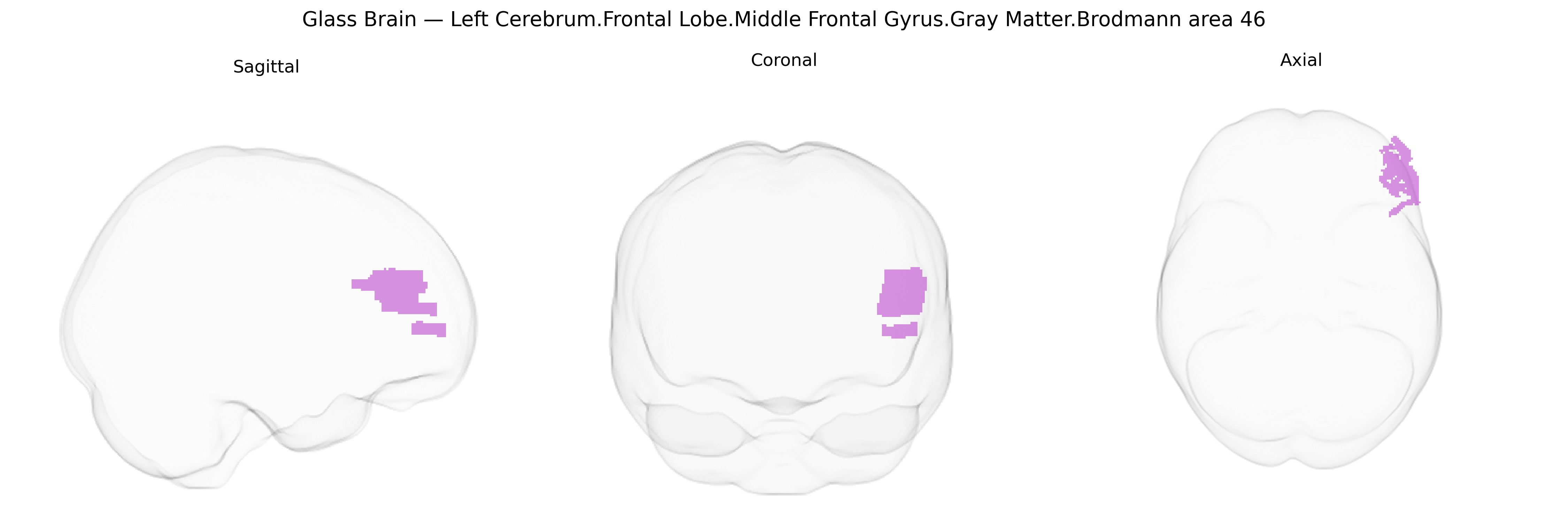
The bilateral Left Cerebrum.Frontal Lobe.Middle Frontal Gyrus.Gray Matter.Brodmann area 46 corresponds to the dorsolateral prefrontal cortex (DLPFC), a granular frontal region implicated in higher-order executive functions, including working memory, attentional control, planning, behavioral flexibility, and aspects of decision-making. Cytoarchitectonically, Brodmann area 46 exhibits a well-developed granular layer IV and distinct pyramidal cell layers, and it maintains extensive reciprocal connections with other prefrontal, parietal, and limbic regions, as well as with subcortical structures such as the basal ganglia and thalamus. Functionally, this area supports manipulation and monitoring of information in working memory, integration of sensory and contextual inputs for goal-directed behavior, and regulation of cognitive control over actions and emotions, making it critical for adaptive, flexible cognition. Brodmann area 46
Genetic associations with bilateral middle frontal gyrus gray matter in Brodmann area 46 (dorsolateral prefrontal cortex) emerge mainly from imaging–genetics and GWAS of cortical structure and cognition: large-scale ENIGMA and UK Biobank studies report heritable variation in cortical thickness and surface area in this region, implicating common variants in genes involved in neurodevelopment, synaptic function, and neuronal migration (e.g., MIR137, SLC39A8, and loci near POU3F2 and TCF4) that also show genome-wide associations with schizophrenia, bipolar disorder, and major depressive disorder; polygenic risk for these disorders correlates with altered morphology or activation in BA46, supporting pleiotropic effects on both structure and psychiatric liability. Variants linked to general cognitive ability and educational attainment show associations with structural and functional metrics in BA46, reflecting the region’s role in working memory and executive control, while ADHD and autism spectrum disorder risk loci have been tied to differences in frontal gyral thickness and connectivity, including middle frontal areas. Additional GWAS for traits such as risk-taking, neuroticism, and smoking behavior implicate frontal cortical loci overlapping or adjacent to BA46, aligning with its contributions to cognitive control, decision-making, and emotion regulation, though most associations are polygenic, distributed, and not specific to a single Talairach-defined parcel.
Overview generated by GPT-4o (2026).
Region ID: 697
Hemisphere: bilateral
Atlas: Talairach labels 1mm
Full Quality Version: Download MP4
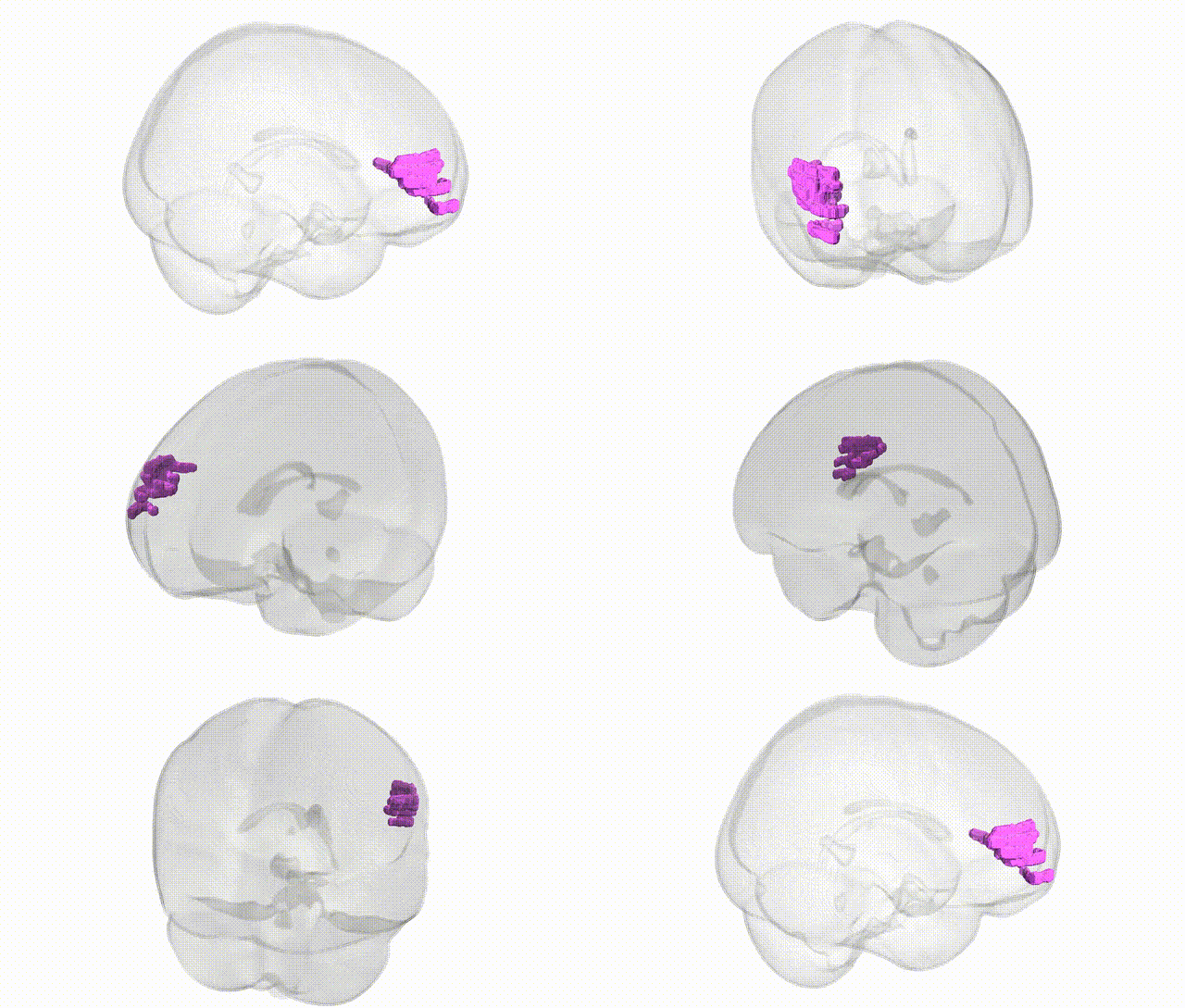
Full Quality Version: Download MP4
Wali Sidiqyar*, Gaurav Rudravaram*, Elyssa M. McMaster, Trent M. Schwartz, Adam M. Saunders, Kurt G. Schilling, Bennett A. Landman "Introducing SPINS: A Shared Public Visualization Library of Neuroanatomical Structures." Medical Imaging with Deep Learning- short paper
This resource is licensed under CC0 1.0 Universal (Public Domain).